
Getting around Mongolia: tours or independent travel, driver-guides, vans and 4x4s, domestic flights, trains and the roads
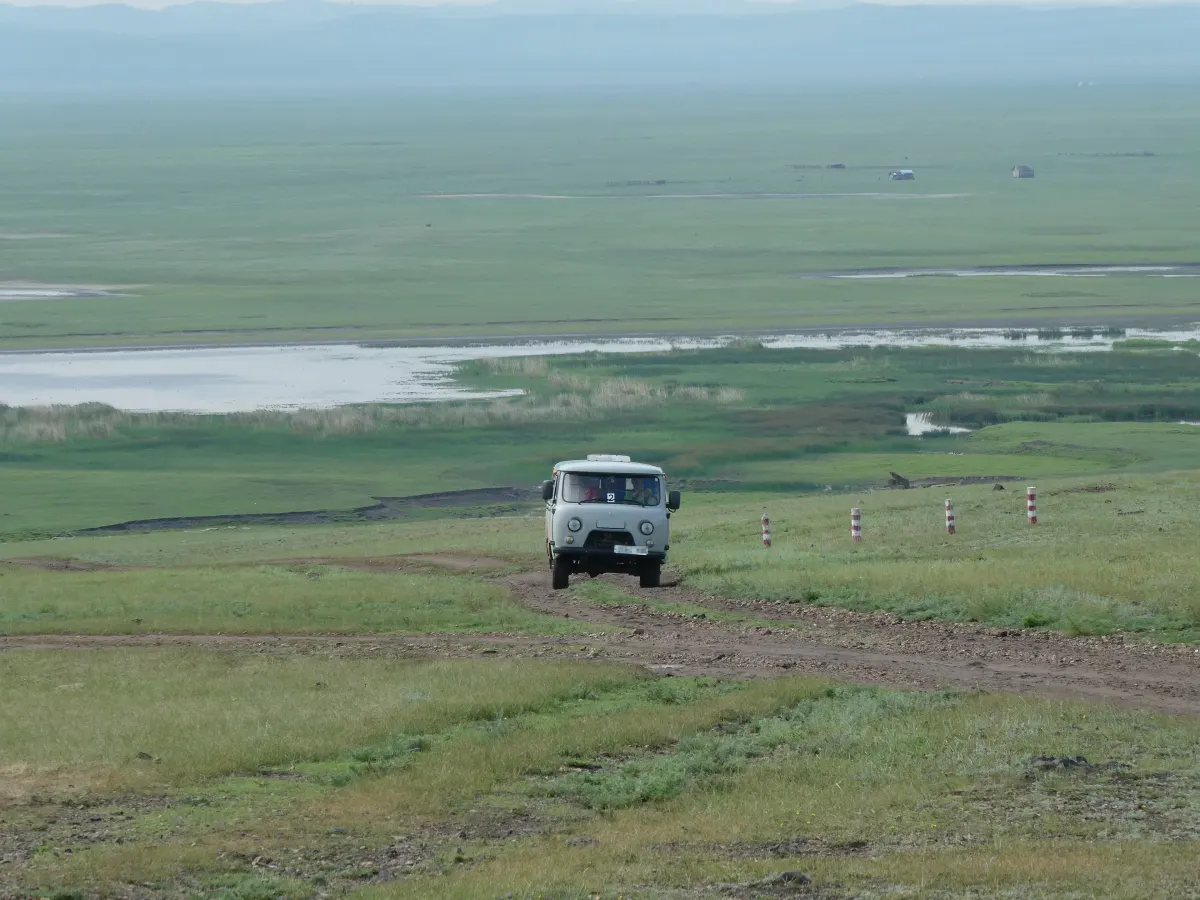
Mongolia is huge, empty and mostly roadless, so travel takes time. Outside Ulaanbaatar there are few signposts, little public transport to the sights, and long stretches with no mobile signal, so most visitors travel with a tour company or hire a driver and guide. Plan on driving a few hundred kilometres a day at most, and on some days much less.
Tours, driver-guides or independent travel
- Group tours and private tours from Ulaanbaatar tour companies are the easiest way to see the countryside: they include a vehicle, a driver who knows the tracks, a guide who speaks your language, fuel, food and nights in ger camps or with families.
- A private trip with your own driver and guide costs more, but you choose the route and the pace. Many travellers in Ulaanbaatar's guesthouses also join up with others to share a vehicle.
- Choose a company with good recent reviews, ask what's included (fuel, entrance fees, meals, tents) and about the vehicle's condition, and get the plan in writing. Check that the guide speaks your language well, and agree how far you'll drive each day.
- Travelling independently by public bus is possible between Ulaanbaatar and the provincial capitals, and some places near them, but you'll still need a car and a driver to reach most sights from there.
Russian vans and 4x4s
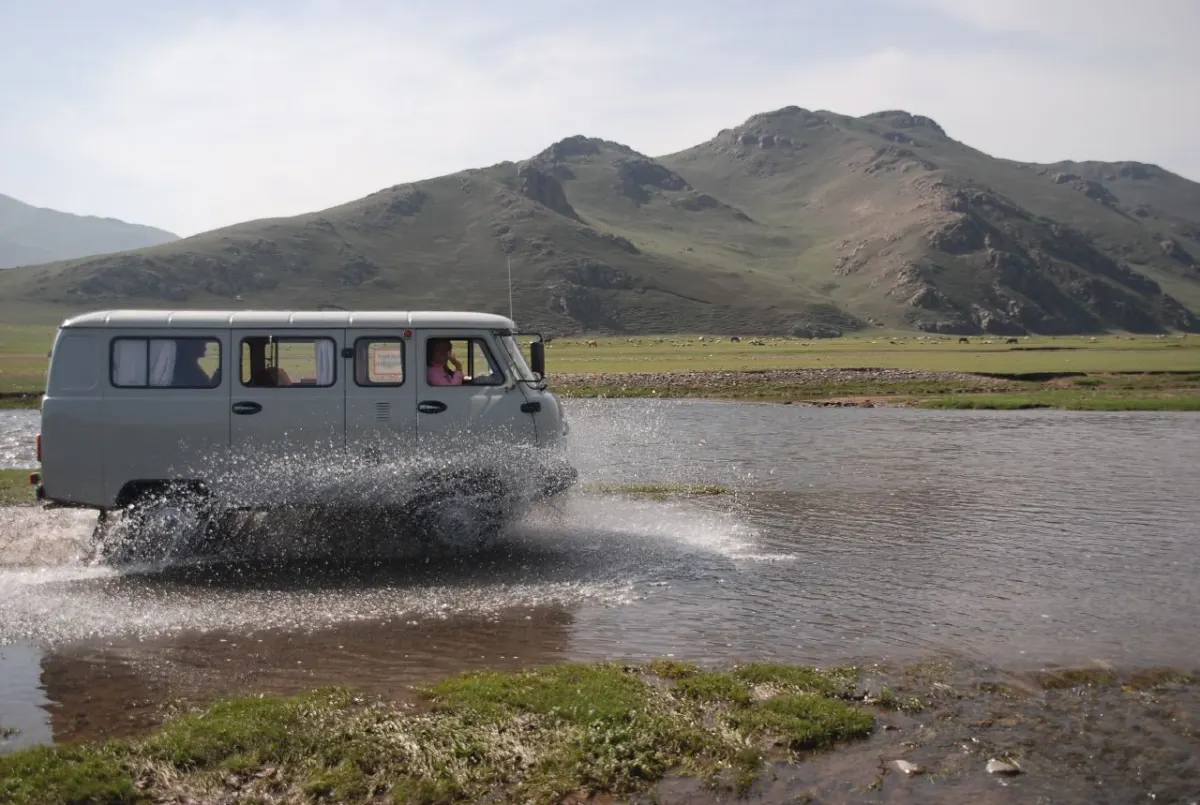
- The classic Mongolian tour vehicle is the UAZ-452, a boxy Russian van (the "furgon" or "bukhanka", the loaf of bread). They're slow and noisy, but drivers can fix them almost anywhere.
- Many tours now use Japanese 4x4s such as Toyota Land Cruisers, which are more comfortable and faster, or minivans on the paved roads.
- Long drives on dirt tracks are tiring and bumpy: take motion-sickness tablets if you need them, and stop often.
Distances and roads
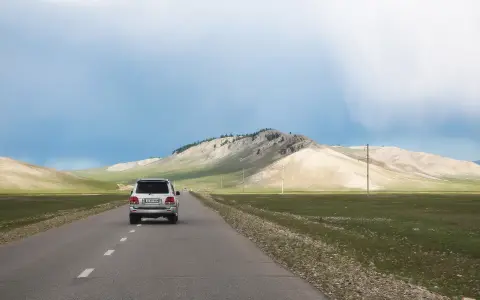
- Only a small part of Mongolia's roads is paved, and outside the main routes most driving is on dirt and gravel tracks across the steppe. Paved roads link Ulaanbaatar with most provincial capitals, but they can be potholed.
- Rough distances by road from Ulaanbaatar: Terelj National Park about 70 km, Hustai National Park about 100 km, Kharkhorin about 360 km, Dalanzadgad in the Gobi about 550 km, and Mörön, for Khövsgöl Lake, about 670 km. Drives from the paved roads to the sights are often slow, on rough tracks.
- Rivers can flood tracks after summer rain, and winter snow can close rural roads.
- Mongolia has had fuel shortages in 2026, with rationing at petrol stations. Ask your tour company how it plans for this, and allow extra time.
Domestic flights
- Domestic airlines such as Aero Mongolia and Hunnu Air fly from Ulaanbaatar to provincial airports, including Dalanzadgad for the Gobi, Mörön for Khövsgöl Lake and Ölgii and Khovd in the far west. Flying saves one or two long days each way.
- Flights are small and often full in summer, so book ahead. Schedules change, flights can be cancelled or delayed by weather, and the baggage allowance can be smaller than on international flights, so check it.
Trains
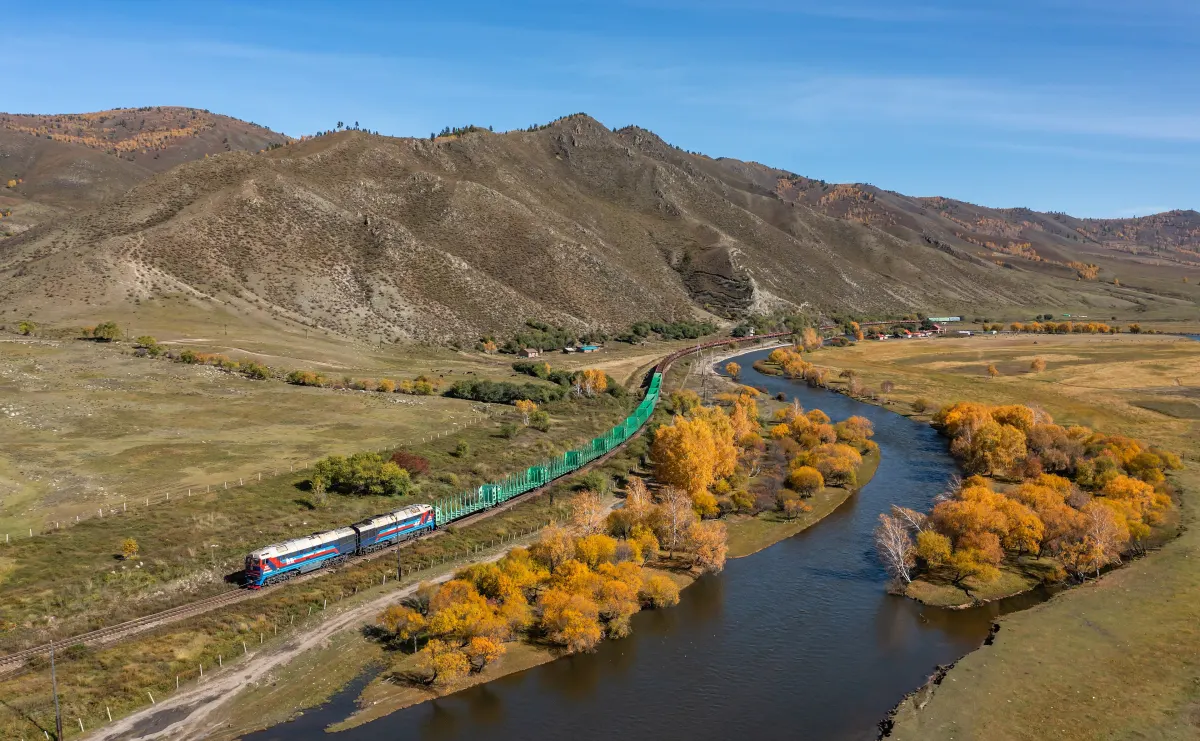
- Mongolia's main railway, part of the Trans-Mongolian line, runs from the Russian border at Sükhbaatar through Darkhan and Ulaanbaatar to Sainshand and the Chinese border at Zamiin-Üüd. There's a branch to Erdenet.
- The international train between Beijing and Ulaanbaatar runs about once a week, taking about 30 hours. There are also overnight domestic trains from Ulaanbaatar towards the Russian border and Zamiin-Üüd. Book through the railway (UBTZ) or a travel agent.
- At the time of writing, the through trains between Moscow and Beijing via Mongolia aren't running. Check before planning a trip on the Trans-Siberian route.
- Keep your bags close on international trains: there have been thefts.
In Ulaanbaatar
- Ulaanbaatar's traffic is notoriously jammed, especially at rush hours, so walking is often quicker in the centre.
- Use licensed taxis, ones ordered by your hotel or restaurant, or the UBCab app, which lets you track the car. Avoid unmarked cars that stop for you, which are common, and don't share a car with strangers.
- City buses are cheap, but crowded and a favourite of pickpockets.
Driving yourself
- You need your licence and an International Driving Permit (the 1968 one for UK licences).
- Driving yourself in the countryside is only for experienced off-road drivers: tracks split and fade, there's no signal for navigation apps in many places, and help can be very far away. Carry spare fuel, water, food, spare tyres and a satellite phone, tell someone your route, and don't drive at night.
- Road accidents are common in Mongolia, and drink-driving is a serious problem, so be careful at night and on holidays.
For itineraries, see 7 days in central Mongolia, Two weeks: the Gobi and central Mongolia and Khövsgöl Lake.

Comments
No comments yet.