
Culture and etiquette in Hong Kong: language, manners, temples, festivals and the strict little laws
Hong Kong is a fast, crowded, efficient city, polite in its own brisk way. Most people are too busy to be offended by a visitor's mistakes, but a few habits will make your trip easier, and a few rules carry hefty fines.
Language
- The everyday language is Cantonese, written in traditional Chinese characters. English is the other official language, and is on all signs, menus in many places, the MTR and in hotels. Many young people speak it well, but many older people, taxi drivers and small shopkeepers don't. Mandarin is widely understood too.
- A few words go a long way: m goi (thank you for a service, excuse me, please), do je (thank you for a gift), jo san (good morning) and mai dan (the bill, please).
Everyday manners
- Queue: Hong Kong people queue for everything, at bus stops, taxi ranks and on the MTR platform, where marks show where the doors will open. Let people off first.
- The MTR: stand on the right on escalators, don't block the doors, take your backpack off in crowded trains, and keep your voice down. Priority seats are for those who need them.
- Personal space is small: crowds push in the busy streets and the MTR at rush hour, and no one means to be rude.
- Giving and receiving: hand over business cards, gifts and money with both hands.
- Dress: Hong Kong is smart and casual. There's no dress code except in temples and some restaurants and bars, but shorts and sandals stand out in Central. Air-conditioning is very cold: carry a layer.
- Sundays in Central: on Sundays, many of Hong Kong's hundreds of thousands of domestic helpers, mostly from the Philippines and Indonesia, gather with friends on the pavements, footbridges and parks of Central and Causeway Bay, on their one day off. It's their space for the day: don't treat it as a sight to photograph.
Luck and numbers
- 4 sounds like "death" in Cantonese, so many buildings have no 4th, 14th or 40s floors. 8 sounds like "prosper" and is lucky.
- Don't give clocks (they suggest death), or umbrellas or knives as gifts, or stick chopsticks upright in a bowl of rice (it looks like incense at a funeral).
- Feng shui shapes many buildings: some apartment blocks have a hole in the middle, said to let the dragons of the hills pass through to the water.
Visiting temples
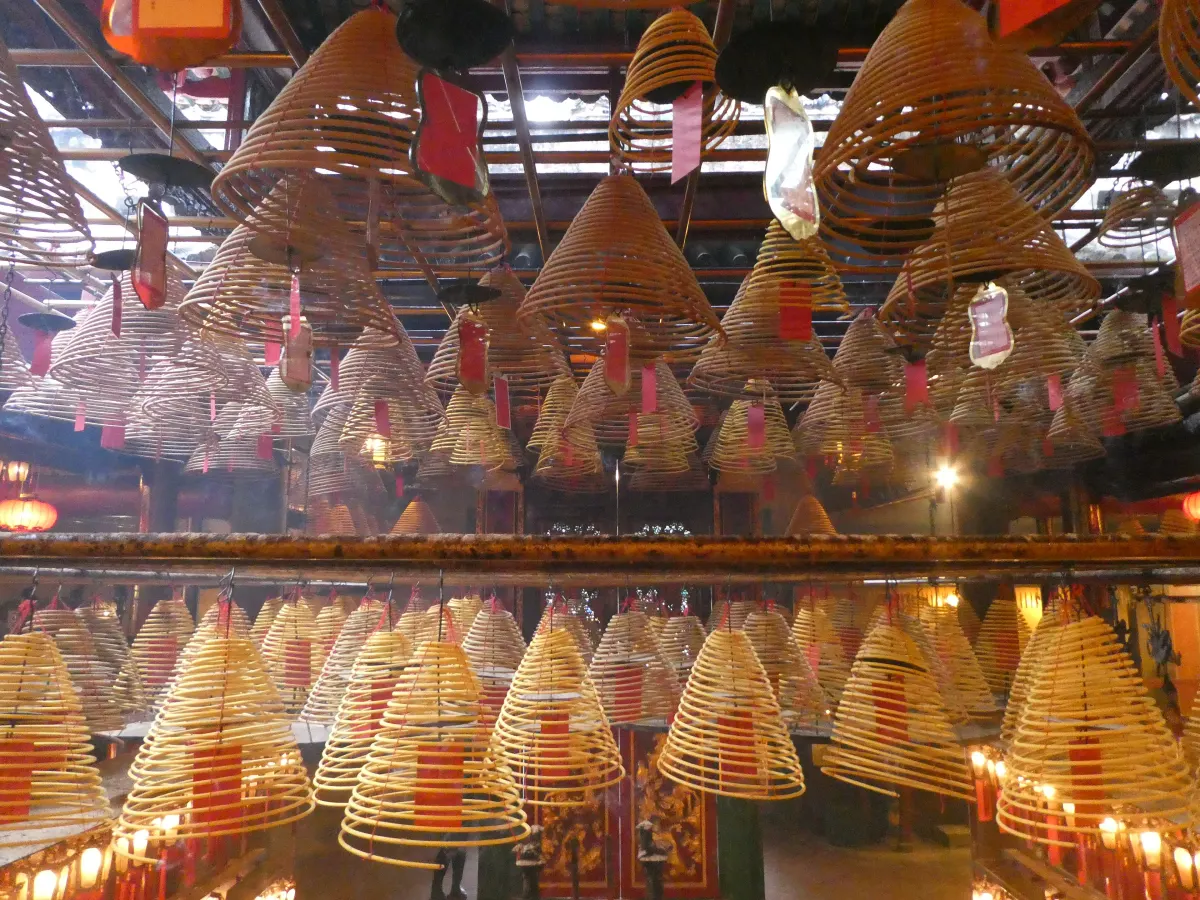
- Hong Kong's temples are busy, working places: Man Mo Temple in Sheung Wan, Wong Tai Sin in Kowloon, the Tin Hau temples to the goddess of the sea, and the Buddhist monasteries of Lantau, like Po Lin by the Tian Tan Buddha.
- Dress modestly, speak quietly, don't touch the statues or offerings, and don't step on the raised threshold at the door. Ask before photographing people praying, and don't use flash. In Buddhist temples, it's polite not to point your feet at the altar.
- Lighting a stick of incense or making a small donation is welcome.
Festivals
- Chinese New Year (January or February): fireworks over the harbour, flower markets and a parade. Many small shops and restaurants close for a few days, and prices go up.
- Cheung Chau Bun Festival (April or May), on the island of Cheung Chau, with a parade and a race up towers of buns.
- Dragon boat races (the Tuen Ng festival, May or June), in harbours all over Hong Kong.
- Mid-Autumn Festival (September or October): lanterns in the parks, mooncakes, and the fire dragon of Tai Hang.
- The dates follow the lunar calendar, and change from year to year. Hotels fill up, and the border with Shenzhen is very busy at Chinese holidays.
The little laws, and their fines
- Littering, spitting, flyposting and dog fouling: fixed penalty of HK$3,000, often enforced.
- Eating or drinking on the MTR or in the paid areas of stations: up to HK$2,000.
- Smoking is banned indoors in restaurants, bars, shops and offices, on public transport, at bus stops and in many parks and beaches, with on-the-spot fixed penalties.
- Vapes and heated tobacco: banned from being brought in, and from being carried in public. See Arriving in Hong Kong.
- Jaywalking: crossing against the red man can be fined.
- Feeding wild monkeys and wild pigs is against the law.
- See Safety and the law for the national security laws, drugs and the bigger things.



Comments
No comments yet.