
Getting around Hong Kong: Octopus cards, the MTR, trams, the Star Ferry, buses, minibuses and taxis

Hong Kong has some of the best public transport in the world: cheap, frequent, clean and easy to use, with signs in English everywhere. You'll rarely need a taxi, and riding the trams and ferries is one of the pleasures of a visit.
The Octopus card
The Octopus is Hong Kong's travel card. You tap it on the MTR, buses, minibuses, trams, ferries and the Peak Tram, and you can also use it to pay in convenience stores, supermarkets, fast-food chains, many cafés and vending machines.
- Buy one at the airport or any MTR customer service centre. The standard Octopus has a HK$50 refundable deposit and can hold up to HK$3,000. Return it at an MTR station before you leave to get your deposit and the balance back (a small fee may be taken if you return it soon after buying it). There's also a souvenir Tourist Octopus, which you keep, with no refund.
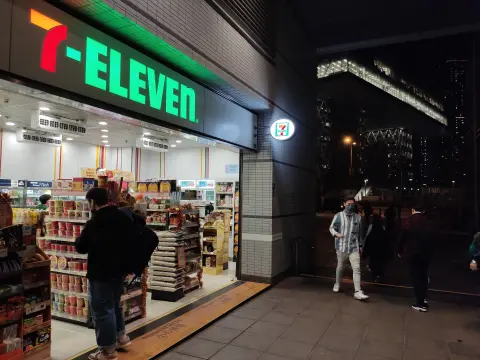
- Top up with cash at MTR stations' machines and counters and at convenience stores like 7-Eleven and Circle K: you need cash for that on a plastic card.
- On your iPhone: visitors can add an Octopus to an iPhone or Apple Watch with the Octopus App for Tourists, and top it up with an overseas Visa, Mastercard or UnionPay card in the app. Check what your bank charges for the currency conversion.
- Your Octopus can go a little negative on a journey (you settle up when you next top up), so you'll never be stuck at a gate.
Paying with a bank card
You can also tap a contactless Visa, Mastercard or UnionPay card (or your phone) at the gates on every MTR line, including the Airport Express since May 2026. You pay the same adult fare as with an Octopus. Most buses, trams and ferries take contactless cards or QR codes too, but an Octopus still works everywhere, including minibuses and shops, so most visitors get one anyway.
The MTR
- The MTR runs underground and overground trains across Hong Kong Island, Kowloon, the New Territories and out to Lantau and the airport, from about 6 am to about 1 am, with trains every few minutes.
- Fares depend on distance, and are low. Tap in and tap out with the same card.
- Signs, maps and announcements are in English, Cantonese and Mandarin. Stations have many exits, lettered and numbered: the maps in the station show which exit is nearest where you're going.
- No eating or drinking in the paid areas of stations or on trains, not even water: there's a fine of up to HK$2,000. Stand to the right on the escalators, and let people off the train first.
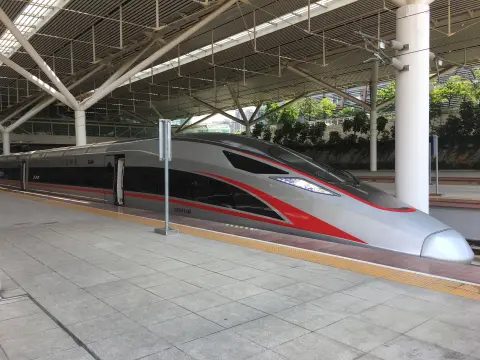
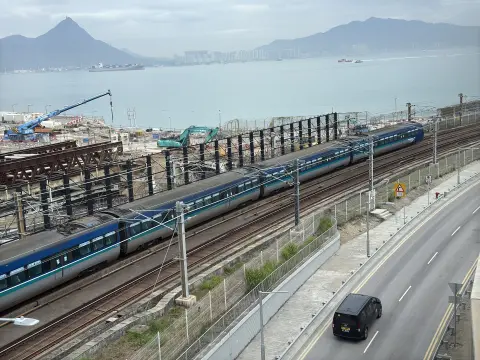
- The East Rail line goes north to the border with Shenzhen, and Tung Chung line trains to Lantau. See Crossing to Shenzhen and Macau.
- The MTR Mobile app has a route planner and fares.
The trams
Hong Kong's narrow double-decker trams, nicknamed "ding dings" after their bells, have run along the north shore of Hong Kong Island since 1904, from Kennedy Town through Central and Causeway Bay to Shau Kei Wan. They're slow, but they're cheap and you see everything from the top deck.
- Get on at the back, and pay when you get off at the front. It's a flat fare, HK$3.3 for adults (since May 2025), however far you go. Pay with Octopus, a contactless card, a QR code, or exact change in coins (no change given).
- Go upstairs and get a seat at the front for the best view, out of the rush hours.
The Star Ferry and the islands
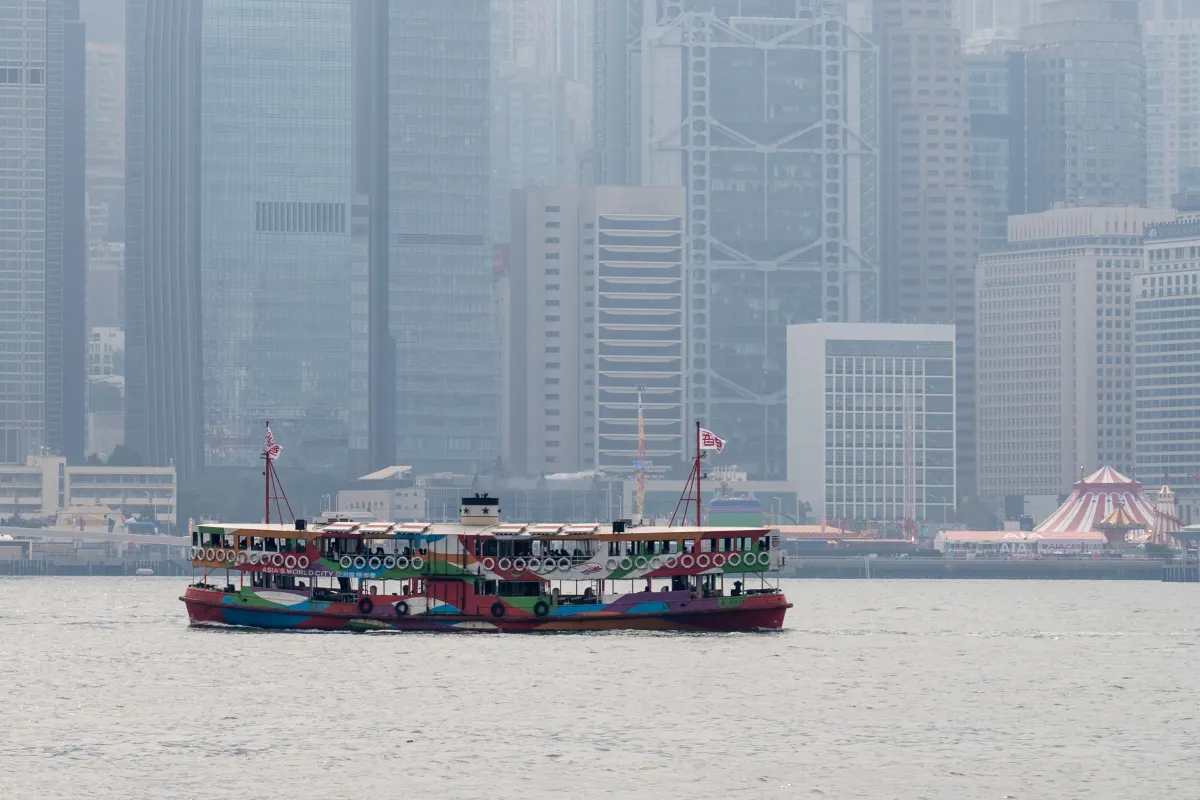
- The Star Ferry has crossed Victoria Harbour since 1888, between Central and Tsim Sha Tsui, and between Wan Chai and Tsim Sha Tsui. It takes about 10 minutes and is one of the world's great cheap rides: HK$5 on the upper deck on weekdays and HK$6.5 at weekends. Tap your Octopus at the gates, or pay at the machines, which take cards.
- Ferries to the outlying islands (Lamma, Cheung Chau, Lantau's Mui Wo and Peng Chau) leave from the Central Ferry Piers, next to the Star Ferry. There are ordinary and faster ferries, and fares go up at weekends.
Buses and minibuses
- Double-decker buses go everywhere, including places the MTR doesn't, like Stanley, Repulse Bay, Shek O and the start of the Dragon's Back. Pay as you get on, with Octopus, a contactless card or QR code, or exact cash (no change). Press the bell before your stop. The Citybus and KMB apps show arrival times.
- Minibuses (16 or 19 seats) are faster and reach the hills and villages. Green minibuses run fixed routes and take Octopus. Red minibuses go roughly where their sign says, and many want cash. On both, you have to call out to the driver where you want to get off ("yau lok", meaning "getting off", works), and you must wear a seat belt.
Taxis
- Red taxis (urban) can go almost anywhere. Green taxis only serve the New Territories, and blue taxis only Lantau and the airport. All of them can take you to the airport.
- Taxis are metered and cheap by world standards. Red taxis start at HK$29 for the first 2 km (2026). On top of the meter you pay HK$6 per bag in the boot and tunnel tolls, and for the cross-harbour tunnels, the driver's return toll too, unless you take the taxi from a cross-harbour taxi rank.
- Since April 2026, all taxi drivers have to offer at least two ways of paying electronically, so you can usually pay by card, Octopus or a QR code, but carry some cash in case the machine "isn't working".
- Have your destination written in Chinese, or show it on a map: many drivers speak little English. Taxi drivers can be in a hurry and a little gruff. Wear your seat belt: it's the law.
- Taxis can't stop on yellow lines: find a taxi rank or a place with no yellow line.
The Peak Tram and the cable car
- The Peak Tram, a funicular, climbs from Central to Victoria Peak. The queues are long in the afternoon and at weekends: go early, or take bus 15 or a taxi up instead.
- The Ngong Ping 360 cable car runs from Tung Chung up to the Tian Tan Buddha on Lantau. It closes for maintenance for some weeks most years, and in high winds. See 4 days in Hong Kong.
Walking
Hong Kong is very walkable, with covered footbridges linking stations, malls and offices, and the long outdoor Central–Mid-Levels escalator up the hill from Central (downhill only in the early morning). Crossing the road against the red man is an offence, and drivers in Hong Kong drive on the left.
Comments
No comments yet.