Historic sites
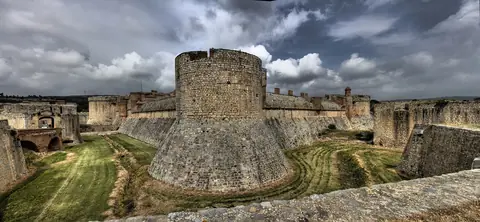
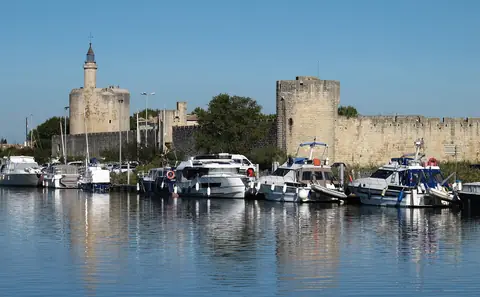
Aigues-Mortes ramparts
Aigues-Mortes, Gard
A walled town in the marshes of the Camargue, built by Saint Louis in the 13th century as his port for the Crusades, with ramparts over 1.6 km long s…
A walled town in the marshes of the Camargue, built by Saint Louis in the 13th century as his port for the Crusades, with ramparts over 1.6 km long s…
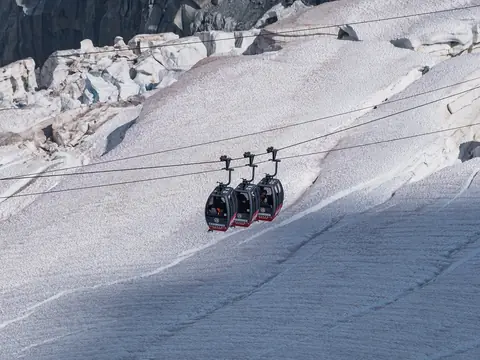
A cable car from Chamonix climbs to the Aiguille du Midi, a granite peak at 3,842 m, in about 20 minutes, with one of the most spectacular views in t…
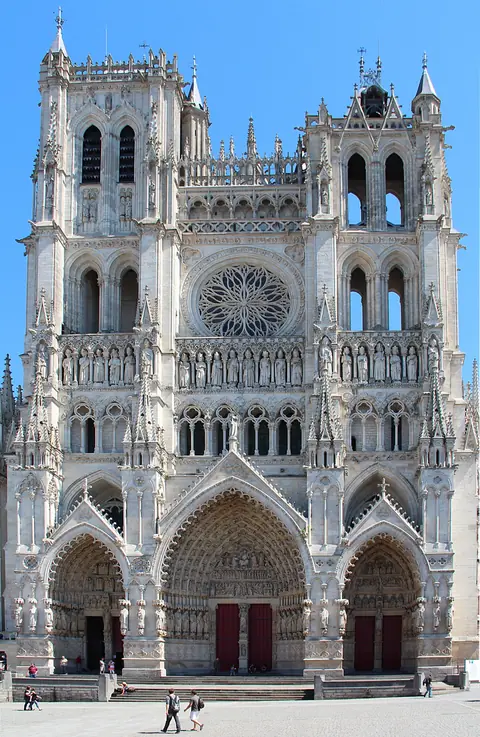
The largest Gothic cathedral in France, built in the 13th century, with a nave so vast that two Notre-Dames of Paris would fit inside.
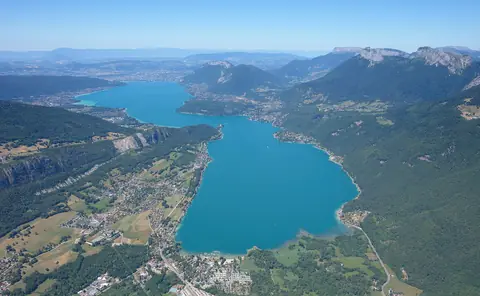
Annecy's old town has canals, flower-lined bridges and pastel houses, earning it the name 'Venice of the Alps'.
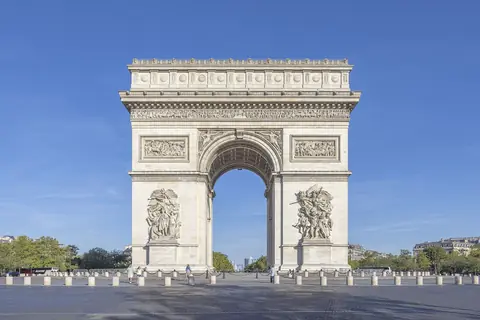
Napoleon's triumphal arch stands at the top of the Champs-Élysées, in the middle of a huge roundabout of 12 avenues.
One of the best-preserved Roman amphitheatres in the world, built around 70 AD and seating about 24,000 people.
A huge tidal bay of sandflats and salt marshes, one of the most beautiful in the world, home to France's largest colony of seals.
The birthplace of Gothic architecture, rebuilt by Abbot Suger in the 12th century, and the burial place of almost all the kings and queens of France …
A citadel town perched on white limestone cliffs at the southern tip of Corsica, its houses overhanging the sea, with views across the strait to Sard…
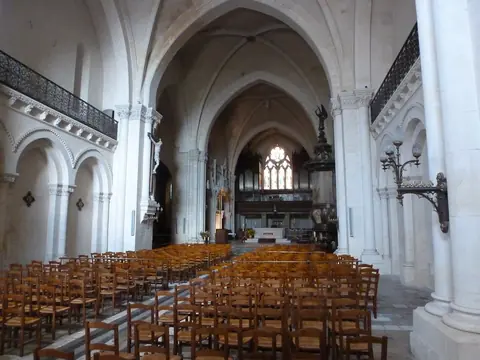
A World Heritage Gothic cathedral built around 1200, unusual for having no transept, so its five-aisled nave rises in one great sweep of light.
The most beautiful of the calanques, the narrow limestone inlets of the Calanques National Park between Marseille and Cassis.
Two great headlands on the Opal Coast facing England across the narrowest part of the Channel: the white chalk cliffs of Blanc-Nez and the grey rocks…
A spectacular headland on Brittany's Emerald Coast, with pink and grey sandstone cliffs over 70 metres high, purple heather and gorse, and colonies o…
A fortified medieval city on a hill in Languedoc, with a double ring of walls and 52 towers, restored in the 19th century by the architect Viollet-le…
One of the most perfect Gothic cathedrals, built mostly between 1194 and 1220 and keeping almost all its original stained glass, famous for its deep …
A massive fortress with 17 striped towers of dark schist and white stone, built by Saint Louis in the 13th century.
One of the most graceful Renaissance châteaux of the Loire Valley, built in the 1520s on an island in the River Indre, so that it seems to float on t…
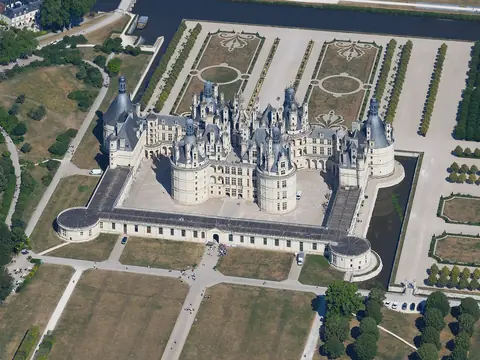
The largest and most extravagant of the Loire châteaux, built from 1519 for King François I as a hunting lodge.
One of the most beautiful châteaux in France, built across the River Cher on a series of arches, with its long gallery reflected in the water.
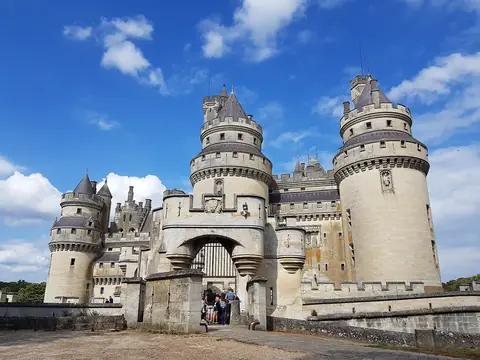
A fairytale castle with towers, battlements and a drawbridge, rebuilt from medieval ruins in the 1860s by the architect Viollet-le-Duc for Napoleon I…
A spectacular canyon in the limestone plateaus of the Causses, where the River Vis once looped around a meander, leaving a hill in the middle of a va…
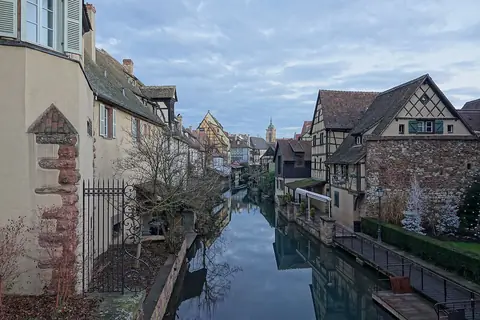
Colmar is the most picturesque town in Alsace, with colourful half-timbered houses, flower boxes and canals.
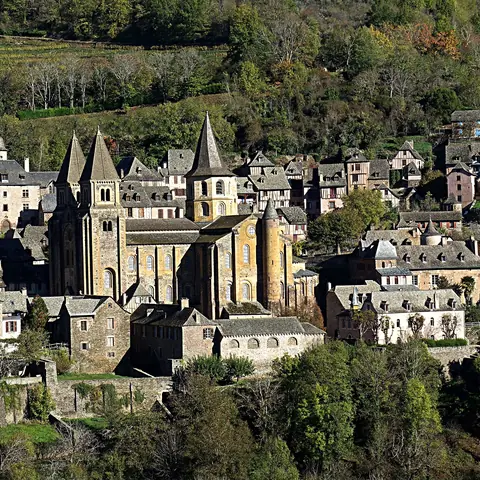
A medieval village of stone houses with slate roofs clinging to a steep hillside, around the Romanesque abbey church of Sainte-Foy, a great stop on t…
On 6 June 1944, Allied forces landed on five beaches along this coast in the largest seaborne invasion in history.
Europe's tallest sand dune, about 100 m high and nearly 3 km long, between the Atlantic Ocean and a pine forest at the entrance to the Arcachon Bay.
Built for the 1889 World's Fair, the 330 m tower has three levels open to visitors.
Dramatic white chalk cliffs on the Normandy coast, with natural arches and a needle of rock standing in the sea, painted by Monet and Courbet.
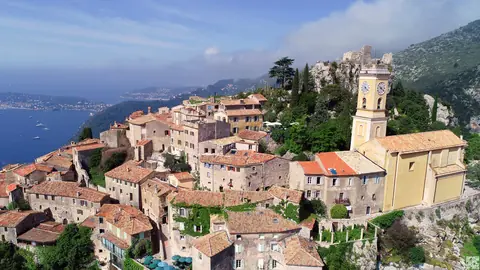
A medieval village perched on a rocky peak 427 m above the Mediterranean, between Nice and Monaco.
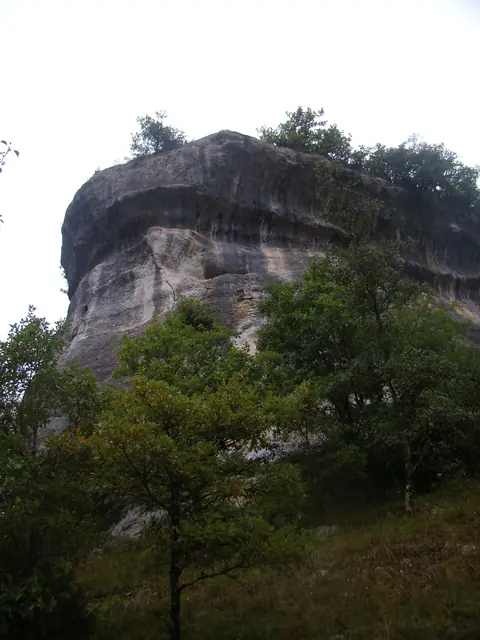
The Vézère valley around Les Eyzies holds an exceptional concentration of prehistoric caves and shelters, a World Heritage Site.
A deep canyon carved by the River Tarn between the limestone plateaus of the Causses, with villages of stone such as Sainte-Énimie and La Malène alon…
Europe's largest canyon, up to 700 m deep, carved by the turquoise Verdon river through the limestone of Provence.
The cave of Lascaux, discovered in 1940, holds some of the finest prehistoric paintings in the world: bulls, horses and deer painted about 17,000 yea…
The world's most visited museum, in the former royal palace on the Seine, entered through I.
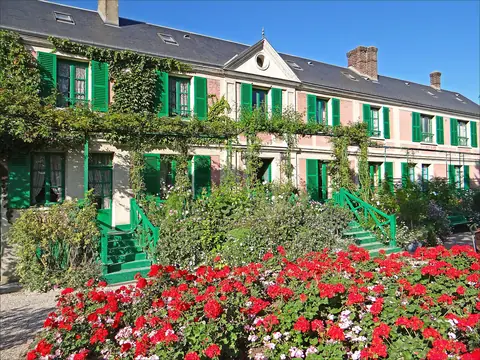
The house where Claude Monet lived for 43 years, and the gardens he created and painted again and again: a flower garden bursting with colour, and ac…
The largest underground church in Europe, carved out of the solid limestone hill beneath Saint-Émilion in the 11th and 12th centuries.
A rocky tidal island in the bay between Normandy and Brittany, crowned by a Benedictine abbey begun in the 8th century and rebuilt over the following…
The great white limestone ridge east of Aix-en-Provence, painted more than 80 times by Paul Cézanne.
A former railway station on the Left Bank of the Seine, now home to the world's greatest collection of Impressionist and Post-Impressionist art: Mone…
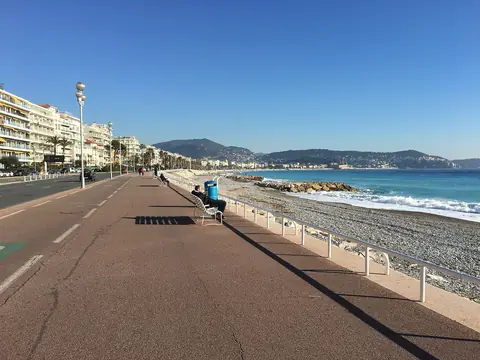
Nice's famous seafront promenade curves for 7 km along the Baie des Anges, lined with palm trees and grand hotels such as the Negresco.
The great Gothic cathedral on the Île de la Cité, begun in 1163 and reopened in December 2024 after the restoration that followed the fire of 2019.
The vast palace of Louis XIV, the 'Sun King', and the seat of the French court until the Revolution.
The largest Gothic palace in the world, built in the 14th century when the popes lived in Avignon instead of Rome.
A vast neoclassical temple on the Montagne Sainte-Geneviève in the Latin Quarter, built as a church and turned into a resting place for France's grea…
A dramatic rocky point at the western tip of Brittany, jutting into the Atlantic, with the lighthouses of La Vieille and Ar Men in the swirling curre…
A huge natural stone arch, 54 metres high, spanning the Ardèche river at the entrance to its gorges, where limestone cliffs rise 300 metres above the…
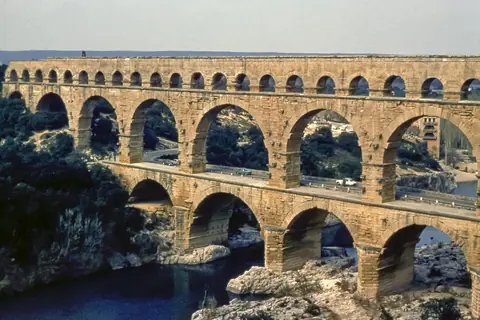
A Roman aqueduct bridge built in the 1st century AD to carry water across the Gardon river to Nîmes.
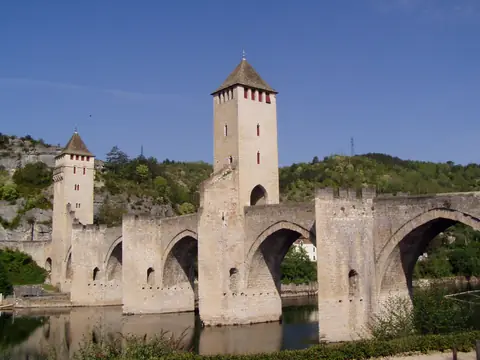
A fortified 14th-century bridge with three tall towers, crossing the Lot River at Cahors, and one of the finest medieval bridges in France.
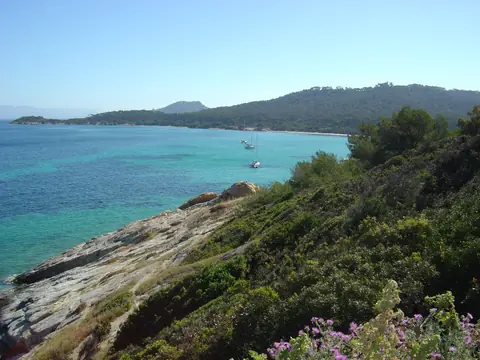
A car-free island off Hyères, part of the Port-Cros National Park, with pine woods, vineyards, cliffs and some of the most beautiful beaches in Franc…
The Gothic cathedral where French kings were crowned for centuries, with more than 2,300 statues on its façade, including the famous 'Smiling Angel',…
A pilgrimage village that clings to a 150 m cliff above the Alzou canyon, with chapels and sanctuaries stacked one above the other.
A spectacular road along the top of the highest sea cliffs in mainland France, from Cassis to La Ciotat.
The white-domed basilica on the hill of Montmartre, the highest point in Paris, finished in 1914.
A medieval village clinging to a cliff 100 m above the Lot River, voted France's favourite village.
A medieval village tucked into the wild gorges of the Hérault, around the Romanesque abbey of Gellone, founded in 804 and a stop on the Way of St Jam…
A royal chapel built in the 1240s by King Louis IX to house relics of the Crown of Thorns, hidden inside the Palais de Justice on the Île de la Cité.
Strasbourg's pink sandstone cathedral, with a single spire 142 m high, was the tallest building in the world for over 200 years.
A Romanesque basilica on a hilltop above the Morvan countryside, once one of the great pilgrimage churches of Christendom and a starting point on the…
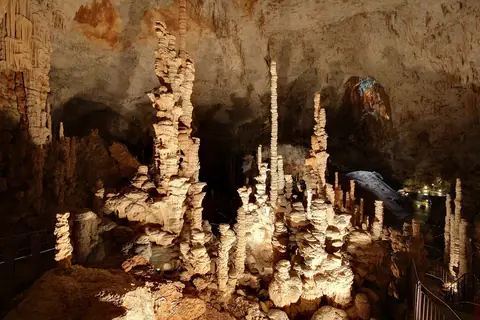
One of the largest and most beautiful show caves in France, discovered in 1935, with vast chambers full of giant stalagmites up to 20 metres tall.
A rounded summit of the southern Vosges mountains, 1,247 metres high, where Alsace, Lorraine and Franche-Comté meet.
A village and its old abbey at the bottom of a deep limestone valley, a 'reculée' typical of the Jura, closed off by cliffs over 200 metres high.
A 70 m long embroidered cloth from the 11th century that tells the story of the Norman conquest of England in 1066, ending with the Battle of Hasting…
A star-shaped fortified town in the marshes of Charente-Maritime, once a busy salt port, whose sea has since retreated, leaving it stranded in the fi…
One of the oldest monuments in the world: a long stepped mound of stone built around 4,500 BC, older than the pyramids of Egypt, on a headland above …
The wild northwest tip of the Cotentin peninsula in Normandy, with high cliffs, heathland and tiny harbours, often compared with Ireland or Cornwall.
More than 3,000 prehistoric standing stones, set up in long rows over 4 km of countryside by people living here between about 4500 and 3300 BC.
A series of 31 waterfalls on the Hérisson river in the Jura mountains, among them the Éventail, which fans out over 65 metres of rock, and the Grand …
A fortress on a tiny island in the bay of Marseille, built by François I and later a prison, made famous by Alexandre Dumas's The Count of Monte Cris…
A huge castle of red stone on a hill above the Dordogne valley, one of the finest examples of medieval military architecture in France, built from th…
The ruins of one of the mightiest castles of the Middle Ages, built in the 13th century by the powerful lords of Coucy, on a spur above the Ailette v…
A royal and then presidential château southwest of Paris, used by French presidents to host summits until 2009.
The Renaissance château of François I, where in 1539 he signed the ordinance that made French the language of law and government.
A medieval royal fortress on the eastern edge of Paris, with the tallest keep in Europe, over 50 metres high, built in the 14th century.
Home to seven kings and ten queens of France, this royal château in the centre of Blois shows four centuries of French architecture around one courty…
The castle where King François I was born in 1494, beside the Charente River in the centre of Cognac.
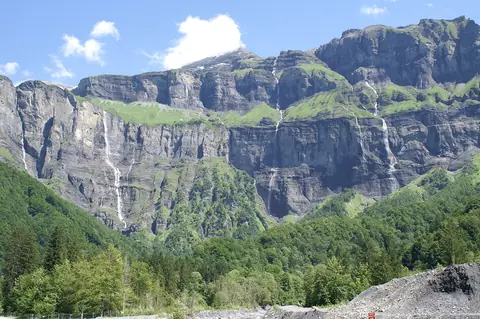
A horseshoe of limestone cliffs up to 700 metres high in the Haute-Savoie Alps, with dozens of waterfalls pouring down in spring.
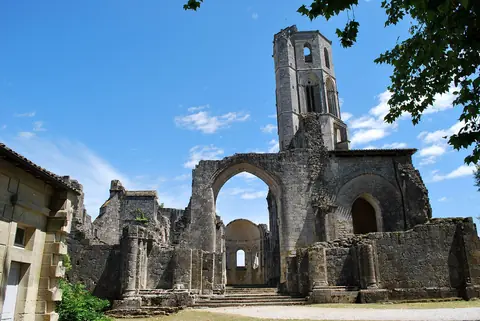
The remains of the greatest abbey of the Middle Ages, founded in 910, whose church was the largest in Christendom until St Peter's in Rome was built.
The oldest surviving part of the medieval royal palace on the Île de la Cité, with a huge Gothic hall of the soldiers, among the largest in Europe.
The 374-metre-long royal rope works of the naval arsenal founded by Louis XIV at Rochefort, on the Charente estuary.
The wild western shore of the Quiberon peninsula, where Atlantic waves crash against granite cliffs, arches and coves.
A cross-shaped peninsula in Finistère with some of Brittany's most spectacular coast: the cliffs of Cap de la Chèvre, the Pointe de Penhir with its r…
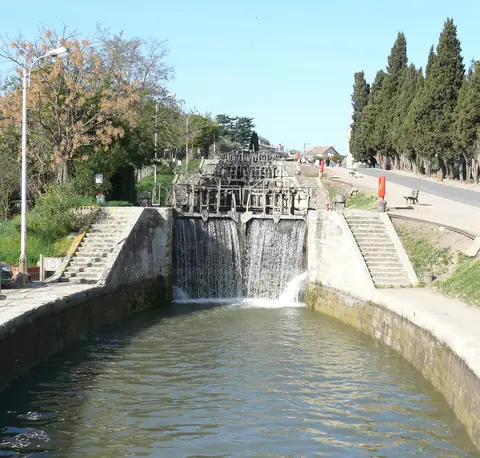
A staircase of eight locks on the Canal du Midi at Béziers, lifting boats 21 metres up the hillside, one of the great feats of Pierre-Paul Riquet's 1…
The mysterious source of the River Sorgue, a deep pool at the foot of a 230-metre cliff, one of the largest springs in the world.
A massive Spanish fortress built in the 1490s, when Roussillon was part of Spain, to guard the road from France.
The ruins of a Greek and Roman town at the foot of the Alpilles hills, with temples, baths, a forum and houses.
Wild limestone gorges of the Gardon river upstream of the Pont du Gard, with cliffs, caves and the hermitage of Notre-Dame de Laval.
Cognac, a small town on the Charente River, is the home of the brandy of the same name, and the great cognac houses offer tours in several languages.
A charity hospital founded in 1443, with a dazzling roof of coloured glazed tiles in geometric patterns over its courtyard.
An 18th-century palace on the Place de la Concorde, built to store the royal furniture and later the headquarters of the French Navy for over 200 yea…
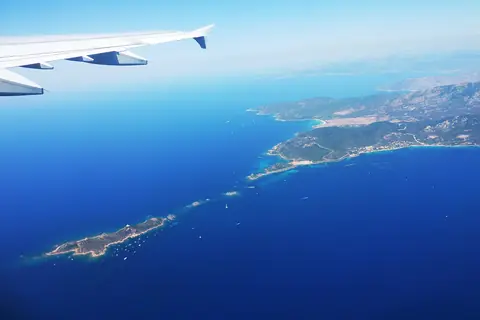
A chain of four islands of red granite at the mouth of the Gulf of Ajaccio, which glow crimson at sunset.
Beautiful 18th-century gardens built around the spring that gave Nîmes its name, with statues, stone balustrades, canals and the ruins of the Roman T…
A lake in a landscape of striking red earth, called ruffe, and black volcanic rocks, west of Montpellier.
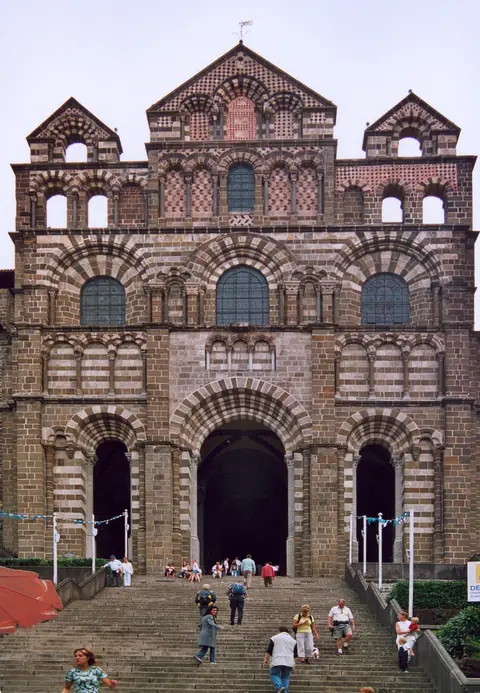
A Romanesque cathedral at the top of the old town of Le Puy-en-Velay, with Moorish-style striped arches and a famous Black Virgin.
One of the three Cistercian sister abbeys of Provence, built in the 12th century in a wooded valley, a masterpiece of pure, unadorned Romanesque arch…
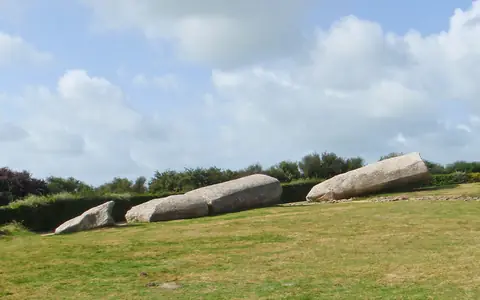
A remarkable group of Neolithic monuments near the Gulf of Morbihan: the Great Broken Menhir of Er Grah, once over 20 metres tall and the largest sta…
The 'Green Venice': a maze of canals shaded by poplars and ash trees in the marshes west of Niort, best explored by flat-bottomed boat or canoe.
One of the biggest and best open-air food markets in Paris, stretching along the central strip of Boulevard Richard-Lenoir from the Place de la Basti…
A range of red volcanic rock plunging into the blue Mediterranean between Saint-Raphaël and Cannes, crossed by the spectacular coast road, the Cornic…
A medieval village perched on a rocky spur between the gorges of the Cesse and Brian rivers, besieged by Simon de Montfort in 1210 during the crusade…
A fortified town built by Vauban in 1693 on a rocky plateau where the Durance and Guil valleys meet, part of the World Heritage listing of his fortif…
A great Benedictine abbey on a rocky hill outside Arles, with a Romanesque church, a cloister with carved capitals and a fortified tower.
The ruined castle on a steep rocky peak in the foothills of the Pyrenees where the Cathars made their last stand.
The house and studio of the Symbolist painter Gustave Moreau, which he designed as his own museum before he died in 1898.
The former palace of the archbishops of Reims, beside the cathedral, where French kings stayed and feasted on the day of their coronation.
The Gothic town palace of Jacques Cœur, a merchant who became the richest man in France and treasurer to King Charles VII before falling from favour.
The palace built for Cardinal Richelieu, with a peaceful garden of lime trees and fountains framed by arcades of old shops and cafés, just north of t…
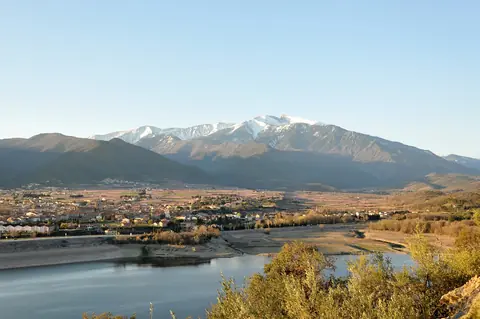
The sacred mountain of the Catalans, rising to 2,784 metres above the plain of Roussillon, with a cross on the summit decorated with Catalan flags.
Bordeaux's grand 18th-century Place de la Bourse faces the Garonne river, and in front of it the Miroir d'eau, the world's largest reflecting pool, a…
The little square at the top of Montmartre where artists set up their easels and sketch portraits, as they have since Picasso and Renoir's day.
The bridge of the famous children's song 'Sur le pont d'Avignon'.
The highest of the Chaîne des Puys, a line of about 80 extinct volcanoes in the Auvergne, which form a UNESCO World Heritage Site with the Limagne fa…
A pyramid-shaped summit at the heart of the Cantal volcano, the largest ancient volcano in Europe, with green valleys radiating out like the spokes o…
A limestone crag rising like the prow of a ship above the vineyards of Pouilly-Fuissé in southern Burgundy.
A hilltop village in the Luberon, painted in every shade of red, orange and yellow from the ochre quarried here for centuries.
A Flamboyant Gothic church and monastery built in the early 1500s by Margaret of Austria in memory of her husband, the Duke of Savoy.
A medieval hilltop village of honey-coloured stone and steep cobbled lanes, surrounded by some of the world's most famous vineyards, a UNESCO World H…
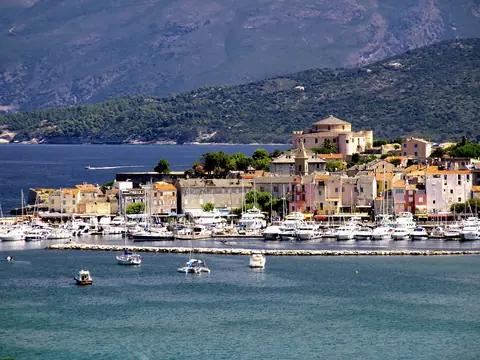
A pretty harbour town on a wide gulf in northern Corsica, with a Genoese citadel, surrounded by the hills of the Conca d'Oru and the vineyards of Pat…
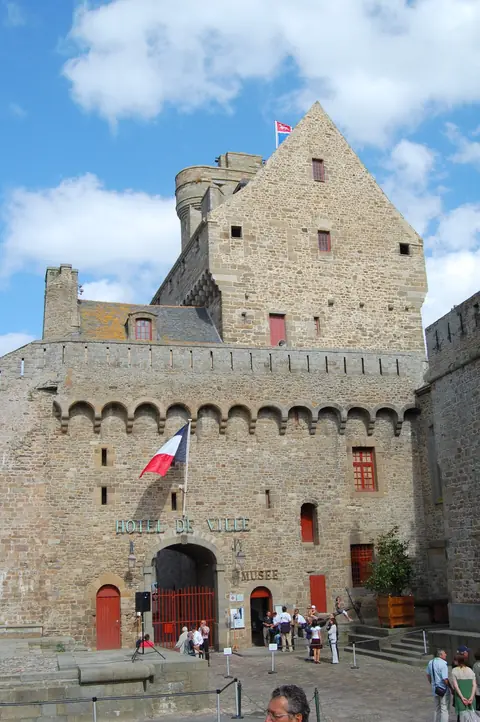
Saint-Malo, the walled corsair city on the Brittany coast, was largely rebuilt after the Second World War, and its granite ramparts make a complete w…
Three medieval towers guarding the old harbour of La Rochelle: the Saint-Nicolas and Chain towers on either side of the entrance, between which a gre…
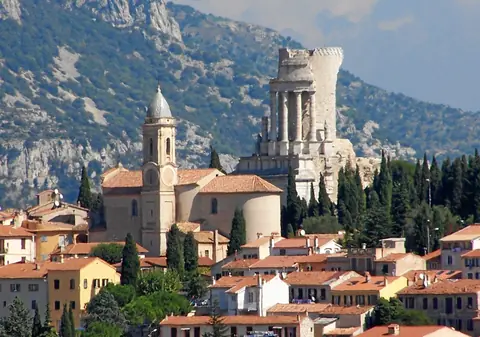
A huge Roman monument raised in 6 BC on a pass above Monaco to celebrate Emperor Augustus's conquest of the Alpine tribes, whose 45 names are carved …
The Valensole plateau in Provence is covered with lavender fields that turn the land purple from about late June to mid-July, with rows stretching to…
A beautiful unspoilt Alpine valley near Briançon, with larch forests, flowery meadows and old villages of wooden chalets such as Névache.
Lyon's old town, a UNESCO World Heritage Site, stretches along the Saône river below the hill of Fourvière, with Renaissance houses, the Gothic Saint…
A modernist mansion built in 1932 by Robert Mallet-Stevens for a textile industrialist, with sleek yellow brick walls, a long mirror pool and every d…
Le Corbusier's famous white villa, built in 1931 as a weekend house and one of the most influential buildings of the 20th century.
The romantic ruins of a Benedictine abbey founded in 1079 in the vineyards of the Entre-deux-Mers, on the route to Santiago de Compostela.
A Benedictine abbey founded in 1034 in a green valley of Normandy, once one of the great centres of learning in Europe: two of its monks, Lanfranc an…
An extraordinary clock built between 1858 and 1860, in the cathedral of Saint-Jean, with over 30,000 parts and 57 dials showing the time around the w…
The great Celtic hilltop town of the Aedui tribe, on the wooded summit of Mont Beuvray in the Morvan, where Vercingetorix was chosen to lead the Gaul…
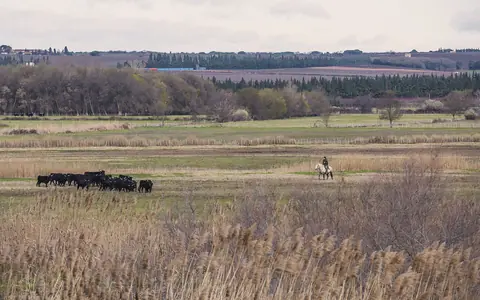
The western part of the Camargue, a land of marshes, reed beds, lagoons and salt meadows where white horses, black bulls and flamingos live.
A moated 18th-century château in Lorraine, built by the architect Germain Boffrand for the Prince of Craon, with 365 windows, 52 chimneys and 12 towe…
A Renaissance château in the countryside of Poitou with a long gallery painted with scenes of the Trojan War, and a collection of contemporary art, C…
A moated château in the Burgundy countryside where the witty courtier Roger de Bussy-Rabutin was exiled by Louis XIV after writing a scandalous book …
A grand early 17th-century château built for the Duke of Épernon, a favourite of Henri III, in the walled town of Cadillac on the Garonne.
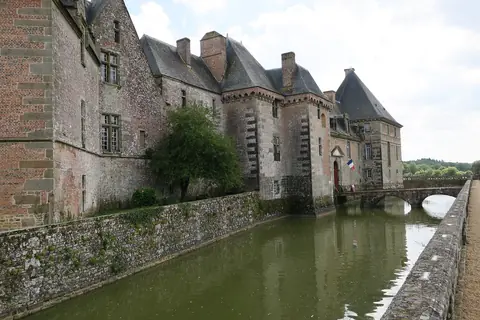
A grand red-brick château surrounded by a moat in the Normandy bocage, built and changed between the 14th and 17th centuries and home to the same fam…
An early 18th-century château east of Paris, once rented by Madame de Pompadour, with fine Rococo interiors including a Chinese salon painted with mo…
A château on a cliff above the River Loir that combines a 12th-century keep, a Gothic wing and a Renaissance wing, built for Dunois, a companion of J…
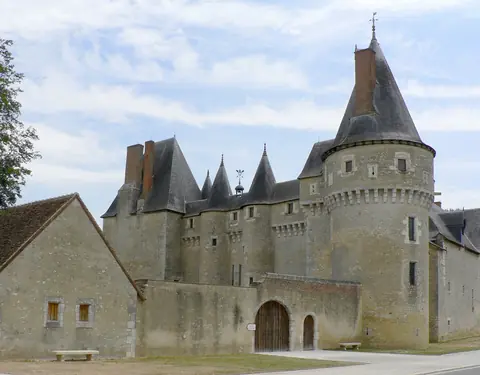
A little fortified château of the late 15th century, between a castle and a country house, with towers, a keep and a courtyard opening onto the villa…
A masterpiece of French classical architecture by François Mansart, built in the 1640s for a finance minister, which inspired the later palace at Ver…
A Renaissance château built in the 1520s by Jeanne de Balzac for her son, who was killed in the Italian wars.
A small Renaissance château in the green Périgord, built in the 1510s and often compared with the châteaux of the Loire.
A small, peaceful château in the farmland north of Blois, with an orchard and conservatory of old fruit varieties.
A château in the Auvergne built around 1500 for Rigaud d'Aureille, a steward of the French kings, known for its rare Renaissance wall paintings, its …
The country house where Voltaire spent his last 20 years, a short way from the Swiss border so that he could flee if he got into trouble.
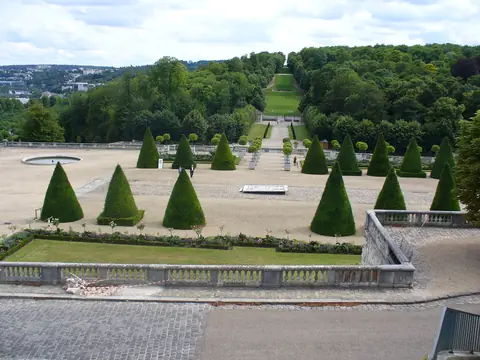
A large park on a hillside above the Seine, laid out by André Le Nôtre around a royal château that burned down in 1870.
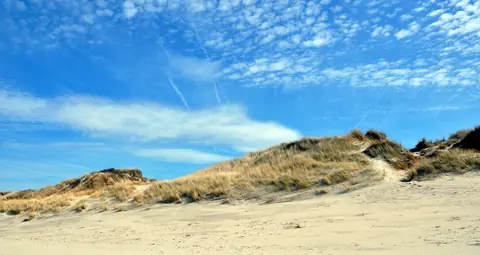
A protected line of wild sand dunes and long beaches between Dunkirk and the Belgian border, among the oldest dunes in France.
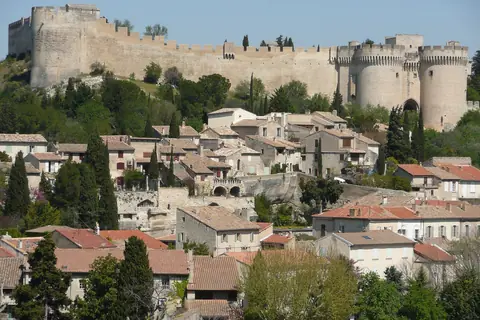
A 14th-century fortress on a hill across the Rhône from Avignon, built by the French kings to watch over the papal city.
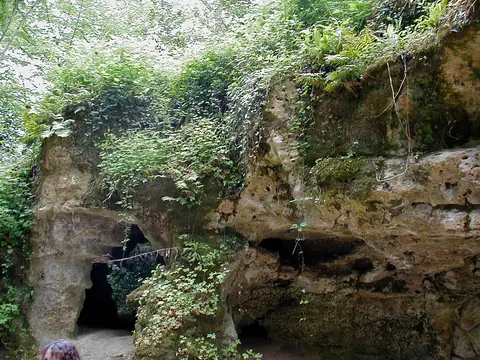
A small decorated cave near Bourg in the Gironde, with engravings of horses, ibex and mammoths around 30,000 years old, among the oldest cave art in …
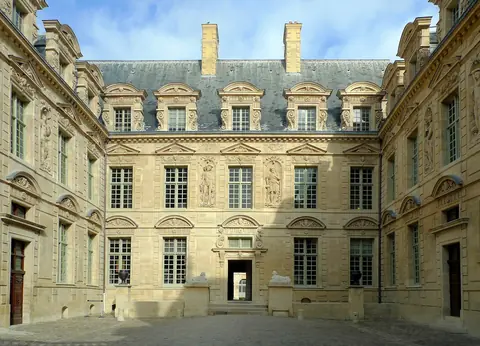
An elegant 17th-century mansion in the Marais, with a decorated courtyard and a formal garden that leads through a passage straight into the Place de…
The country house where the writer George Sand lived and wrote, and where she welcomed Chopin, Delacroix, Liszt, Flaubert and Balzac.
The simple fisherman's house by the sea in the Vendée where Georges Clemenceau, French prime minister during the First World War, spent his last year…
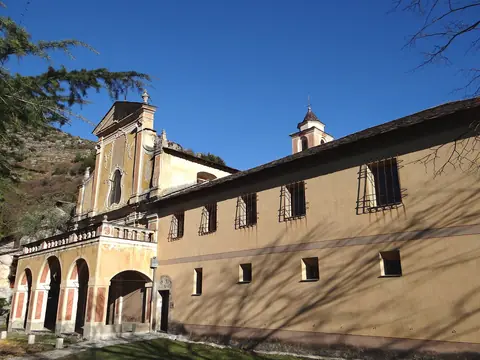
A 17th-century Franciscan monastery above the dramatic hill village of Saorge, whose tall houses cling to the cliffs of the Roya valley.
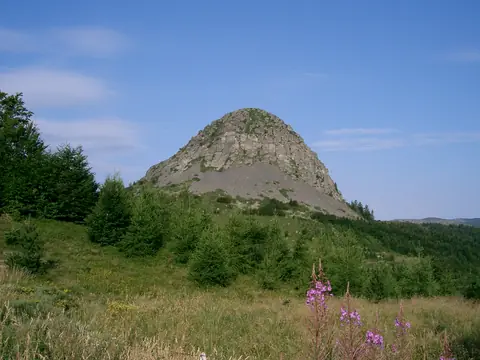
A distinctive cone-shaped volcanic peak in the Ardèche mountains, at the foot of which rises the River Loire, the longest river in France.
An ancient hilltop town between Béziers and Narbonne, lived in from the 6th century BC until Roman times, with a museum of Greek vases and finds.
The free-standing bell tower of Bordeaux's Saint-André Cathedral, built in the 15th century apart from the church so its bells would not shake the bu…