Historic sites
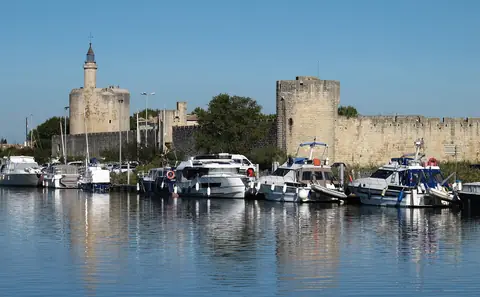
Aigues-Mortes ramparts
Aigues-Mortes, Gard
A walled town in the marshes of the Camargue, built by Saint Louis in the 13th century as his port for the Crusades, with ramparts over 1.6 km long s…
A walled town in the marshes of the Camargue, built by Saint Louis in the 13th century as his port for the Crusades, with ramparts over 1.6 km long s…
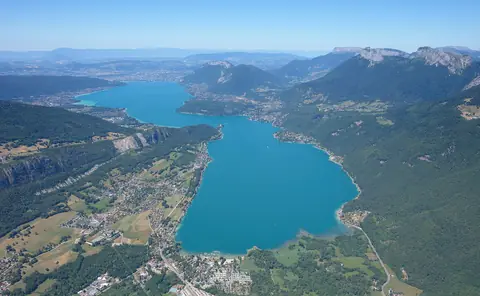
Annecy's old town has canals, flower-lined bridges and pastel houses, earning it the name 'Venice of the Alps'.
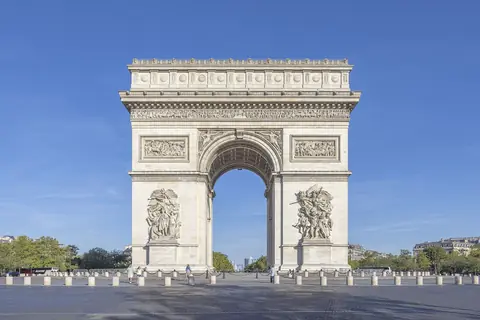
Napoleon's triumphal arch stands at the top of the Champs-Élysées, in the middle of a huge roundabout of 12 avenues.
One of the best-preserved Roman amphitheatres in the world, built around 70 AD and seating about 24,000 people.
The birthplace of Gothic architecture, rebuilt by Abbot Suger in the 12th century, and the burial place of almost all the kings and queens of France …
A citadel town perched on white limestone cliffs at the southern tip of Corsica, its houses overhanging the sea, with views across the strait to Sard…
A fortified medieval city on a hill in Languedoc, with a double ring of walls and 52 towers, restored in the 19th century by the architect Viollet-le…
A massive fortress with 17 striped towers of dark schist and white stone, built by Saint Louis in the 13th century.
One of the most graceful Renaissance châteaux of the Loire Valley, built in the 1520s on an island in the River Indre, so that it seems to float on t…
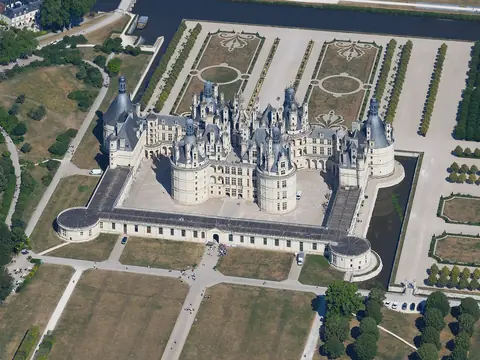
The largest and most extravagant of the Loire châteaux, built from 1519 for King François I as a hunting lodge.
One of the most beautiful châteaux in France, built across the River Cher on a series of arches, with its long gallery reflected in the water.
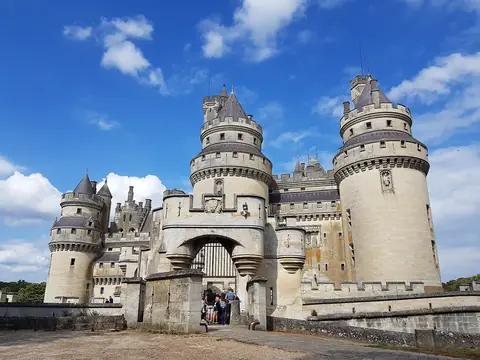
A fairytale castle with towers, battlements and a drawbridge, rebuilt from medieval ruins in the 1860s by the architect Viollet-le-Duc for Napoleon I…
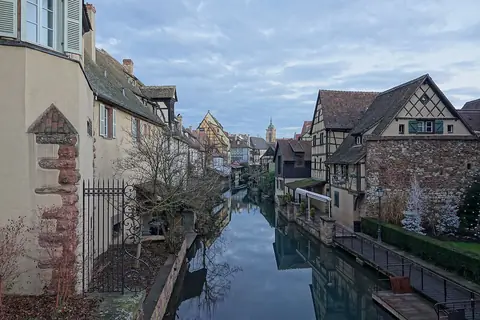
Colmar is the most picturesque town in Alsace, with colourful half-timbered houses, flower boxes and canals.
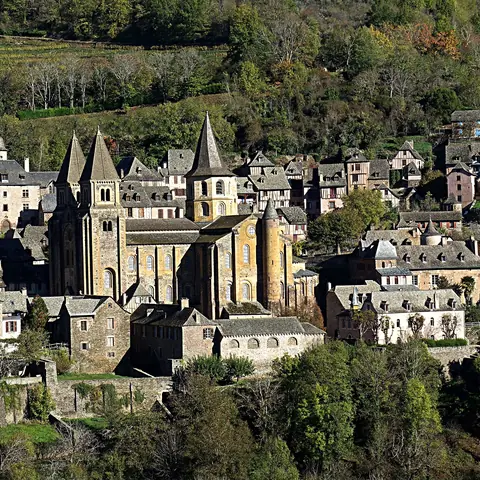
A medieval village of stone houses with slate roofs clinging to a steep hillside, around the Romanesque abbey church of Sainte-Foy, a great stop on t…
On 6 June 1944, Allied forces landed on five beaches along this coast in the largest seaborne invasion in history.
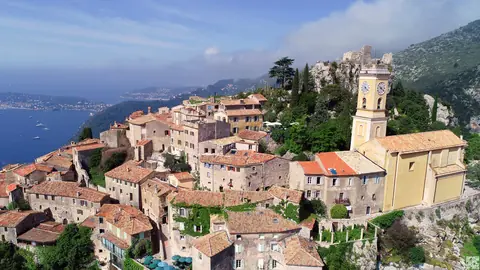
A medieval village perched on a rocky peak 427 m above the Mediterranean, between Nice and Monaco.
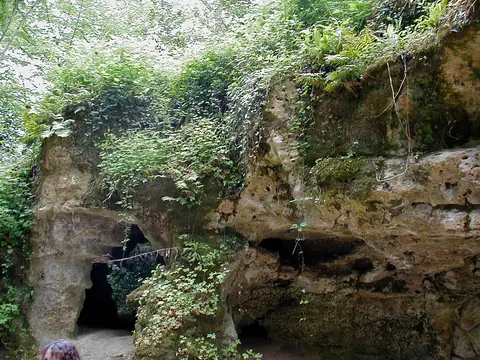
The Vézère valley around Les Eyzies holds an exceptional concentration of prehistoric caves and shelters, a World Heritage Site.
The cave of Lascaux, discovered in 1940, holds some of the finest prehistoric paintings in the world: bulls, horses and deer painted about 17,000 yea…
The largest underground church in Europe, carved out of the solid limestone hill beneath Saint-Émilion in the 11th and 12th centuries.
A rocky tidal island in the bay between Normandy and Brittany, crowned by a Benedictine abbey begun in the 8th century and rebuilt over the following…
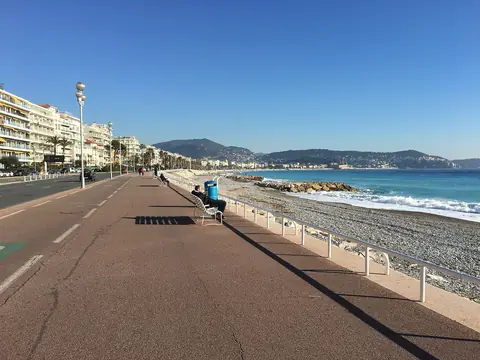
Nice's famous seafront promenade curves for 7 km along the Baie des Anges, lined with palm trees and grand hotels such as the Negresco.
The vast palace of Louis XIV, the 'Sun King', and the seat of the French court until the Revolution.
The largest Gothic palace in the world, built in the 14th century when the popes lived in Avignon instead of Rome.
A vast neoclassical temple on the Montagne Sainte-Geneviève in the Latin Quarter, built as a church and turned into a resting place for France's grea…
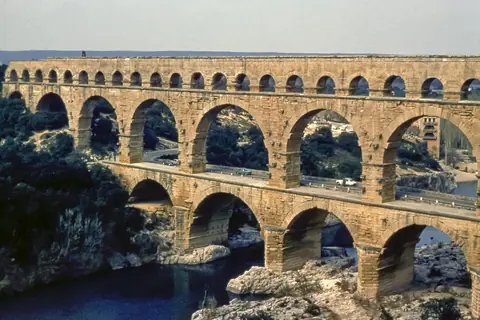
A Roman aqueduct bridge built in the 1st century AD to carry water across the Gardon river to Nîmes.
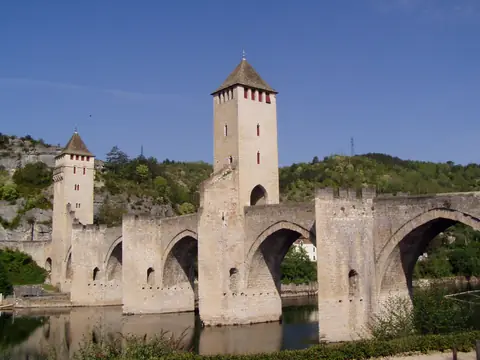
A fortified 14th-century bridge with three tall towers, crossing the Lot River at Cahors, and one of the finest medieval bridges in France.
A pilgrimage village that clings to a 150 m cliff above the Alzou canyon, with chapels and sanctuaries stacked one above the other.
A medieval village clinging to a cliff 100 m above the Lot River, voted France's favourite village.
A medieval village tucked into the wild gorges of the Hérault, around the Romanesque abbey of Gellone, founded in 804 and a stop on the Way of St Jam…
A 70 m long embroidered cloth from the 11th century that tells the story of the Norman conquest of England in 1066, ending with the Battle of Hasting…
A star-shaped fortified town in the marshes of Charente-Maritime, once a busy salt port, whose sea has since retreated, leaving it stranded in the fi…
One of the oldest monuments in the world: a long stepped mound of stone built around 4,500 BC, older than the pyramids of Egypt, on a headland above …
More than 3,000 prehistoric standing stones, set up in long rows over 4 km of countryside by people living here between about 4500 and 3300 BC.
A fortress on a tiny island in the bay of Marseille, built by François I and later a prison, made famous by Alexandre Dumas's The Count of Monte Cris…
A huge castle of red stone on a hill above the Dordogne valley, one of the finest examples of medieval military architecture in France, built from th…
The ruins of one of the mightiest castles of the Middle Ages, built in the 13th century by the powerful lords of Coucy, on a spur above the Ailette v…
A royal and then presidential château southwest of Paris, used by French presidents to host summits until 2009.
The Renaissance château of François I, where in 1539 he signed the ordinance that made French the language of law and government.
A medieval royal fortress on the eastern edge of Paris, with the tallest keep in Europe, over 50 metres high, built in the 14th century.
Home to seven kings and ten queens of France, this royal château in the centre of Blois shows four centuries of French architecture around one courty…
The castle where King François I was born in 1494, beside the Charente River in the centre of Cognac.
The remains of the greatest abbey of the Middle Ages, founded in 910, whose church was the largest in Christendom until St Peter's in Rome was built.
The oldest surviving part of the medieval royal palace on the Île de la Cité, with a huge Gothic hall of the soldiers, among the largest in Europe.
The 374-metre-long royal rope works of the naval arsenal founded by Louis XIV at Rochefort, on the Charente estuary.
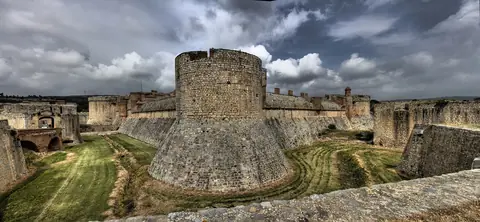
A massive Spanish fortress built in the 1490s, when Roussillon was part of Spain, to guard the road from France.
The ruins of a Greek and Roman town at the foot of the Alpilles hills, with temples, baths, a forum and houses.
A charity hospital founded in 1443, with a dazzling roof of coloured glazed tiles in geometric patterns over its courtyard.
An 18th-century palace on the Place de la Concorde, built to store the royal furniture and later the headquarters of the French Navy for over 200 yea…
One of the three Cistercian sister abbeys of Provence, built in the 12th century in a wooded valley, a masterpiece of pure, unadorned Romanesque arch…
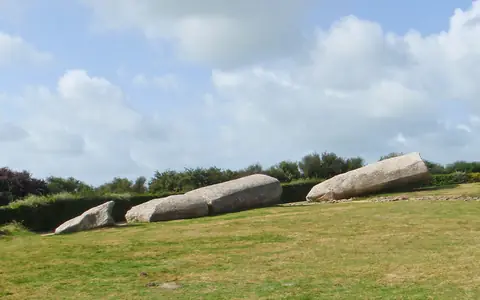
A remarkable group of Neolithic monuments near the Gulf of Morbihan: the Great Broken Menhir of Er Grah, once over 20 metres tall and the largest sta…
A medieval village perched on a rocky spur between the gorges of the Cesse and Brian rivers, besieged by Simon de Montfort in 1210 during the crusade…
A fortified town built by Vauban in 1693 on a rocky plateau where the Durance and Guil valleys meet, part of the World Heritage listing of his fortif…
A great Benedictine abbey on a rocky hill outside Arles, with a Romanesque church, a cloister with carved capitals and a fortified tower.
The ruined castle on a steep rocky peak in the foothills of the Pyrenees where the Cathars made their last stand.
The former palace of the archbishops of Reims, beside the cathedral, where French kings stayed and feasted on the day of their coronation.
The Gothic town palace of Jacques Cœur, a merchant who became the richest man in France and treasurer to King Charles VII before falling from favour.
The palace built for Cardinal Richelieu, with a peaceful garden of lime trees and fountains framed by arcades of old shops and cafés, just north of t…
Bordeaux's grand 18th-century Place de la Bourse faces the Garonne river, and in front of it the Miroir d'eau, the world's largest reflecting pool, a…
The little square at the top of Montmartre where artists set up their easels and sketch portraits, as they have since Picasso and Renoir's day.
The bridge of the famous children's song 'Sur le pont d'Avignon'.
A Flamboyant Gothic church and monastery built in the early 1500s by Margaret of Austria in memory of her husband, the Duke of Savoy.
A medieval hilltop village of honey-coloured stone and steep cobbled lanes, surrounded by some of the world's most famous vineyards, a UNESCO World H…
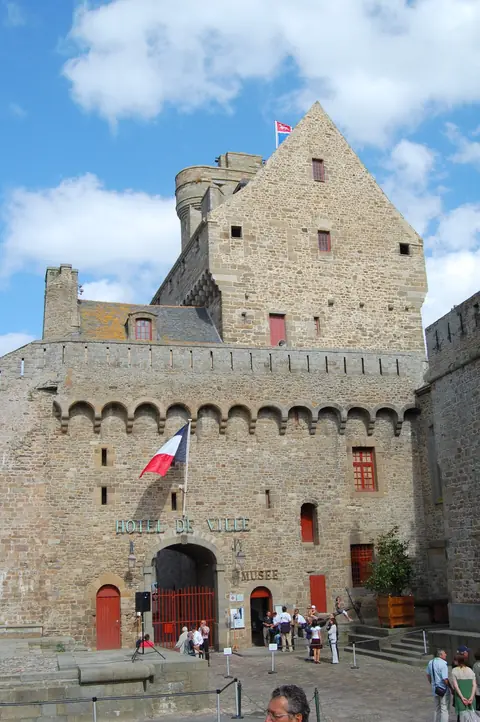
Saint-Malo, the walled corsair city on the Brittany coast, was largely rebuilt after the Second World War, and its granite ramparts make a complete w…
Three medieval towers guarding the old harbour of La Rochelle: the Saint-Nicolas and Chain towers on either side of the entrance, between which a gre…
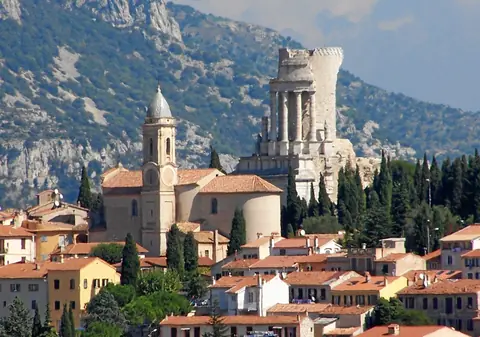
A huge Roman monument raised in 6 BC on a pass above Monaco to celebrate Emperor Augustus's conquest of the Alpine tribes, whose 45 names are carved …
Lyon's old town, a UNESCO World Heritage Site, stretches along the Saône river below the hill of Fourvière, with Renaissance houses, the Gothic Saint…
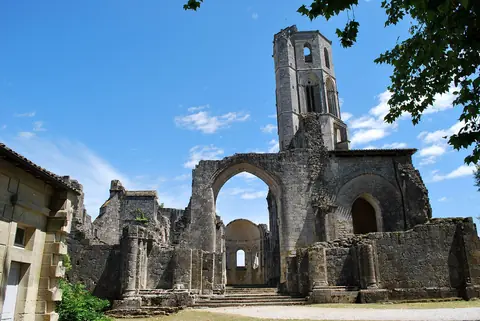
The romantic ruins of a Benedictine abbey founded in 1079 in the vineyards of the Entre-deux-Mers, on the route to Santiago de Compostela.
A Benedictine abbey founded in 1034 in a green valley of Normandy, once one of the great centres of learning in Europe: two of its monks, Lanfranc an…
The great Celtic hilltop town of the Aedui tribe, on the wooded summit of Mont Beuvray in the Morvan, where Vercingetorix was chosen to lead the Gaul…
A moated 18th-century château in Lorraine, built by the architect Germain Boffrand for the Prince of Craon, with 365 windows, 52 chimneys and 12 towe…
A Renaissance château in the countryside of Poitou with a long gallery painted with scenes of the Trojan War, and a collection of contemporary art, C…
A moated château in the Burgundy countryside where the witty courtier Roger de Bussy-Rabutin was exiled by Louis XIV after writing a scandalous book …
A grand early 17th-century château built for the Duke of Épernon, a favourite of Henri III, in the walled town of Cadillac on the Garonne.
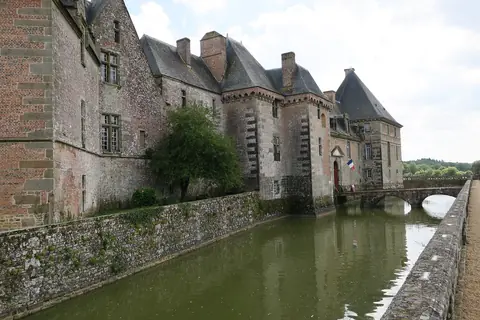
A grand red-brick château surrounded by a moat in the Normandy bocage, built and changed between the 14th and 17th centuries and home to the same fam…
An early 18th-century château east of Paris, once rented by Madame de Pompadour, with fine Rococo interiors including a Chinese salon painted with mo…
A château on a cliff above the River Loir that combines a 12th-century keep, a Gothic wing and a Renaissance wing, built for Dunois, a companion of J…
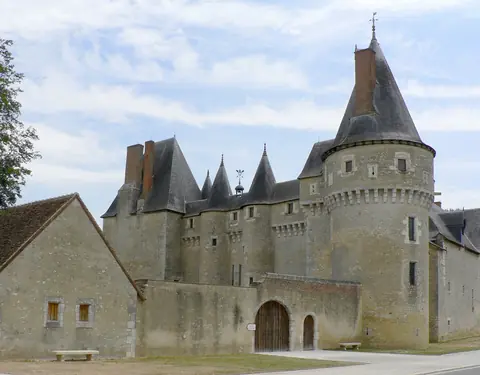
A little fortified château of the late 15th century, between a castle and a country house, with towers, a keep and a courtyard opening onto the villa…
A masterpiece of French classical architecture by François Mansart, built in the 1640s for a finance minister, which inspired the later palace at Ver…
A Renaissance château built in the 1520s by Jeanne de Balzac for her son, who was killed in the Italian wars.
A small Renaissance château in the green Périgord, built in the 1510s and often compared with the châteaux of the Loire.
A small, peaceful château in the farmland north of Blois, with an orchard and conservatory of old fruit varieties.
A château in the Auvergne built around 1500 for Rigaud d'Aureille, a steward of the French kings, known for its rare Renaissance wall paintings, its …
The country house where Voltaire spent his last 20 years, a short way from the Swiss border so that he could flee if he got into trouble.
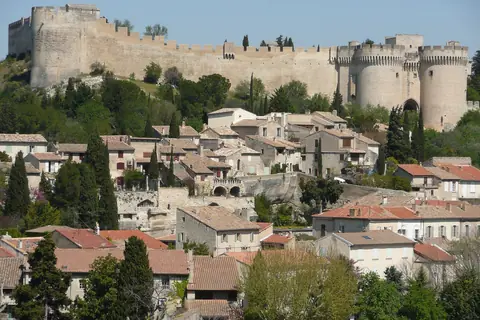
A 14th-century fortress on a hill across the Rhône from Avignon, built by the French kings to watch over the papal city.
A small decorated cave near Bourg in the Gironde, with engravings of horses, ibex and mammoths around 30,000 years old, among the oldest cave art in …
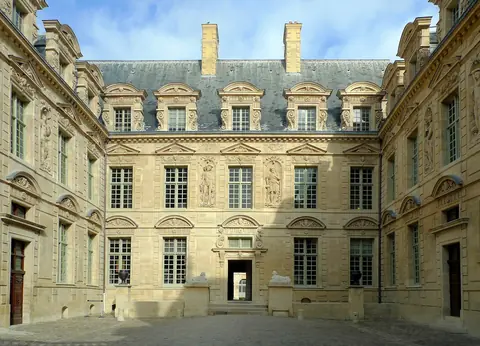
An elegant 17th-century mansion in the Marais, with a decorated courtyard and a formal garden that leads through a passage straight into the Place de…
The country house where the writer George Sand lived and wrote, and where she welcomed Chopin, Delacroix, Liszt, Flaubert and Balzac.
The simple fisherman's house by the sea in the Vendée where Georges Clemenceau, French prime minister during the First World War, spent his last year…
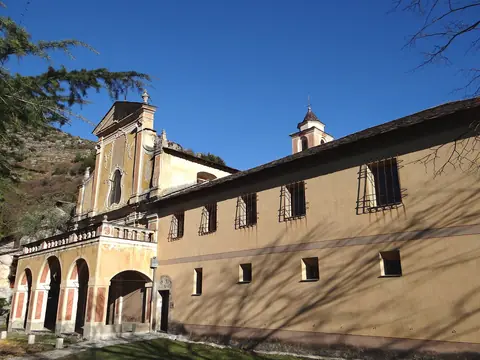
A 17th-century Franciscan monastery above the dramatic hill village of Saorge, whose tall houses cling to the cliffs of the Roya valley.
An ancient hilltop town between Béziers and Narbonne, lived in from the 6th century BC until Roman times, with a museum of Greek vases and finds.