Walks and treks

Calanque d'En-Vau, Cassis
France Bouches-du-Rhône Cassis

Calanque d'En-Vau, Cassis
Photo: Andrew Wilson, CC BY-SA 4.0, via Wikimedia Commons

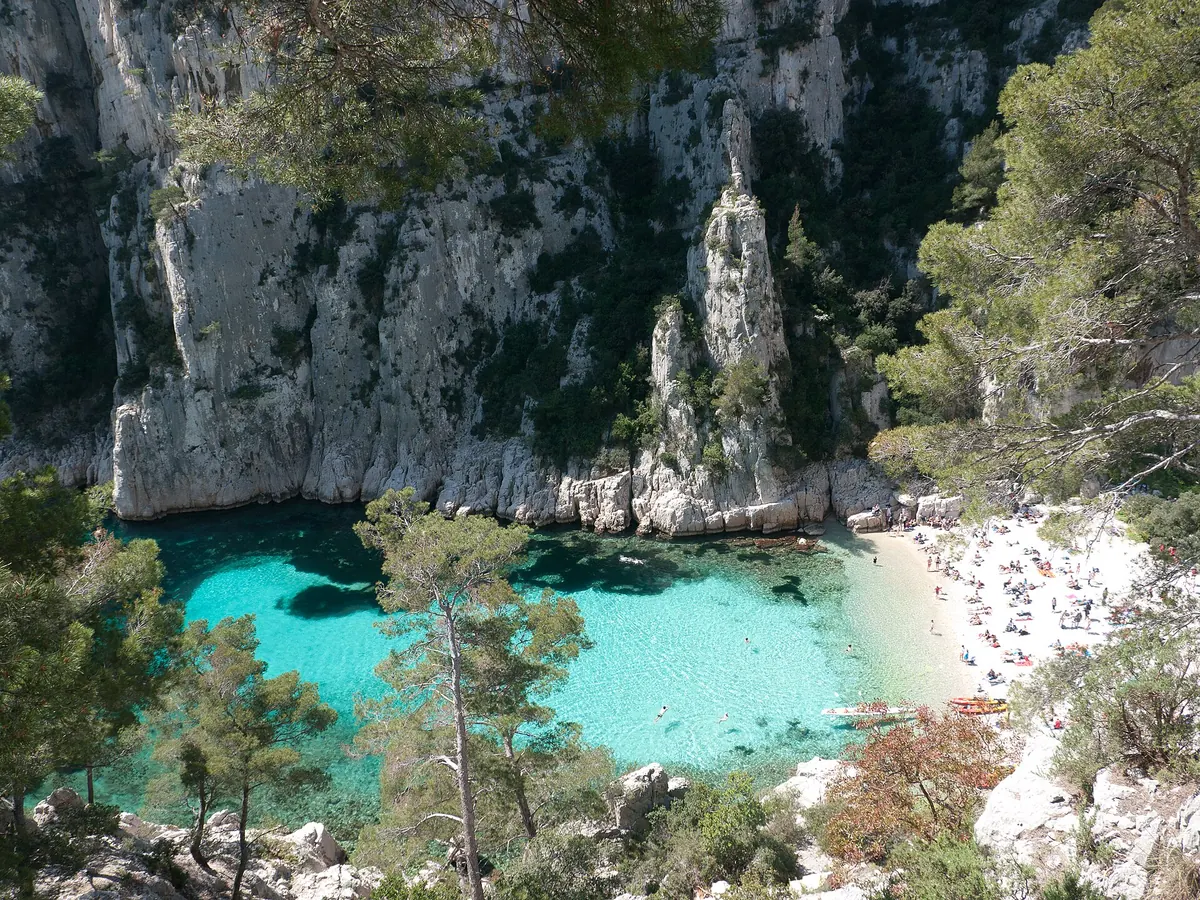
The most beautiful of the calanques, the narrow limestone inlets of the Calanques National Park between Marseille and Cassis. En-Vau is a fjord-like cove with towering white cliffs, a pebble beach and astonishingly clear turquoise water, loved by swimmers and rock climbers.


The walk from the car park at the Col de la Gardiole or from Port-Miou, on the edge of Cassis, takes about 1.5 hours each way via the calanques of Port-Miou and Port-Pin, with steep, rocky sections; wear good shoes and bring plenty of water. In summer, access to the park can be closed on days of high fire risk, so check before you go. In summer you may also need a free reservation to visit the Sugiton calanque. Boat trips from Cassis harbour visit the calanques without the walk.


The park is also crossed by marked hiking paths all the way to Marseille, and camping isn't allowed. Cassis itself is a lovely fishing port, about 3 km from its train station.

Comments

No comments yet.

More tips nearby

All tips for France
Historic sites

Château d'If

Marseille Endoume, Bouches-du-Rhône

A fortress on a tiny island in the bay of Marseille, built by François I and later a prison, made famous by Alexandre Dumas's The Count of Monte Cris…

Walks and treks

Montagne Sainte-Victoire

Puyloubier, Bouches-du-Rhône

The great white limestone ridge east of Aix-en-Provence, painted more than 80 times by Paul Cézanne.

Natural features

Porquerolles

Hyères, Var

A car-free island off Hyères, part of the Port-Cros National Park, with pine woods, vineyards, cliffs and some of the most beautiful beaches in Franc…

Historic sites

Le Thoronet Abbey

Le Thoronet, Var

One of the three Cistercian sister abbeys of Provence, built in the 12th century in a wooded valley, a masterpiece of pure, unadorned Romanesque arch…

Natural features

Roussillon and the Ochre Trail

Apt, Vaucluse

A hilltop village in the Luberon, painted in every shade of red, orange and yellow from the ochre quarried here for centuries.