
Getting around Vietnam: Grab, sleeper buses, trains, flights and the metro

Vietnam is long and thin: from Hanoi to Ho Chi Minh City is over 1,700 km by rail. Most visitors fly the long legs, take a sleeper train or bus for the shorter ones, and get around the cities with a ride-hailing app. It's all cheap by Western standards.
In the cities: Grab and Xanh SM
- Grab is the main ride-hailing app, for cars and motorbike taxis (xe ôm), and food delivery. You see the price before you book, so there's no haggling, and you can pay in cash or with a card in the app.
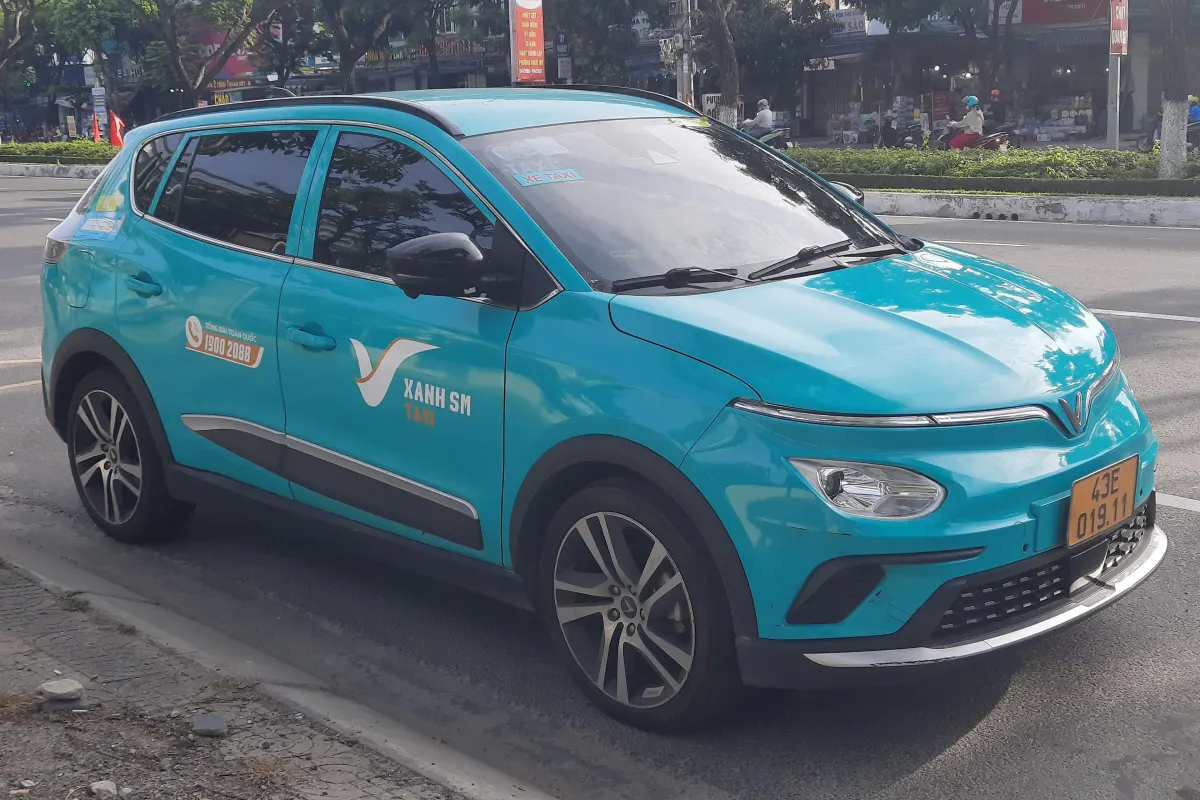
- Xanh SM runs electric taxis and motorbikes, in its turquoise colour, with its own app, and has become as common as Grab in many cities. Be is a third, Vietnamese, app.
- Check the number plate and the driver's details before you get in, and book the whole journey in the app. Watch out for drivers pretending to be from Grab or Xanh SM.
- A motorbike taxi is the quickest way through traffic. The driver will give you a helmet: wear it, and hold on.
- Taxis: if you take a street taxi, choose a big company like Mai Linh or Vinasun (in the south), and make sure the meter is on. See Scams and safety.
Sleeper buses
- Long-distance buses link almost everywhere, including places with no train, like Sa Pa, Hà Giang and Đà Lạt. Many run overnight.
- Sleeper buses have reclining berths in three rows on two levels. You take your shoes off at the door (they give you a bag). The berths are short for anyone tall. "Cabin" or "VIP" buses have private pods, and "limousine" minivans have nine or so big seats for shorter trips.
- Book through your hotel, the bus company, or an app such as Vexere, and ask whether you'll be picked up from your hotel or need to get to a bus station on the edge of town.
- Keep your valuables with you, not in the luggage hold. Night buses do crash more often than day buses, as drivers get tired: on mountain roads, a day bus is safer.
Trains: the Reunification Express
- The North–South Railway runs 1,726 km from Hanoi to Saigon station in Ho Chi Minh City, by way of Ninh Bình, Huế, Đà Nẵng and Nha Trang. The fastest trains, SE1 and SE2, take a little over 30 hours end to end, but few people ride the whole way.
- The best sections are overnight from Hanoi to Huế (about 13 hours), and by day from Huế to Đà Nẵng (about 2½ hours), along the coast and over the Hải Vân Pass.
- Classes: hard seat, soft seat (air-conditioned), hard sleeper (six berths in a compartment) and soft sleeper (four berths). Book soft sleeper for a night train. Some trains also carry private companies' sleeper carriages, which are smarter and cost more.
- Booking: on Vietnam Railways' website, dsvn.vn, at stations, or through an agency. Book well ahead for weekends and holidays, and for Tết weeks ahead.
- Trains also run from Hanoi to Lào Cai, for Sa Pa (about 8 hours overnight, then an hour by bus), and to Hải Phòng.
Domestic flights
- Vietnam Airlines, Vietjet, Bamboo Airways and Vietravel Airlines fly between the main cities, and to Phú Quốc, Côn Đảo, Đà Lạt and other towns. Hanoi to Ho Chi Minh City takes about 2 hours, and there are dozens of flights a day.
- Fares are cheap if you book ahead, but cheap tickets often don't include checked bags. Flights are often delayed, especially Vietjet's, so don't plan tight connections.
- Take your passport: you need it to fly within Vietnam.
The metro
- Hanoi: Line 2A runs (on viaducts) from Cát Linh, west of the Old Quarter, to Hà Đông, and Line 3 from Nhổn to Cầu Giấy. Line 3's underground section to Hanoi railway station is due to open in about 2027. Neither yet reaches the Old Quarter, so they're more use to people who live there than to visitors.
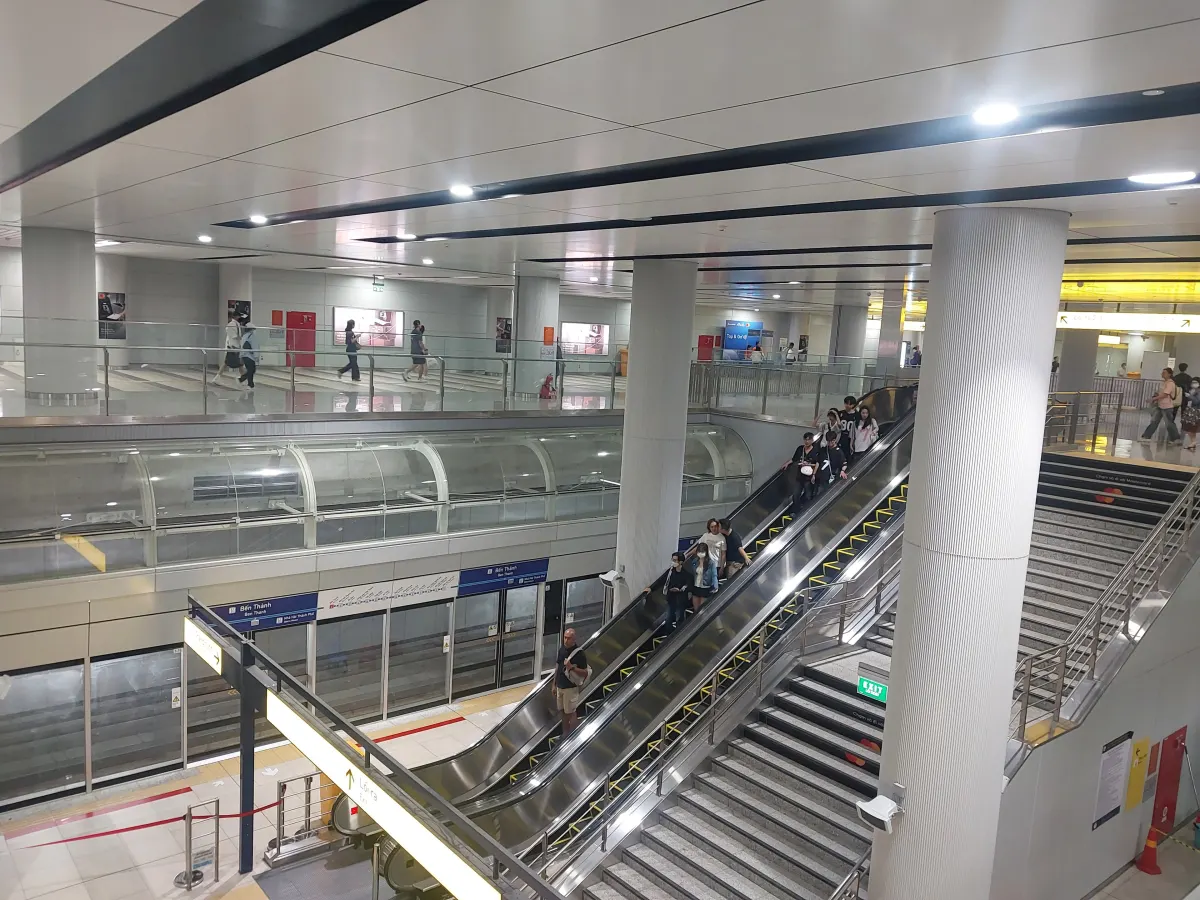
- Ho Chi Minh City: Line 1 runs from Bến Thành market, in the centre, to Suối Tiên in Thủ Đức, along the river and out past Thảo Điền. Fares are about 6,000 to 20,000 dong, and there's a 40,000 dong day pass.
Getting from the airport
- Hanoi (Nội Bài): Grab or Xanh SM to the Old Quarter takes 40 minutes to an hour. Bus 86 runs to the Old Quarter and the railway station.
- Ho Chi Minh City (Tân Sơn Nhất): the airport is in the city, 20 to 40 minutes from District 1 by car. Bus 109 goes to Bến Thành and the backpacker area.
- Đà Nẵng: the airport is in town, and Hội An is about 45 minutes away by car.
Boats
Boats link the mainland to islands such as Cát Bà, Côn Đảo and the islands off Nha Trang. For trips on Hạ Long Bay, see Hạ Long Bay and Lan Hạ Bay cruises. In the Mekong Delta, the boats are the reason to go.
Driving yourself
Hiring a car to drive yourself isn't practical for most visitors: you need a licence that Vietnam recognises, and the traffic is chaotic. Hiring a car with a driver is common and not too expensive. For motorbikes, see Traffic, crossing the road and riding a motorbike.




Comments
No comments yet.