
Money in Vietnam: the dong, cash, cards, ATMs, bargaining and tipping
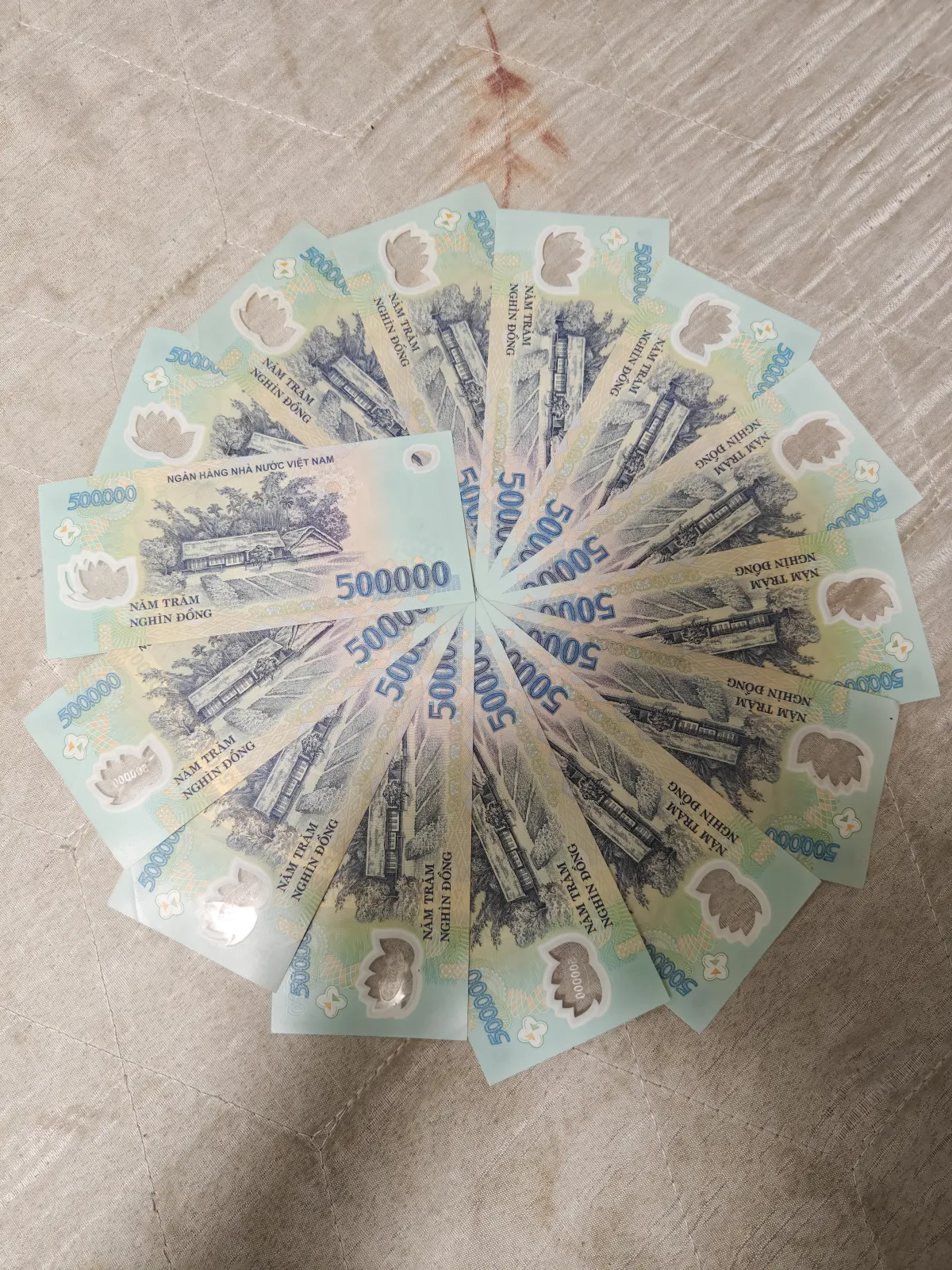
Vietnam's money is the dong (VND, đ), and with around 26,000 dong to the US dollar, you'll quickly be a millionaire. Cash is still king at markets, street food stalls and small shops, but cards work in hotels, bigger restaurants and shops, and you pay for rides through apps.
The banknotes
- Notes run from 1,000 to 500,000 dong. The ones from 10,000 up are plastic (polymer); the small 1,000, 2,000 and 5,000 notes are paper. Coins are hardly used.
- Count the zeros: prices are often written without the last three, so "50k" or "50" means 50,000 dong. An easy way to work out what something costs is to knock off three zeros and divide by 25 or so for US dollars.
- The 20,000 and 500,000 notes are both blue, and the 10,000 and 200,000 are similar colours, so check before you hand them over. Keep the big notes apart from the small ones.
- Carry plenty of small notes (10,000 to 50,000) for street food, drinks and tips: vendors often can't change a 500,000 note.
- Some places quote prices in US dollars, but you'll usually get a better deal paying in dong.
Cash
- ATMs are everywhere in towns and cities. Most charge a fee of roughly 20,000 to 110,000 dong per withdrawal (on top of your own bank's), and many limit you to a few million dong at a time, so take out the maximum each time.
- Use ATMs inside banks or shopping centres where you can, and cover the keypad. If you're asked whether to be charged in your home currency or in dong, choose dong.
- Changing money: banks, airport counters and licensed exchange desks, such as the gold shops on Hà Trung street in Hanoi, give good rates for US dollars and euros, in clean, undamaged notes. Only change money at places with a sign showing they're allowed to: changing it elsewhere is illegal.
- Have some cash before you go to rural areas such as the Hà Giang Loop, Sa Pa's villages or the Mekong Delta, where ATMs are few.
Cards
- Visa and Mastercard are taken in hotels, mid-range and upmarket restaurants, supermarkets, chain cafés and many shops. American Express less so. Some places add a surcharge of 2% to 3%.
- Contactless payment by card or phone works in many shops and chains.
- You can link a foreign card to Grab and Xanh SM, and to many booking apps, but some apps and websites only take Vietnamese cards.
VietQR and paying by QR code
Vietnamese people pay almost everything, even a coffee from a street stall, by scanning a VietQR code with their banking app. Visitors usually can't, unless they have a Vietnamese bank account, but this is changing: some banking and wallet apps from other Asian countries (such as Thailand, Singapore, South Korea and China) now scan VietQR codes directly. Check whether your bank's app supports it before you go. Otherwise, pay in cash.
Bargaining
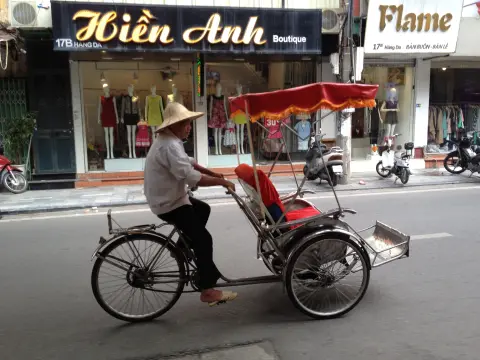
- Haggle at markets, souvenir shops, with cyclo drivers and motorbike taxis you hail on the street, and for tours booked in small agencies. Don't haggle in shops and restaurants with fixed, written prices, or with ride-hailing apps.
- Ask the price first, then offer less: often half to two-thirds of the first price in tourist markets. Stay friendly and smile, and be ready to walk away. Once you agree a price, pay it.
- Agree on the price, and whether it's per person or for the whole group, before you start: see Scams and safety.
Tipping
- Tipping isn't traditional in Vietnam, but it's welcome, and more and more expected in tourist areas.
- Restaurants: rounding up, or 5% to 10% in a nice restaurant, is generous. Check the bill first, as some add a service charge. At street stalls, no tip is expected.
- Guides and drivers: on a day tour, around 100,000 to 200,000 dong per person for a good guide, and a little less for the driver.
- Cruises: on Hạ Long Bay cruises there's often a tip box for the crew.
- Spa and massage staff are often tipped, and some places suggest an amount.
What things cost
A bowl of phở at a street stall costs around 40,000 to 70,000 dong, a bánh mì 20,000 to 40,000, a cà phê sữa đá 25,000 to 50,000, and a local beer 20,000 to 40,000. Prices are higher in Hanoi's Old Quarter, Ho Chi Minh City's District 1 and resort towns.


Comments
No comments yet.