
Malaysian laws visitors should know: drugs, alcohol, vaping, dress and more
Malaysia is a modern, easy-going country to visit, but some of its laws are much stricter than at home, and the penalties can be severe. Most visitors never have any trouble, but a few rules are worth knowing before you go.
Drugs
- Malaysia's drug laws are among the strictest in the world. Possessing, using, importing or trafficking drugs, cannabis included, can bring long prison sentences, caning and, for trafficking, the death penalty. Since 2023 the death penalty is no longer compulsory for trafficking, but judges can still impose it, and the alternative is 30 years or more in prison and whipping.
- If you're caught with more than a small amount, the law presumes you're trafficking, and it's up to you to prove otherwise.
- The police can ask you for a urine test, including on arrival, and a positive test can mean arrest even if you took the drug before you came, in a country where it's legal, such as cannabis in Thailand.
- Police raid bars and clubs that foreigners use. Never carry a package or bag for anyone else, and keep an eye on your luggage. Your embassy can't get you out of jail.
Alcohol
- You must be 21 to buy alcohol. Muslims are forbidden to drink, and can be punished under Sharia law for doing so, but non-Muslims can drink freely, and you'll find beer in Chinese restaurants, bars, hotels, supermarkets and convenience stores in the cities and tourist areas.
- Alcohol is heavily taxed, except on the duty-free islands of Langkawi and Labuan.
- In Kelantan and Terengganu, the most conservative states, alcohol is hard to find outside Chinese restaurants and some hotels and resorts, and you shouldn't drink in public. In Kelantan and some other places, shops can't sell it to Muslims.
- Being drunk and disorderly in public is an offence. The drink-driving limit is 50 mg of alcohol per 100 ml of blood, and the police run breath tests.
- Drinks have been spiked in bars, even smart ones, and people have died from methanol in fake spirits. Buy drinks from reputable places, and watch your glass.
Smoking and vaping
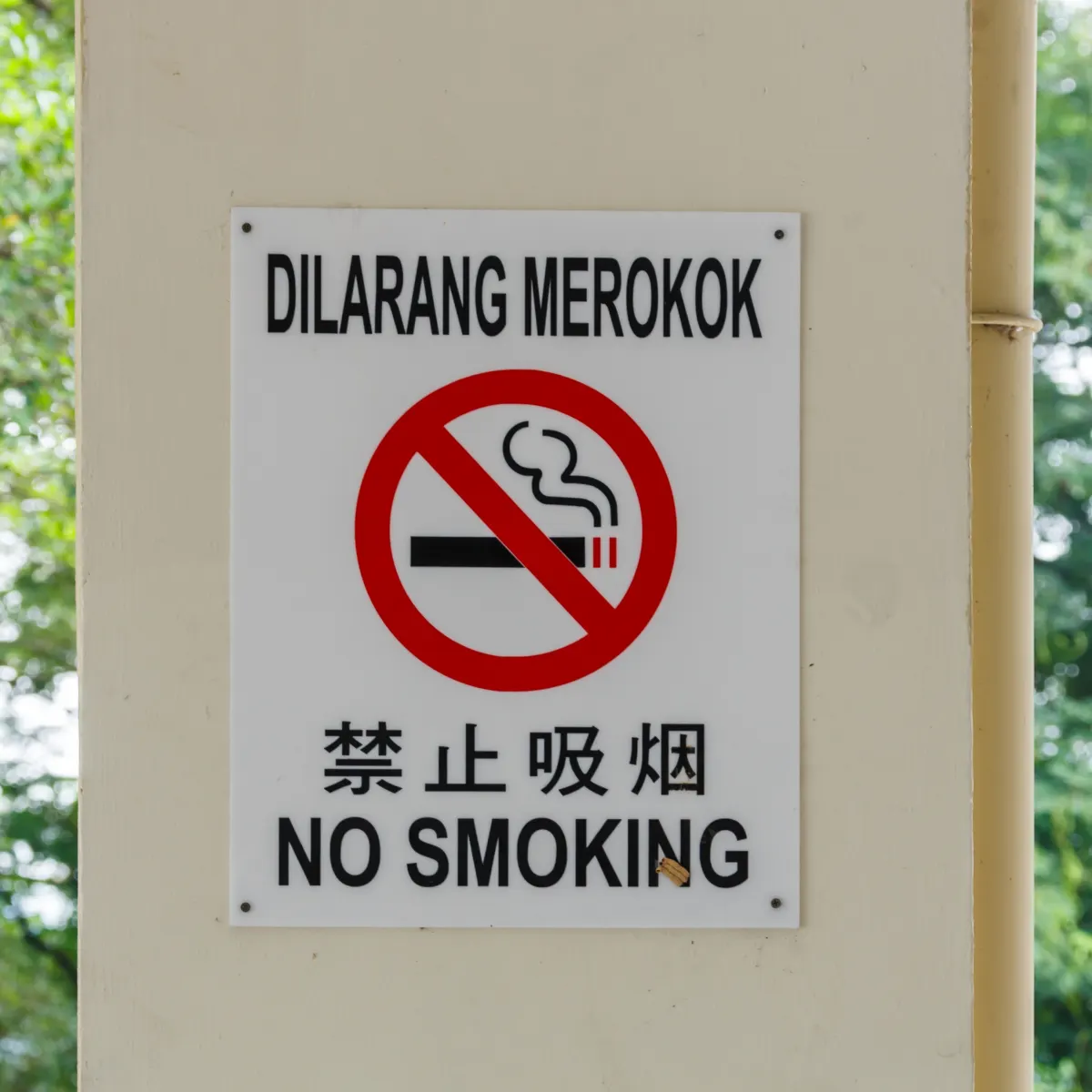
- Smoking and vaping are banned in restaurants, cafés and hawker centres, including open-air ones, and in air-conditioned shops and offices, public transport, stations, hospitals, government buildings, national parks and many other public places. You can be fined on the spot. Look for the "Dilarang merokok" (no smoking) signs.
- Vapes and e-cigarettes are covered by the Control of Smoking Products for Public Health Act 2024, which controls how they're sold. The rules on selling nicotine vapes are changing: some states have banned their sale, a court ruling in 2026 put nicotine liquid back under the poisons law, and the government has talked about a nationwide ban. Don't count on buying a vape in Malaysia, and check the rules before you bring one.
- Bringing in more cigarettes than the duty-free allowance means paying duty: declare them.
Dress
- There's no law on what non-Muslim visitors wear, and shorts and T-shirts are fine in KL, Penang and the tourist areas. Swimwear is fine on resort beaches and by the pool, but not in town, and nude or topless bathing isn't acceptable anywhere.
- Dress modestly, covering your shoulders and knees, at places of worship, in government offices (which can turn you away), in rural areas, and in the conservative northeast, Kelantan and Terengganu, including on the east-coast islands away from the resorts.
- See Culture, religion and etiquette.
Sharia law, LGBT+ travellers and relationships
- Muslims, including Muslim visitors, are also subject to Sharia law, enforced by state religious officers, for things such as drinking, not fasting during Ramadan, and being alone together with someone of the opposite sex they aren't married to.
- Same-sex sexual acts are illegal under federal law, and the police have raided LGBT+ events and venues. Same-sex couples generally travel without trouble, but be discreet in public.
- Public displays of affection are frowned on for everyone, especially outside the cities.
Other rules
- Carry your passport (or a copy, with the original kept safely nearby) as ID, as the law requires. You also need it to check in at hotels and to fly to Borneo.
- Foreigners may not take part in demonstrations, which can be broken up with tear gas and water cannon.
- Insulting Islam, the royal families or other religions, including online, can lead to prosecution under the sedition and communications laws.
- Don't bring in weapons or ammunition, even spent cartridges or war souvenirs, and don't buy products made from protected wildlife, such as turtle shell or ivory.
- Drones need permission in many places, including the national parks: check the Civil Aviation Authority of Malaysia's rules before you fly one.
- Durians, the spiky, smelly fruit, are banned in many hotels and on public transport. You'll see the signs.
- Overstaying your visa-free stay is an offence: see Arriving in Malaysia.
Your government's travel advice for Malaysia has more, and is the place to check for changes. See also: Health and safety in Malaysia.


Comments
No comments yet.