
Money in Malaysia: ringgit, cards, Touch 'n Go, tipping, service charge and the tourism tax
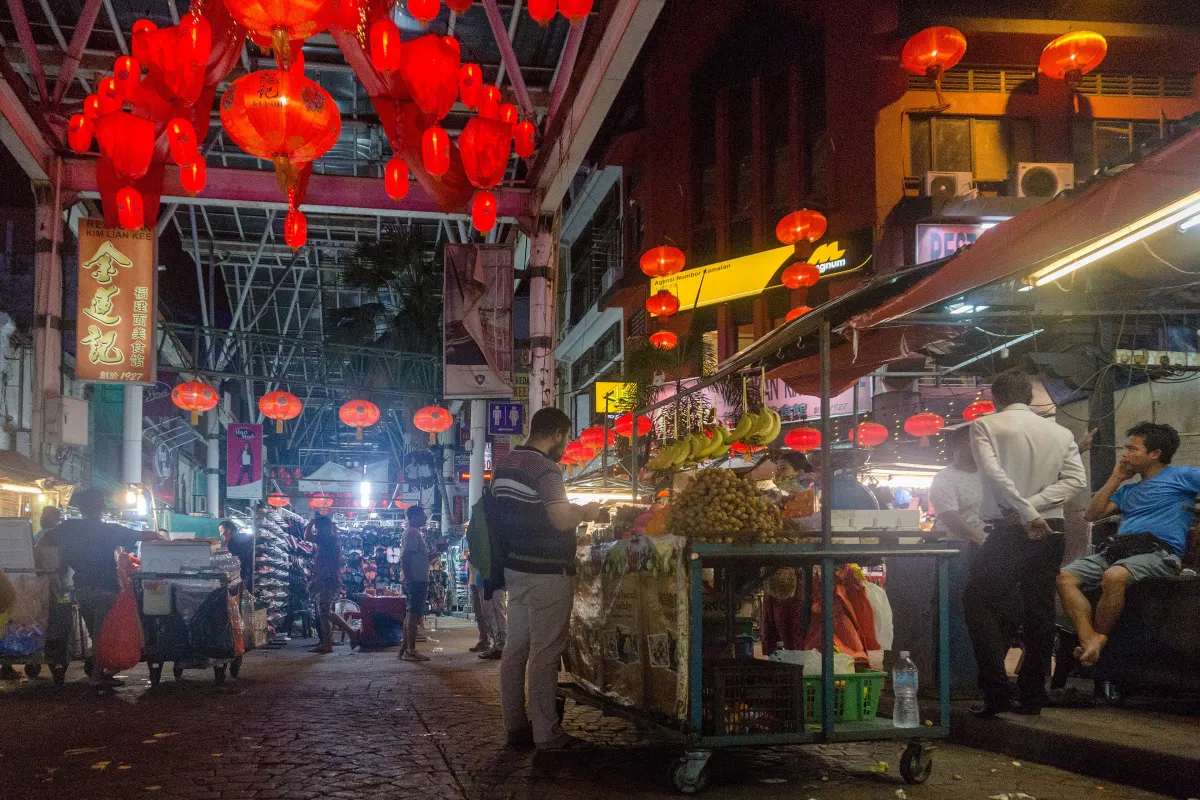
Malaysia is good value, especially for food and transport. Cards are accepted widely in the cities, and Malaysians pay for more and more by scanning QR codes with their phones, but you still need cash for hawker stalls, markets and small places. Tipping isn't expected, and the extra charges on restaurant and hotel bills are worth understanding.
The ringgit
- The Malaysian ringgit (MYR, written RM) is divided into 100 sen. Notes are RM1, 5, 10, 20, 50 and 100, and coins are 5, 10, 20 and 50 sen. Prices are often rounded to the nearest 5 sen when you pay cash.
- Keep small notes for stalls, taxis and the toilet charge at bus stations and rest stops.
- Licensed money changers, in shopping centres and around the tourist areas, give good rates for cash, often better than the banks. Airport rates are worse.
ATMs and cards
- ATMs are easy to find in towns, but scarce on the islands, in national parks and in rural Borneo, so take enough cash before you go.
- When an ATM or a card machine offers to charge you in your home currency, choose ringgit: the conversion rate it offers is worse.
- Visa and Mastercard are accepted in hotels, shopping centres, chain restaurants, supermarkets and convenience stores, and contactless works widely. Small cafés, hawker stalls, night markets and many guesthouses take only cash or QR codes.
- Credit card and ATM fraud happens. Use ATMs inside banks and shopping centres, cover the keypad, and keep an eye on your card.
QR codes and e-wallets
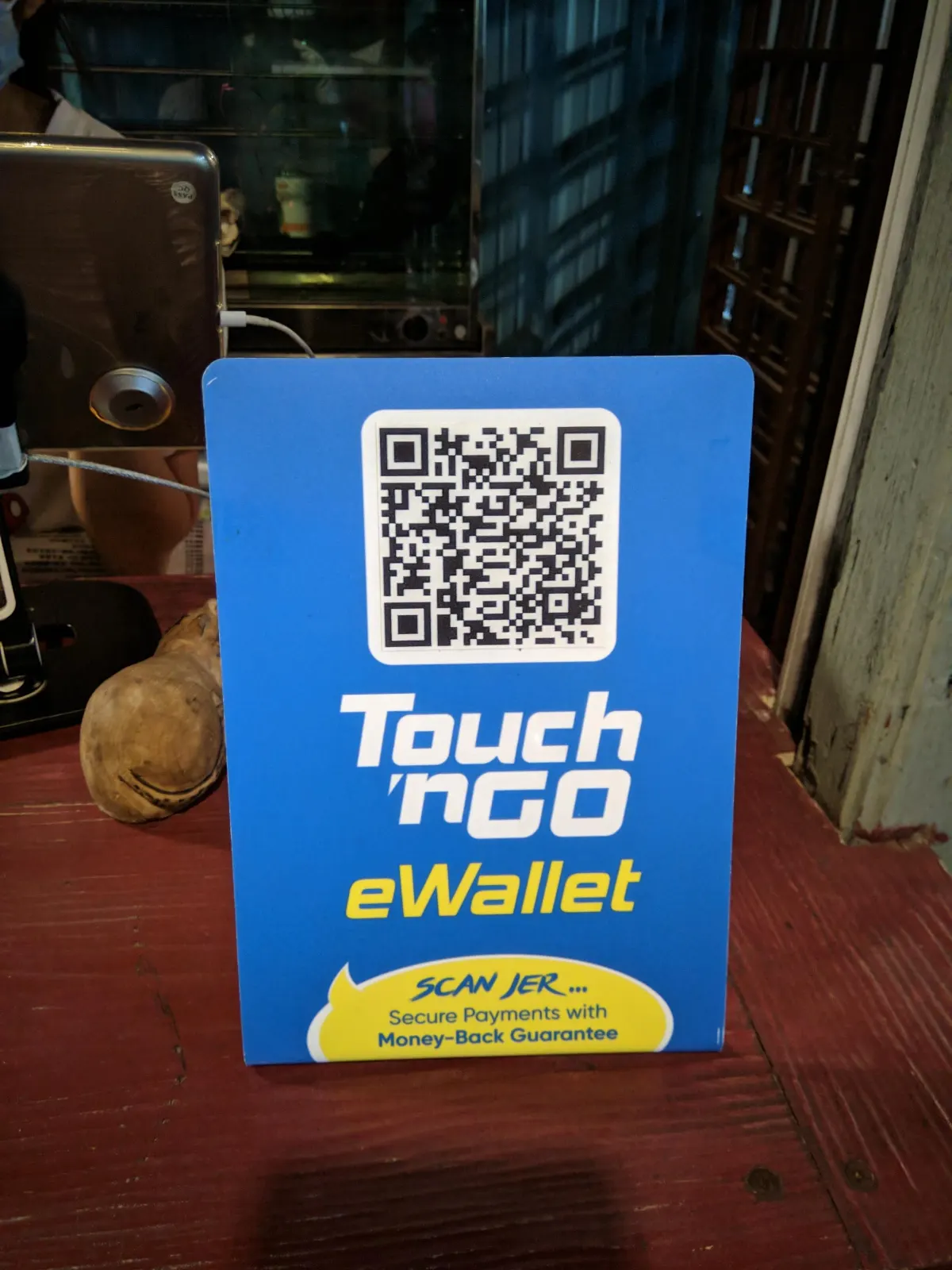
- Almost every shop and stall has a DuitNow QR code, Malaysia's national QR payment system, which Malaysians scan with their banking or e-wallet apps.
- Touch 'n Go eWallet, the most popular e-wallet, opened to foreign tourists in 2025. You register with your passport and your own phone number, and top it up with a foreign credit or debit card, so you can pay by QR code like a local. Check in the app whether it works with your passport and card, and what it charges for top-ups.
- Some foreign wallets, such as those using Alipay+, can pay DuitNow QR codes too.
- In November 2026, Tourism Malaysia and Merchantrade launched a prepaid Visa card and app for visitors, which you register for at Merchantrade branches, including at the airports.
- Don't confuse the eWallet with the Touch 'n Go card, a plastic stored-value card for trains, buses, tolls and car parks. You top up the card with cash at stations and shops, or from the eWallet. See Getting around.
Tipping, service charge and service tax
- Tipping isn't expected in Malaysia. At hawker stalls and in cafés, nobody tips.
- Many restaurants, bars and hotels add a 10% service charge, and a government service tax (6% on food and drink, 8% on hotel rooms and many other services). Menus show this as "++" after the price. You don't need to add a tip on top.
- If you've had good service, rounding up or leaving the coins is appreciated, as is a tip for porters, guides and drivers on tours, and mountain guides and porters on Kinabalu.
- Grab drivers don't expect a tip, though you can add one in the app.
The tourism tax on hotels
- Foreign visitors pay a tourism tax of RM10 a room a night on most hotels, guesthouses and holiday flats. It's charged per room, not per person, and Malaysians and permanent residents don't pay it.
- Hotels usually collect it when you check in or out, even if you've paid for the room online, although some booking sites add it to the price you pay when you book. Read the small print, so you're not surprised.
- Some states and cities add a small charge of their own per room per night, for example in Johor, Melaka and Penang, and the national and marine parks charge foreigners their own entry and conservation fees.
Bargaining
- Haggle with a smile at night markets, at souvenir stalls in places such as Melaka and KL's Petaling Street and Central Market, and with taxis that won't use the meter.
- Prices are fixed in shops with labels, shopping centres, restaurants and food stalls.
Shopping and taxes
- There's no general tax refund for tourists who buy goods in Malaysia, but Langkawi and Labuan are duty-free islands, where alcohol, chocolate and tobacco cost much less than on the mainland.
- Alcohol is heavily taxed elsewhere, so a beer in a bar can cost more than a meal at a hawker stall.
See also: Phones and apps and Food and drink.

Comments
No comments yet.