
5 days by bike through windmills and bulb fields: Amsterdam, Haarlem, the dunes, Keukenhof, Leiden, Gouda and Kinderdijk
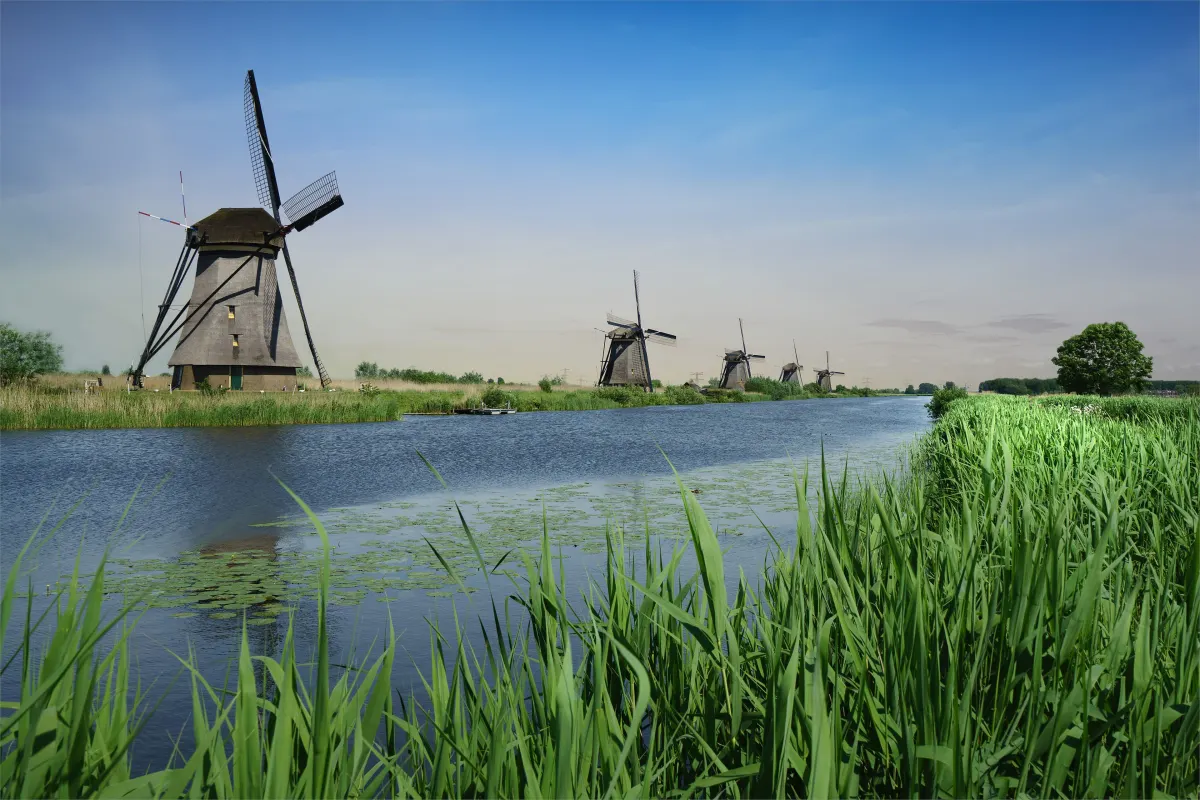
Flat, quiet and full of things to look at: about 170 km in five days, 25 to 45 km a day, from Amsterdam to Kinderdijk, with a boat or a short ride into Rotterdam. An ordinary bike will do. You need no experience beyond being steady on one. Come from mid-April to early May for tulips, or any time to October without.
Map of the route
Day 1: Amsterdam to Haarlem, about 25 km
Day 2: the dunes and back, about 27 km
Day 3: the bulb fields, Keukenhof and Leiden, about 45 km
Day 4: Leiden to Gouda, about 34 km
Day 5: Gouda to Kinderdijk, about 41 km
WaterShuttle from Kinderdijk to Rotterdam, about 12 km
Click a dot for the place. Labels show where you spend each night. The ways are cycle routes worked out from OpenStreetMap: check them in a cycling planner. The dashed line is the boat. Distances are approximate. Route from OpenStreetMap (© OpenStreetMap contributors, ODbL).
Before you go
- Read the rules. Hire a bike with gears, hand brakes and panniers in Amsterdam by the week. Ask if you can leave it in Rotterdam; if not, take it back on the train off-peak (€8.50 in 2026).
- Follow the junction numbers (knooppunten). Make the route in a planner such as the Fietsersbond's, as the map here shows the way roughly. Small ferries take cards, cost a euro or two, and often stop in winter or at 6 or 7 pm.
- Book beds early for April, and Keukenhof for day 3. Not on 17 April 2027, when the flower parade shuts the roads.
- The wind's usually from the south-west. If the forecast is for a week of it, ride the trip the other way.
Day 1: Amsterdam to Haarlem (about 25 km)
Leave by the Westerpark and Sloterdijk, where the city suddenly stops, and ride the dyke by Halfweg and Spaarndam, a lock village with a statue of the boy who put his finger in the dyke (an American story, but the village has made the best of it). Follow the Spaarne into Haarlem, past the Adriaan windmill. See the Grote Markt and the Frans Hals Museum. If you'd like to see Zaanse Schans, go there by train the evening before: the ride is all suburbs.
Day 2: The dunes and the sea (about 27 km)
A loop from Haarlem without bags. Ride by Bloemendaal into Zuid-Kennemerland National Park, on good paths over dunes up to 50 metres, with bison (look from the viewpoint), Konik ponies and Highland cattle: keep 50 metres off. Swim at Bloemendaal or Zandvoort, and come back past the grand houses of Aerdenhout.
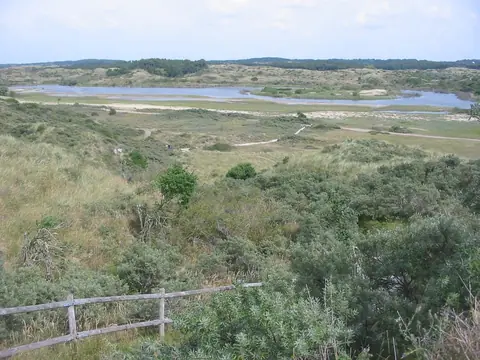
Zuid-Kennemerland National Park
Dunes, forest and lakes between Haarlem and the North Sea, where European bison, Scottish Highland cattle and Konik horses roam.
Day 3: The bulb fields to Leiden (about 45 km)
South through Heemstede, Bennebroek and Hillegom, into the flowers. The lanes west of the railway, round De Zilk and Noordwijkerhout, have the widest fields. At Lisse have an afternoon slot at Keukenhof, after 3 (there's free bike parking at the gate). Then it's 15 km by Sassenheim and Warmond to Leiden, Rembrandt's birthplace, with the country's oldest university, the Hortus where the first Dutch tulips flowered in 1594, and more canals than anywhere but Amsterdam.
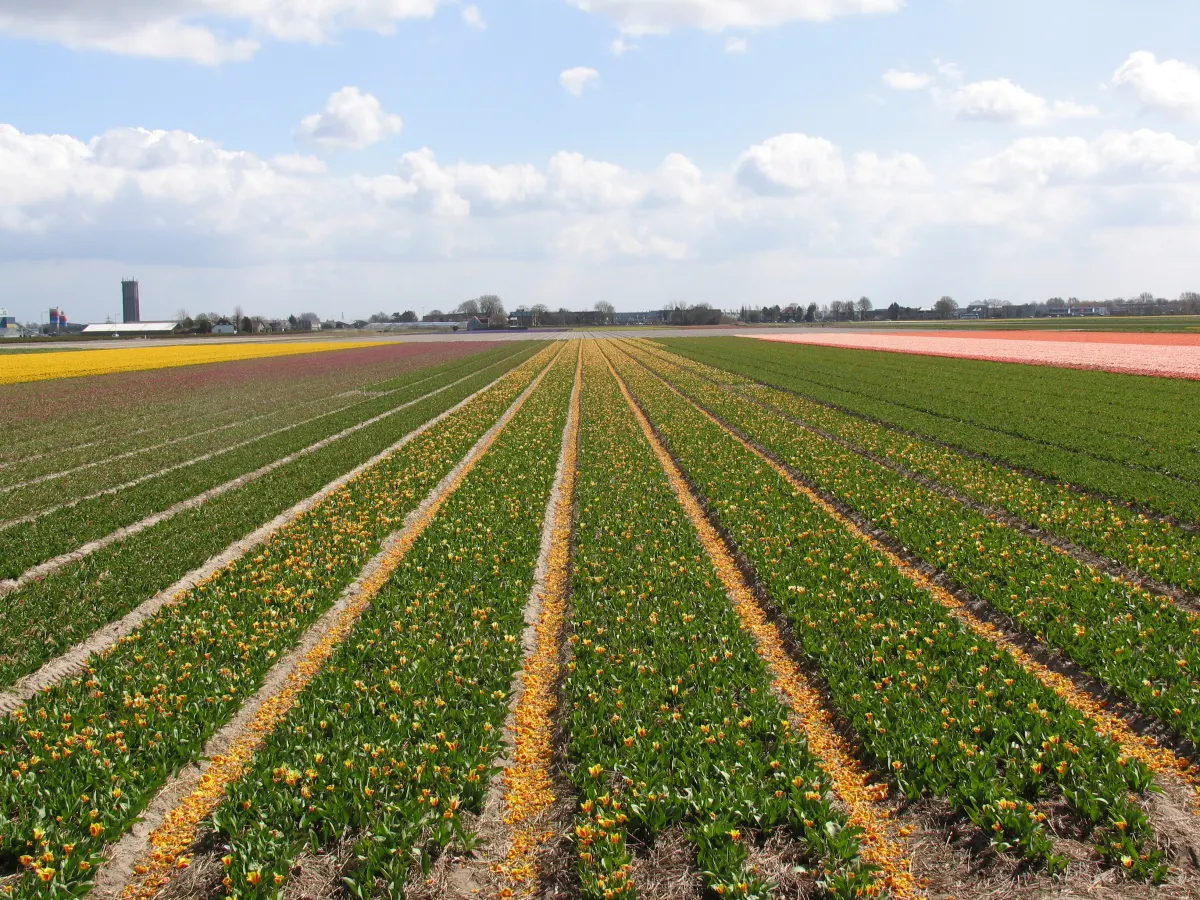

Keukenhof Gardens
The world's most famous flower garden, where around 7 million tulips, daffodils and hyacinths bloom in 32 hectares of parkland every spring.
Day 4: Lakes and polders to Gouda (about 35 km)
East along the old Rhine, the Roman frontier, by Koudekerk and Alphen aan den Rijn. South of Alphen the land drops into peat polders five metres and more below the sea. Pass Boskoop, all nurseries and hump bridges, and Waddinxveen, to Gouda. Its town hall stands alone in the square like a toy, and Sint-Janskerk has the finest stained glass in the country. Eat a warm stroopwafel at the source. The cheese market is on Thursday mornings from April to August.

Stroopwafels
Thin waffles with caramel syrup in the middle, best fresh and warm from market stalls.
Day 5: Gouda to Kinderdijk (about 40 km) and Rotterdam
Ride along the Hollandse IJssel and through the Krimpenerwaard, a green sheet cut by ditches, to the Lek, and cross by the car ferry at Schoonhoven, the silver town, or Bergambacht. Then follow the dyke west by Streefkerk and Nieuw-Lekkerland to Kinderdijk: 19 windmills from around 1740, along two canals. You may cycle between them for nothing. Stay until the coaches go. On Fridays, Saturdays and Sundays the WaterShuttle goes to Rotterdam in half an hour (ask about bikes); at other times the small Driehoeksveer ferry crosses to Ridderkerk, and you ride in along the river, or take the Waterbus, under the Erasmus Bridge.
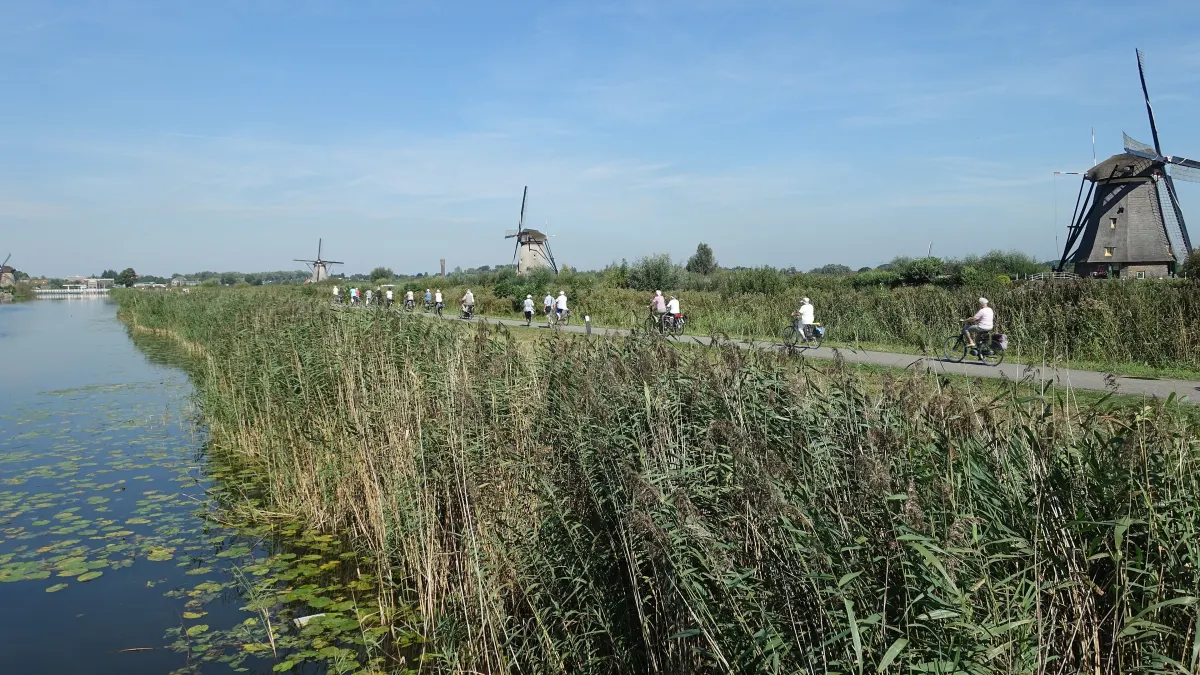

Windmills of Kinderdijk
Nineteen 18th-century windmills standing in rows along the canals of a polder near Rotterdam, built to pump water out of the low-lying land.
In bad weather
Trains run near the route on every day: Haarlem, Hillegom, Leiden, Alphen and Gouda all have stations. Bikes go on them off-peak.
Shorter
Days 2 and 3 alone, from Haarlem to Leiden, are the best of it. By train to Haarlem, hire a bike there, and return it.
With more time
- From Rotterdam go on to Delft and Zeeland.
- The Biesbosch, by Waterbus to Dordrecht.
- From Gouda, the Reeuwijk lakes, a short loop on lanes between sheets of water.
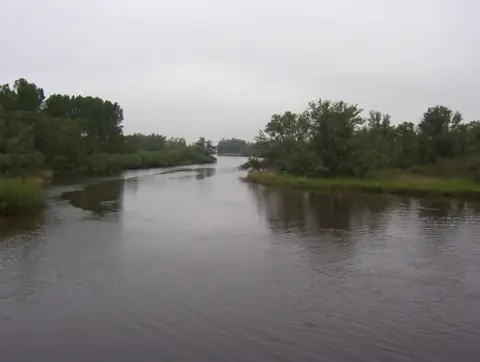
De Biesbosch National Park
One of Europe's largest freshwater tidal areas, a maze of creeks and willow forests with beavers and kingfishers.


Comments