
Food in the Netherlands: herring, bitterballen, pancakes, cheese, rijsttafel, markets and eating out
The Dutch have a poor name for food, and they used to deserve it. Now there are good restaurants everywhere, the snacks are worth the trip, and four centuries in Asia and the Caribbean left the best of it: Indonesian and Surinamese cooking.
When people eat
- Breakfast and lunch are bread: with cheese, ham, peanut butter, or at breakfast hagelslag, chocolate sprinkles on butter. Lunch is from 12 to 2. A hot one is usually a uitsmijter (fried eggs, ham and cheese on bread) or a croquette on bread.
- Dinner is early, from 6. Kitchens often close at 9 or 9:30 pm, and earlier in villages.
- Book for Thursday to Saturday. Many restaurants close on Monday, some on Tuesday too.
- Ask for kraanwater (tap water). It's excellent. Some places refuse, or charge, and tell you to buy a bottle.
From the fryer
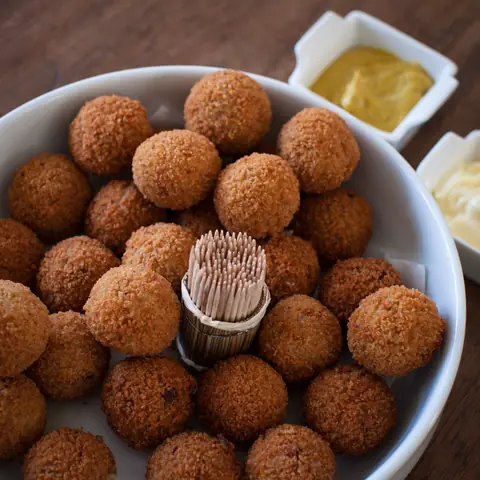
- Bitterballen: crisp balls of beef ragout, with mustard, eaten with a beer. They're molten inside: break one open and wait.
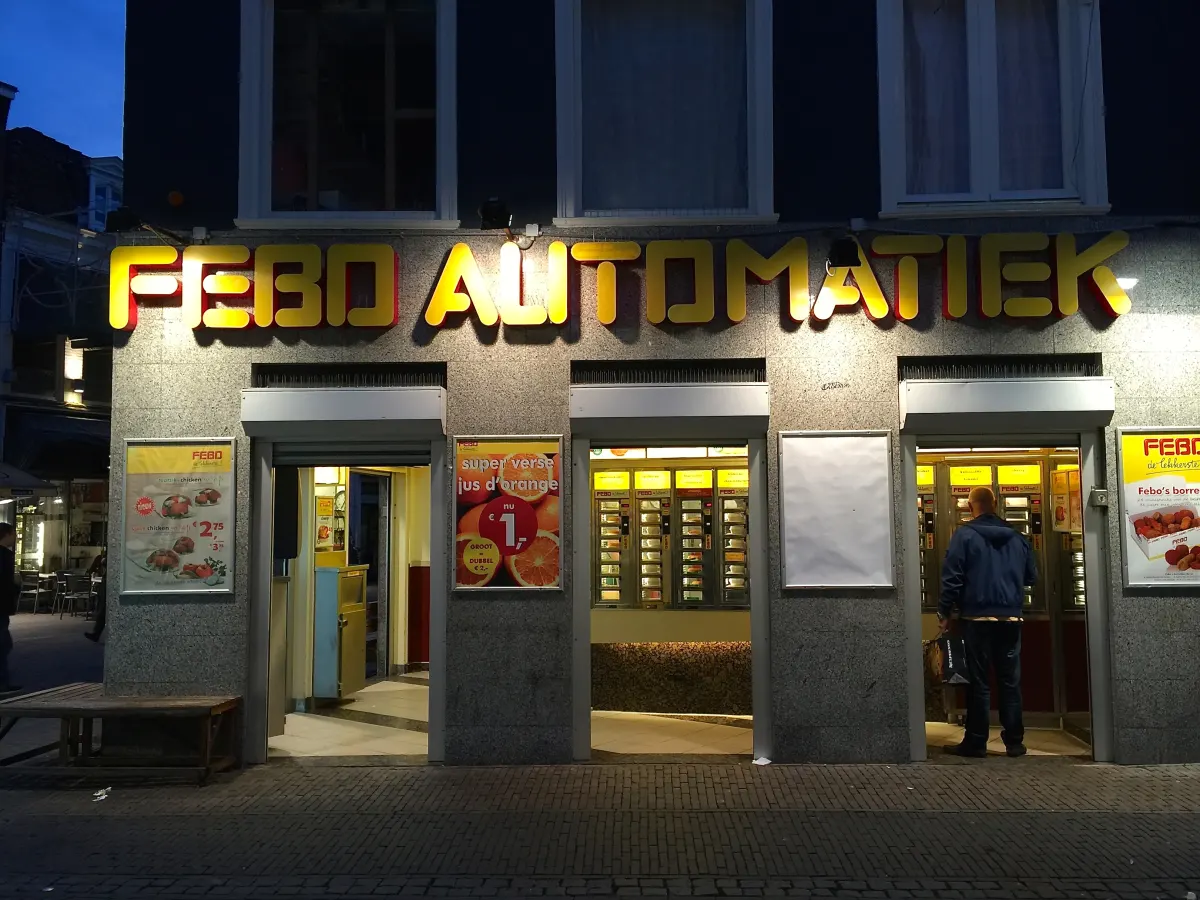
- Kroket, the same as a roll; frikandel, a skinless sausage; kaassoufflé, a pocket of melted cheese. Some snack bars sell them from a wall of little heated doors: tap a card and one opens.
- Chips (patat or friet) with mayonnaise. Patatje oorlog, "war chips", has peanut sauce, mayonnaise and raw onion.
- Kibbeling: battered chunks of cod, from a fish stall.
Fish
- Raw herring, with onion and gherkin, from a stall. It's lightly salted, not quite raw. Hollandse Nieuwe, the new catch, comes in mid-June. In Amsterdam it's cut up with a little flag; elsewhere you hold it by the tail.
- Mussels from Zeeland, July to about April. Oysters from Yerseke.
- Smoked eel is a tradition, from a fish that's nearly extinct. Leave it.
Cheese
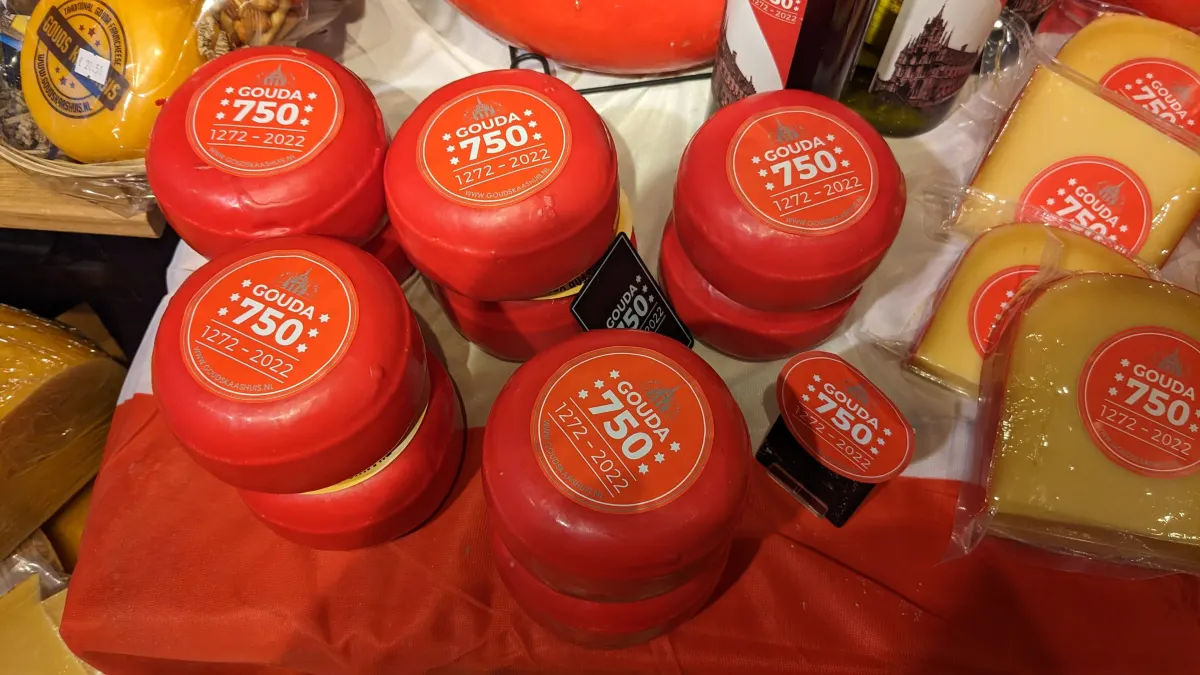
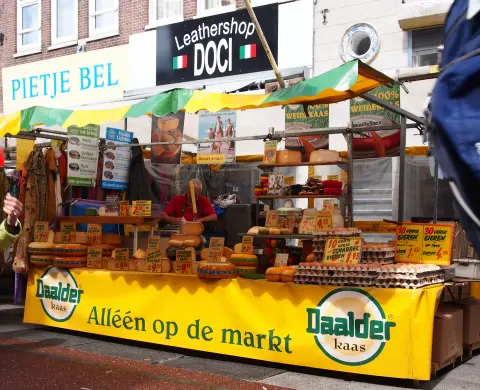
- Nearly all of it is Gouda or Edam in style. Ask by age: jong is mild, belegen matured, and oud hard, salty and best. Boerenkaas is farm cheese, from raw milk.
- Buy it at a market or a farm, where they let you taste. The shops with waxed balls in central Amsterdam are for tourists.
- The Alkmaar market, on Friday mornings from late March to September, is a show, and a good one.
Sweet things
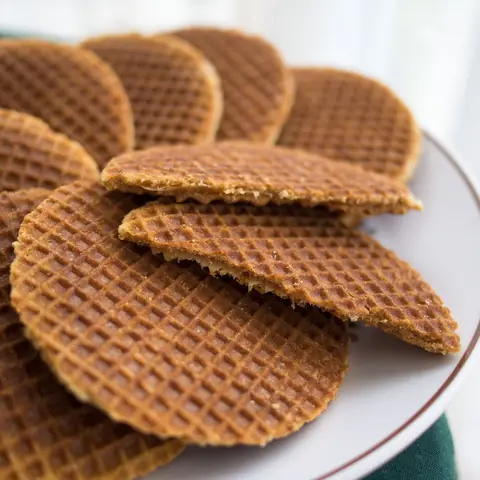
- Stroopwafels: buy one hot at a market. They come from Gouda. Lay a cold one over your coffee cup.
- Poffertjes: tiny fluffy pancakes with butter and icing sugar. Big pannenkoeken, with bacon, apple or cheese, are dinner.
- Appeltaart: deep apple pie with whipped cream.
- Drop: liquorice, sweet or fiercely salty. Accept one, and keep your face still.
- In autumn pepernoten and speculaas, and for New Year oliebollen, doughnuts with raisins. Tompouce, a pink slice, is orange on King's Day.
Indonesian and Surinamese
- Rijsttafel, "rice table": a dozen or more little dishes with rice, invented for colonial tables. For two or more. The Hague may do it best.
- A toko is a shop selling the same thing in a box, for a third of the price.
- Surinamese: roti with chicken curry and beans, broodje pom, bara, moksi meti. Cheap, spicy and everywhere in Amsterdam, Rotterdam and The Hague.
- Turkish and Moroccan bakeries and grills feed you for very little too.
Dutch dishes
- Stamppot: potato mashed with kale, endive or carrots, with smoked sausage. Erwtensoep, pea soup in which a spoon should stand. Both in winter.
- White asparagus from mid-April to 24 June, mostly from Limburg and Brabant, with ham, egg and butter. Every restaurant has a menu.
Markets and shops
- Amsterdam's Albert Cuyp (every day but Sunday), Rotterdam's Markthal and Tuesday and Saturday market on the Binnenrotte, The Hague's big multicultural Haagse Markt, and a weekly market in every town.
- Supermarkets: Albert Heijn and Jumbo, and the cheaper Lidl, Aldi and Dirk.
Diets
- Vegetarians and vegans do very well: every menu has something, and even herring and bitterballen have plant versions.
- Restaurants must be able to tell you the allergens. Peanut is in satay and many Indonesian dishes.
- Halal food is easy to find in the cities.
See also coffee, beer and jenever and Tipping.
Stroopwafels
Thin waffles with caramel syrup in the middle, best fresh and warm from market stalls.
Raw herring (Hollandse Nieuwe)
Lightly salted raw herring with onion and pickles, eaten by holding the tail.
Bitterballen
Crisp fried balls of beef ragout, served with mustard and a beer at 'borrel' (drinks) time.
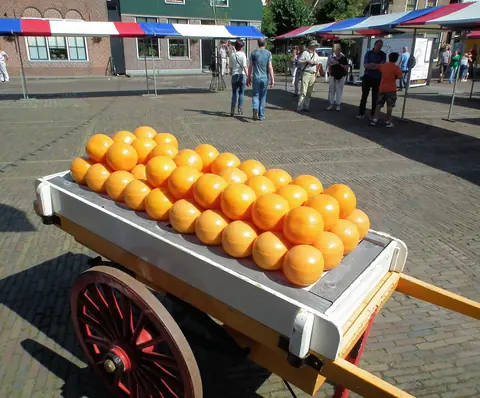
Dutch cheese and the Alkmaar cheese market
See the traditional cheese market in Alkmaar on Friday mornings from April to September, where porters carry wheels on wooden barrows.
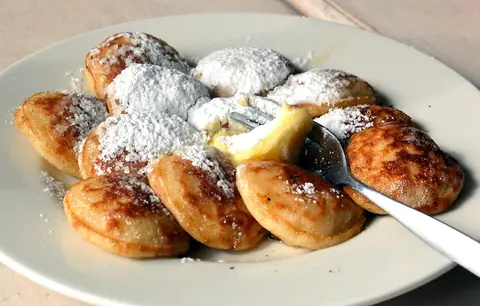
Poffertjes
Tiny, fluffy pancakes cooked in special pans, served with butter and powdered sugar, at markets and fairs.
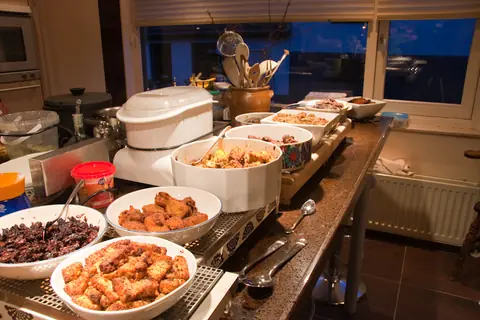
Indonesian rijsttafel
A 'rice table' of many small Indonesian dishes, a colonial-era tradition.


Comments