
Cycling in the Netherlands: the rules, fines, hiring a bike, locking it, junction numbers and where to ride
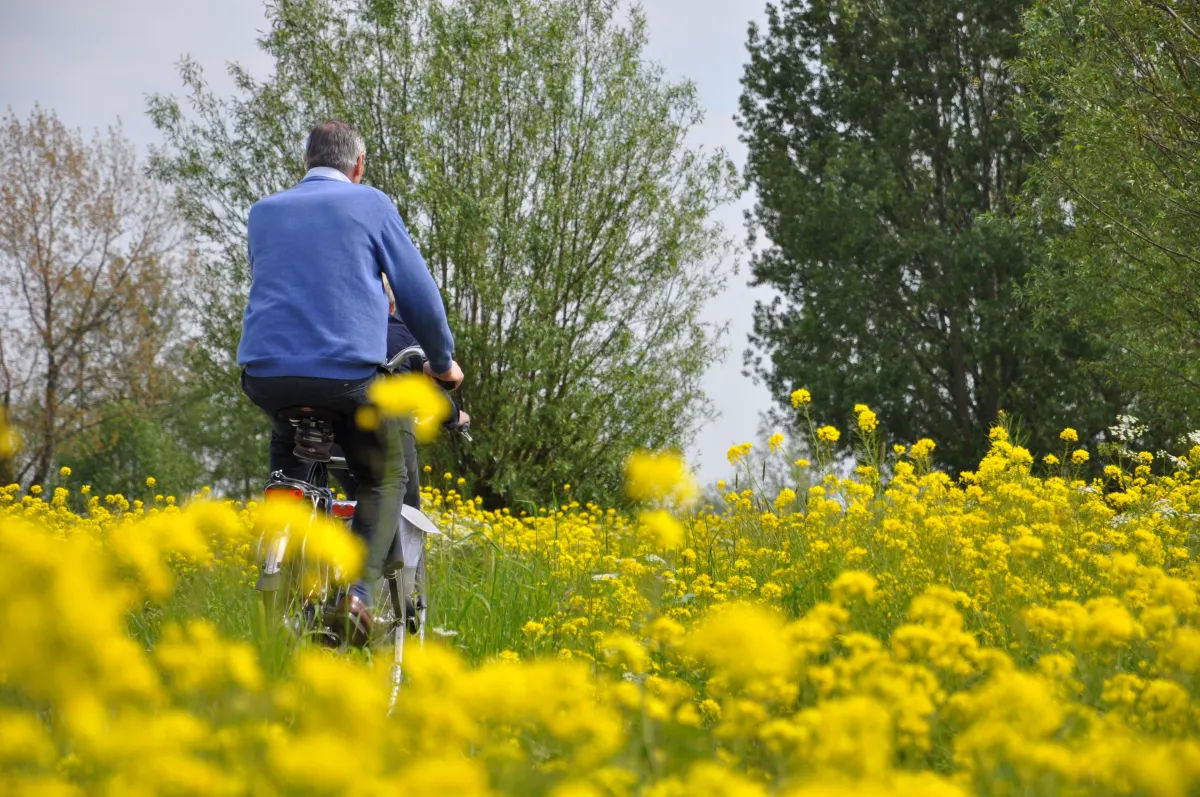
There are more bikes than people here, and some 35,000 km of cycle paths. Out of town it's the best way to see the country, flat and safe. In the middle of Amsterdam it's fast, crowded and unforgiving, and not the place to learn. If you're unsure, start in a park, in Haarlem or in the dunes.
The rules
- Ride on the right, on the red path if there's one. A round blue sign with a white bike means you must use it. Don't ride on pavements or the wrong way.
- Give way to traffic from the right at unmarked crossings, bikes and cars alike. A row of white triangles, shark's teeth, pointing at you means give way. Trams nearly always go first.
- Traffic lights with a bike are for you. Some signs let bikes turn right on red: rechtsaf fietsers vrij.
- Put your arm out to turn. Don't stop on the path: pull off it first.
- You may ride two abreast, but keep right so that others can pass. If somebody rings, move over.
- Lights, white in front and red behind, in the dark.
- Cross tram rails at a wide angle, or your wheel drops in. This is how most visitors fall.
- Passengers sit on the back rack only if the bike is made for it. Children need a proper seat.
- No helmet is required on ordinary and electric bikes, and few wear one, but hire shops will give you one. A law for under-18s on e-bikes was still being prepared in late 2026.
- On paths marked fietspad you'll meet light mopeds too. In Amsterdam those must use the road.
Fines
- For 2026: holding a phone €170, going through a red light €120, no lights €75, each plus €9 in costs. The government plans about €180, €130 and €80 for 2027, though in the autumn parliament was still objecting.
- Alcohol: the limit is the same as for cars, 0.5 g per litre of blood. Cannabis counts too.
Hiring
- An ordinary bike is usually €10 to €15 a day, and less by the week. An e-bike is €25 to €40. Town hire shops want a passport or a card deposit: give a card, not your passport.
- Choose hand brakes and gears if you're not used to a back-pedal brake.
- Take the insurance against theft.
- The yellow-and-blue OV-fiets at every station (€4.80 a day, €4.95 from 2027) is cheap and excellent, but needs a personal Dutch travel card with a subscription, so it's not for visitors.
- Fatbikes: some shops hire souped-up ones that go faster than 25 km/h. That makes them illegal mopeds, and the police have rollers to test them and take them away. More and more towns restrict fatbikes: look for signs.
Locking and parking
- Use two locks: the one on the back wheel, and a chain round the frame to something fixed.
- Park in a rack or a guarded bike park. There are huge free ones for the first 24 hours under the stations at Amsterdam Centraal and Utrecht, whose 12,500 places make it the world's biggest.
- Bikes left in the way, or in a "no bikes" zone, are taken to a depot. You pay to get them back, and the Amsterdam one is far out.
- Don't buy a bike offered in the street. It's almost certainly stolen, and buying it is a crime.
Finding your way: junction numbers
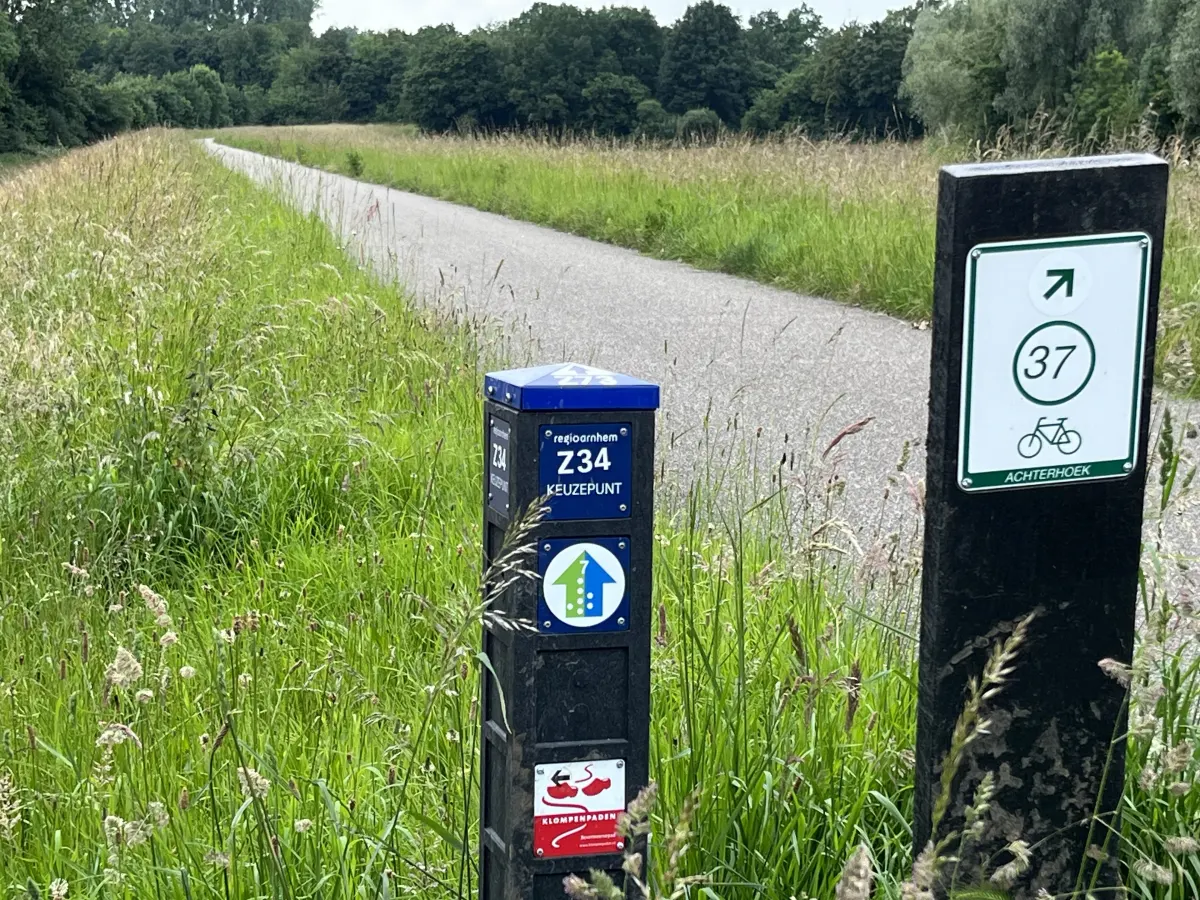
- The whole country has a network of numbered junctions, knooppunten. Write down the numbers of your route, such as 23, 57, 58, and follow the signs from one to the next, on quiet paths.
- Plan with the Fietsersbond planner, the ANWB app or Holland Cycling Routes.
- Long routes are marked LF, such as the LF Kustroute along the whole coast.
- The wind is the Dutch mountain. Ride out against it and back with it: it usually blows from the south-west.
Where to ride
- The dunes of Zuid-Kennemerland, from Haarlem.
- The bulb fields in April, round Lisse and Hillegom.
- Waterland: Amsterdam Noord to Broek, Monnickendam and Marken, from the free ferry.
- The Hoge Veluwe, with 1,800 free white bikes inside the park.
- The mills of Kinderdijk, from Rotterdam.
- The islands: Schiermonnikoog and Texel.
- Limburg, round Valkenburg, if you want hills.
See 5 days by bike through the windmills and bulb fields, with a route map.

Kröller-Müller Museum and Hoge Veluwe National Park
A national park of heath, forest and drifting sand dunes, with deer and wild boar, where you can borrow one of the free white bicycles at the entranc…
Zuid-Kennemerland National Park
Dunes, forest and lakes between Haarlem and the North Sea, where European bison, Scottish Highland cattle and Konik horses roam.

Windmills of Kinderdijk
Nineteen 18th-century windmills standing in rows along the canals of a polder near Rotterdam, built to pump water out of the low-lying land.

Comments