
10 days in the imperial cities by train: Casablanca, Rabat, Meknes, Volubilis, Fes and Marrakech
Four cities have been Morocco's capital: Fes, Marrakech, Meknes and Rabat. All are on the railway, with Casablanca between them, so you can see the country's greatest architecture without a car. The trip suits first-time visitors and any season except the hottest weeks.
Map of the route
Train from Casablanca airport to Casa Voyageurs, about 36 km
Train from Casablanca to Rabat, about 88 km
Train from Rabat to Meknes, about 175 km
Taxi from Meknes to Volubilis and Moulay Idriss, about 30 km
Train from Meknes to Fes, about 55 km
Train from Casablanca to Marrakech (the last part of the trip from Fes), about 246 km
Click a dot for the place. Labels show where you spend each night. From Fes to Marrakech the train goes back by Meknes, Rabat and Casablanca. Distances are approximate. Route from OpenStreetMap (© OpenStreetMap contributors, ODbL).
Before you start
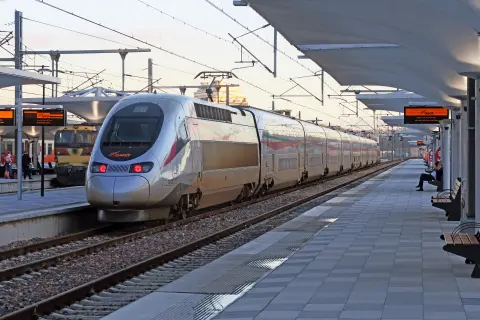
- Trains: check times the day before. Since September 2026 works on the new high-speed line have changed the timetable: see Trains. The cheapest fares were 49 dirhams on Al Atlas trains in November 2026. First class is worth it for the long legs.
- When: March to June and September to November. Fes is cold and wet in January. During Ramadan, hours are shorter.
- Start at Casablanca airport, which has a station, or come down from Tangier on Al Boraq and begin in Rabat.
Day 1: Casablanca
A working city with fine 1930s buildings. Take the hourly airport train to Casa Voyageurs and a petit taxi or tram on. Join a tour of the Hassan II Mosque: 140 dirhams, at 9, 10, 11, noon and 3 from mid-September to mid-March (Fridays 9, 10 and 3), and also at 4 in summer. The minaret is 210 m high, and the Atlantic breaks below the prayer hall. The Museum of Moroccan Judaism is one of a kind.

Hassan II Mosque, Casablanca
One of the largest mosques in the world, built partly over the Atlantic, with a 210 m minaret.
Days 2 and 3: Rabat
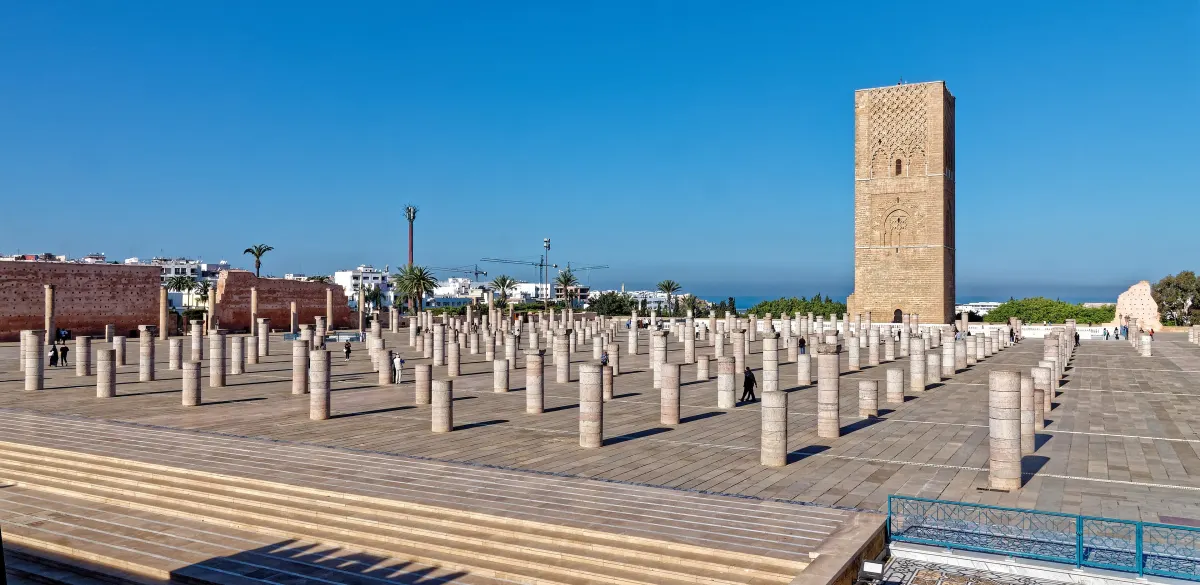
About an hour by frequent shuttle train to Rabat Ville. The capital is green, tidy and easy. See the Hassan Tower, what's left of a mosque begun in the 1190s, and the Mausoleum of Mohammed V beside it, which everyone may enter. Walk through the blue and white Kasbah of the Udayas above the river mouth. Chellah, a Roman town and royal cemetery with storks, has been closed and opened in stages for restoration: ask. The Mohammed VI Museum of modern art is by the station. Take the tram or a rowing boat to Salé.
Days 4 and 5: Meknes
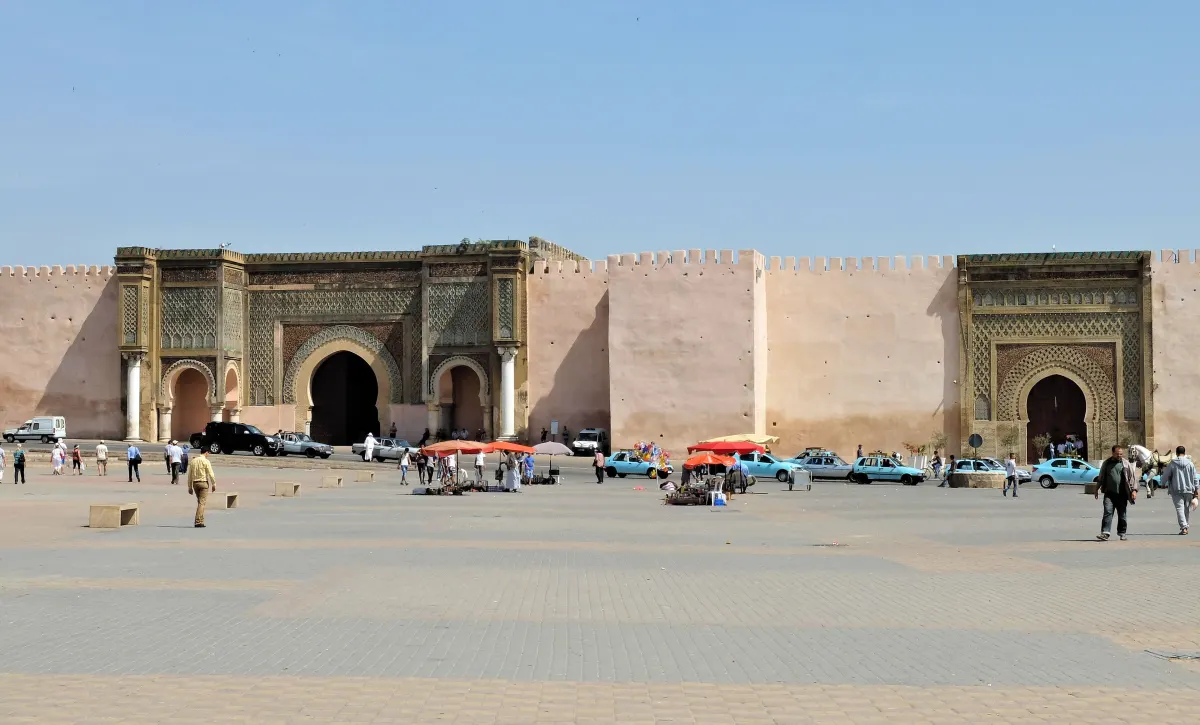
About 2 to 2½ hours by train. Get off at Meknes Amir Abdelkader, the nearer station to the middle. The sultan Moulay Ismail built 40 km of walls here around 1700. See Bab Mansour, the granaries of Heri es-Souani, his mausoleum if it's open, and the Bou Inania madrasa. Several monuments have been under repair, so ask at your riad.
On the second day share a grand taxi to Volubilis (about 30 km), with Roman mosaics still lying in the open among olives. Go early: there's no shade. Then Moulay Idriss, a white hill town round the tomb of Morocco's founder. Non-Muslims were not allowed to stay the night there until 2005.

Volubilis
The best-preserved Roman ruins in Morocco, a UNESCO site, with mosaic floors still in place, a triumphal arch and basilica columns among olive groves.
Days 6 to 8: Fes
About 40 minutes by train. Fes el-Bali is the largest and most complete medieval city in the Arab world. Hire an official guide for the first morning: the Bou Inania and al-Attarine madrasas, the Qarawiyyin (from its doors, as non-Muslims can't go in), the Nejjarine fountain and wood museum, and the tanneries. On the second day wander alone, and see the mellah and the Merinid tombs at sunset, by taxi. On the third learn to cook, try a hammam, or go to Ifrane's cedars by grand taxi.

Fès el-Bali medina
One of the largest car-free urban areas in the world, a UNESCO site, with about 9,000 lanes, souks, the Al-Qarawiyyin university (founded in 859) and…
Day 9: Fes to Marrakech
The long leg, around 7 hours, sometimes with a change at Casa Voyageurs. Book first class, bring lunch, and have the plains and red hills to look at. Or fly, on days when there's a direct flight: see Domestic flights. Evening on Jemaa el-Fna.
Day 10: Marrakech
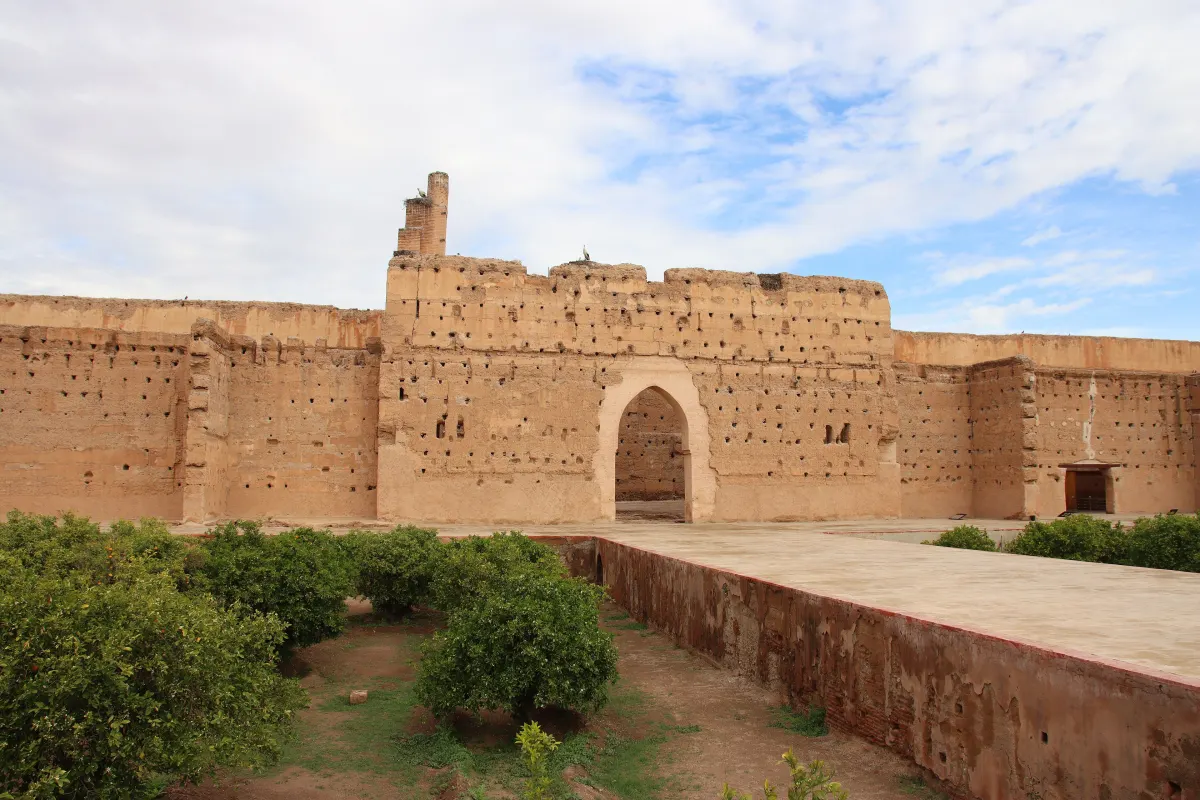
The Bahia Palace, the Badi Palace and the Saadian Tombs are 100 dirhams each for foreign adults, and 50 for children from 7 to 13. Go to the tombs at opening. Then Ben Youssef Madrasa and the souks, and the Jardin Majorelle with a ticket bought online. Stay longer if you can: two more days allow Ouzoud Falls or a walk from Imlil.

Bahia Palace, Marrakech
A 19th-century palace built for a grand vizier, with courtyards, gardens of orange trees and rooms decorated with the finest Moroccan craftsmanship: …

Ben Youssef Madrasa, Marrakech
A 16th-century Islamic college, the largest in Morocco, with a courtyard of carved cedar, stucco and zellige tiles around a pool, and tiny student ce…
Variations
- One week: one night each in Casablanca and Meknes, one in Rabat, two in Fes, two in Marrakech.
- From Spain: the ferry to Tangier, then Al Boraq to Rabat in 1 hour 20 minutes.
- To the sea: a Supratours bus from Marrakech station to Essaouira, about 3 hours.
- The desert instead of the train: go from Fes to Marrakech by Merzouga, in reverse.
Comments