
Arriving in Morocco: visas, passports, customs, the drone ban, and getting into town from the airport
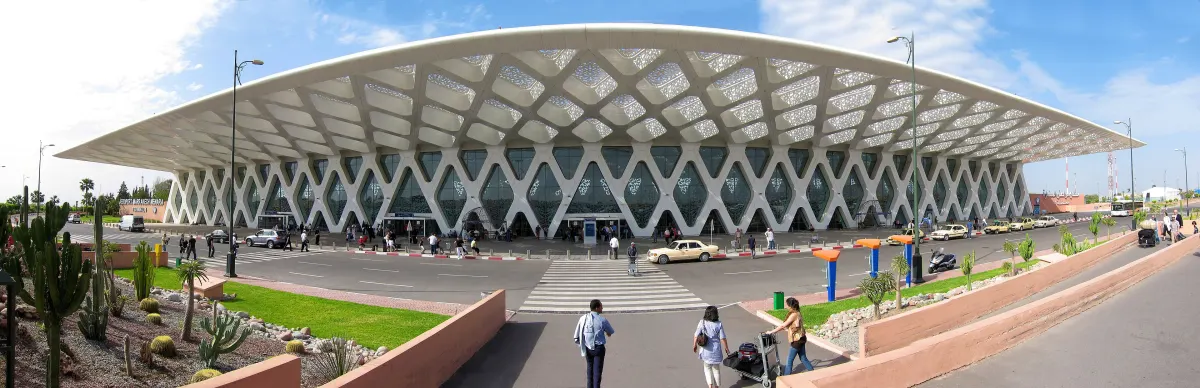
Most visitors need only a passport. Three things catch people out: a passport that expires too soon, a missing entry stamp, and a drone in the luggage.
Visas
- Citizens of the UK, Canada, Australia, New Zealand, the USA and the EU can visit without a visa for up to 90 days.
- Many other nationalities need a visa, an e-visa or an electronic travel authorisation, and the lists have changed more than once since 2024. Ask a Moroccan consulate, or look at the official site, acces-maroc.ma. Other sites that "process" applications are resellers.
- To stay longer than 90 days you need permission from the foreigners' service of the local police. Canada says to ask at least 15 days before the limit. Overstaying means a fine and an appearance before a prosecutor before you can leave.
- Officers can ask for a return ticket and proof of money and accommodation. Have your first hotel's address ready.
Your passport
- The UK says it must be valid for at least three months after you arrive. Canada says six months after you leave. Airlines sometimes apply the stricter rule, so aim for six.
- Damaged passports have been refused. Identity cards aren't accepted, even from the EU.
- Check that you've been stamped in. Visitors without an entry stamp have had trouble leaving.
- If it's lost or stolen, report it to the police in the town where it happened. You need their paper to leave the country. It's illegal to send a passport to Morocco by post or courier, so a replacement can be slow: New Zealand, which has no embassy here, warns of several weeks.
- Children travelling with one parent should carry a birth certificate and a letter from the other parent.
Customs
- Personal belongings are free of duty. Guides give the limits as 200 cigarettes (or 200–250 g of tobacco), about one litre of spirits or one bottle of wine, and 150 ml of perfume. Customs' own page couldn't be read for this article, and reports differ on alcohol, so don't bring more than a bottle.
- Declare foreign money worth 100,000 dirhams or more, in or out. You can carry only 2,000 dirhams across the border: see Money.
- Medicines: bring the prescription and keep them in their packets.
- Banned: drugs, including cannabis, pornography, and weapons, including pepper spray. Religious literature meant to convert Muslims is illegal.
- Professional-looking film equipment can be held at the airport if you don't have a filming permit.
- Going home: up to ten ornamental stones or fossils are allowed out. Antiques and anything that counts as cultural property need a certificate. Rules at your own end, such as on meat or coral, apply too.
Leave the drone at home
Morocco's customs says that bringing in and using drones is prohibited without prior authorisation, and that you must declare one on arrival to avoid having it confiscated. This covers toys too. France's foreign ministry describes it as a complete ban except for authorised professionals, with a fine and confiscation. In practice tourists don't get permission.
Set your watch
Morocco went back to Greenwich Mean Time for good on 20 September 2026, after eight years an hour ahead. There is no summer time and no change for Ramadan any more. It's the same time as London in winter and an hour behind it in summer, and one hour behind Spain and France in winter, two in summer. Guides, older phones and some timetables may be wrong.
From the airport
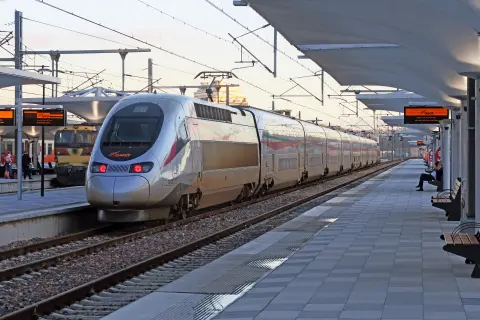
- Casablanca (Mohammed V): an hourly train from under the terminal to Casa Voyageurs, where you change for Rabat, Tangier, Fes and Marrakech. ONCF lists it from 60 dirhams, between about 5:30 am and 11 pm, but building works are changing the timetable. Taxis to the centre cost several times as much.
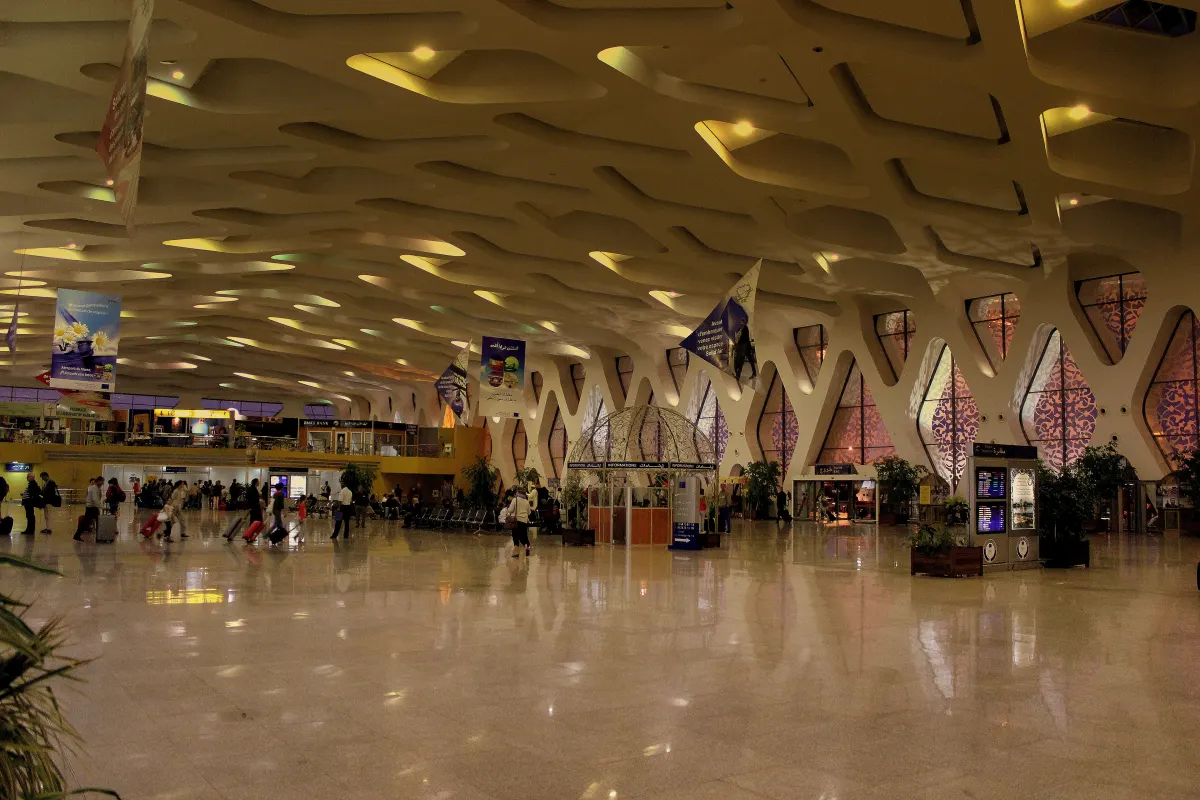
- Marrakech (Menara): only about 6 km from the medina. Taxis have posted prices by zone, reported at about 70 to 100 dirhams to the medina by day and more at night, and drivers ask for much more. Bus 19 goes to Jemaa el-Fna and Gueliz.
- Fes, Tangier, Agadir, Rabat, Essaouira: use a grand taxi from the rank, with the price agreed first, or have your hotel send a car. Riads in a medina usually meet you, as cars can't reach the door.
- Change a little money, or use a cash machine, before you leave the terminal, and buy a SIM card there if you want one.
By land
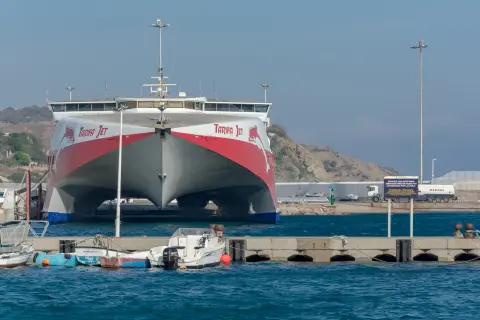
The border with Algeria is closed, on land and at sea. You can walk across from the Spanish cities of Ceuta and Melilla, with a Schengen visa or visa-free status for the Spanish side, and often a long wait. Boats are in Ferries from Spain.

Hassan II Mosque, Casablanca
One of the largest mosques in the world, built partly over the Atlantic, with a 210 m minaret.

Jemaa el-Fnaa, Marrakech
The great square at the heart of Marrakech's medina, one of the most exciting places on Earth.
Comments