
Money in Morocco: dirhams, cash machines, cards, what things cost and why to change your dirhams back
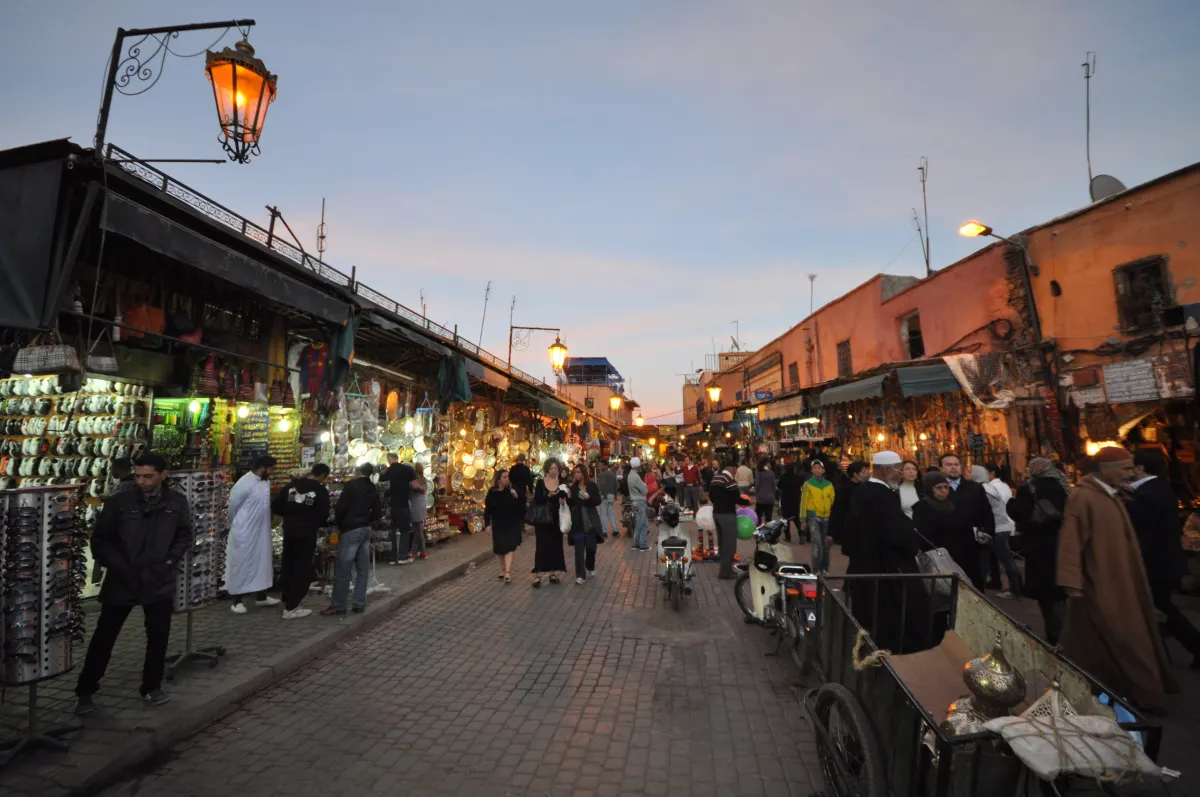
Morocco runs on cash. Its currency, the dirham (DH or MAD), is closed: you can't easily buy it before you come, or change it after you've left.
The dirham
- In late 2026 a euro was worth very roughly 10 to 11 dirhams, a US dollar 9 to 10 and a pound 12 to 13. Look up today's rate.
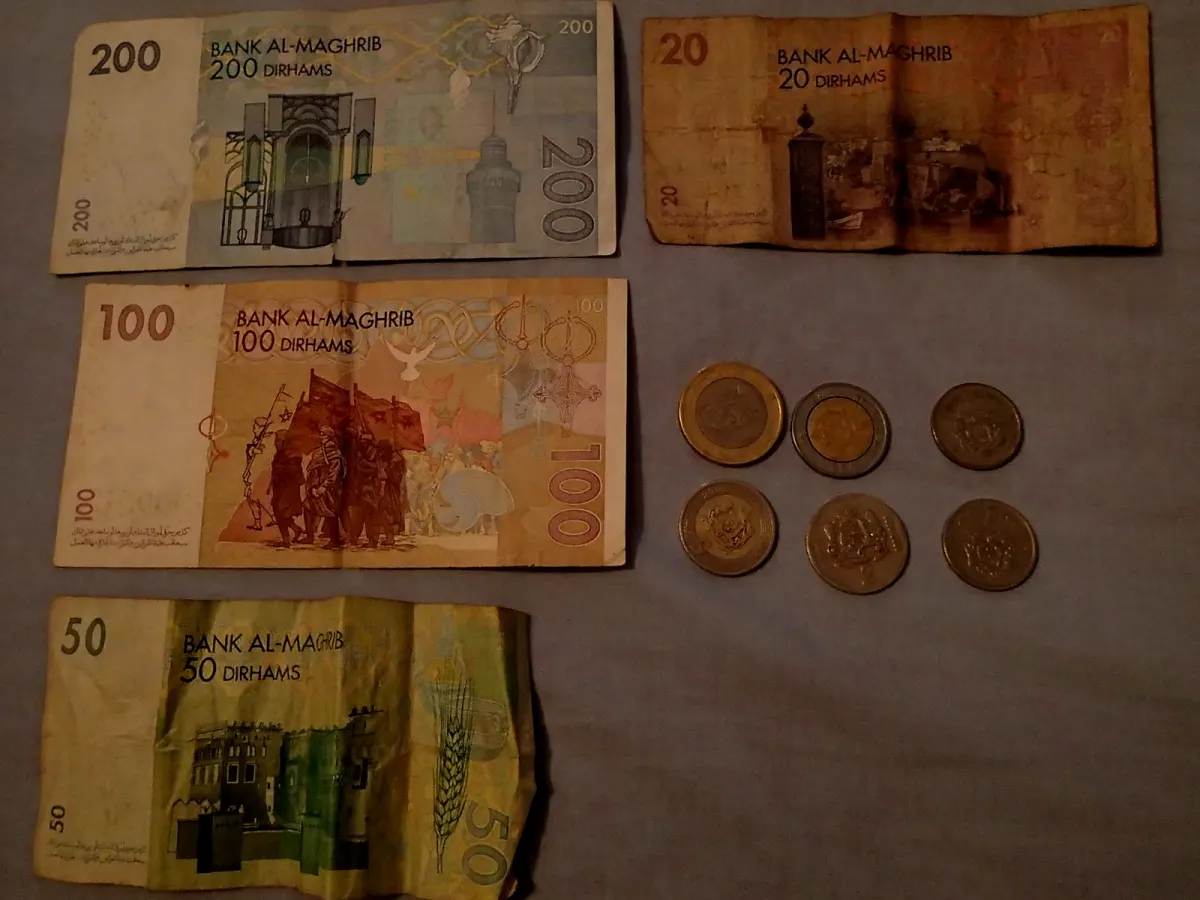
- Notes are 20, 50, 100 and 200. Coins go up to 10. Some sellers still count in rials (20 to a dirham) or old centimes. If a price sounds absurd, ask them to write it in dirhams.
- Moroccan customs lets you carry at most 2,000 dirhams in or out. Foreign money worth 100,000 dirhams or more must be declared.
Cash machines
- They're in every town, at banks, stations and airports, but few in small villages. Merzouga, Imlil and the gorges have few or none: bring enough.
- Most charge foreign cards a fee, usually 20 to 35 dirhams, on top of your own bank's. Try two or three banks, as it varies.
- The usual limit is 2,000 dirhams a time, sometimes more.
- When a machine offers to convert to your own currency, choose dirhams.
- Machines run out on Sundays and before holidays. Use one attached to an open bank, shield your PIN, and watch for anyone hovering: Canada says fraud and theft at machines are frequent.
Changing money
- Banks and licensed bureaux de change give close to the official rate, and there's little difference between them. The airport is fine for a first 50 euros.
- Euros, pounds and US dollars are easy. Australian dollars can't be changed at all, Australia says, and New Zealand dollars are no likelier.
- Don't change on the street. Damaged notes are refused.
- Keep a receipt. You may be asked for it when you change dirhams back, which you should do before passport control. Better still, spend them.
Cards
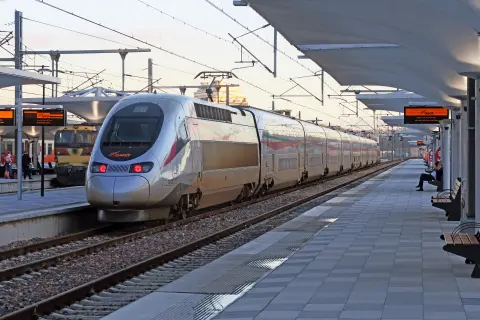
- Visa and Mastercard work in larger hotels, supermarkets, smart restaurants, petrol stations on main roads, and for train tickets. American Express seldom does.
- Nearly everything else is cash: taxis, small riads, market stalls, guides, most cafés.
- Some shops add 2 or 3% for cards. Scams include charging twice. Keep the slip and check your account.
- Tell your bank you're coming, and bring two cards.
What things cost
Rough prices, in dirhams, away from the tourist squares:
- Mint tea or coffee 8 to 20. Fresh orange juice 5 to 15. Large bottle of water 5 to 8.
- Harira soup 5 to 15. A sandwich or a plate of grilled meat 25 to 50. A tagine 50 to 90, and 90 to 180 in a tourist restaurant.
- Petit taxi across town 10 to 25.
- A simple room 200 to 350, a pleasant riad 500 to 1,200, a fine one much more.
- State monuments in Marrakech, such as the Bahia Palace, are 100 dirhams for foreign adults and 50 for children from 7 to 13. Smaller museums and madrasas cost 20 to 70.
Taxes on your bill
Hotels and riads add a tourist tax for each person and night, according to their class and the town: from a few dirhams to several tens in the smartest. It's often paid in cash, and not included in online prices. Ask.
See also Tipping and Bargaining.

Historic sites
Bahia Palace, Marrakech
Marrakesh, Marrakech
A 19th-century palace built for a grand vizier, with courtyards, gardens of orange trees and rooms decorated with the finest Moroccan craftsmanship: …
Shopping
Souks of the Marrakech medina
Marrakesh, Marrakech
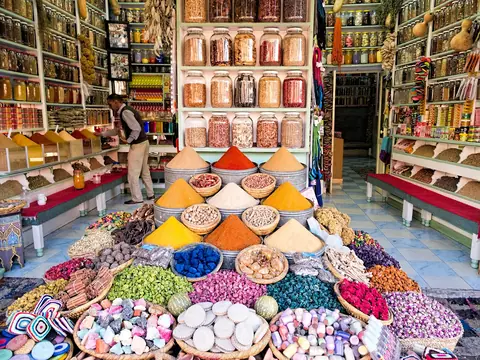
North of Jemaa el-Fnaa, the medina is a remarkable maze of covered souks, each lane devoted to a craft: leather, spices, lanterns, carpets, babouche …
Comments