
Shopping and bargaining in Morocco: how to haggle, fair prices, carpets, leather, argan oil and what you can take home
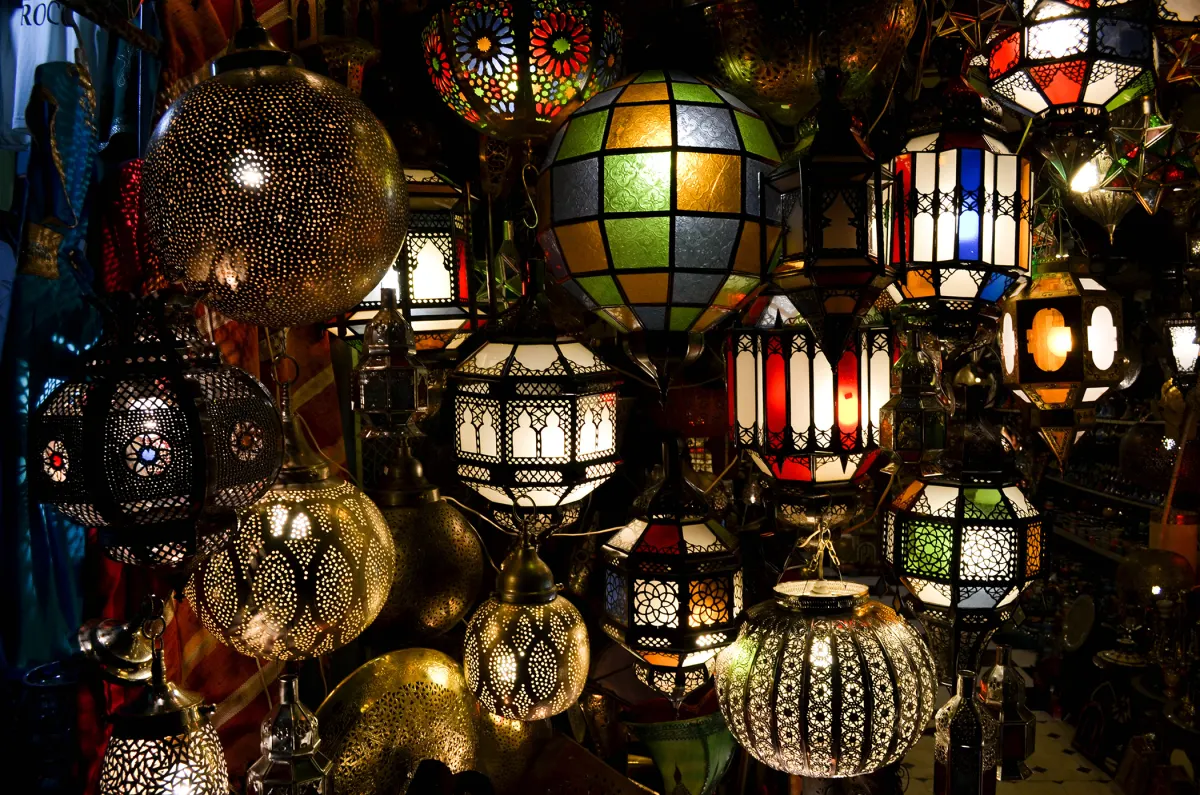
Morocco's craftsmen still make things by hand in sight of the street, and half the luggage home is usually theirs. In the souks the price is a conversation. Enjoy it, and never start one you don't mean.
How to bargain
- First look round: ask prices in three shops, visit a fixed-price place, and decide what the thing is worth to you.
- Greet, admire, ask. Whatever the first price, look thoughtful.
- Offer a third to a half, politely. Move up in small steps while the seller comes down. You'll often meet somewhere around half to two-thirds.
- Walking away, with thanks, finds the real price. If you aren't called back, you know that too.
- If you name a price and it's accepted, you've bought it. Backing out is bad manners.
- Buy two or three things together for a better price. Pay cash.
- Don't fight over the last 10 dirhams. If you're both smiling, it was a fair price.
- Don't haggle over food, taxis with meters, or anything with a label.
Fixed prices
- State craft centres, called Ensemble Artisanal, in Marrakech, Fes, Rabat and other cities. Good for learning prices, and buying without argument.
- Co-operatives, museum shops, and the design shops in Marrakech's new town and Sidi Ghanem.
What to buy
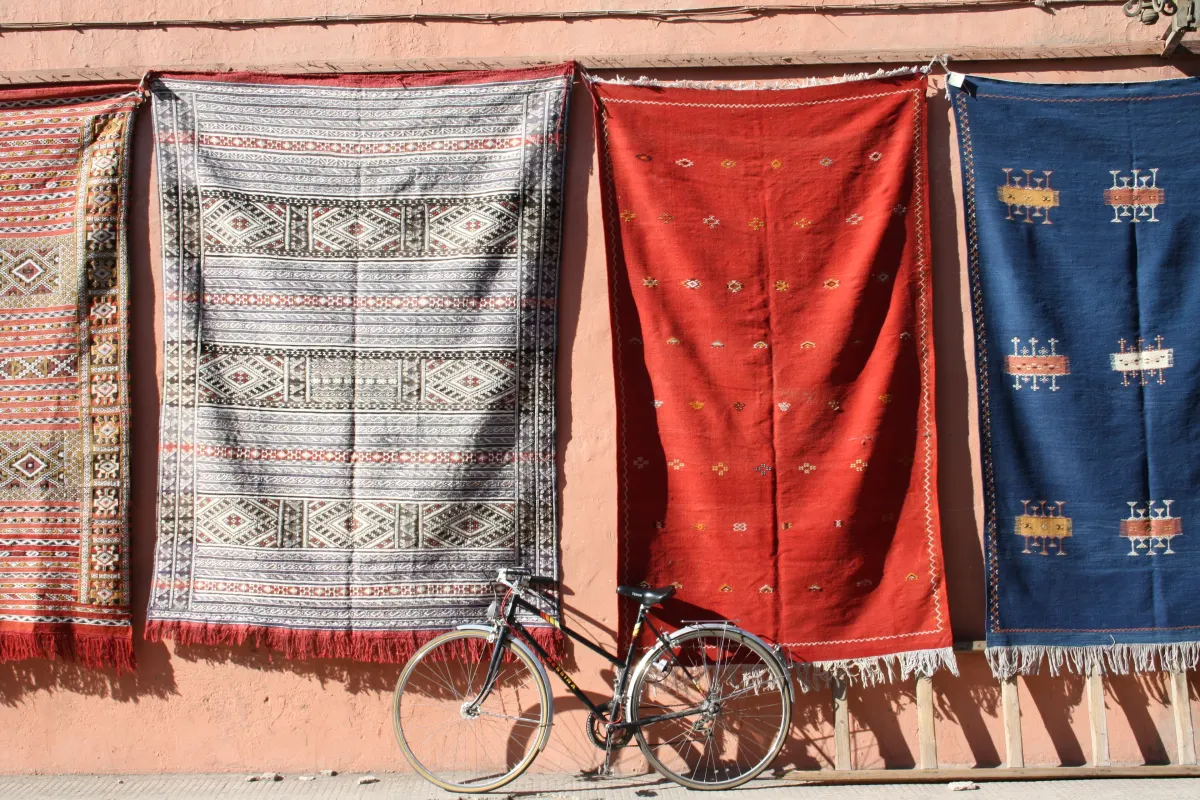
- Carpets: see where they're from. Thick white Beni Ourain, coloured Azilal, flat-woven kilims (hanbel), and Taznakht from near Ouarzazate. Feel the wool, look at the back, rub a damp cloth on the red. "Antique" and "vegetable dyes" are usually neither. Sleep on it.
- Leather: bags, belts, poufs and babouche slippers, from the Fes tanneries and Marrakech. Smell it: some fishy or ammonia smell stays for months. Check the stitching and zips.
- Ceramics: blue from Fes, ochre and green from Safi and Tamegroute. Some glazes contain lead, so use them for show rather than for acidic food.
- Metalwork: pierced lamps, trays and teapots. Ask about wiring.
- Wood: thuya boxes from Essaouira. The tree is under pressure: buy small.
- Argan oil: only from the south-west. Toasted for food, pale for skin. Women's co-operatives near Essaouira and Agadir sell the real thing. If it's cheap, it's mixed.
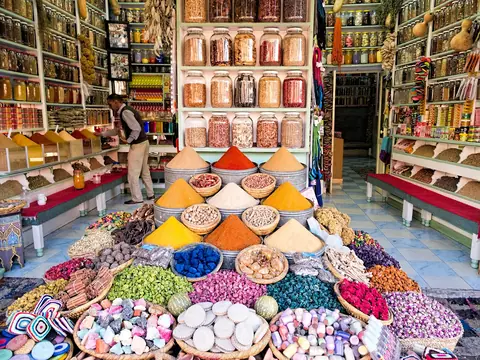
- Spices: cumin, ginger, ras el hanout. Saffron comes from Taliouine, in whole dark-red threads, and is never a bargain.
- Silver from Tiznit, and Amazigh jewellery. Much "silver" is nickel.
Guides and commission
If a guide, driver or helpful stranger brings you in, their share is added to your price. Go back alone. See Guides.
Markets outside the cities
Weekly souks in country towns are the real thing: Rissani, near Merzouga, on Sundays, Tuesdays and Thursdays; Asni, below Imlil, on Saturdays; Tuesdays at Azrou for Middle Atlas carpets. Ask for the day locally. Arrive early.
Getting it home
- Carry what you can. Shops ship carpets, and respectable ones do it honestly, but insist on a written description, photographs, the courier's name and a tracking number, and pay by card.
- Antiques and anything that could be cultural property need an export certificate from the culture department.
- Fossils and minerals: up to ten pieces are allowed out. Around Erfoud many trilobites are partly resin.
- Don't buy tortoises, ivory, skins of wild cats, or live animals. It's illegal at both ends.
- Keep receipts. Your own country's allowance applies: see its customs site. Meat, milk and some plants can't be taken into the EU or UK.
Opening hours
Roughly 9 am to 8 pm, with a pause at lunch. Medina shops close from Friday noon, and some on Sunday. Ramadan has its own hours.
Souks of the Marrakech medina
North of Jemaa el-Fnaa, the medina is a remarkable maze of covered souks, each lane devoted to a craft: leather, spices, lanterns, carpets, babouche …

Fès el-Bali medina
One of the largest car-free urban areas in the world, a UNESCO site, with about 9,000 lanes, souks, the Al-Qarawiyyin university (founded in 859) and…



Comments