
Finding your way in Morocco's medinas, and hiring an official guide
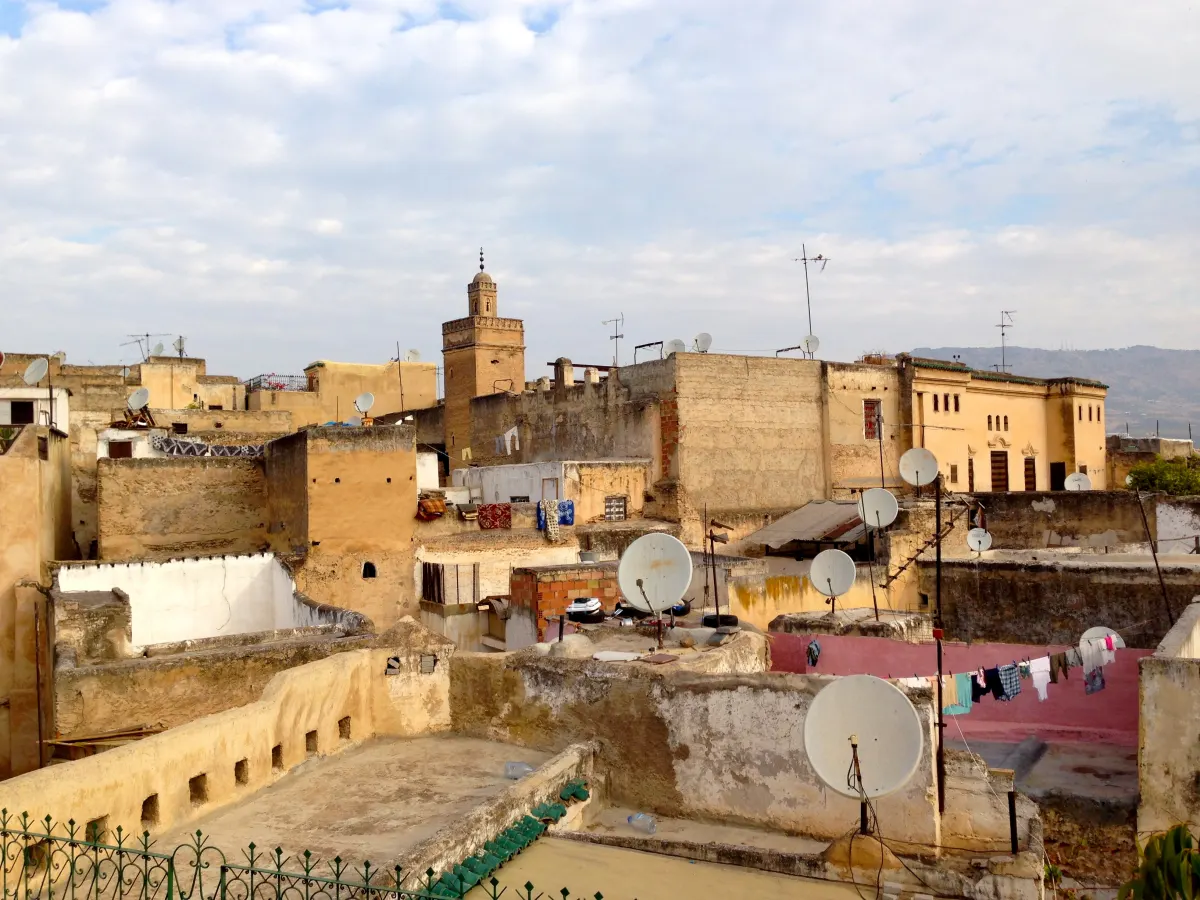
A medina is a whole medieval city, walled, dense and still lived in. Fes el-Bali is said to have about 9,000 lanes, many of them dead ends. You will get lost. That's no disaster, and a good guide for the first morning makes the rest easier.
How a medina works
- Gates (bab) are the landmarks. Learn the name of yours: in Fes, Bab Bou Jeloud, the Blue Gate.
- One or two main streets run downhill to the great mosque. Around it are the souks, each trade in its own lane. Noble trades, such as books, perfume and silk, are nearest the mosque, and smelly ones, such as tanneries, are furthest, by the river.
- Every quarter has its mosque, fountain, oven, hammam and school. Narrow lanes with closed doors are homes.
- The mellah is the old Jewish quarter. The kasbah is the fortress.
- Ochre signs in Marrakech and coloured star signs in Fes mark walking routes. Many have gone missing.
Not getting lost, much
- Save an offline map, pin your riad, and photograph the turning into its lane and the door.
- Going downhill in Fes leads towards the river, and uphill towards the gates.
- If you're lost, ask a shopkeeper or a woman with shopping. They can't leave to lead you. Young men who offer, or who say "this way is closed", want money: see Scams.
- Get back to the main streets before shops close, at around 8 or 9 pm. Lanes empty fast.
Watch out for
- Balak! means "mind out". Step aside: a loaded mule can't stop.
- Mopeds in Marrakech squeeze through every lane. Keep to the right, hold your bag on the wall side and don't step sideways without looking.
- Wet, sloping cobbles, low beams and unlit steps.
When to go
- Early morning, before 10, for light and space. Late afternoon, when the locals shop, for life.
- Fridays from noon most souks close. Good for photographs of doors, bad for shopping.
- Ramadan: afternoons and late evenings.
The tanneries
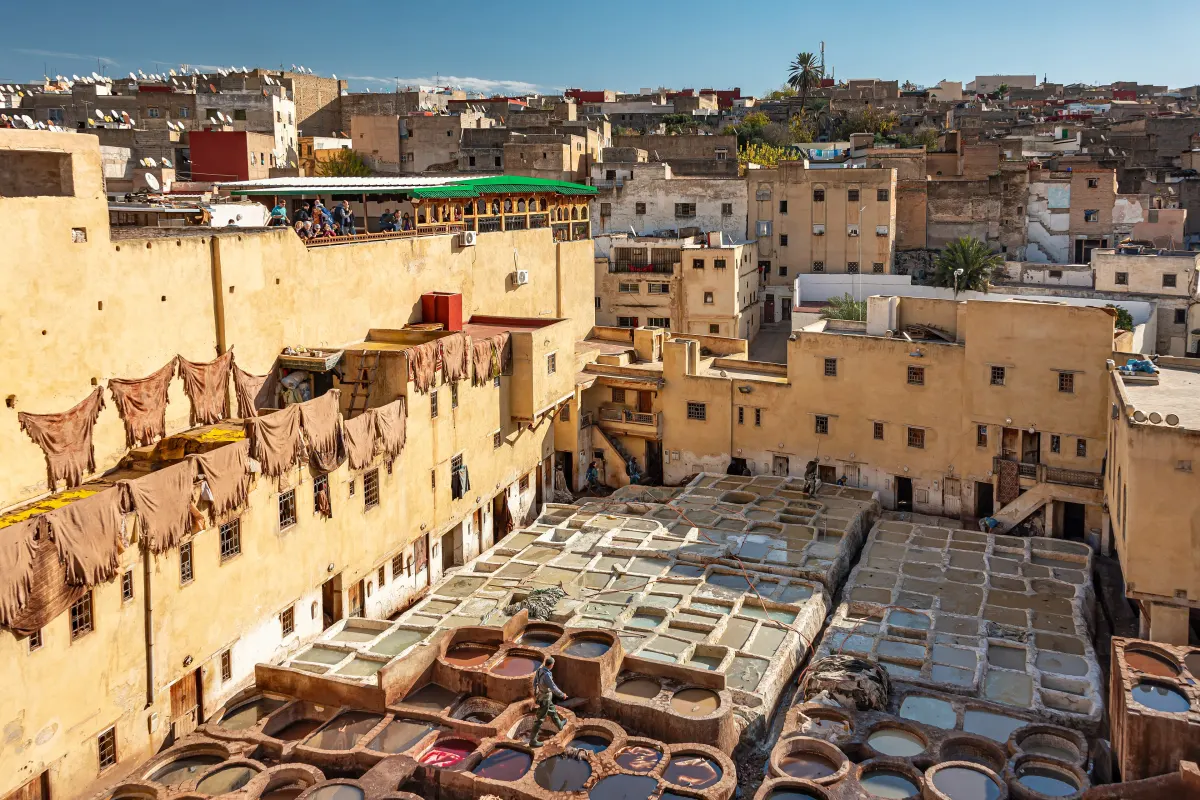
In Fes, the Chouara tannery is watched from leather shops' terraces, with a sprig of mint against the smell. It's free if you look at the shop afterwards, or pay 10 to 20 dirhams. Nobody needs to lead you. In the morning the vats are busiest.
Official guides
- Guides pass a state examination and carry a badge with a photo, for cities and tours or for nature and mountains. The guides' federation counted 4,627 in April 2026. The UK advises making sure yours has the badge.
- Find one through your riad, the tourist office or the regional guides' association. Say what interests you: craft workshops, history, food, gardens.
- Prices: about 350 to 500 dirhams for half a day, for the group, is usual in Fes and Marrakech in 2026. Agree on hours, language and how many shops you'll visit. "No shops, please" is a fair request, and worth a higher fee.
- Guides earn up to a third of what you spend in shops they take you to, and it's added to the price.
- Entry tickets and lunch are extra.
Which medinas
- Fes: the oldest and deepest. Two full days.
- Marrakech: the liveliest, and the hardest sell. See the souks.
- Meknes and Tetouan: handsome, and few tourists.
- Chefchaouen and Essaouira: small, painted and easy.
- Rabat and Asilah: calm and clean by the sea.
See also Shopping and bargaining.

Fès el-Bali medina
One of the largest car-free urban areas in the world, a UNESCO site, with about 9,000 lanes, souks, the Al-Qarawiyyin university (founded in 859) and…
Souks of the Marrakech medina
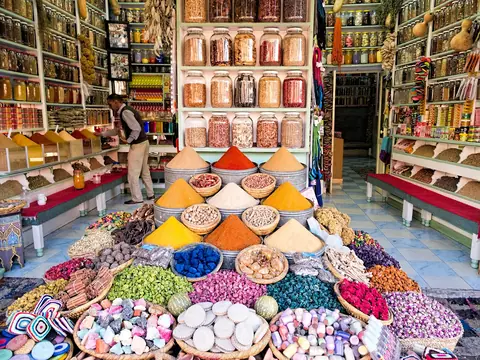
North of Jemaa el-Fnaa, the medina is a remarkable maze of covered souks, each lane devoted to a craft: leather, spices, lanterns, carpets, babouche …

Comments