
Scams and hassle in Morocco: false guides, closed roads, tanneries, taxis, henna and how to say no
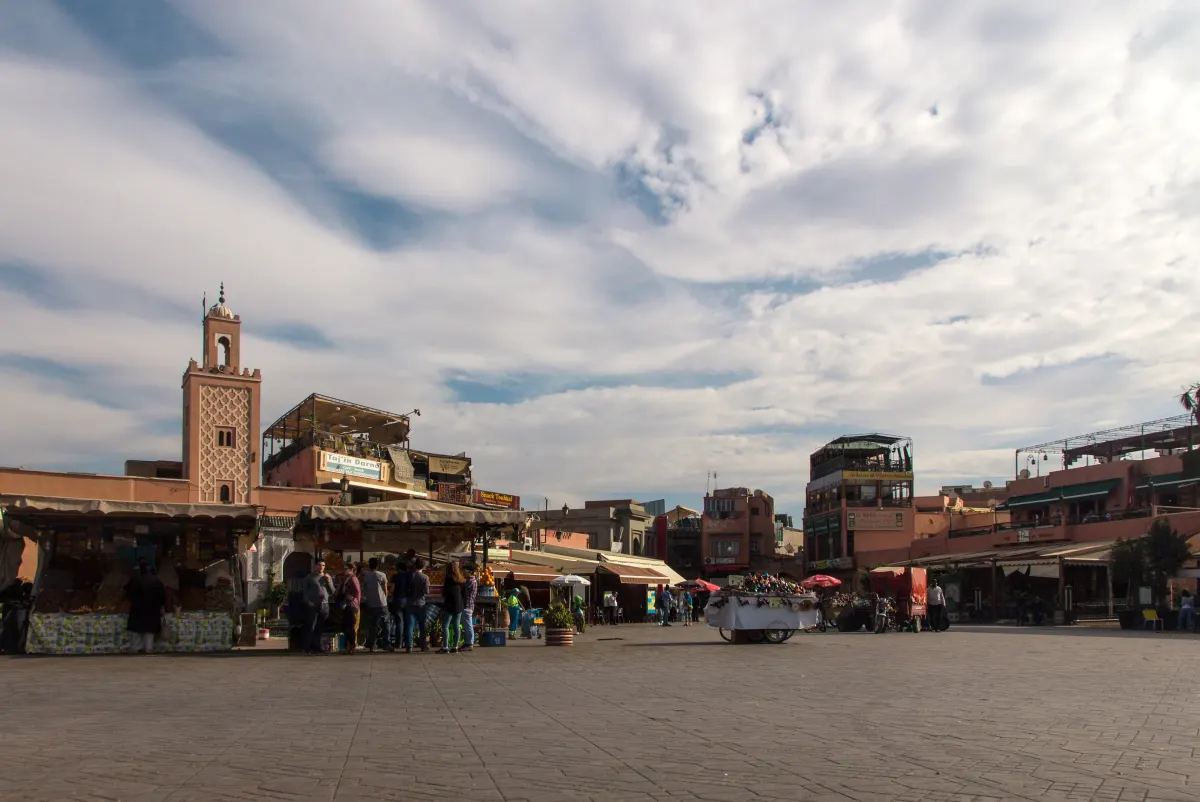
Most people who talk to you in Morocco are only being friendly. In a few places, above all Marrakech, Fes and the ports, some make a living from confusion. The tricks are old, and once you know them they lose their power.
The classics
- "That way is closed." It isn't. He'll lead you round by his cousin's shop, or ask for money when you arrive. Say thank you and walk on to see for yourself.
- "The Berber market is today only." The tannery, the craft fair and the auction are always on their last day.
- "I work at your hotel, don't you remember me?" He doesn't. Ask him the hotel's name.
- The friend on the train, with a free guide waiting at the station.
- The false guide who walks beside you, chatting, then wants 200 dirhams. Make it clear at the start: "No guide, thank you." If he leads you somewhere, 10 to 20 dirhams settles it.
- "Just look, no need to buy." See Bargaining.
- The letter: would you help write to his friend in your country? The table is in a carpet shop.
- The broken-down car on the desert road. He asks for a lift, or for a note to be delivered, and the address is a shop.
On the squares
- Henna: a woman takes your hand and starts. Keep your hands in your pockets, or agree a design and price first. Black henna can burn and scar.
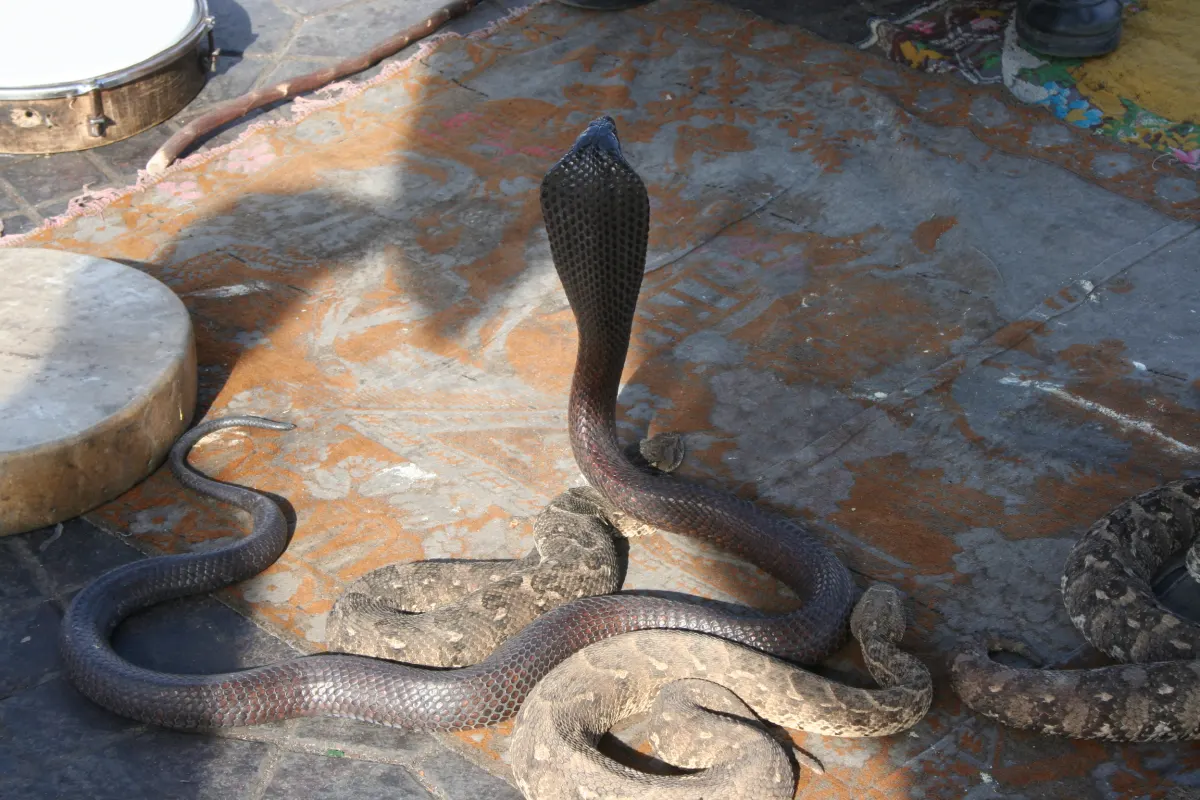
- Snakes and monkeys are put round your neck and the fee comes afterwards. Keep your distance: it's also cruel.
- Food stalls: plates of bread, olives and salad you didn't order are on the bill. Send them back at once.
- Short change: name the note as you hand it over.
In shops
- The UK warns of inferior goods being substituted for what you bought. Watch it being wrapped, and carry it away yourself.
- "Pure" saffron, argan oil, amber and silver often aren't. Sealed co-operative bottles are safer.
- Cards: some are charged twice. Keep the slip, check the currency and the zeros.
Bigger frauds
- False agencies: France warns of people in Marrakech offering "VIP contracts", holiday clubs and compensation, who take a card imprint and empty the account. Timeshares sold with gifts are very hard to cancel.
- Desert tours sold on the street: the camp in the photo isn't the one you'll see. See Desert tours.
- Booking sites: pay for riads through the site, not by a link sent in a message.
- Romance: governments report marriage fraud and blackmail, and false friends online who need money in an emergency.
- Dealers and police: see Laws.
Taxis and parking
Meters that are "broken", fares per person, and prices that double on arrival are covered in Taxis. A real parking guardian wears a vest and takes 5 to 10 dirhams.
How to say no
- A smile, a hand on the heart, la, shukran, and keep walking. Don't stop to explain.
- Look as though you know where you're going. Check maps inside a shop or café.
- Sunglasses, and not answering "Where are you from?", stop many conversations before they begin. But not every one should be stopped. People who greet you and then go back to what they were doing want nothing.
- If someone gets angry, walk into a shop or café. It's noise, and very rarely more.
- Never hand over money because someone is shouting.
Getting help
- Marrakech, Fes and Agadir have tourist police (brigade touristique). In Marrakech they're on Jemaa el-Fna. False guides can go to prison, and simply saying "I'll ask the tourist police" often ends it.
- Police in towns: 190.
- Hotels must give you a complaints form if you ask.
It's calmer in Rabat, Essaouira, Chefchaouen, Meknes, Agadir and nearly every village. If Marrakech wears you out, take a train.

Jemaa el-Fnaa, Marrakech
The great square at the heart of Marrakech's medina, one of the most exciting places on Earth.
Souks of the Marrakech medina
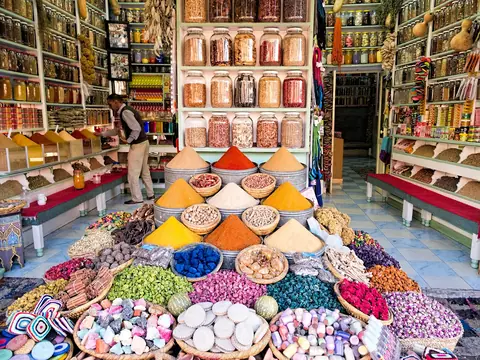
North of Jemaa el-Fnaa, the medina is a remarkable maze of covered souks, each lane devoted to a craft: leather, spices, lanterns, carpets, babouche …


Comments