
Driving in Morocco: licences, the permit to bring, speed limits, police checkpoints, mountain passes and flash floods
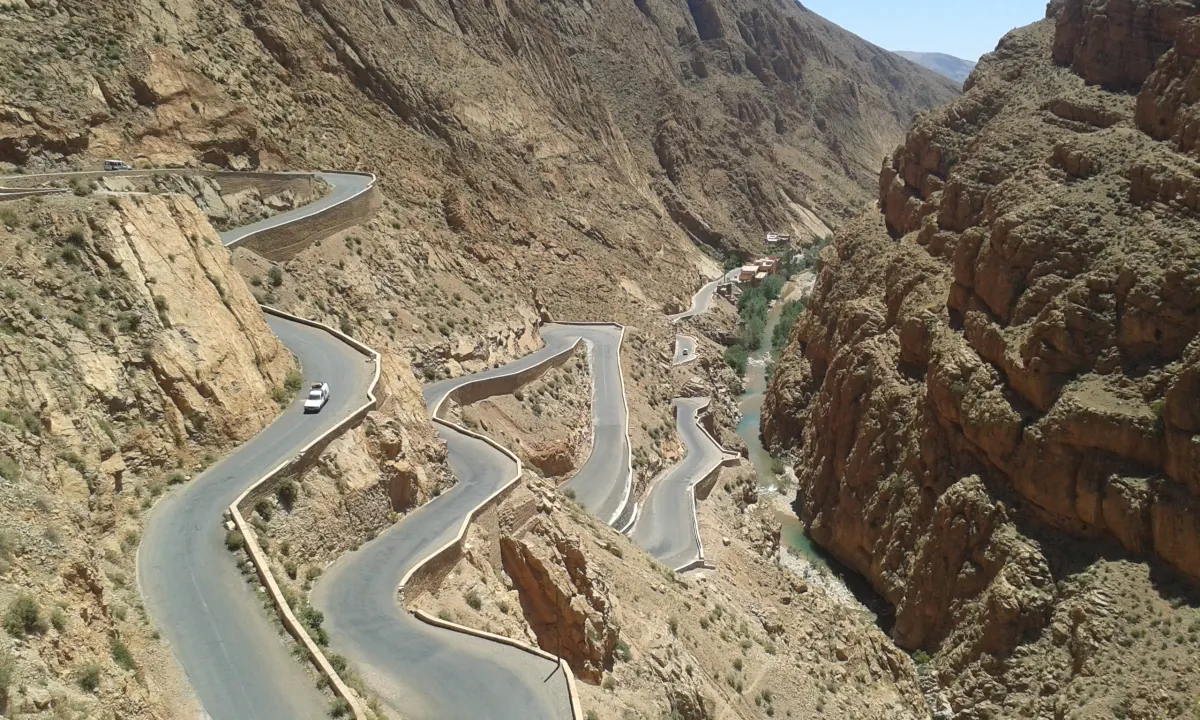
A car opens up the Atlas, the gorges and the desert road, where you'll want to stop every few kilometres. Roads between towns are mostly good. Other drivers, animals and darkness are the dangers. In the cities, leave the car parked.
Licence and papers
- The UK says its drivers need both their licence and an international driving permit of the 1968 type: Morocco no longer accepts the 1949 version. You can't get one abroad.
- France's foreign ministry says a licence from home is valid for a year and the permit is only "strongly encouraged". Hire firms and policemen vary. If your licence isn't in French or Arabic, bring the 1968 permit if your country issues it.
- Carry your passport, licence, the hire contract, and the car's registration and insurance papers.
- Most firms want drivers over 21 to 25 with a year or two's experience, and a deposit on a credit card.
Hiring
- Film the car inside and out, including the tyres and spare, before you leave.
- Full insurance usually leaves out tyres, glass and the underside. Ordinary hire cars aren't insured on unsurfaced tracks.
- One-way hire between Marrakech and Fes is easy, for a fee.
- An ordinary small car is enough for all the sights on our desert itinerary.
Rules
- Drive on the right. Limits for cars are 60 km/h in towns (40 where signed), 100 outside and 120 on motorways. They drop suddenly at the edge of villages, and that's where the radar is.
- Some roundabouts give priority to cars entering from the right. Assume nothing.
- Alcohol: none. The UK says any amount in a test means a fine and possibly prison.
- Seat belts front and back. No phone in the hand.
- Motorways are toll roads, paid in cash at booths, or with a Jawaz tag in separate lanes. Don't drive into a Jawaz lane without one.
Police checkpoints
- They're at the entrance of most towns. Slow right down, dip your lights, and stop before the sign until you're waved on. Driving past one is a fine.
- Be polite, hand over what's asked, and wait. Officers can take on-the-spot payment for a fine, and must give a receipt. Ask for it.
- Near the Algerian border and in the far south you may have to say where you're going and where you're staying.
Mountain passes
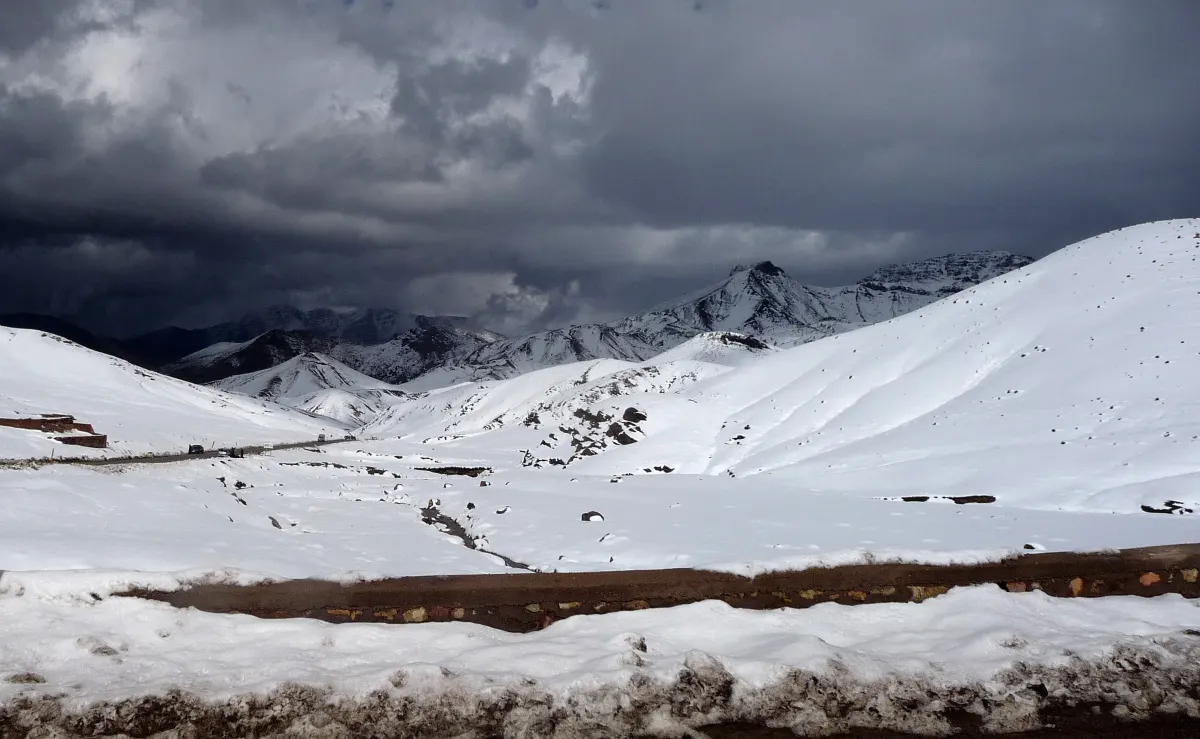
- Tizi n'Tichka (N9), between Marrakech and Ouarzazate: the sign says 2,260 m. It has been widened and is busy with lorries. Allow 4 to 5 hours for 200 km. Snow falls between November and March and closes it for hours, sometimes a day or two.
- Tizi n'Test (N10), towards Taroudant, about 2,100 m: narrow and spectacular, through the area hit by the September 2023 earthquake. We couldn't confirm its condition in November 2026. Ask in Marrakech or Taroudant before setting out.
- Dadès and Todra gorges: surfaced, with famous hairpins above Boumalne. The high road joining the two on their upper side is rough and often cut.
- Marrakech to Agadir motorway: France singles out the long descent to Agadir as very dangerous, because of lorries.
- Chains are rare, and snow barriers are closed by the gendarmes. Wait.
Floods
South of the Atlas, rain in autumn and spring turns dry riverbeds into torrents in minutes. At least two people died in flash floods in October 2026, one in a car swept away between Ouarzazate and Agdz. If water is across the road, don't drive in. Never park or camp in a riverbed.
Staying out of trouble
- Don't drive at night. Donkeys, bicycles, people in dark clothes and cars without lights share the road.
- A hand-waving man by a "broken-down" car may be selling a visit to a shop: see Scams. At a real accident, stop.
- In the Rif mountains, where cannabis grows, France advises not taking side roads at night or stopping for people by day. The main road by Chefchaouen and Tetouan is busy and fine.
- Fill up before the desert and the high valleys. Carry water.
Parking
A gardien in a high-visibility vest watches most streets. Give 5 to 10 dirhams by day, and 20 or so for a night. Medinas are closed to cars, so park at a gate (bab) and have your riad send a porter. Leave nothing in view.
If you have an accident
- With damage only, both drivers fill in and sign a constat amiable, the form that should be in the glove box. Photograph everything.
- If anyone's hurt, call 190 (police, in towns) or 177 (gendarmerie, outside) and 150 for an ambulance, and don't move the cars. After a fatal accident, the driver thought responsible can be detained.
Dadès Valley
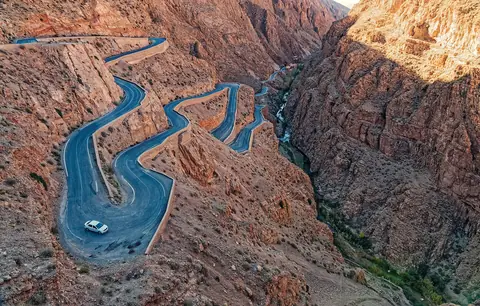
A valley of kasbahs and red rock formations, with the famous hairpin road climbing the gorge.

Aït Benhaddou
A fortified village (ksar) of earthen kasbahs climbing a hill above a river on the old caravan route, a UNESCO site, used in films such as Gladiator …
Comments