
Phones and the internet in Morocco: SIM cards, eSIMs, coverage, calls and WhatsApp
Mobile data is cheap and fast in Morocco, and works in surprisingly remote places. Most visitors buy a local SIM or an eSIM on the first day.
Networks
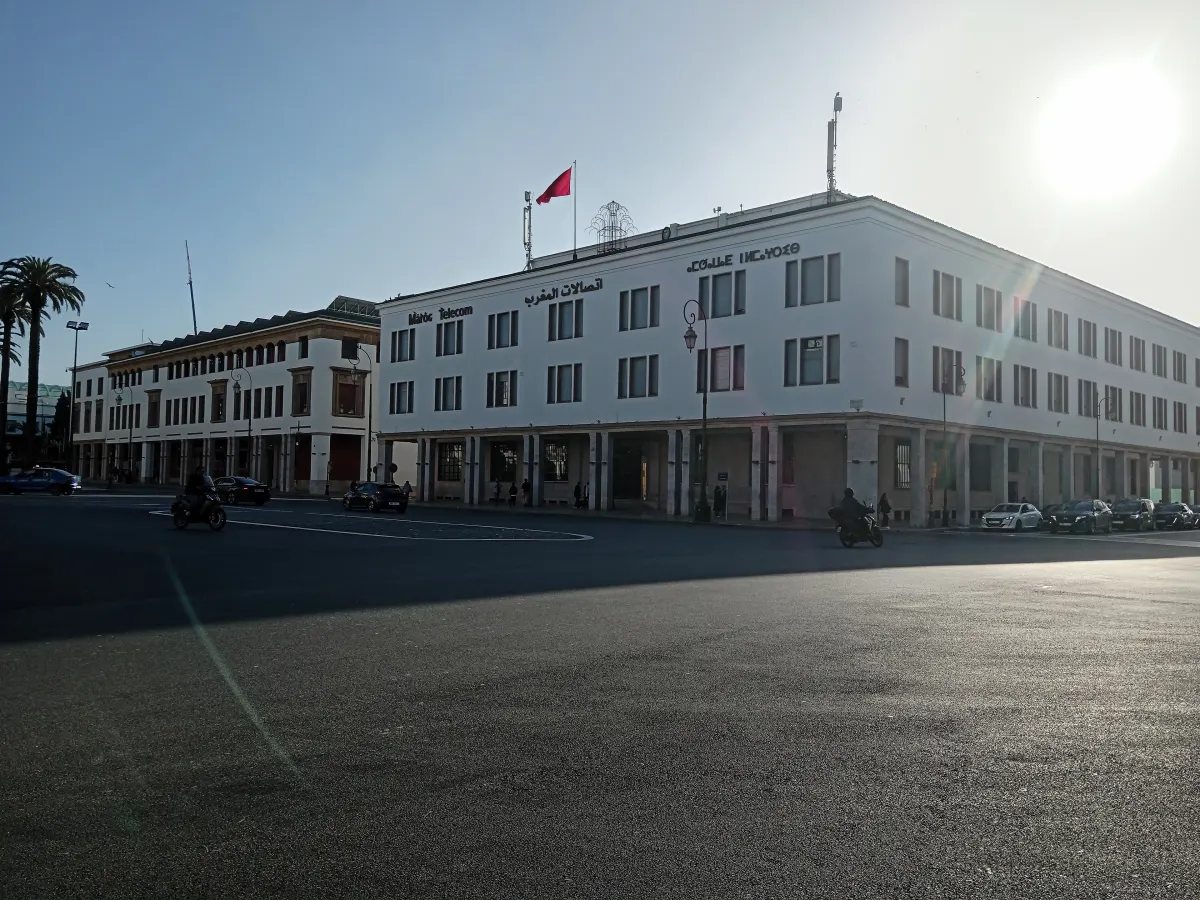
- There are three: Maroc Telecom (IAM), Orange and inwi. All have 4G nearly everywhere people live, and 5G in the larger cities since late 2025.
- Maroc Telecom is usually said to reach furthest into the Atlas and the desert. In towns there's little between them.
Buying a SIM
- Bring your passport: every SIM must be registered.
- Buy at the networks' desks in the airports, or their shops in town. Airport staff sometimes hand out free SIMs with no data: ask what's on it, and how to top up.
- Avoid sellers in the street, whose cards may be registered to somebody else and stop working.
- Data costs very roughly 10 dirhams a gigabyte, less in larger bundles. Let the shop activate the bundle and test it before you leave.
- Top up (recharge) in small shops, with a scratch card or by app. A code after the number chooses data or calls, so ask the shopkeeper to do it.
eSIMs
- International eSIMs need no passport check and work when you land. They cost more per gigabyte.
- The Moroccan networks sell visitor eSIMs too. A 2026 comparison listed Maroc Telecom's from 70 to 320 dirhams, and others from 120, with identification needed.
- Check that your phone isn't locked.
Roaming
Morocco isn't in the EU, and roaming can be very expensive. Near Tangier and the Mediterranean your phone may join a Spanish network, and near Tarifa it may join a Moroccan one. Turn roaming off until you know the price.
Wifi
- Nearly every riad and hotel has it, and most cafés in towns. Thick medina walls block both wifi and mobile signals: expect one bar in an inside room.
- In gorge and desert guesthouses it can be slow, and camps in the dunes often have none.
Maps
Save an offline map before each medina. Google Maps knows most lanes of Marrakech and Fes but loses its way between high walls. Pin your riad, and the nearest gate, when you're standing there.
Calling
- Morocco's code is +212, then the number without its first 0. Mobiles start 06 or 07, and landlines 05.
- Everybody uses WhatsApp: guesthouses, guides and drivers answer it sooner than e-mail.
- Emergencies: 190 police in towns, 177 gendarmerie elsewhere, 150 ambulance and fire.
The clock on your phone
Since 20 September 2026 Morocco is on GMT all year. An old phone that hasn't been updated may show an hour too many: check against a station clock before your first train.
Charging
Sockets are the European type, with two round pins (C and E), at 220 volts. British and American visitors need an adapter. Old riads have few sockets, so a small power strip helps. Bring a power bank for treks and camps.
What not to post
Insulting the king, Islam or the flag, or disputing Morocco's claim to Western Sahara, is an offence, online as well. See Laws.

Fès el-Bali medina
One of the largest car-free urban areas in the world, a UNESCO site, with about 9,000 lanes, souks, the Al-Qarawiyyin university (founded in 859) and…
Comments