
Beaches and swimming in Morocco: the best coasts, sea temperatures, currents, flags and what to wear
Morocco has some 3,500 km of coast, if you count Western Sahara. The Mediterranean side is calm and clear. The Atlantic is long, wide and wild, and much of it isn't safe for swimming.
The Mediterranean
- Al Hoceima: coves under cliffs, clear water. Quemado and Cala Iris.
- M'diq, Martil, Cabo Negro: resorts near Tetouan, packed with Moroccan families in July and August, and quiet in June and September.
- Oued Laou: a simple fishing beach below the Rif, an hour or so from Chefchaouen.
- Saïdia: 14 km of sand in the far east, beside the closed Algerian border. All of it is inside Canada's 20 km avoid-all-travel zone along that border. The UK warns boats and jet skis to know where the line is: people who stray into Algerian waters are stopped.
The Atlantic
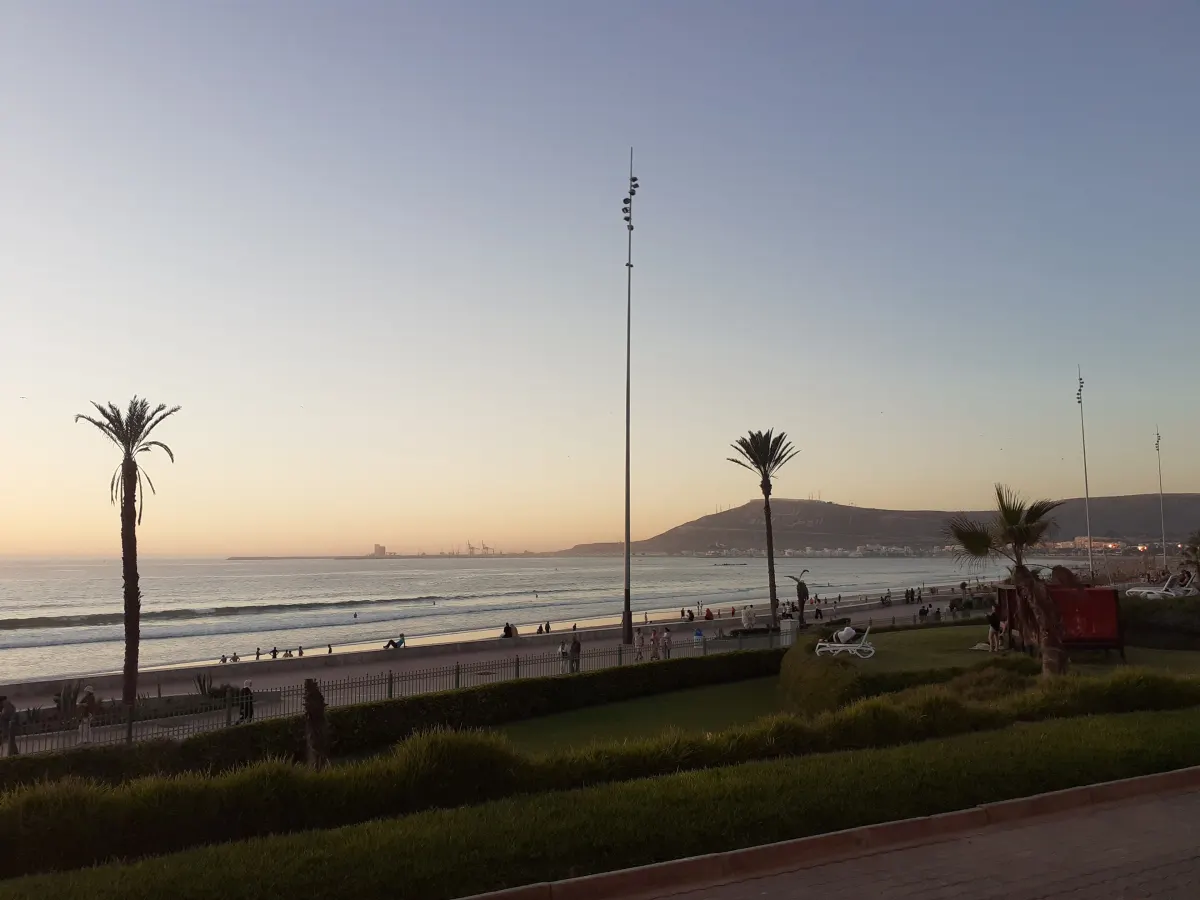
- Agadir: 9 km of gently sloping sand, lifeguards in summer, a promenade. The easiest for families.
- Essaouira: a broad bay, shallow and sheltered from swell though not from wind. Lovely for walking and riding.
- Oualidia: a lagoon behind a bar of rock, calm at most tides.
- Asilah: Paradise Beach to the south, and clean sands by the railway to the north.
- Tangier: the town beach is for football and walks. Achakar, by Cape Spartel, is better, with big waves.
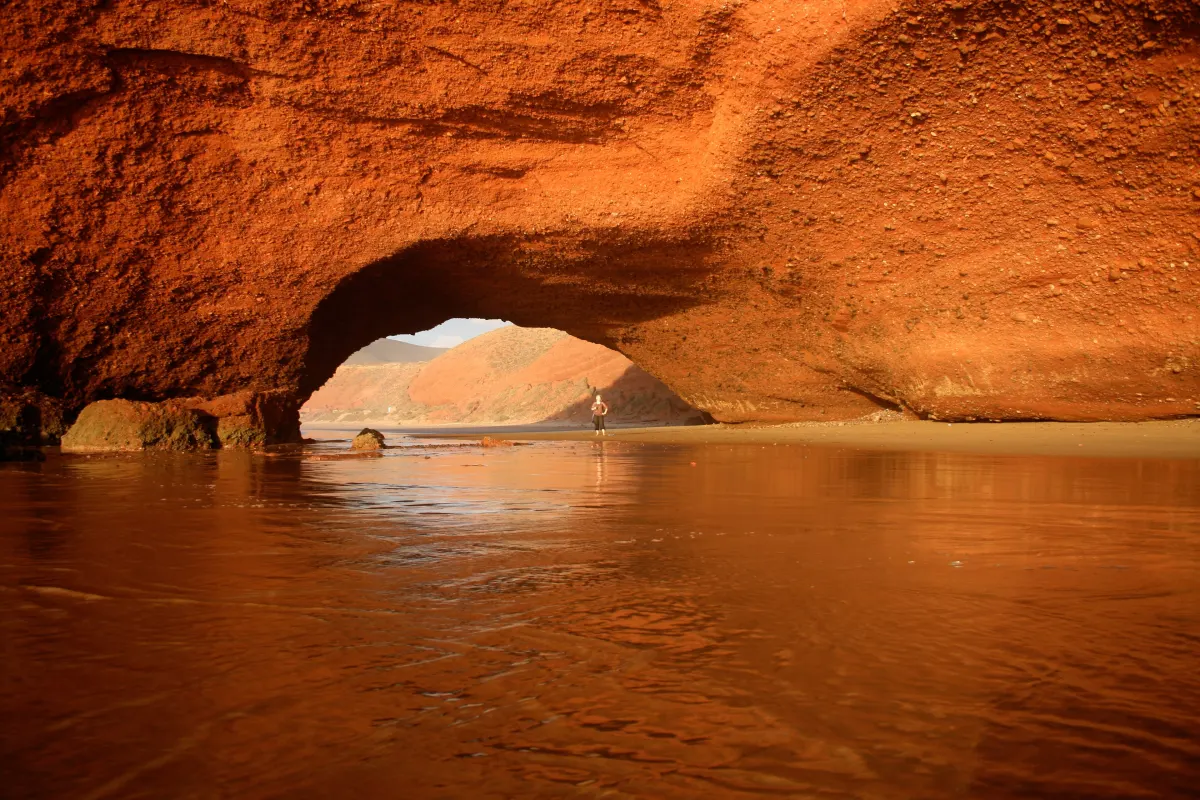
- Legzira, near Sidi Ifni: a red stone arch over the beach. A second arch fell in 2016. Go at low tide and don't stand under it.
- Casablanca: Aïn Diab, with beach clubs and pools. Canada says public beaches in big cities are often polluted.
The sea
- Mediterranean: about 15 °C in February, 24–25 in August.
- Atlantic: cold upwelling keeps it at 17–18 °C in winter and 20–22 in summer. Agadir and Essaouira are cooler than you'd expect.
- Best for swimming: June to early October.
Currents
- France advises extreme caution even on beaches with lifeguards, and calls drownings frequent. Most beaches have none, and lifeguards generally work only from June to mid-September.
- Swim where Moroccan families swim, between flags, and not alone. Green is safe, orange dangerous, red forbidden.
- The Atlantic shore break can knock you down in knee-deep water. Keep hold of small children.
- Caught in a rip? Float, signal, swim sideways.
- Cars get trapped on beaches by the tide. So do walkers below the cliffs.
Clean beaches
The Mohammed VI Foundation awards the Blue Flag each summer, and the government publishes water tests. After storms and near river mouths, keep out.
What to wear
- At resorts and hotel beaches any swimwear is fine, but not topless. France suggests a one-piece. On local beaches many women bathe fully dressed, and a T-shirt and shorts over a costume are more comfortable.
- Some hotel pools ban the burkini, and some the opposite. Ask.
- Cover up to walk into town.
- Women may be bothered on city beaches: see Women travellers.
On the sand
- Parasols and chairs are for hire, 20 to 50 dirhams. Some operators claim the whole beach: you may put your own towel on the public part.
- Camel and horse rides: agree the time and price, and check the animal.
- Alcohol on the beach is illegal.
- Thefts are common. Don't stay after dark, and don't sleep in a camper on a lonely beach.
Rock pools and waterfalls
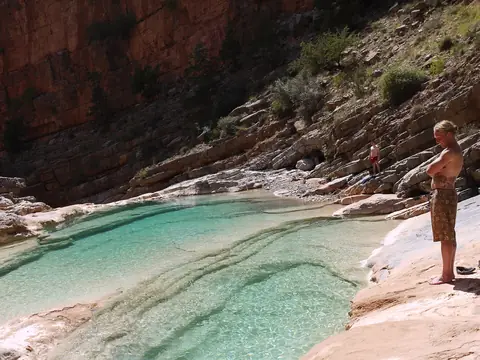
Paradise Valley near Agadir, Ouzoud and Akchour in Talassemtane are the favourites. Jumping injures people every year, water can be low in dry years and dangerous after rain, and the UK's health service advises against bathing in fresh water.
For waves, see Surfing.

Essaouira
A relaxed walled port on the Atlantic, with a UNESCO-listed medina, ramparts with cannons, a busy fishing harbour, and grilled fish at stalls.
Paradise Valley
A palm-lined gorge with rock pools for swimming, in the foothills of the Atlas.

Comments