
Food in Morocco: tagines, couscous, pastilla, street food, breakfast and eating well as a vegetarian
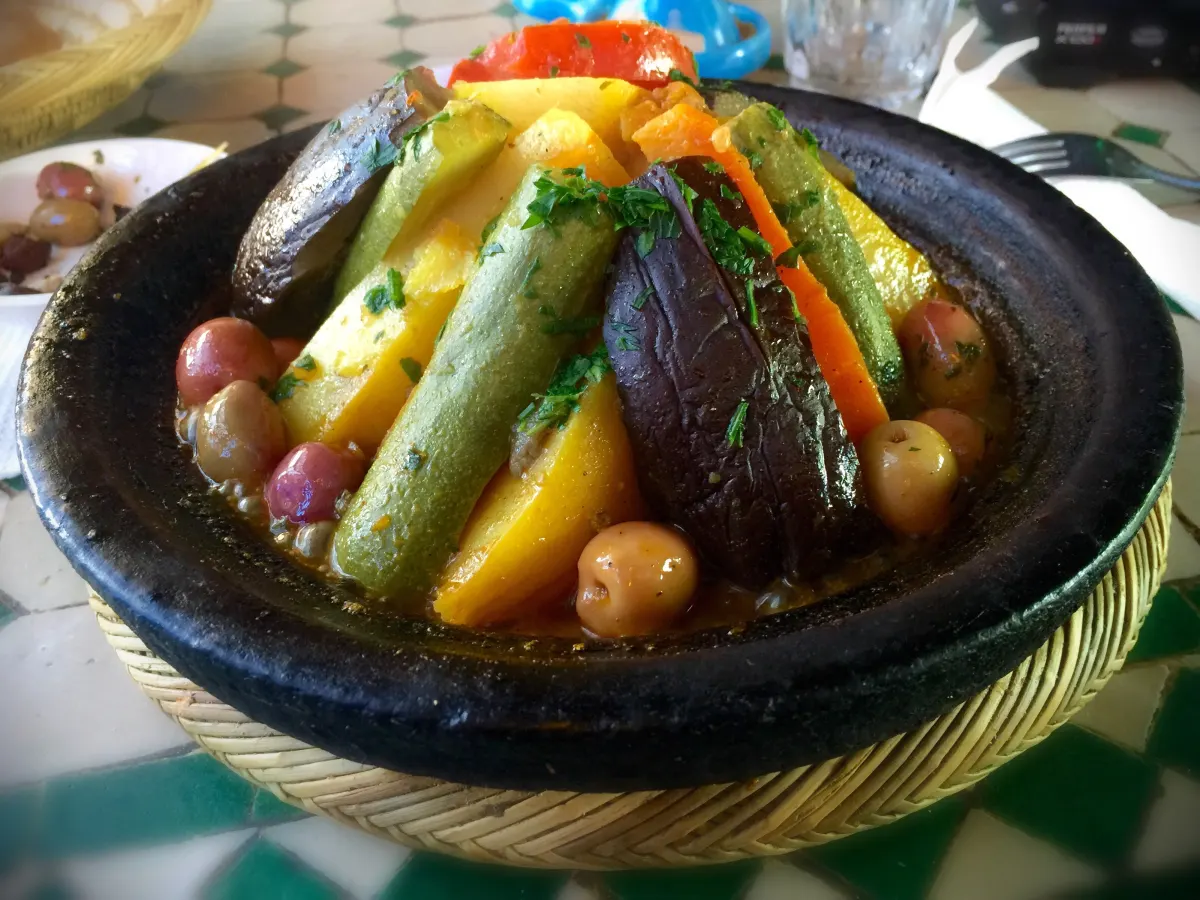
Moroccan cooking is fragrant rather than hot: cumin, ginger, saffron, preserved lemon, olives and slow heat. The best of it is made at home, so the meals you'll remember may be in a riad, on a trek, or at a grill by the road.
Dishes to look for
- Tagine: meat, fish or vegetables cooked slowly under a cone-shaped lid. Classics are chicken with preserved lemon and olives, beef with prunes and almonds, and kefta (meatballs) with eggs.
- Couscous: steamed several times, with seven vegetables. It's the family meal on Fridays, after noon prayers, and many restaurants make it only then.
- Pastilla: a sweet and savoury pie of pigeon or chicken with almonds and cinnamon, from Fes.
- Tanjia: Marrakech's speciality, meat sealed in a clay jar and left in the ashes of a hammam's furnace.
- Mechoui: lamb roasted whole in a pit and sold by weight, with cumin and salt.
- Harira: tomato, lentil and chickpea soup, above all in Ramadan. Bissara is a thick soup of dried broad beans with olive oil, a cheap winter breakfast.
- Rfissa: chicken and lentils over torn bread, with fenugreek.
- Zaalouk (aubergine) and taktouka (peppers): cooked salads that start a meal.
Breakfast
Breads come warm: msemen, a square layered pancake, baghrir, full of tiny holes, and harcha, made with semolina. Eat them with honey, olive oil, soft cheese, or amlou, a paste of almonds, argan oil and honey from the south-west.
By the sea and in the hills
- Fish: grilled sardines, squid and prawns on the Atlantic. At Essaouira and Agadir you choose from the stall: agree the price for the weight before it's cooked. Oysters come from Oualidia.
- In the north, food leans Spanish: goat's cheese around Chefchaouen, bocadillos and fried fish in Tangier.
- In the desert, try medfouna, a stuffed flatbread sometimes called Berber pizza, around Rissani, and dates from Erfoud.
Where to eat
- Grill restaurants on main roads: choose meat from the butcher's counter, have it cooked next door, and eat with bread, tomatoes and tea.
- Snack means a sandwich and grill bar, cheap and busy at all hours.
- Riads cook to order. Ask by the morning.
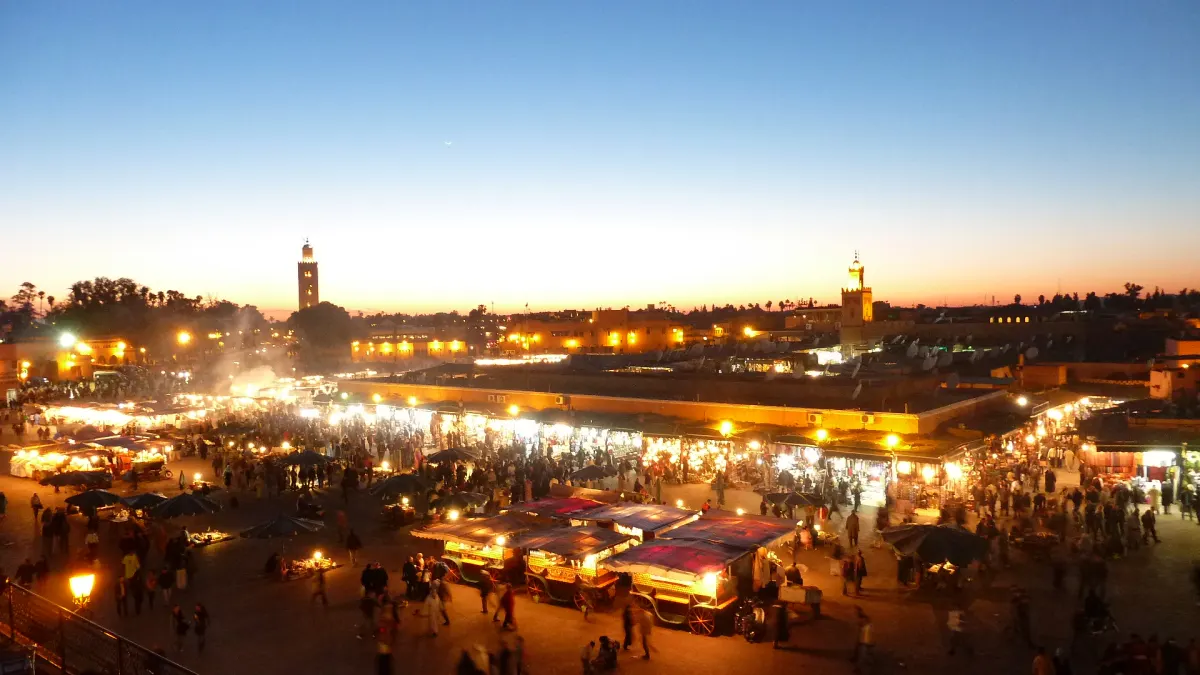
- Jemaa el-Fna: the stalls are touristy but fun. Look for a printed price list and Moroccan customers, refuse any dish you didn't order, and check the sum.
- Skip restaurants with photos, a tout and six languages.
How to eat
- Bread takes the place of a fork. Eat with your right hand from the part of the dish in front of you. Cutlery is brought if you ask.
- Wash your hands before and after. Say bismillah to begin, and tbarkallah or la bnin ("delicious") in praise.
- Meals are late: lunch from 1 pm, dinner from 8. Ramadan changes everything.
Vegetarian and other diets
- Vegetable tagines, lentils, bissara, salads, eggs, bread and olives are on every menu. "Vegetable" couscous is often cooked in meat stock: ask for bla lham, bla marqa dyal lham (without meat, without meat broth), or sans viande, sans bouillon.
- Gluten is hard to avoid outside cities, as bread, couscous and msemen are wheat.
- Nuts and sesame are in sweets, pastilla and some tagines. Allergen labels are rare. Carry your allergy written in French and Arabic.
- All meat is halal. Pork is found only in a few shops and hotels.
Sweets and fruit
Try chebakia (fried, honeyed, with sesame), gazelle horns filled with almond paste, oranges with cinnamon, prickly pears from a cart in summer, figs, and pomegranates in autumn.
To stay well, see Health. For what to drink, see Mint tea, coffee and juices.
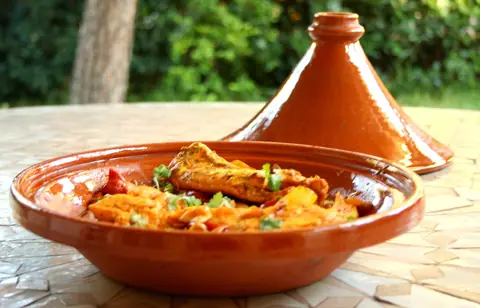
Tagine
Slow-cooked stew in a conical clay pot: chicken with preserved lemon and olives, or lamb with prunes.
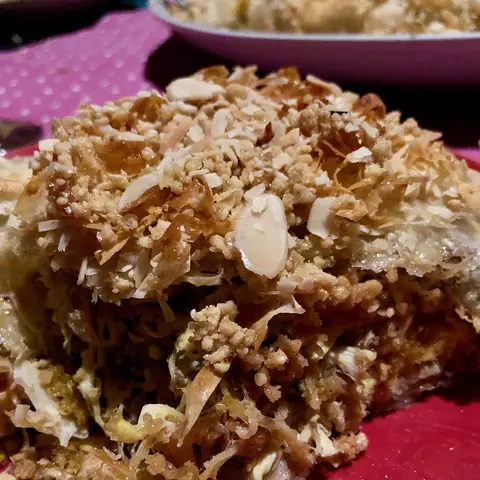
Pastilla
A flaky pie of pigeon or chicken with almonds, topped with sugar and cinnamon, a speciality of Fès.
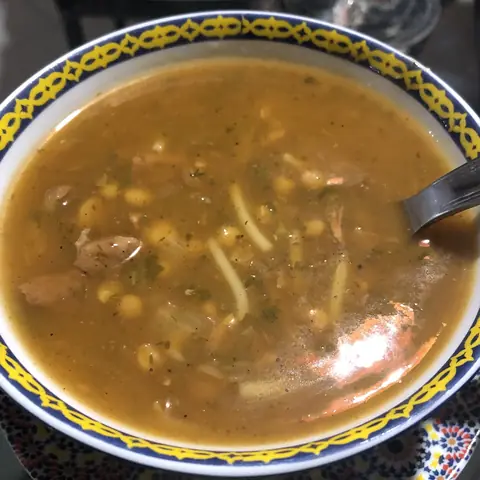
Harira
Tomato, lentil and chickpea soup, eaten with dates to break the fast in Ramadan.

Comments