
Crossing Croatia's land borders: the Neum corridor and the Pelješac Bridge, day trips to Mostar and Kotor, queues and hire cars
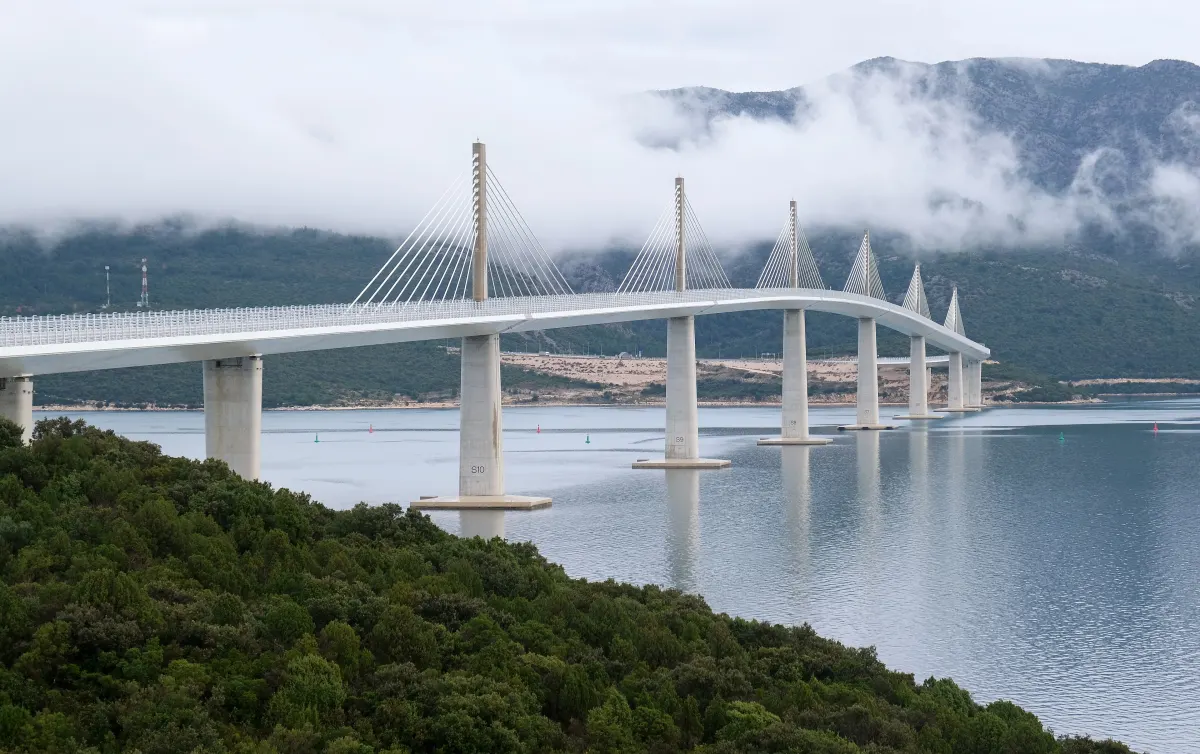
On a map, Bosnia and Herzegovina reaches the sea at Neum and cuts Dubrovnik off from the rest of Croatia. Until 2022 everybody on the coast road crossed two borders. Now there's a bridge. But for a day in Mostar or Kotor you still leave the Schengen area and come back through a full passport check, and in summer that can take hours.
Split to Dubrovnik without a border
- The Pelješac Bridge opened in July 2022. It's 2.4 km long, free, and goes from Komarna on the mainland to the Pelješac peninsula. New roads lead on past Ston to the coast road for Dubrovnik.
- Set your navigation to avoid Neum, or follow signs for Pelješac and Dubrovnik. Some apps still send you by Neum, where you need a passport, and EES applies.
- Long-distance buses between Split and Dubrovnik mostly use the bridge now. A few go by Neum. Ask, and keep your passport in your hand luggage in any case.
- Strong wind can close the bridge to high vehicles. The old Ploče to Trpanj ferry is the other way round.
Montenegro
- The main crossing is Karasovići to Debeli Brijeg, 40 km from Dubrovnik on the road to Herceg Novi and Kotor. A smaller one, Vitaljina to Kobila, is nearer the sea, and isn't always open to everyone.
- Kotor is 90 km from Dubrovnik, and takes about two hours on a quiet day. In early August 2026 the local press reported waits of three hours and, on the worst day, up to ten. Queues are worst on July and August weekends, from mid-morning, and going home in the late afternoon.
- Go before 7 am, or in spring or autumn. With a tour you wait too.
Bosnia and Herzegovina
- For Mostar, the crossings by Metković (Doljani) and the motorway at Bijača are the usual ones. From Dubrovnik, Brgat to Ivanica leads to Trebinje, only 30 km away and a quieter day out than Mostar.
- Half an hour to an hour and a half is normal in summer.
- Mines remain in Bosnia, though no longer in Croatia. Stay on roads and well-used paths there.
Serbia and Hungary
- The motorway crossing to Serbia, Bajakovo to Batrovci, is one of Europe's worst on summer weekends, when people drive home from Germany: up to eight hours in August 2026.
- Hungary and Slovenia are in Schengen, with at most spot checks: see Arriving.
What you need
- A passport for each person. UK, US, Canadian, Australian and New Zealand citizens don't need a visa for a short visit to Bosnia, Montenegro or Serbia. Other nationalities should check each country's rules.
- With a single-entry Schengen visa you can't come back. Ask for multiple entries when you apply.
- EES: visitors from outside the EU are recorded out and in. If you've been registered before, it's faster, but queues are for everyone.
- With a hire car, you need the company's written permission and a green card for insurance. Book it ahead: many charge a fee, some forbid certain countries. Without it you aren't insured, and may be turned back.
- You can't bring back meat or dairy. Alcohol and tobacco limits by land are small, and checked.
- Bosnia and Serbia use their own money, and Montenegro the euro. EU roaming doesn't work in any of them: see Phones.
Live queues
The Croatian motoring club HAK shows waiting times and cameras at the crossings, on its site and in its app. Look before you set out.
Comments