
Northern lights in Iceland: when to come, where to look, the forecast, tours and photographs
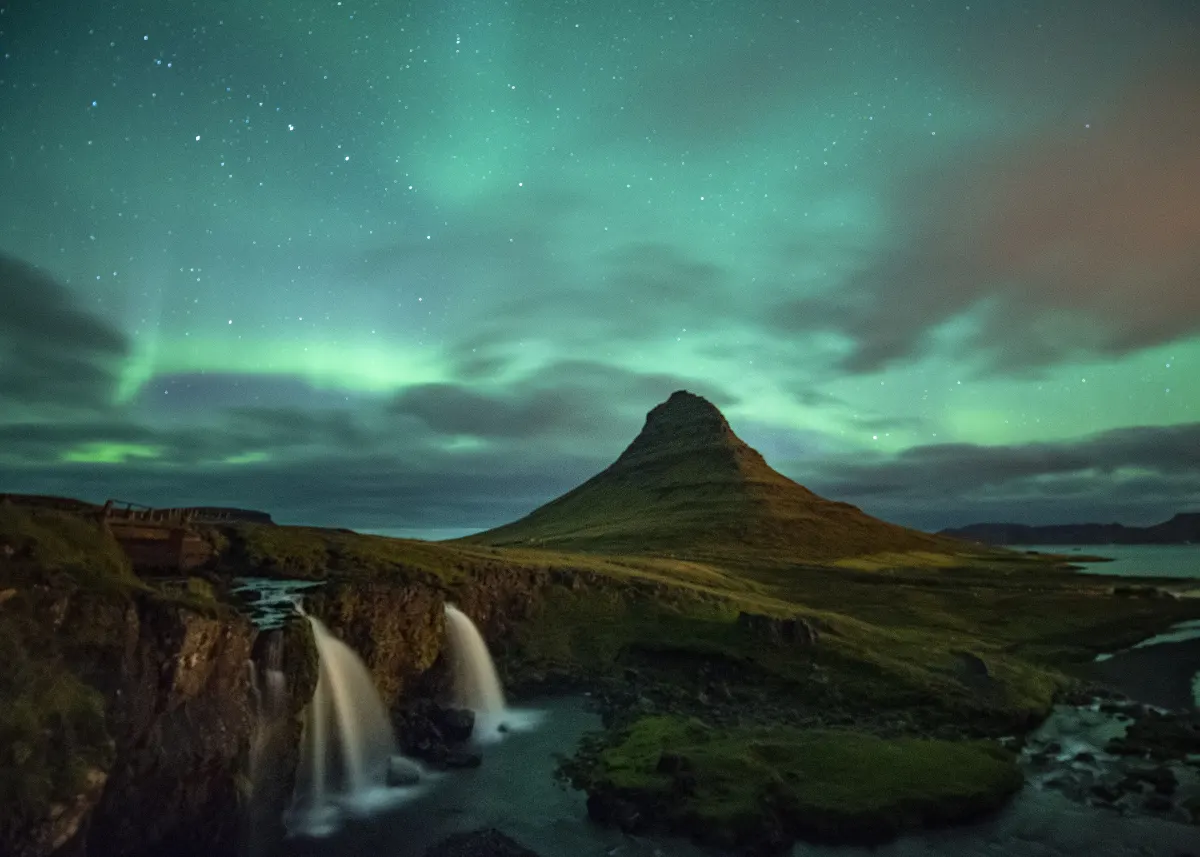
You need three things: darkness, a clear sky and some activity from the sun. Iceland has the first from late August to late April. The second is the hard one. Give it several nights, come for the rest of the country, and count the lights as luck.
When
- The season is roughly late August to late April. From mid-May to late July it's never dark enough.
- September, October and March are the best all round. There's dark at a decent hour, better roads, and often more activity near the equinoxes. December and January have the longest nights, and the most cloud and storms.
- Look from about 9 pm to 2 am. They may come for five minutes or five hours.
- The sun was at its most active in 2024 and 2025. It's now calming down, but scientists expect good displays through 2026 and 2027. At this latitude you can see them in quiet years as well.
- A full moon doesn't spoil it, and lights up the view.
The forecast
- The Met Office at vedur.is has one map for both. White is clear sky and green is cloud, which people often read the wrong way round. Check the key.
- Activity runs from 0 to 9. With 2 or 3 and a clear sky you may well see them. With 6 and cloud you won't. Cloud matters more.
- It's good for one night, fair for three. Nobody knows about next week.
- A grey arch to the north, like thin cloud, may be one starting. A photo on your phone will show whether it's green.
Where
- Anywhere dark with an open view north. You don't need the far north: Iceland is under them already. Go where it's clear, rather than to a famous place.
- In Reykjavík, strong ones show over the town. The Grótta lighthouse and the shore by the Sun Voyager are the usual spots. Perlan's hill is another.
- Within an hour: Þingvellir, the lake at Kleifarvatn, and Hvalfjörður.
- For a picture: Kirkjufell, Jökulsárlón, Vestrahorn, and Mývatn, which has some of the clearest skies.
- Best of all is a night or two in a country guesthouse with a wake-up call.
Tours
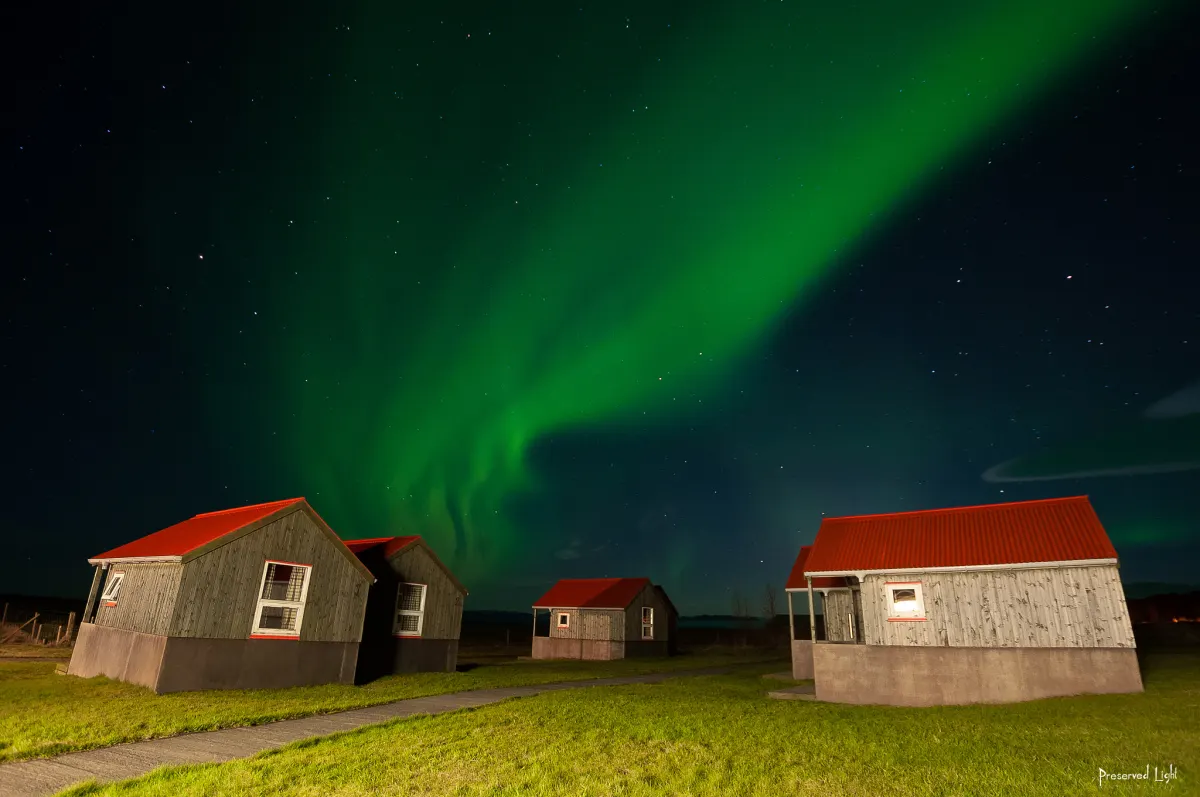
- Coaches from Reykjavík are the cheapest, small jeeps and minibuses go farther for clear sky, and boats leave the harbour. Most let you come again free if you see nothing. Book for your first night, so that you have time to use it.
- They're called off in the late afternoon when there's no hope. Keep your phone on.
- If you don't want to drive in the dark on ice, this is the way.
Safety
- Never stop on the road, or beside it. Turn into a proper car park, with lights off once you've stopped. Don't walk on the road: nobody can see you.
- Check the roads first, at umferdin.is. Set a time to turn back. Tired driving ends more trips than cloud.
- Dress for standing still for two hours at minus 5 with wind. Bring a head torch with a red light, and something hot.
- Keep away from the sea and cliff edges in the dark.
Photographs
- Most newer phones do it on night mode, held still on a tripod or a bag. Set it to 3 to 10 seconds. Turn off the flash: it spoils everybody's night eyes.
- With a camera: widest lens, f/2.8 or so, ISO 1,600 to 3,200, 5 to 15 seconds, and focus by hand on a star. Keep a spare battery warm.
- The camera sees more colour than you will. Faint ones look grey. Strong ones are green and move, and sometimes pink at the edge. Put the camera down for a while.
See also When to go and Weather and road warnings.
Natural features
Northern lights in Iceland
Southern
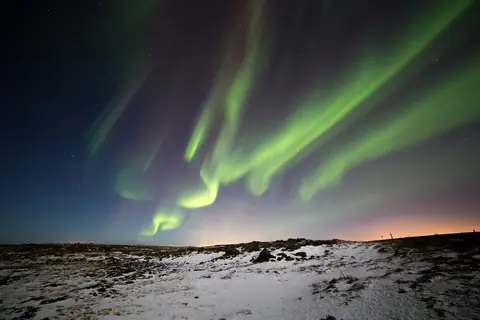
The aurora borealis can be seen across Iceland from September to April on clear, dark nights.

Comments