
Waves in Iceland: sneaker waves at Reynisfjara, the warning lights, and safe beaches
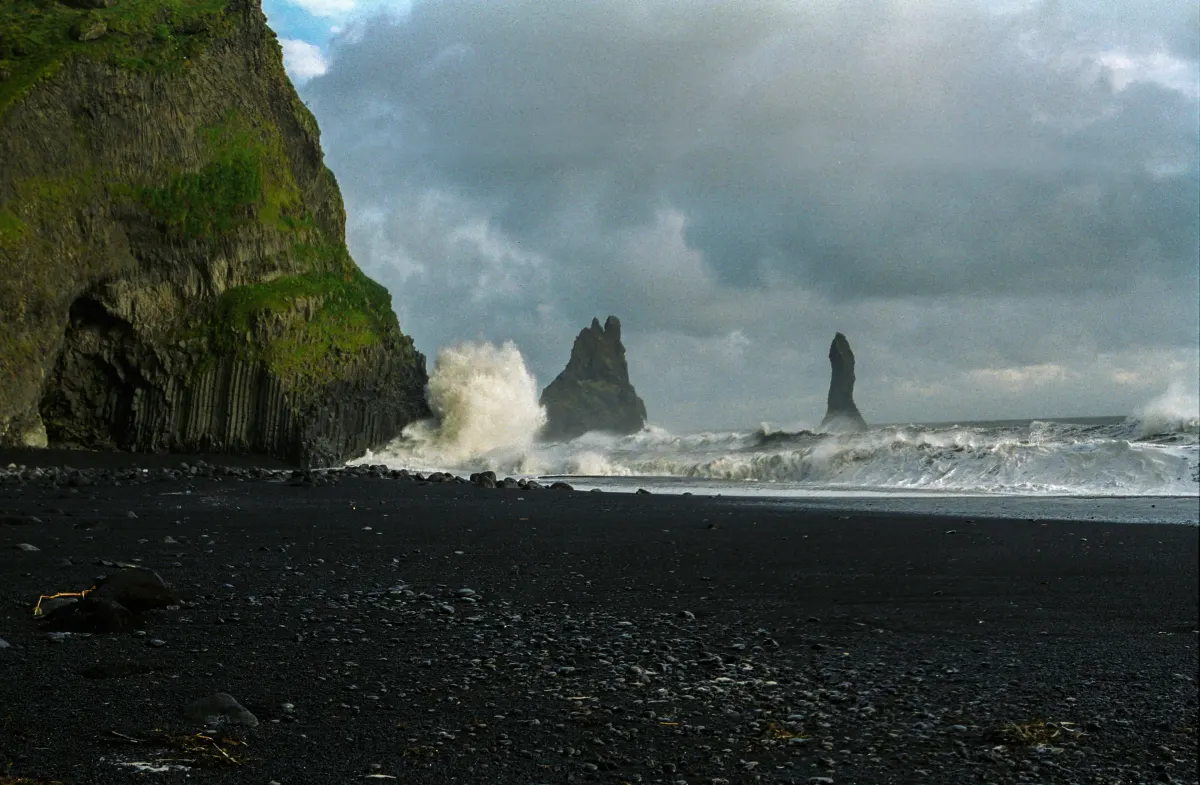
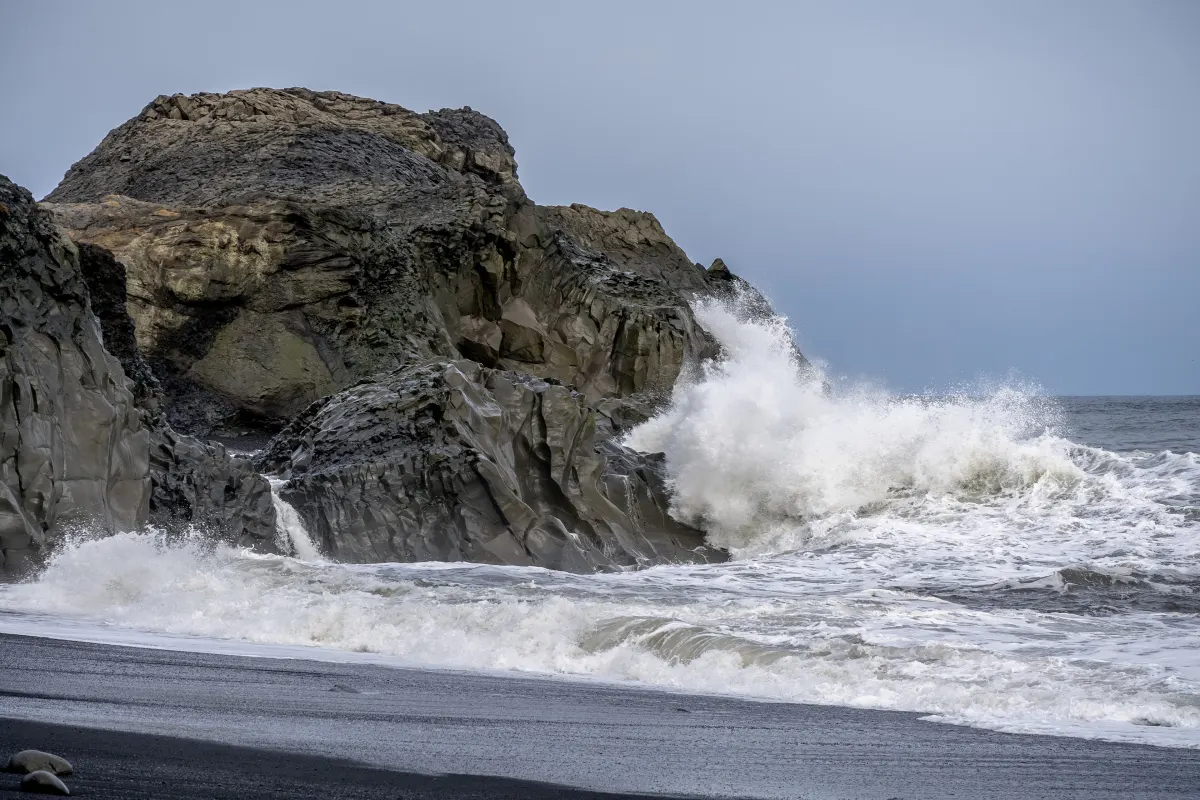
The beaches of the south coast face the open Atlantic, with nothing between them and Antarctica. Sneaker waves come with no warning after minutes of calm, run far up the sand, and pull people into water so cold that few last long. Several visitors have drowned at Reynisfjara, a child in 2025 among them. You can see it safely. Just do it from the right place.
Reynisfjara has changed
- In February 2026 storms tore away a large part of the beach. The viewing platform and warning signs were undermined, and a slope on Reynisfjall came down. The sea came so close that you couldn't reach the basalt columns at all.
- Sand comes and goes there, and part of the beach has come back since. Old photos, and older articles, show a wide beach that may not be there.
- In October 2026 the landowners said that when the waves are high the lower car park is closed, staff stand guard, and ropes and chains mark where you mayn't go. That month a child was knocked under by a wave. The landowners said some visitors still climb over the barriers.
- On 24 November 2026 Safetravel said the beach could be seen only from the viewpoint, because of storms and high waves. Look at its page before you go.
The lights
- Yellow: moderate danger. Stay alert, and well back from the water.
- Orange: considerable danger. Stay at least 25 m from the sea.
- Red: the beach is closed. Stay at the viewing area above it. The cave and columns are shut too.
- If the lights are missing or out, as some were in 2026, treat it as red, and do what the staff say.
How not to drown
- Never turn your back on the sea, not even for a photo.
- Watch for ten minutes before you go down. Wet sand shows how far the last big wave came. Stay well above it.
- Hold children by the hand.
- Don't stand on rocks or in the cave. Waves fill it, and there's no way out.
- If somebody goes in, don't follow. Call 112 and throw the ring if there is one.
- Rocks fall from the cliff, especially after rain and frost.
Other places to take care
- Kirkjufjara and Dyrhólaey: the beach below the headland is closed, and the cliff edges crumble. Dyrhólaey's upper part has the best safe view of Reynisfjara. It's shut at times in May and June for nesting birds.
- Vík beach: the same waves, and no lights.
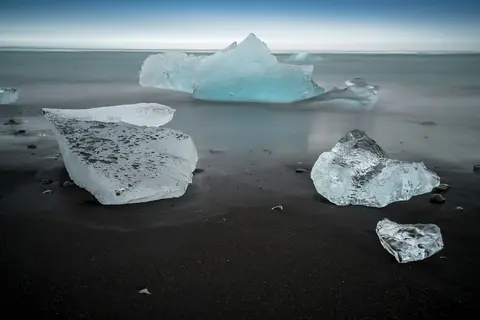
- Diamond Beach: the waves move blocks of ice weighing tons. Don't stand between the ice and the sea, or climb on it.
- Jökulsárlón: never step onto floating ice. It rolls.
- Djúpalónssandur on Snæfellsnes and Stokksnes near Höfn: strong currents. No paddling.
- Rivers: the water at Stuðlagil looks calm and blue, and is swift and icy. Stay on the paths.
Safe seaside
For seals, sit quietly at Ytri Tunga on Snæfellsnes. For a swim, Nauthólsvík in Reykjavík has a sheltered beach with warm water let into it, and the GeoSea baths at Húsavík look out to sea from the cliff. See Swimming pools.

Reynisfjara Black Sand Beach
A black volcanic sand beach near Vík, with towering basalt columns forming a cave and the Reynisdrangar sea stacks offshore, said to be trolls turned…
Diamond Beach
Chunks of ice from Jökulsárlón glacier lagoon wash up on black volcanic sand, glittering like diamonds.



Comments