
Glaciers in Iceland: why you need a guide, conditions at Sólheimajökull, walks near the ice and tours
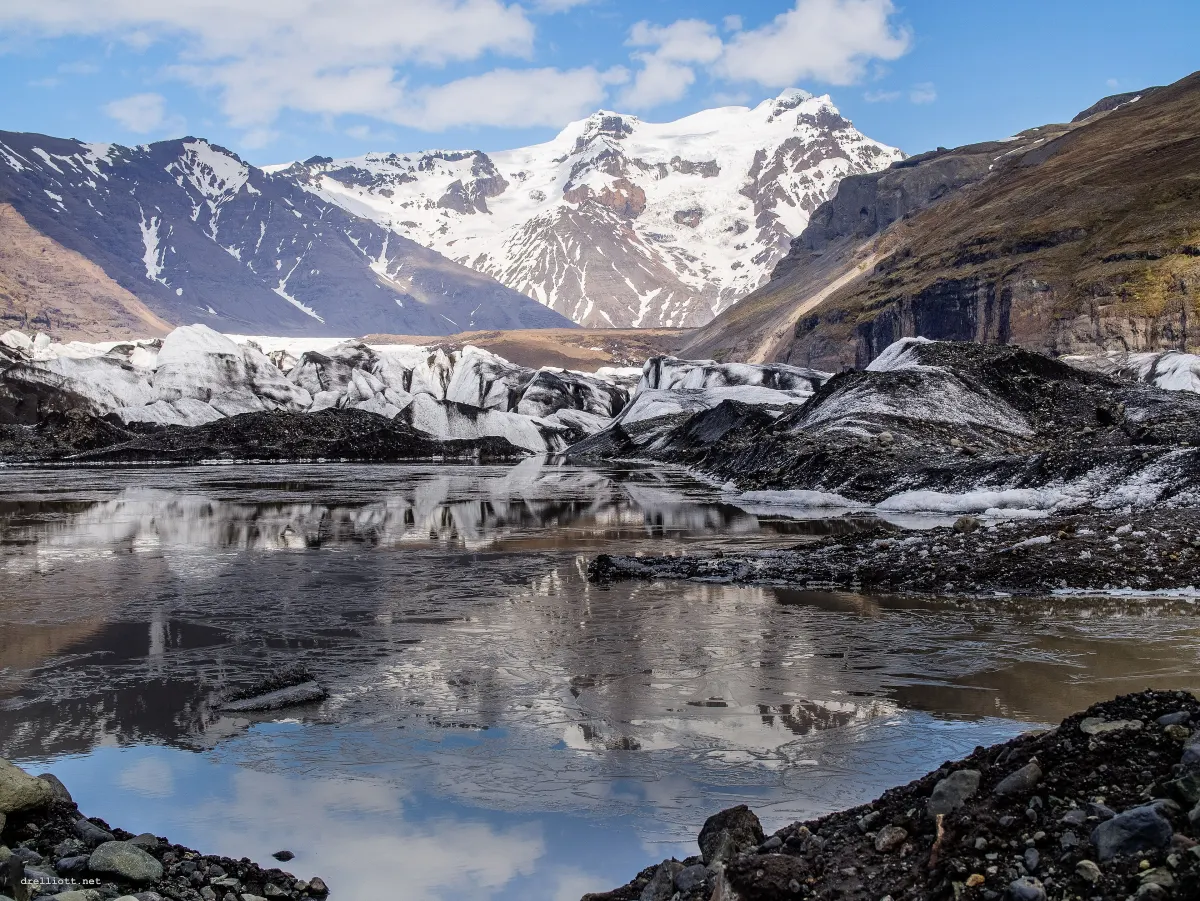
About a tenth of Iceland is ice, and some of it comes down nearly to the Ring Road. You can walk up to it on your own, and on it only with a guide. Crevasses are hidden by snow in winter, and the edges melt, flood and fall all summer.
The rule
- For the blue caves under the ice, see Ice caves.
- Don't step on a glacier without a guide, proper crampons and a helmet. Safetravel says never to go without experience. Slip-on spikes from a petrol station aren't crampons.
- Look from the marked path. Keep off the ice edge, out of any arch or cave, and away from the lagoon below, where blocks fall and make waves.
- Guides should be trained by the Association of Icelandic Mountain Guides or the like. Ask how many people there are to a guide. In Vatnajökull National Park it's from 8 to 16.
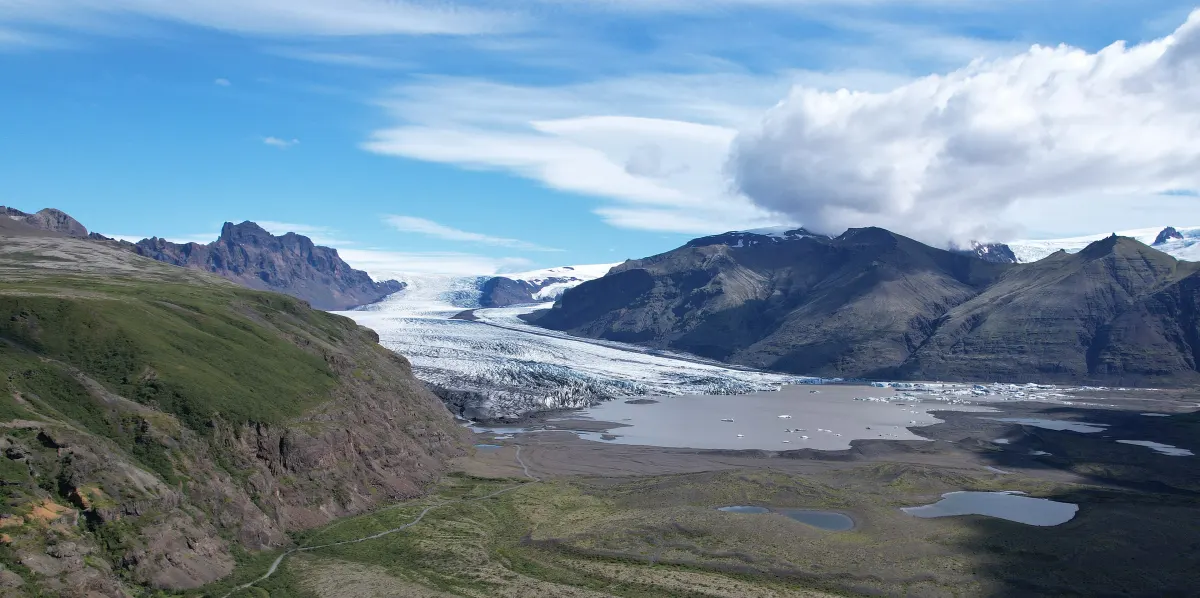
Sólheimajökull in 2026
- This is the easiest glacier from Reykjavík, and it has become more dangerous. A new lagoon has made the ridge of ice on the way thin and unstable, and rocks fall from the hill above the path.
- In July 2026 several companies stopped their walks for a time. The authorities left the place open, with stronger warnings. In November Safetravel still said to go only with a guide, to keep off the ice ridge and away from the lagoons, and to check conditions first.
- If your tour there is cancelled, the walks at Skaftafell (Falljökull and Svínafellsjökull) are the usual alternative. Don't walk out onto it on your own.
Walking near ice
- Skaftafell: an easy path of about 40 minutes to the front of Skaftafellsjökull, and the walk to the black columns of Svartifoss.
- Fjallsárlón: a smaller, quieter lagoon than Jökulsárlón, 10 minutes west.
- Fimmvörðuháls, from Skógar to Þórsmörk, crosses snow and ice between two glaciers. In August 2026 hikers were warned of new gullies and crevasses on the route. Ask the wardens, and go only in good weather with a GPS.
- Bridges on the Laugavegur trail are few, and glacial rivers rise in the afternoon.
Tours
- A glacier walk of three to four hours is fine for anyone fit. There's a lower age limit, often 8 to 10. Crampons, axe and helmet are lent. Bring hiking boots with ankles, as hire boots run out.
- For Snæfellsjökull there are ski and snowcat trips in spring and early summer. For Hvannadalshnúkur, Iceland's highest peak at 2,110 m, you need a guide and a very long day, usually from April to June.
- Snowmobiles run on Langjökull and Mýrdalsjökull all year. Going is off in strong wind.
- Off season, avoid the ice on any day with an orange warning. See Weather and road warnings.
Natural features
Vatnajökull National Park and Skaftafell
Eastern
Europe's largest national park, around the vast Vatnajökull ice cap, a World Heritage site of glaciers, volcanoes and waterfalls.

Comments