
Driving in Iceland: licences, speed limits, one-lane bridges, gravel, wind, insurance, fuel and fines
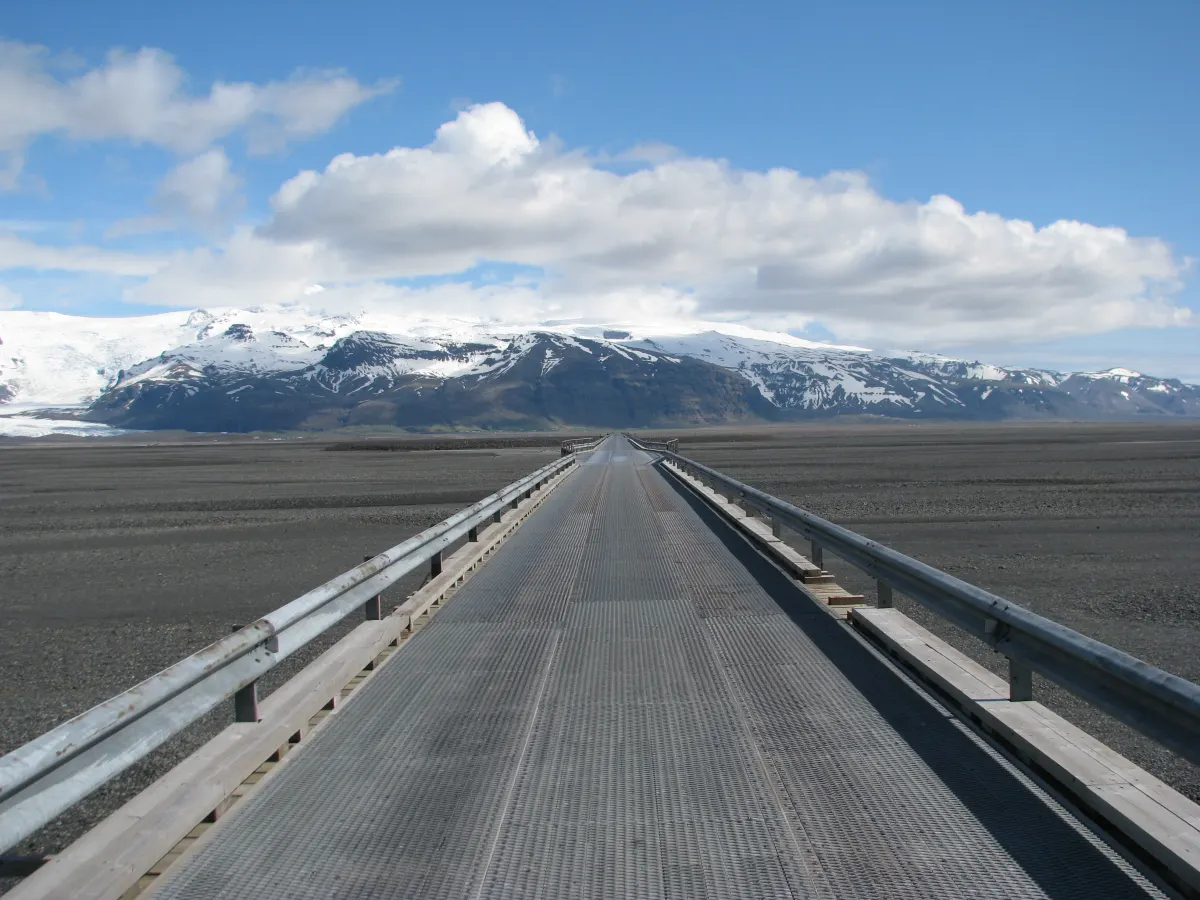
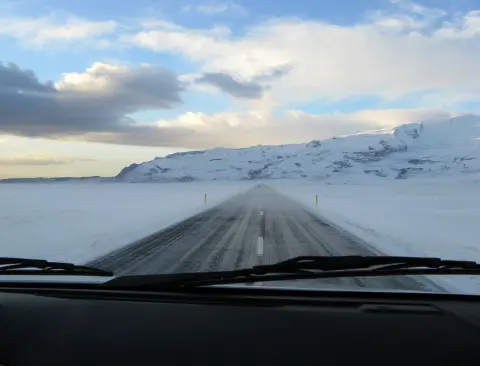
A car is the best way to see Iceland, and the roads are the likeliest thing here to hurt you. Traffic is light, but the weather, gravel, narrow bridges and views catch out people who drive well at home. Keep the days short: 250 km with stops is plenty in summer, and half that in winter.
Before you go
- Licence: EEA licences are valid, and the Transport Authority says those from other countries are valid for six months. The UK government says 30 days for its own photocard licences. If yours has no photo or isn't in the Latin alphabet, bring an international driving permit. You must carry it.
- Hire firms usually want you to be 20 (23 to 25 for a big 4x4) and to have held a licence for a year, with a credit card.
- Book early for summer. Read the part of the contract about F-roads.
The rules
- Speed: 50 km/h in towns, 80 on gravel, 90 on paved roads. That's the highest there is, and it's for good conditions.
- Alcohol: the limit is 0.2 g per litre. One drink can break it.
- Lights front and back, day and night, all year. "Auto" often leaves the back ones off.
- Seat belts for everybody. Children under 135 cm need a proper seat.
- On a two-lane roundabout, the inner lane has the right of way when leaving. Visitors don't expect this.
- Never stop on the road for a photo. Find a lay-by.
- Off-road driving is illegal everywhere, even on sand. Fines are large, and the tracks last for decades.
One-lane bridges
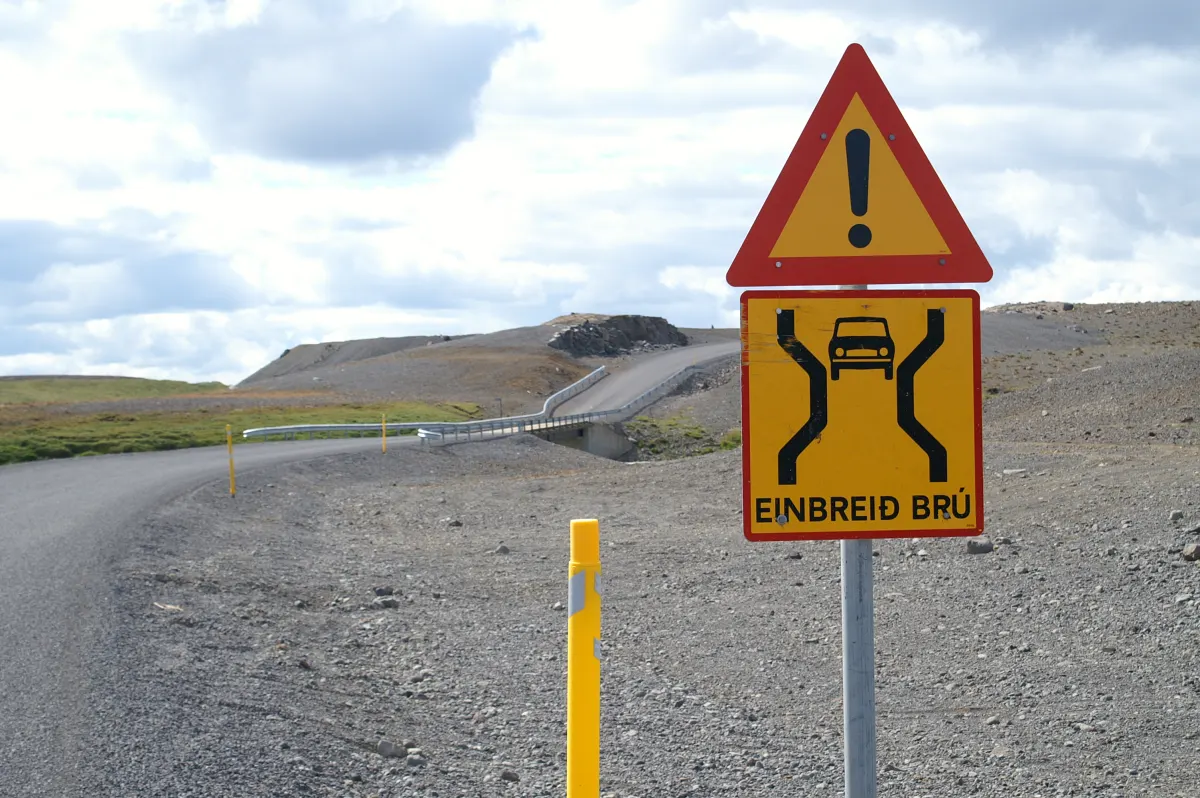
A sign says Einbreið brú. The limit is 50 km/h, and the car nearest the bridge goes first. Slow down and see what the other driver does. There are fewer than there were, but still plenty on Route 1 in the east.
Gravel, wind and sheep
- Slow down before the paving ends (Malbik endar). Many of the worst tourist crashes are cars that meet gravel at 90.
- Wind tears car doors off their hinges. Park into the wind, hold the door with two hands, and open one at a time. This damage isn't usually insured.
- Sheep roam free from June to September. If there's a lamb on one side and its mother on the other, it will run.
- Blind crests (Blindhæð): keep right and slow down.
Insurance
- Add gravel cover for glass and paint. Sand and ash cover is worth it on the south coast, where one storm can strip the paint.
- Not covered by any: rivers, off-road driving, doors in the wind (usually), the underside, and F-roads in a car that's not allowed on them.
- Photograph the car all round when you get it.
Fuel
- Petrol was about 270 krónur a litre in November 2026. Pumps are self-service, with a card and PIN. Choose an amount, as "full tank" can block a large sum for days. Fill up at half in the north and east, and before any F-road.
- Electric cars work on the Ring Road, with fast chargers at most towns. They lose range in the cold and wind.
Fines and trouble
- A phone in the hand is 40,000 krónur, a red light 50,000, and no seat belt 20,000. Speeding starts at about 20,000 and goes past 200,000. Cameras are fixed and mobile. Paying at once usually earns a discount of about a quarter.
- In an accident call 112. For road conditions call 1777.
There are pages of their own for F-roads, winter driving and tolls and parking. See also Weather and road warnings and the Ring Road in 9 days.
Comments