
Safari in South Africa: which park, driving yourself, private lodges, malaria-free parks and what it costs
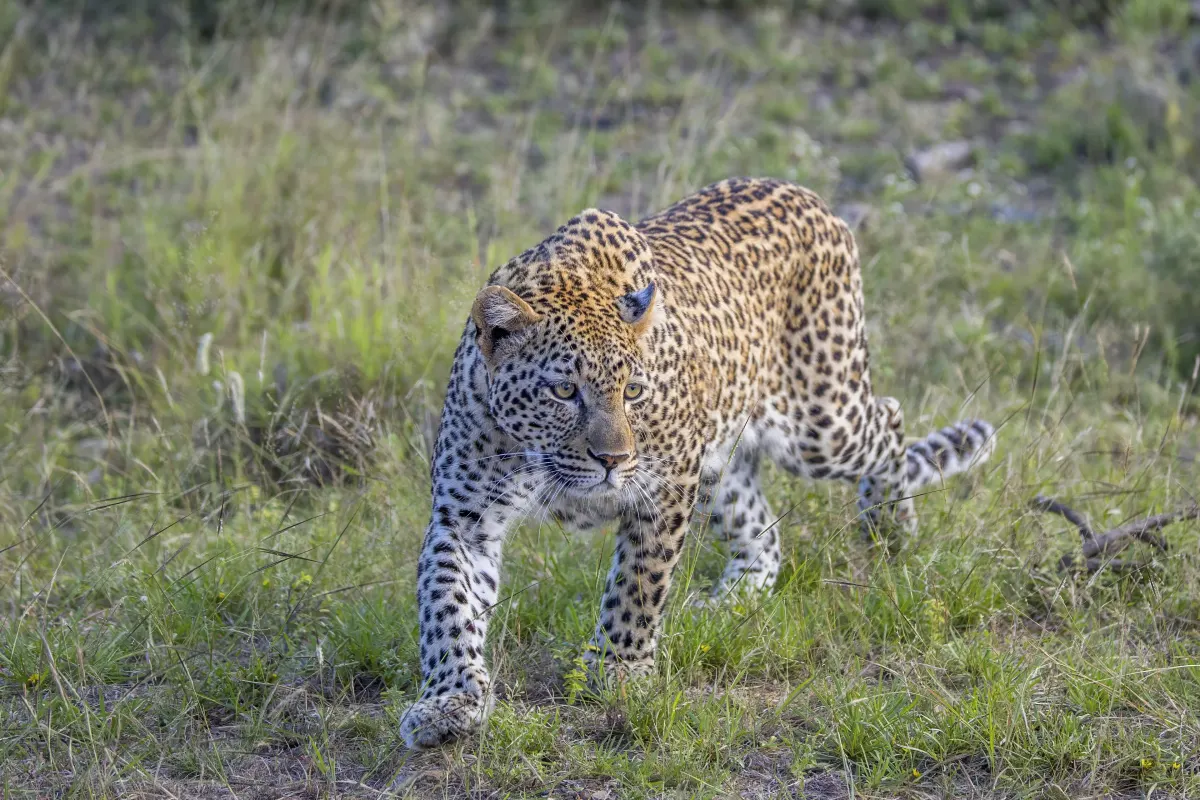
South Africa is the easiest place in Africa to see big animals on your own: good roads, fenced rest camps and prices that don't have to be high. You can also stay in a private lodge, where everything's done for you.
Which park
- Kruger: vast, with the Big Five and some 20,000 sq km. The south has the most animals and the most people; the north is wild and quiet. Malaria area. Rules, gates and quotas are in Kruger.
- Private reserves beside Kruger, such as Sabi Sand, Timbavati, Klaserie and Manyeleti: guided drives off the road, with the best chances of leopards. Expensive.
- Hluhluwe-iMfolozi: green hills, and the place that saved the white rhino. With iSimangaliso's hippos close by.
- Pilanesberg: Big Five, no malaria, within three hours of Johannesburg. Madikwe, further on by the Botswana border, is also malaria-free, and takes only lodge guests.
- Addo: elephants galore, no malaria, and at the end of the Garden Route.
- Kgalagadi: red dunes, black-maned lions, cheetahs and birds of prey. Remote.

Natural features
Kruger National Park
Mpumalanga
One of Africa's largest game reserves, about 20,000 km², with the Big Five and more.
Natural features
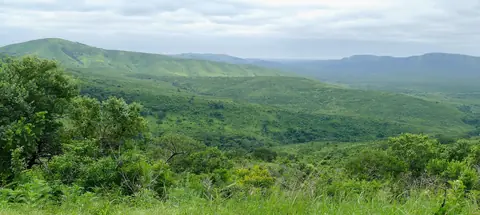
Hluhluwe-iMfolozi Park
KwaZulu-Natal
Africa's oldest proclaimed reserve, where white rhinos were saved from extinction, with the Big Five on hilly game drives.
Driving yourself
- An ordinary car is fine in Kruger, Hluhluwe-iMfolozi, Pilanesberg and Addo. Sit high if you can.
- Be at the gate when it opens, and go out again in the late afternoon. Drive slowly, stop often, and look for other cars that have stopped.
- Waterholes, river bridges and bird hides are the best places to wait. Rest camps have sightings boards.
- May to September is dry, cool and best for seeing animals. November to March is hot, green and full of baby animals and birds: see When to go.
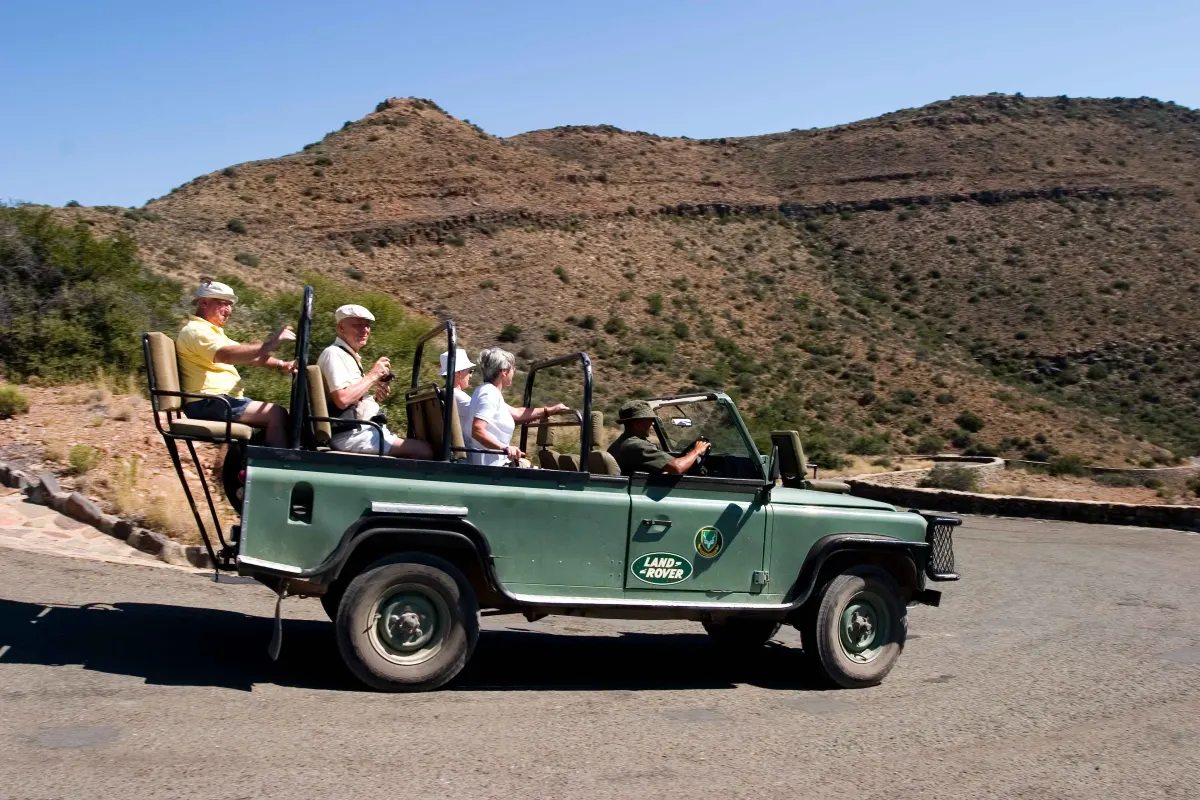
- Book rest camps as early as you can (up to about a year ahead). Book at least one guided drive, at night or before dawn, when you can't be out on your own, and a guided walk.
What it costs (1 November 2026 to 31 October 2027)
- Kruger, per day for foreign visitors: R692 for adults, R345 for children aged 2 to 11.
- Addo: R565. Cape Point: R592 (children R288). These were reported from South African National Parks' list. Prices for South Africans and people from neighbouring (SADC) countries are much lower, with proof.
- If you'll be in parks for more than about a week, a Wild Card for foreign visitors can pay for itself. Work it out with the new prices first.
- A 1% community charge is added to camps and activities. KwaZulu-Natal's parks (Ezemvelo) have their own fees and bookings.
Malaria
Kruger and its neighbours, and the low country round them, are a malaria area, mainly from September to May. Ask a travel clinic about tablets, which may not be right for small children or in pregnancy: see Health. If that's a problem, choose Addo, Pilanesberg, Madikwe or the parks of the Western Cape.
At a private lodge
- The price usually covers meals and two guided drives a day, but maybe not drinks, park fees and transfers. Ask for everything in writing.
- Ask about minimum ages for children, and whether the camp is fenced. If it isn't, you'll be walked to your room after dark.
- Tip guides and trackers: see Money and tipping.
Comments