
Northern Lights in Canada: where, when, forecasts, photos and what to wear
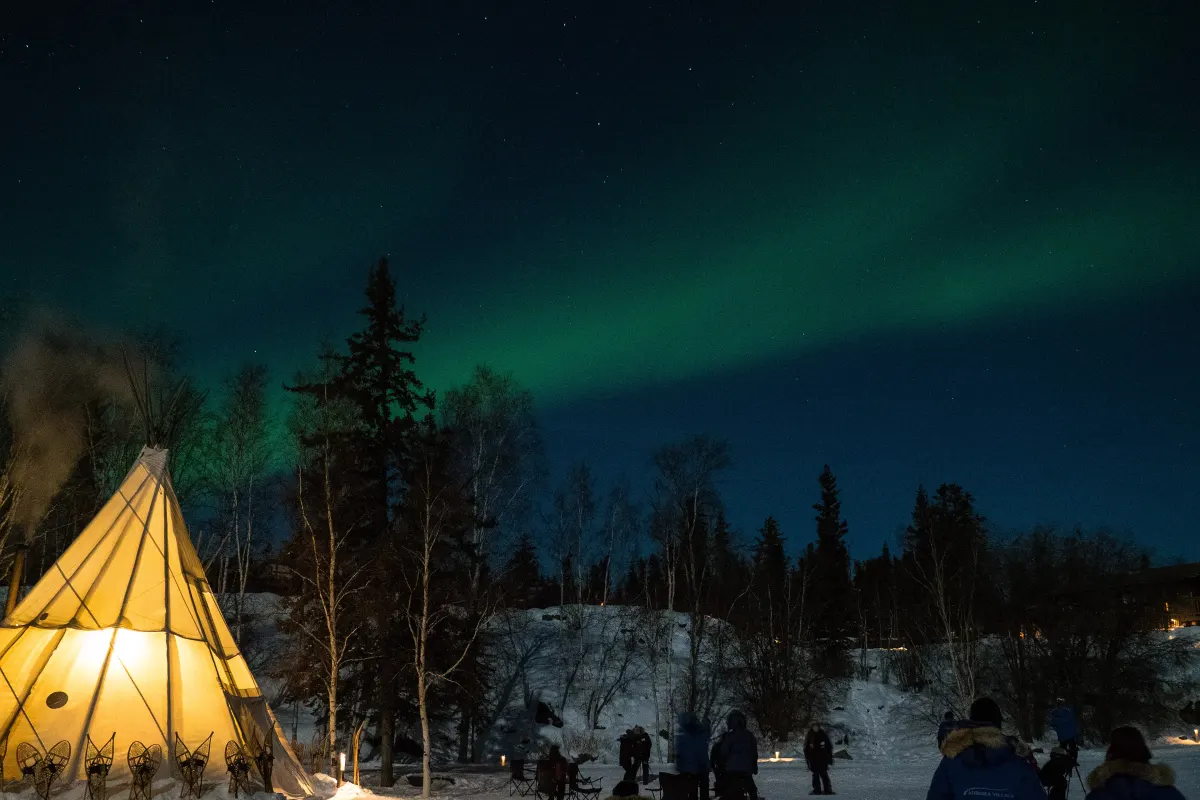
Some of the best places on Earth for the aurora have an airport, hotels and a road here. Go where the sky is clear, stay at least three nights, and dress for standing still.
Northern Lights: where
- Yellowknife, in the Northwest Territories, is the surest: right under the auroral oval, flat and dry, with clear skies. Tours go out to heated tepees and cabins. Fly from Edmonton, Calgary or Vancouver.
- Whitehorse, in the Yukon, is easier and more scenic, with hot springs, dog sledding and mountains, but cloudier in early winter.
- Churchill, in Manitoba, has auroras on most clear nights. February and March are best, with the dearest trips.
- By road: Fort McMurray and northern Alberta, northern Saskatchewan and, when activity is strong, Jasper and almost anywhere on the Prairies. Nunavik and Labrador see many, but are hard to reach.
Natural features
Northern lights in Yellowknife
Yellowknife, Northwest Territories
One of the best places to see the aurora, from late August to April, from heated viewing cabins.

Natural features
Churchill polar bears
Manitoba
A small town on Hudson Bay, the 'polar bear capital of the world', where bears gather each October and November waiting for the sea to freeze.
When
- From late August to mid-April. In summer it doesn't get dark.
- Late August and September: mild (5 to 15°C), lakes that reflect the lights, and you can hire a car safely. October and November are often cloudy.
- December to March: long nights and the clearest skies, at −20 to −40°C. February and March are drier and lighter, with dog sledding too.
- The best hours are about 10 pm to 2 am, and often later now that the clocks stay on summer time.
- Stay at least three nights. A moonless week helps, but a half moon lights the snow.
- The Sun's activity peaked in about 2024 and is falling slowly, but the years after a peak still bring strong displays. That makes 2026 and 2027 good, and nothing is ever sure.
Forecasts and photos
- See Space Weather Canada and the University of Alberta's AuroraWatch. In the North, a clear sky matters more than a high number.
- For photos, use a tripod, a wide lens at f/2.8 or so, ISO 1600 to 3200 and 2 to 10 seconds, focused by hand on a star. Night mode on a phone works too. Keep spare batteries in an inside pocket, and don't bring a cold camera straight into a warm room: put it in a sealed bag first.
- The lights can look grey to the eye when they're faint. Cameras show more colour.
What to wear
- At −30°C you stand still for hours, so hire a parka, boots, mittens and snow trousers there (often included in a tour). Underneath, wear wool thermals, a fleece and two pairs of socks that aren't tight.
- Chemical hand warmers, a neck tube and a hat that covers the ears make all the difference. Take off metal earrings.
- Cold drains phones fast. See Safety for frostbite, and Driving before you hire a car.
See also winter trips and Weather and seasons.

Comments