
Driving and road trips in Canada: licences, distances, winter tyres, wildlife and car hire
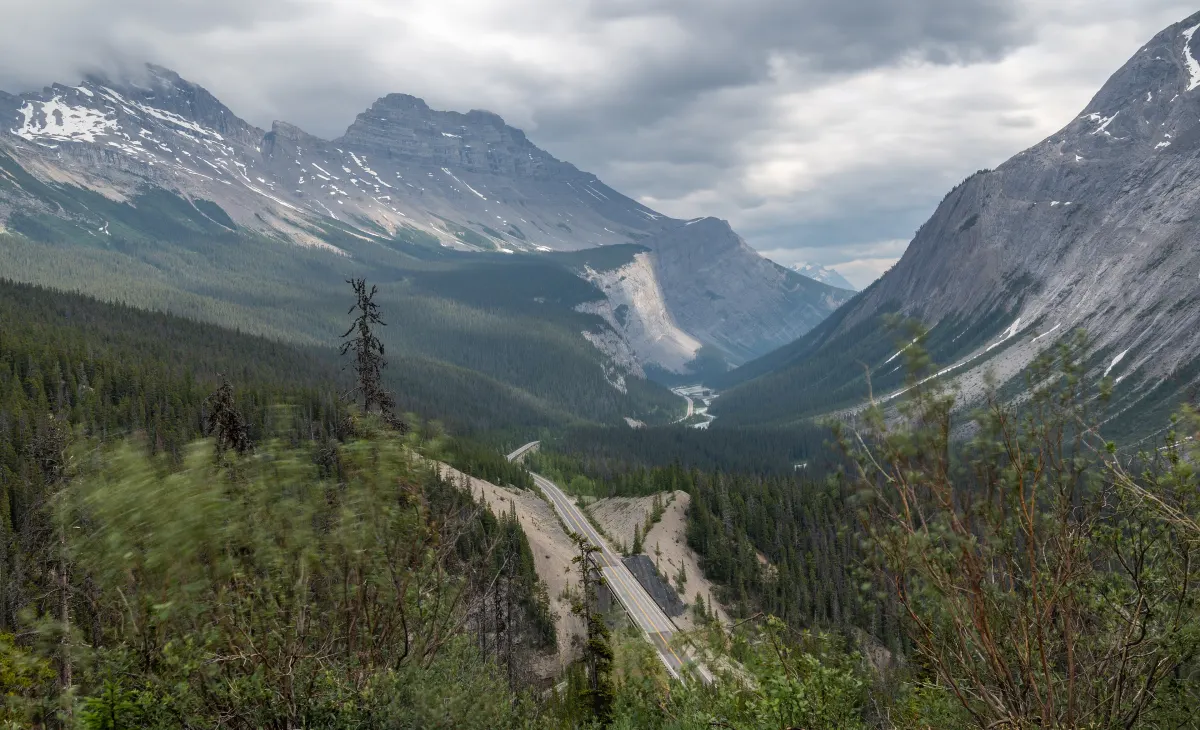
Roads are good, traffic is mostly calm, and outside the Toronto–Québec corridor a car is the best way to see the country. The main dangers are distance, winter and animals.
Licences, hire and insurance
- Your home licence is valid for visits of less than three months in Ontario and up to six months in Quebec; other provinces have similar rules. Carry an International Driving Permit as well if yours isn't in English or French, or if your hire company asks for one. You must get it at home.
- Most hire companies want drivers of 21 or more, with a surcharge under 25, and a credit card in the driver's name.
- Check the third-party liability cover, as the legal minimum is too low for a bad accident: take CAN$1 million or more. Many policies exclude gravel roads, which matters in the Yukon and Northwest Territories.
- One-way hire, such as Calgary to Vancouver, usually has a drop-off fee. Ask before taking a car into the USA.
- Motorhomes are popular, but must be booked months ahead for July and August. Read the limits on kilometres.
Real distances
- Distances are in kilometres. Toronto to Montréal is 540 km (5½ hours), Calgary to Vancouver 970 km (11 hours), Montréal to Halifax 1,250 km (13 hours), Whitehorse to Dawson City 530 km (6 hours) and Toronto to Vancouver about 4,400 km (5 to 7 days).
- In the mountains and on Atlantic coast roads, count on 70 to 80 km an hour with stops. Plan no more than 400 km on a normal day.
Rules of the road
- Drive on the right. Limits are usually 50 km/h in towns, 80 to 90 on two-lane roads and 100 to 110 on motorways (120 on a few in British Columbia). Lower limits in school and playground zones are strictly enforced, and cameras are common in some provinces.
- You can turn right on red after stopping, unless a sign says no, but not on the island of Montréal. A flashing green light means different things: in Ontario, you may turn left; in British Columbia, pedestrians control the light.
- Stop, in both directions, for a school bus with flashing red lights (except across a divided road). At a four-way stop, whoever stops first goes first. Slow down and move over for emergency vehicles.
- Seat belts are compulsory, and holding a phone brings big fines. Use headlights all day: in some places it's the law.
- Alcohol: it's a crime to drive with 80 mg per 100 ml of blood, and most provinces suspend your licence and take the car from 50 mg (Saskatchewan 40). Young and new drivers must have none. Police can test any driver they stop. Driving on cannabis is treated as seriously.
- In Quebec, signs are in French: arrêt (stop), sortie (exit), est (east), ouest (west), travaux (roadworks), détour. Parking signs in Montréal are a puzzle: read every one on the pole.
Fuel and tolls
- Petrol is gas, sold by the litre. The national average was CAN$1.41 on 23 November 2026, after reaching CAN$1.90 in May. It's dearest in British Columbia and the North. Some pumps want you to pay first.
- Fill up when you can in the North and on the Icefields Parkway, where there's none in winter.
- Electric cars are easy in southern Quebec, Ontario and British Columbia, and harder on the Prairies and in the North. Cold cuts their range a lot.
- There are few tolls: Ontario's 407 ETR round Toronto (cameras, and expensive, with rental fees on top: tell your satnav to avoid it; the eastern end, Highway 407 from Pickering, is free), the A25 and A30 bridges near Montréal, and the Confederation Bridge.
Winter driving
- In Quebec, cars registered there must have winter tyres from 1 December to 15 March. In British Columbia you need winter tyres (the M+S or snowflake mark) or chains on most highways from 1 October to 30 April, or 31 March on some, but not in Vancouver or south-eastern Vancouver Island. On the Icefields Parkway it's 1 November to 31 March, and whenever there's snow. Elsewhere they're strongly advised: ask for them when you book.
- Check the road the same day: DriveBC, 511 Alberta, and 511 in the other provinces. The Trans-Canada at Rogers Pass often closes for avalanche control.
- Carry a blanket, warm clothes, food, water, a shovel, a torch, a charged phone and spare washer fluid rated to −40°C. Watch for black ice, and for drifting snow on the Prairies.
- If you get stuck, stay in the car. Clear the exhaust pipe before running the engine. Plug in the block heater if the car has one and it's below −15 to −20°C.
- Snowploughs have flashing blue or amber lights: don't pass them.
Animals
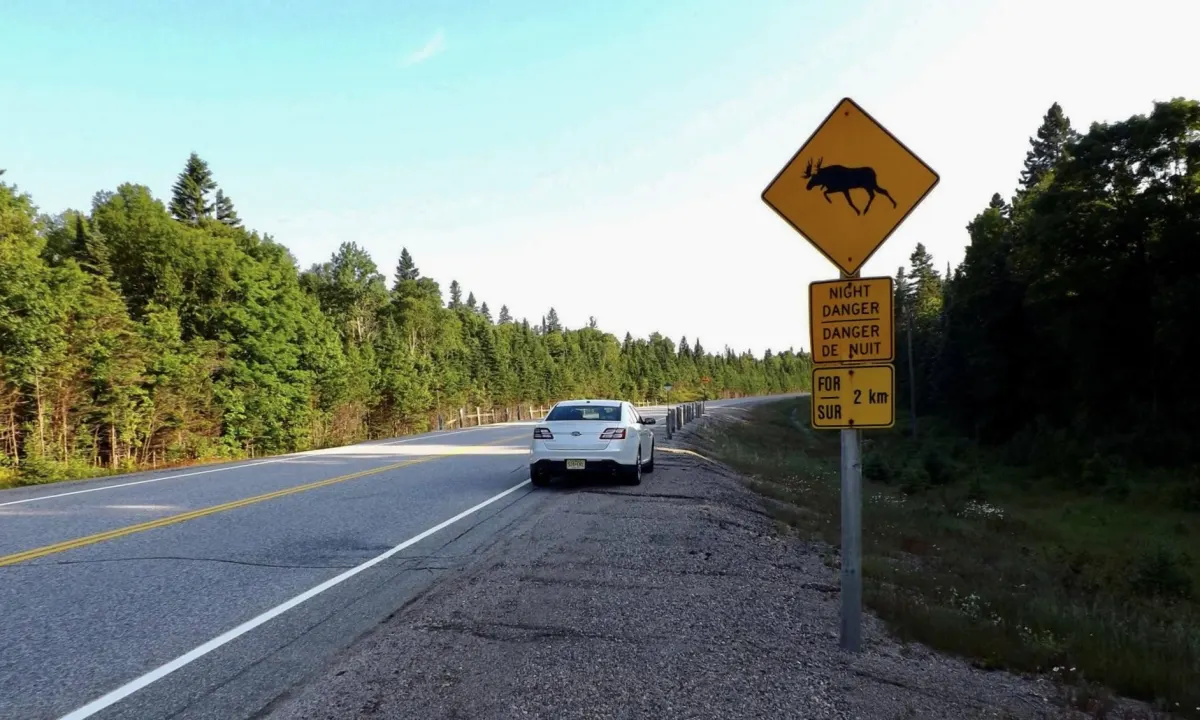
- Hitting a moose can kill you, as its body comes through the windscreen. They're a real danger in Newfoundland, northern New Brunswick, Quebec, northern Ontario and the North. Deer, elk and bears are common elsewhere.
- Don't drive at dusk, dawn or night in the country if you can avoid it. Where one crosses, expect more. Brake firmly in a straight line rather than swerving.
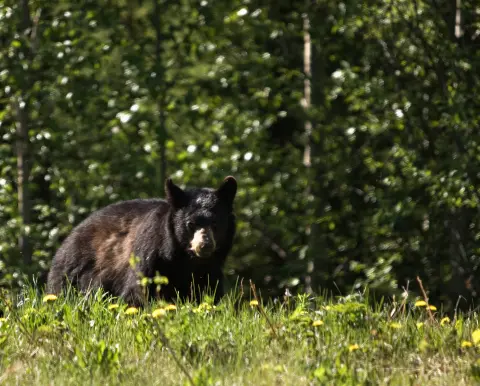
- For a bear or elk by the road, slow down, don't stop on a bend, and stay in the car.
Gravel and remote roads
On the Dempster, the Dalton and other northern roads, carry a full-size spare tyre (two on the Dempster), extra fuel, food and a satellite messenger. Slow down and keep right for lorries, which throw stones. There's no phone signal for hours.
Road trips on this site: the Rockies from Calgary to Vancouver, Atlantic Canada, the Yukon, and the Cabot Trail.

Comments