
7 days in Laos: Vientiane, Vang Vieng and Luang Prabang (route map)
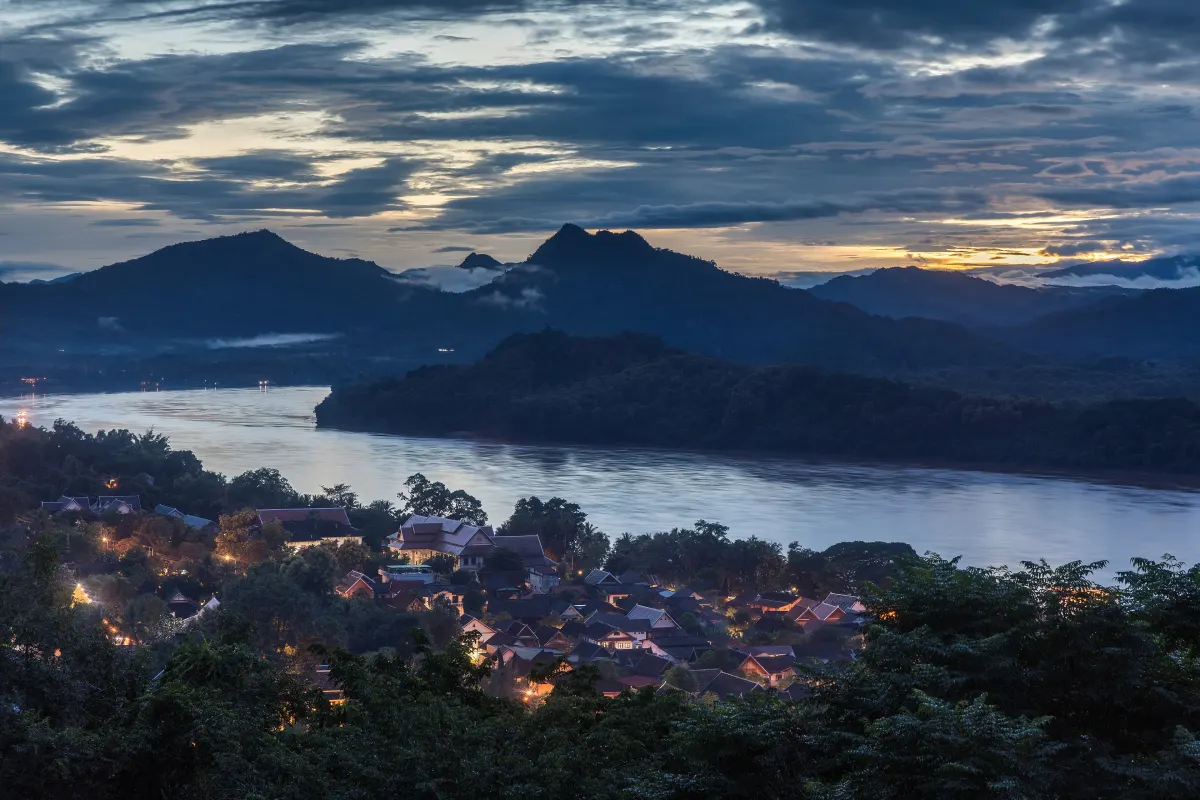
The Laos–China Railway has made this the easiest week in Laos: the quiet capital, Vientiane; the limestone mountains of Vang Vieng; and the temples and riverside streets of Luang Prabang, joined by fast trains of one or two hours each.
Map of the route
Vientiane to Vang Vieng and Luang Prabang by train, about 270 km
Day trip to Kuang Si Falls, about 30 km
Click a dot for the place. Labels show where you stay; the dashed line is a day trip. Route from OpenStreetMap (© OpenStreetMap contributors, ODbL).
Before you go
- When: November to February is best. In March and April the north is often hazy with smoke, and from June to September heavy rain can stop river trips. See Weather and when to go.
- Getting there: fly into Vientiane, or come by train from Bangkok or Nong Khai, and fly home from Luang Prabang. Or do the trip the other way round.
- Book ahead: train tickets sell out, so book them as soon as they go on sale. See Getting around Laos. Book rooms in Luang Prabang ahead in the busy season.
- Cash: take out kip in Vientiane. See Money in Laos.
Day 1: Vientiane
Vientiane is one of the most relaxed capitals in Asia. Start at Pha That Luang, the golden stupa that's the symbol of Laos, then walk to the Patuxai victory monument. In the afternoon, visit Wat Si Saket, with its thousands of small Buddha images, and Haw Phra Kaew opposite. At sunset, walk along the Mekong riverside and its night market, with Thailand on the other bank.

Pha That Luang, Vientiane
A golden stupa, the national symbol of Laos, said to hold a relic of the Buddha.
Day 2: Vientiane
Spend the morning at the COPE Visitor Centre, which tells the story of the bombs dropped on Laos and the people still hurt by them. In the afternoon, take a tuk-tuk out to Xieng Khuan, the Buddha Park, a strange garden of concrete statues by the Mekong, or get a traditional herbal sauna and massage at a temple or spa.
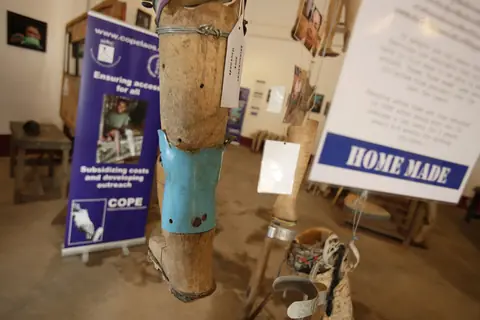
COPE Visitor Centre, Vientiane
Laos is the most heavily bombed country in history per person: the US dropped more than two million tonnes of bombs on it between 1964 and 1973, and …
Day 3: The train to Vang Vieng
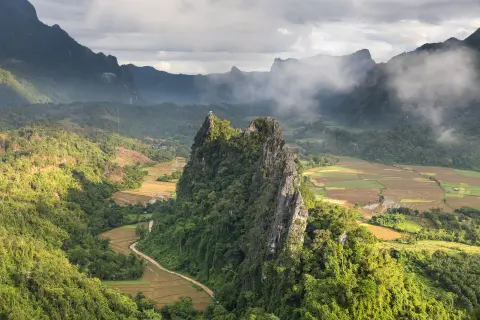
Take the train north, under an hour, to Vang Vieng. Once a party town, it's now better known for its scenery: the Nam Song river under jagged limestone peaks. Cross the river to the bamboo bridges and rice fields, and watch the sunset (and, on calm mornings, hot-air balloons) over the mountains.

Vang Vieng
A small town on the Nam Song river surrounded by dramatic karst mountains, now known for outdoor adventures: kayaking, tubing, caving, rock climbing,…
Day 4: Vang Vieng
Spend the day outdoors. Kayak or float down the Nam Song in a tube (with a life jacket, and without the drinks), explore the caves, cycle or ride to the Blue Lagoons, swimming holes at the foot of the mountains, or climb to a viewpoint such as Pha Ngeun. Use well-known companies, and read Safety in Laos, especially about drinks, first.
Day 5: The train to Luang Prabang
The train to Luang Prabang takes just over an hour, through tunnels and over bridges among the mountains. The town is a World Heritage Site: a peninsula between the Mekong and the Nam Khan, full of temples, old wooden houses and French colonial buildings. Climb Mount Phousi for the sunset, then browse the night market and eat at the food stalls next to it.

Luang Prabang
The old royal capital of Laos, on a peninsula where the Nam Khan meets the Mekong, a UNESCO World Heritage Site of golden temples, French colonial ho…
Day 6: Luang Prabang
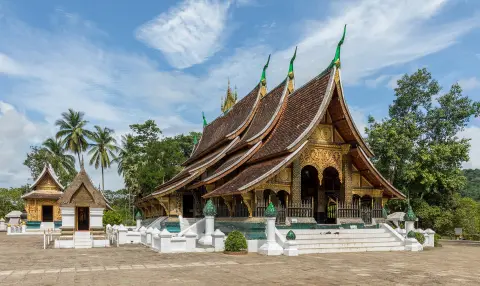
Get up before dawn to watch the monks' alms round quietly from a distance (read how to do it respectfully first), then walk through the morning market. Visit Wat Xieng Thong, the most beautiful temple in Laos, and the Royal Palace Museum. In the late afternoon, take a boat across the Mekong, or a sunset cruise.
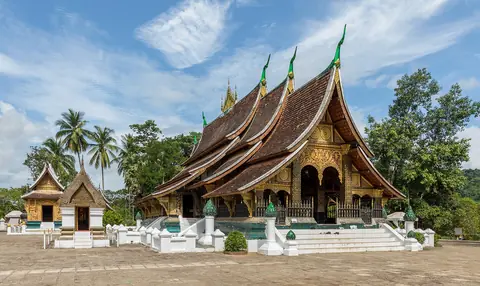
Wat Xieng Thong, Luang Prabang
Luang Prabang's most beautiful temple, built in 1560, with a sweeping, low roof that reaches almost to the ground in the classic Luang Prabang style.
Day 7: Kuang Si Falls
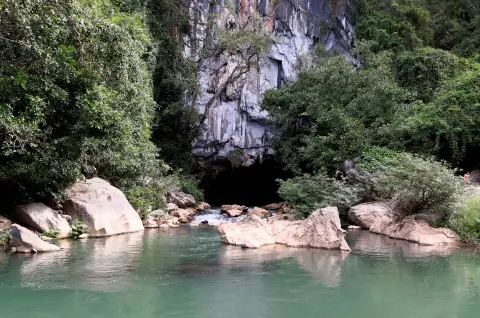
Take a tuk-tuk or minivan about 45 minutes out of town to Kuang Si Falls, a series of turquoise pools tumbling through the forest, with a bear rescue centre at the entrance. Go early to beat the crowds, and swim in the pools where it's allowed. Fly home the next day, or carry on.

Kuang Si Falls
A multi-tiered waterfall in the forest with turquoise limestone pools for swimming, near Luang Prabang.
With more time
- Add a day in Luang Prabang for a cooking class, a trip to the Pak Ou caves by boat, or just slowing down.
- From Luang Prabang, take a minivan north to Nong Khiaw and the boat to Muang Ngoi, among the mountains of the Nam Ou.
- Fly or take a bus to Phonsavan to see the mysterious Plain of Jars.
- Turn it into two weeks with the south: see Two weeks in Laos.



Comments
No comments yet.