
Getting around Laos: the Laos–China Railway, buses, the slow boat on the Mekong, tuk-tuks and LOCA
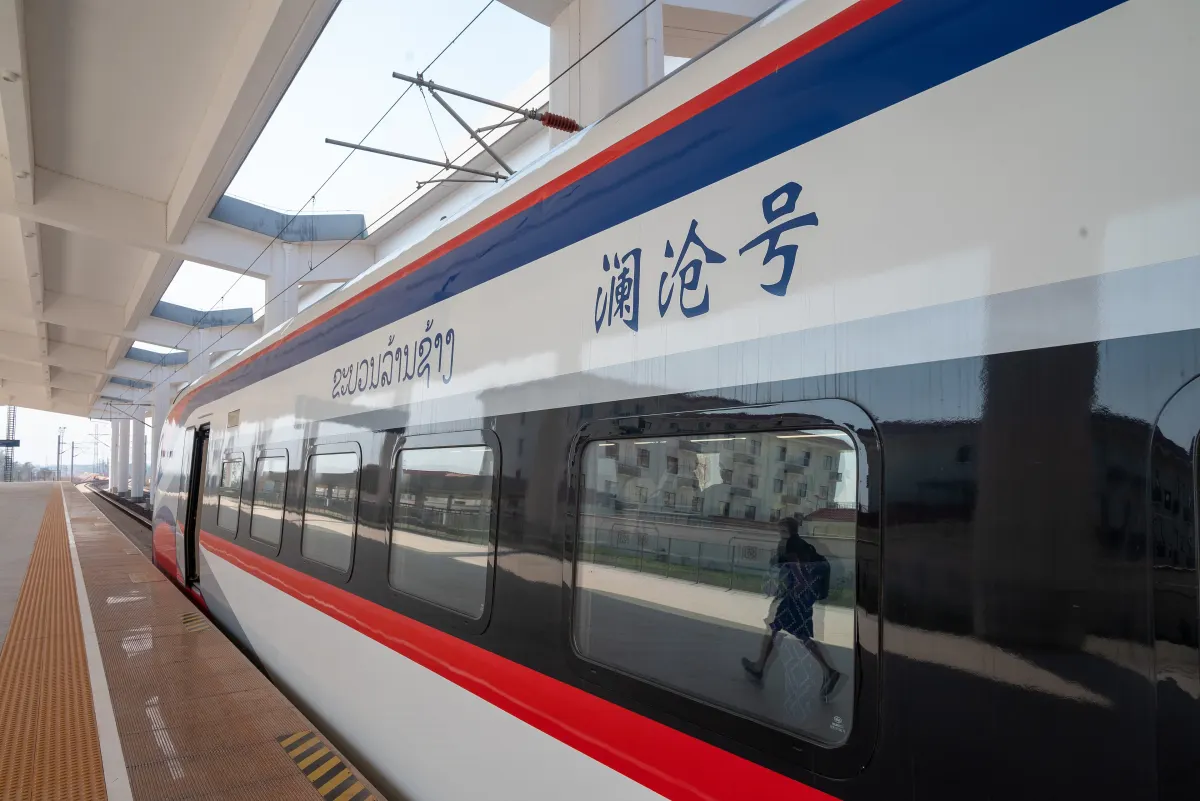
Getting around Laos used to mean long, winding bus rides. Since the Laos–China Railway opened in 2021, the trip from Vientiane to Luang Prabang takes a couple of hours instead of a day, and Vang Vieng is less than an hour from the capital. Away from the railway, it's still buses, minivans and river boats, at a slow and scenic pace.
The Laos–China Railway
- The line runs north from Vientiane through Vang Vieng, Luang Prabang and Muang Xay (Oudomxay) to Boten on the Chinese border, and on to Kunming. Domestic trains take about an hour from Vientiane to Vang Vieng and about two hours to Luang Prabang. There are fast trains with first- and second-class seats, and slower, cheaper ones.
- Book ahead. Tickets go on sale a few days before departure and sell out, especially at weekends, in the dry season and around holidays. Buy them in the official LCR Ticket app (you can register with a passport and email; payment by foreign cards has been hit and miss, and Visa has worked best), at the stations, at ticket offices in town, or through a travel agent or your hotel for a small fee.
- You need your passport to buy a ticket and to board, and the name must match. Get to the station an hour early: there are security checks like an airport's, and the gates close a few minutes before departure.
- Knives, lighters, flammable things and some liquids aren't allowed. Stations are well outside the towns: in Vientiane, Vang Vieng and Luang Prabang, allow time for a shared van or tuk-tuk to the station.
- For the international trains to Kunming, you need a Chinese visa or visa-free entry, and the Lao exit check and Chinese entry check happen at Boten and Mohan. Coming into Laos from China, have your Lao e-visa first: there's no visa on arrival at Boten station.
Buses, minivans and songthaews
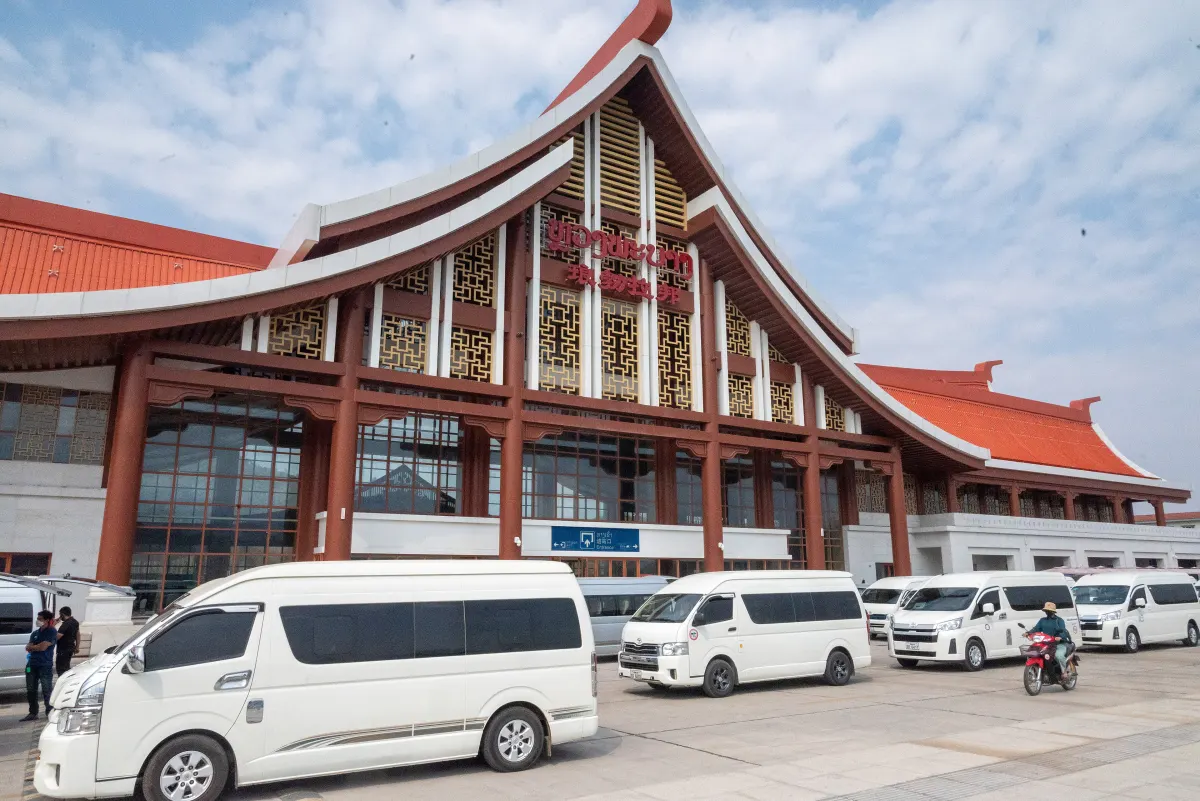
- Everywhere off the railway, buses and minivans are how you get around: south from Vientiane to Thakhek, Savannakhet and Pakse, east to Phonsavan and the Plain of Jars, and north from Luang Prabang to Nong Khiaw and Luang Namtha.
- Overnight sleeper buses run from Vientiane to Pakse. The beds are narrow, often doubles shared with a stranger if you travel alone.
- Roads in the mountains are winding and often damaged in the rainy season, so journeys take longer than the distance suggests. Take travel-sickness tablets if you need them.
- Buses leave from different stations depending on where they're going, often outside town. Tickets booked through a guesthouse usually include a pick-up.
- Songthaews (pick-up trucks with benches in the back) run between villages and on short routes. Pay the driver.
The slow boat on the Mekong
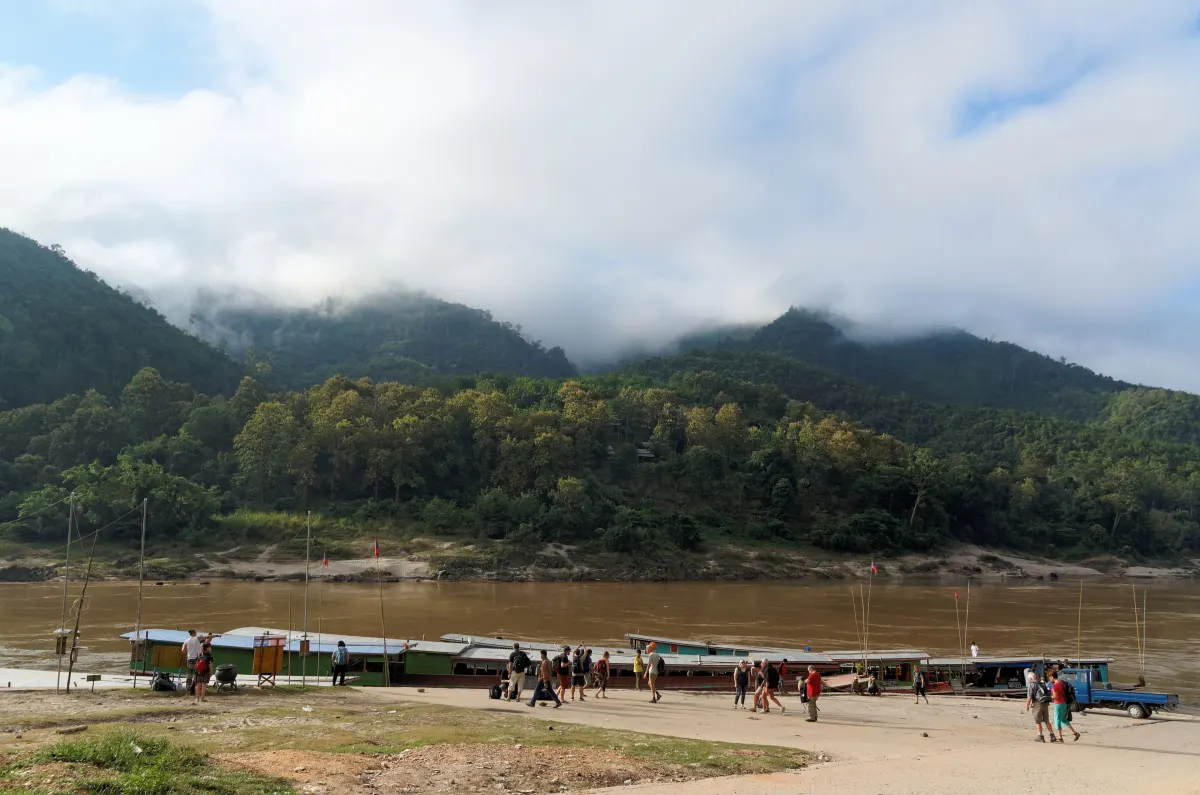
The two-day slow boat between Houay Xai, on the Thai border opposite Chiang Khong, and Luang Prabang is one of the classic trips in Southeast Asia: long, narrow boats wind down the Mekong past forest, cliffs and villages, with a night in the river village of Pakbeng on the way.
- Boats leave in the morning, and each day is a long one, of eight hours or more. You can also take it upstream from Luang Prabang, which is slower.
- Buy tickets at the pier or through a guesthouse. There are also more comfortable private cruise boats with lunch included.
- Seats are often hard wooden benches: bring a cushion, food, water, a warm layer for the morning mist and a book. Arrive early for a good seat.
- Book a room in Pakbeng ahead in the busy season, or take your chances with the touts at the pier.
- Don't board an overcrowded boat, and keep your bags dry.
Other river trips
In the north, boats on the Nam Ou link Nong Khiaw and Muang Ngoi, a village with no road. In the south, boats take you between the islands of Si Phan Don (the 4,000 Islands). Many older river routes have been cut by new dams, so ask locally what's running.
Flights
Lao Airlines and a few other airlines fly between Vientiane, Luang Prabang, Pakse and a few other towns. Flying Vientiane to Pakse saves a long bus ride on a two-week trip. Check the current schedule, as routes and frequencies change.
Tuk-tuks, taxis and LOCA
- Tuk-tuks are the usual way around town. Agree the price before you get in: they're often more expensive than in Thailand, and drivers waiting outside hotels and at the night markets ask the most.
- LOCA is Laos' ride-hailing app, like Grab (which doesn't operate in Laos). It works best in Vientiane, where it's the easiest way to get a taxi or tuk-tuk at a fixed price, and is also used in some other towns. You can pay by card in the app.
- Check that the driver and number plate match the app, and don't get into an unmarked car offered at the airport.
Renting a motorbike or bicycle
Renting a scooter is the easy way to explore around Vang Vieng, the Bolaven Plateau and the Thakhek Loop, but read Safety in Laos first: you need the right licence for your insurance to cover you, and never leave your passport as a deposit. In Luang Prabang, Vientiane and the 4,000 Islands, a bicycle is enough.




Comments
No comments yet.