
Money in Laos: the kip, cash, ATMs, cards and tipping
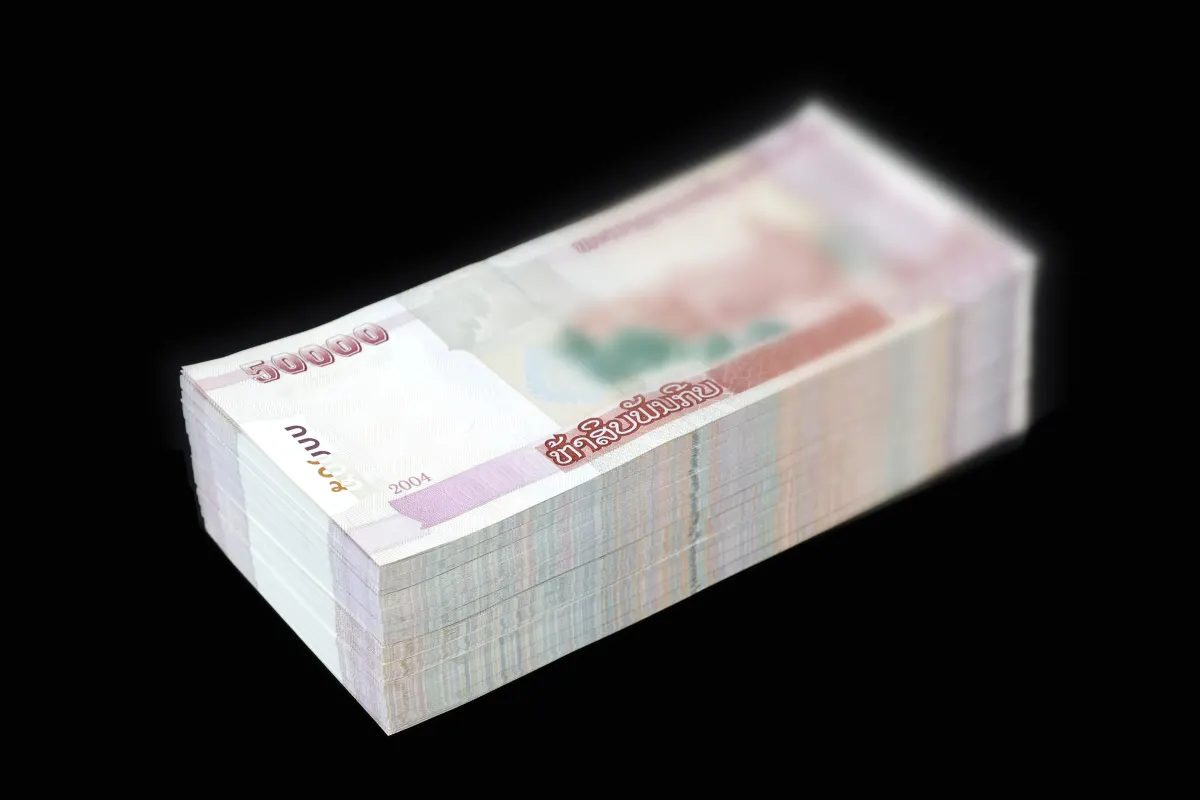
Laos runs on cash, in Lao kip. There are ATMs in every town, but they charge a fee and only give out a little at a time, so take out what you need in the bigger towns before heading somewhere remote.
The kip
- The currency is the Lao kip (LAK, written ₭). The kip has lost much of its value in recent years, so prices are in thousands: you'll carry a fat wallet of notes up to 100,000 kip, and coins aren't used.
- Prices change with the exchange rate. Check the current rate before you go, and be ready for prices in the kip to be higher than in older guidebooks.
- You can't easily change kip outside Laos: spend it or change it back before you leave.
Cash, dollars and baht
- Pay for everyday things in kip. The government has told businesses to price and charge in kip, though some hotels, tour agencies and border offices still quote in US dollars, and Thai baht are accepted in some places near the Thai border.
- Bring some US dollars in cash for the visa on arrival, and for an emergency. Banks and licensed money changers change dollars, euros and baht at fair rates; you need clean, undamaged notes.
ATMs
- ATMs are easy to find in Vientiane, Luang Prabang, Vang Vieng, Pakse and other towns, and there's at least one in most small towns, though they sometimes run out of cash or go offline. On the islands of Si Phan Don and in remote villages there may be none at all.
- Foreign cards are charged a fee for every withdrawal, typically a few tens of thousands of kip, and there's a low limit on how much you can take out at once, often one or two million kip. Your own bank may charge too. Take out the maximum each time to keep the fees down.
- If the ATM offers to convert the withdrawal into your home currency, say no: you'll get a worse rate.
Cards and QR payments
- Cards are accepted at bigger hotels, some restaurants and shops in Vientiane and Luang Prabang, and by the train ticket app and LOCA, often with a surcharge of a few per cent. Elsewhere, cash only.
- Lao people pay each other with bank QR codes (the BCEL One app and others), which you'll see on every market stall. They mostly need a Lao bank account, though some foreign bank and payment apps can now pay Lao QR codes: check with yours.
Bargaining and tipping
- Bargain politely in markets and with tuk-tuk drivers, but not in shops with fixed prices or for food. Smile, don't push hard: prices are often low already.
- Tipping isn't expected, but it's welcome. Round up in restaurants, or leave about 5 to 10 per cent in tourist restaurants if there's no service charge. Tip trekking guides, drivers and boat crews if they've looked after you well.
What things cost
Laos is one of the cheaper countries in the region for food and transport, though not quite as cheap as it once was, and tours, hotels in Luang Prabang and imported things cost more. A bowl of noodle soup from a street stall or a night-market meal is cheap; Western food and wine cost several times as much.




Comments
No comments yet.