
Visiting Cambodia's genocide memorials: Tuol Sleng, Choeung Ek and the Khmer Rouge years
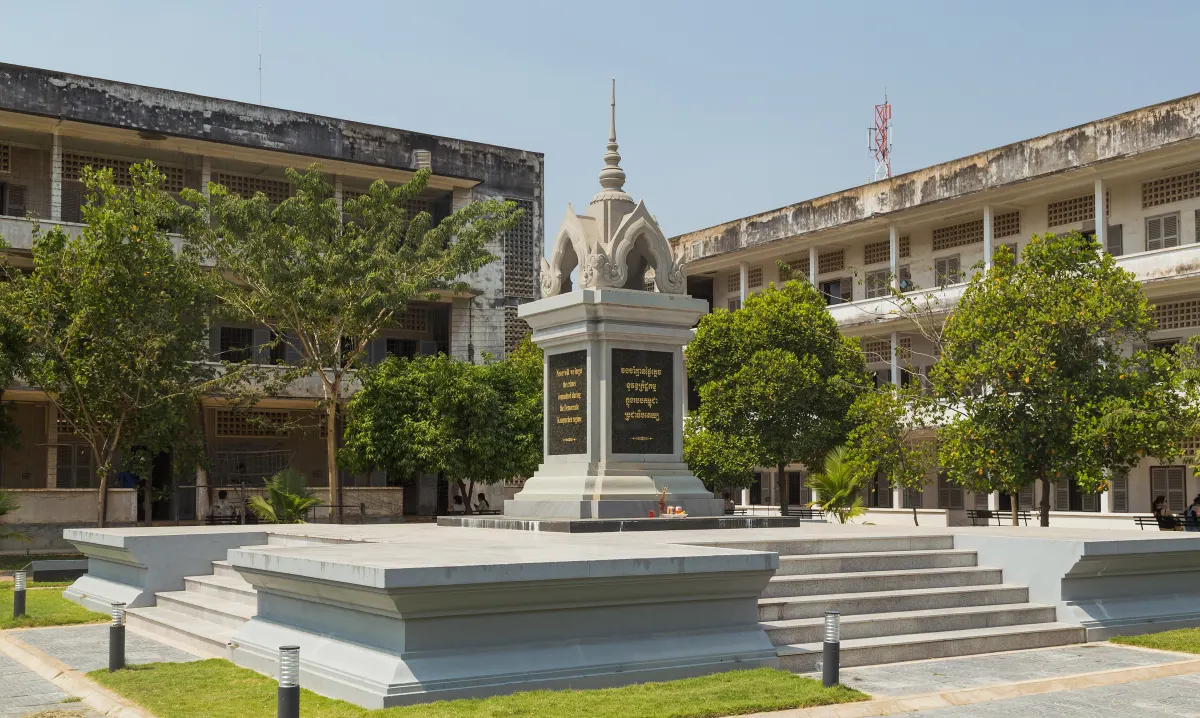
Between 1975 and 1979, the Khmer Rouge regime drove Cambodians out of the towns into forced labour camps, and around a quarter of the population, perhaps 1.7 to 2 million people, died from execution, starvation, overwork and disease. Visiting the places where this happened is harrowing, but it's the best way to understand modern Cambodia, and Cambodians want visitors to learn what happened.
In 2025 the Tuol Sleng prison and the Choeung Ek killing fields in Phnom Penh, with the M-13 prison in Kampong Chhnang province, were added to UNESCO's World Heritage List as the Cambodian Memorial Sites.
Tuol Sleng Genocide Museum (S-21)
- A former high school in Phnom Penh, turned by the Khmer Rouge into Security Prison 21, where thousands of people, including the regime's own cadres and their families, were interrogated, tortured and forced to confess before being taken away to be killed. Only a handful survived.
- The classrooms still hold the iron beds and the tiny brick and wooden cells, and the walls are covered with the photographs the regime took of each prisoner when they arrived. It's deeply moving.
- Take the audio guide, which tells the story through the voices of survivors, guards and relatives. Allow two to three hours.
- Survivors of the prison have sometimes sat in the grounds selling their books. Buying one is a way to hear their story.
Choeung Ek
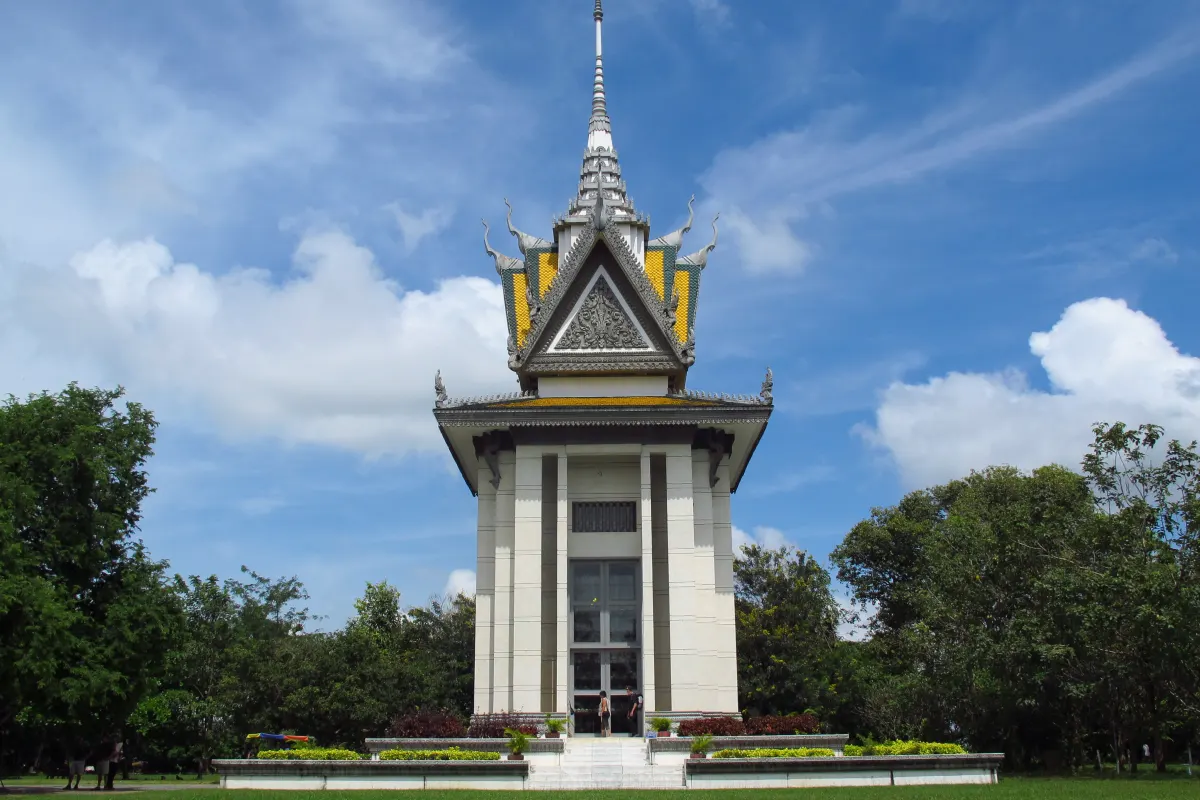
- About 15 km south of central Phnom Penh, Choeung Ek, a former orchard and Chinese cemetery, is the best known of Cambodia's hundreds of "killing fields", where most of the prisoners from S-21 were taken to be executed and buried in mass graves.
- Today it's a peaceful place, but the pits of the mass graves are still there, and fragments of bone and clothing still surface after heavy rain. A tall memorial stupa holds thousands of skulls.
- The audio tour is excellent, and you walk round it quietly at your own pace. Allow around two hours. Most people take a tuk-tuk or ride-hailing car there and back, and combine it with Tuol Sleng on the same day, in either order.

Tuol Sleng and the Killing Fields, Phnom Penh
Tuol Sleng (S-21), a school turned into a Khmer Rouge prison, where thousands were tortured, is now a genocide museum.
How to visit respectfully
- Dress modestly, with your shoulders and knees covered. These are memorials and burial places.
- Be quiet, and don't eat, drink or smoke on the sites.
- Photos: many signs ask you not to take photos inside some of the buildings, or of the remains. Where photos are allowed, take them discreetly and respectfully: no selfies or posing.
- Stay on the paths at Choeung Ek, and don't step on the mass graves or pick anything up.
- It's very upsetting, especially the photos of the prisoners. Many visitors feel the need for quiet time afterwards, so don't plan anything too lively for the rest of the day. Think about whether to take children.
- Be sensitive with Cambodians. Almost every family lost relatives, and some people don't want to talk about it.
Learning more
- Read up first. Survivors' memoirs, such as Loung Ung's First They Killed My Father, and the films of Rithy Panh, such as S-21: The Khmer Rouge Killing Machine, give the background.
- The Documentation Center of Cambodia (DC-Cam) has spent decades collecting evidence, and the UN-backed Khmer Rouge Tribunal convicted the head of S-21 of crimes against humanity, and two of the regime's surviving leaders of crimes against humanity and genocide.
- Outside Phnom Penh, there are memorials at many places, including the killing caves at Phnom Sampeau, near Battambang, and the M-13 prison site in Kampong Chhnang province. In Siem Reap, the Wat Thmey pagoda has a small memorial stupa.
See also: 7 days in Phnom Penh and Siem Reap and Culture and etiquette.
Comments
No comments yet.