
Culture and etiquette in Cambodia: Buddhism, monks, pagodas, greetings and the royal family
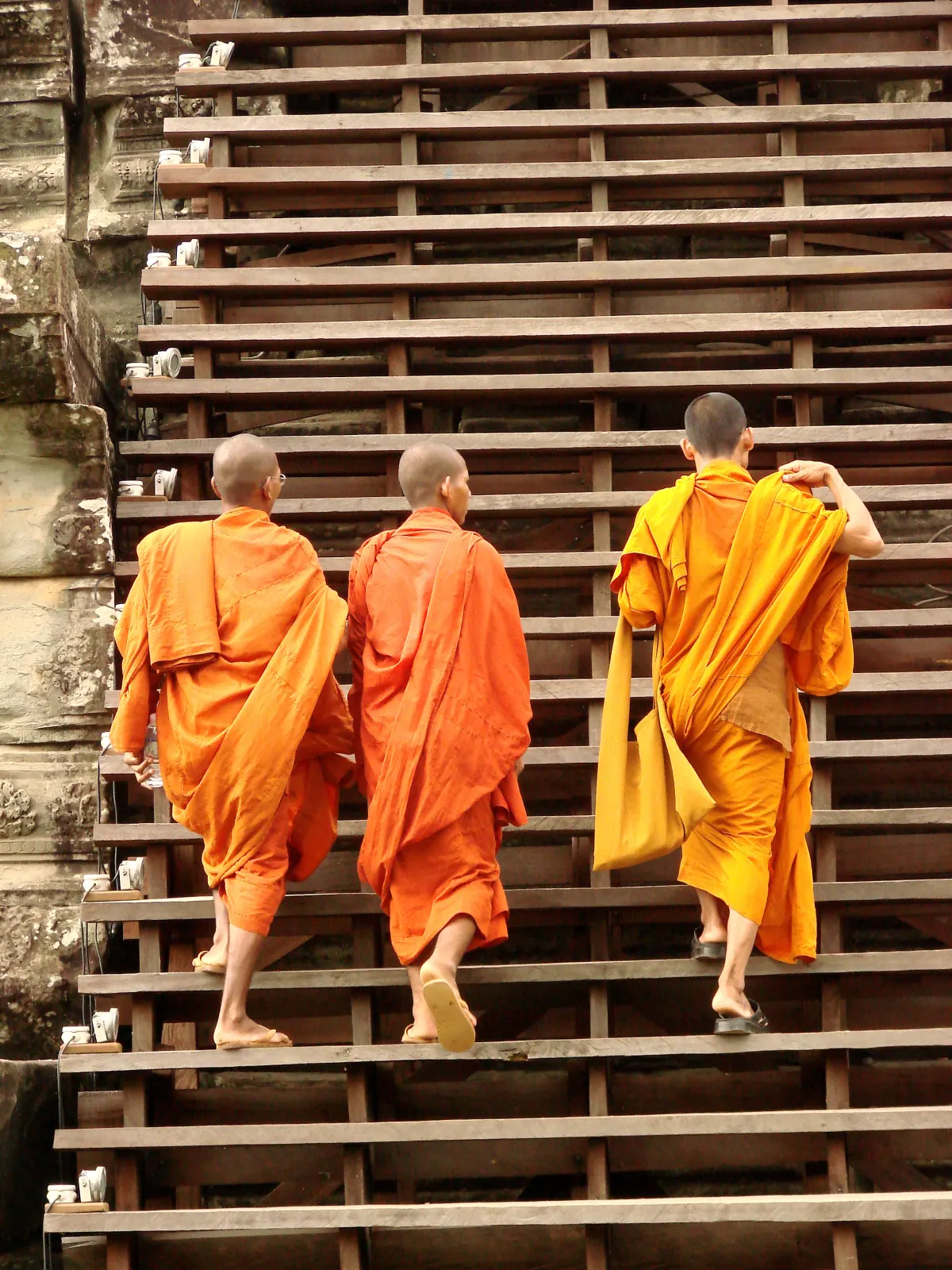
Cambodians are warm, gentle and welcoming, and generally forgiving of visitors' mistakes. Most are Theravada Buddhists, and the country is still recovering from the Khmer Rouge years of the 1970s, which touched every family. A few customs will help you fit in.
Greetings and manners
- The traditional greeting is the sampeah: press your palms together in front of your chest and bow your head slightly. The higher the hands, the more respect, and highest of all for monks. Return a sampeah if someone gives you one. Handshakes are common with men in business and the towns.
- Say "chum reap suor" for hello, and "or kun" for thank you.
- Stay calm and keep smiling: raising your voice or losing your temper makes everyone uncomfortable, and won't get you anywhere.
- Don't touch anyone's head, which is thought sacred, and don't point your feet at people or at images of the Buddha. Point with your whole hand, not a finger.
- Take off your shoes when you go into a home, and in some shops and guesthouses: look for shoes at the door.
- Public displays of affection, beyond holding hands, are frowned on.
Monks and pagodas
- Every town and village has its wat, or pagoda, and you're welcome to visit. Cover your shoulders and knees, take off your shoes and hat before entering a temple building, and sit with your feet tucked behind you, not pointing at the Buddha.
- Women must not touch a monk, sit next to one, or hand anything to one directly: put it down near him, or give it to a man to pass on. On buses, women shouldn't sit beside a monk.
- Ask before taking photos of monks, as of everyone else.
- In the early morning, monks walk the streets collecting alms. If you want to give, do it quietly and respectfully, and don't treat it as a photo opportunity.
- Don't climb on or pose disrespectfully with Buddha images, and don't buy Buddha heads as souvenirs: taking antiquities out of Cambodia is illegal.
What to wear
Cambodians dress modestly, even in the heat. Shorts and vest tops are fine on the beach and in the backpacker areas, but cover your shoulders and knees at temples, including Angkor, at the Royal Palace and in the countryside. Public nudity is illegal, and going topless on the beach isn't acceptable.
The royal family and the law
- Cambodia is a kingdom, and the King, Norodom Sihamoni, is widely respected. It's a crime to insult the King or the monarchy.
- Laws on defamation and on "incitement" are broad. Avoid political protests, and be careful what you say about the government on social media while you're in Cambodia.
- Don't photograph military sites, airports, government buildings or police, and ask before photographing people.
The Khmer Rouge years
From 1975 to 1979, the Khmer Rouge regime emptied the towns, abolished money and religion, and caused the deaths of roughly one in four Cambodians. Almost everyone over a certain age lost family. People may talk about it if they choose to, but don't press them. See Visiting the genocide memorials.
Festivals
- Khmer New Year (Choul Chnam Thmey), for three days in mid-April, is the biggest holiday. Many people go home to their villages, transport is packed, and there's water-throwing and dancing, and huge crowds at Angkor.
- Pchum Ben, in September or October, is a 15-day festival for the spirits of the dead, when families take food to the pagodas. The last days are public holidays.
- The Water Festival (Bon Om Touk), at the full moon in October or November, brings boat races, fireworks and big crowds to the riverfront in Phnom Penh.
- Festival dates follow the lunar calendar, so they change every year. Book transport and hotels early, and expect offices and some shops to close.
See also: Orphanages, children and responsible travel and Khmer food and drink.
Comments
No comments yet.