
Getting around Georgia: marshrutkas, trains, Bolt, driving mountain roads and the Military Highway
Georgia is small, and getting around is cheap, but the roads into the mountains are slow, and some close in winter. Most travellers use a mix of marshrutkas (minibuses), trains, taxis booked through an app, and a driver or a hired car for the mountains.
Marshrutkas
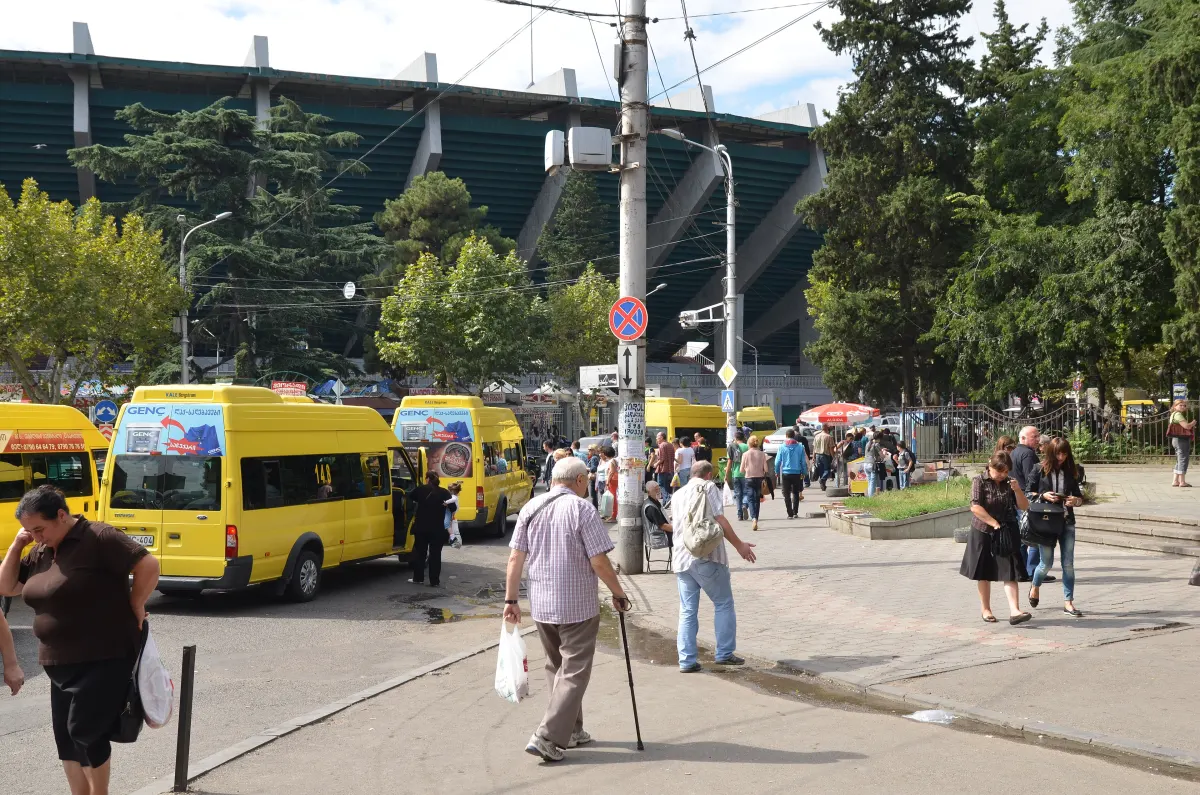
Marshrutkas, the yellow and white minibuses, go almost everywhere, and are the cheapest way to travel between towns.
- Most leave when they're full rather than to a timetable, more often in the morning. Get there early, especially for long trips and in the mountains, where the last one may leave early in the afternoon.
- In Tbilisi, they leave from several bus stations. Didube, by the metro station of the same name, has the minibuses to Kazbegi (Stepantsminda), Mtskheta, Gori, Borjomi and much of the west. Marshrutkas to Kakheti (Sighnaghi and Telavi) leave from the east of the city, around the Samgori and Isani metro stations, and minibuses to Mestia from near the main railway station. Ask your guesthouse which one, as they move.
- Pay the driver, in cash, usually when you get off. The destination is written on the front, often only in Georgian, so ask.
- Drivers can be fast and overtake on blind bends. If you're nervous, a shared taxi or a private driver costs more but is usually more comfortable.
Trains
- Georgian Railway, railway.ge, runs comfortable modern trains between Tbilisi and Batumi, now about four hours, several times a day in summer and less often in winter. Book a few days ahead in summer, when they sell out.
- There's a daily train between Tbilisi and Zugdidi, the town where you change for Mestia and Svaneti, and trains that stop near Kutaisi. Slow local trains run to Borjomi.
- Buy tickets online with your passport number, or at the station, and carry your passport on the train.
- International trains run between Tbilisi and Baku in Azerbaijan. Check for trains to Armenia, which have run only in some seasons.
Flights to the mountains
Small planes fly from Natakhtari airfield, north of Tbilisi, to Mestia in Svaneti and to Ambrolauri, a few times a week. They're cheap and save a long day on the road, but they're often cancelled in bad weather, so don't count on one for your last day. Book on the airline's site, and check the luggage limit.
In the cities
- Bolt, the ride-hailing app, works well in Tbilisi, Batumi and Kutaisi, and is the easiest way to take a taxi without arguing over the fare. The UK government advises using an app rather than flagging a taxi in the street. Uber doesn't operate in Georgia.
- Tbilisi has two metro lines, buses, minibuses and a cable car up to Narikala fortress. Pay with a contactless bank card or a Metromoney card: a trip costs 1 lari, and changes within 90 minutes are free.
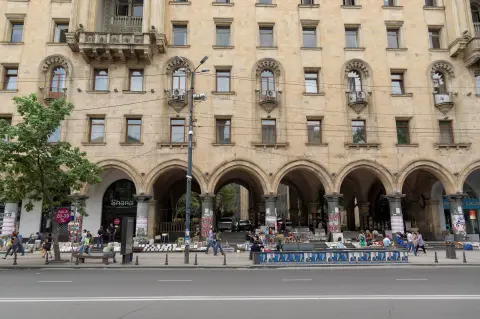
- Tbilisi's old town is hilly and best on foot, but the pavements are uneven and the traffic is heavy: take care crossing roads, and use the underpasses on the main avenues.
Driving
- Georgians drive on the right, and drivers can be aggressive: speeding, overtaking on bends and ignoring lanes are common. Watch out for cows on the roads in the countryside, and for potholes, unlit roads and landslides in the mountains.
- You can drive on most foreign licences for up to a year. Hire companies may ask for an International Driving Permit too, so bring one.
- The legal alcohol limit is very low. Don't drink at all if you're driving.
- If you bring your own car across the border, you must buy Georgian third-party insurance, which is sold at the border.
- Many mountain roads, such as the road to Tusheti, need a 4x4 and an experienced driver: hire one with a local driver instead. The road to Tusheti is open only in summer.
The Georgian Military Highway
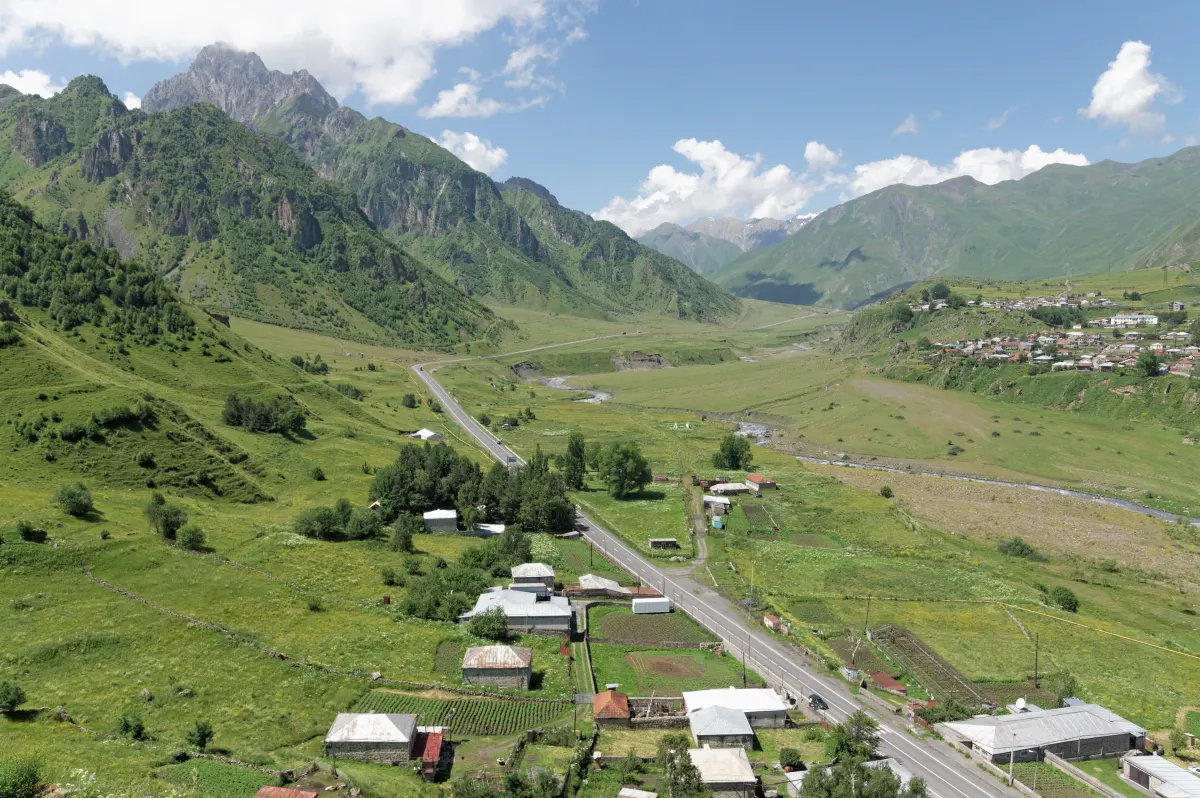
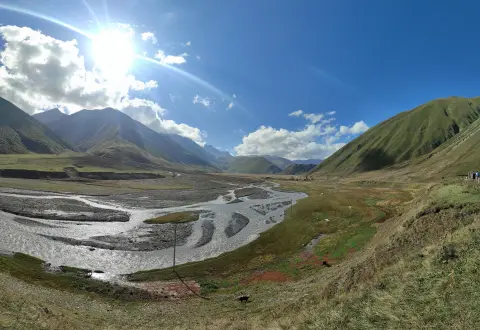
The road from Tbilisi to Kazbegi and the Russian border, the Georgian Military Highway, crosses the Jvari Pass at about 2,400 metres. It's one of the most beautiful drives in the Caucasus, past Ananuri fortress and the ski resort of Gudauri, but it's also the main road for lorries to Russia.
- In winter and spring, the stretch over the pass is often closed for hours or days by snow and avalanche risk, first for lorries and trailers and then for all traffic. Closures are announced by Georgia's Roads Department and reported on Georgian news sites: check the day before and on the morning you travel, and carry snow chains if you drive.
- Queues of lorries waiting for the border can stretch for kilometres on the Kazbegi side. A new road with tunnels to bypass the pass is being built, but isn't open yet.
- Don't follow the road on to the Russian border: see Arriving in Georgia and Safety.

Gergeti Trinity Church, Kazbegi
A 14th-century church on a hilltop at 2,170 m below Mount Kazbek, 5,047 m, one of Georgia's iconic views.
See also the itineraries 7 days in Georgia and Two weeks in Georgia.
Comments
No comments yet.