
Culture and etiquette in Georgia: churches, hospitality, language and history
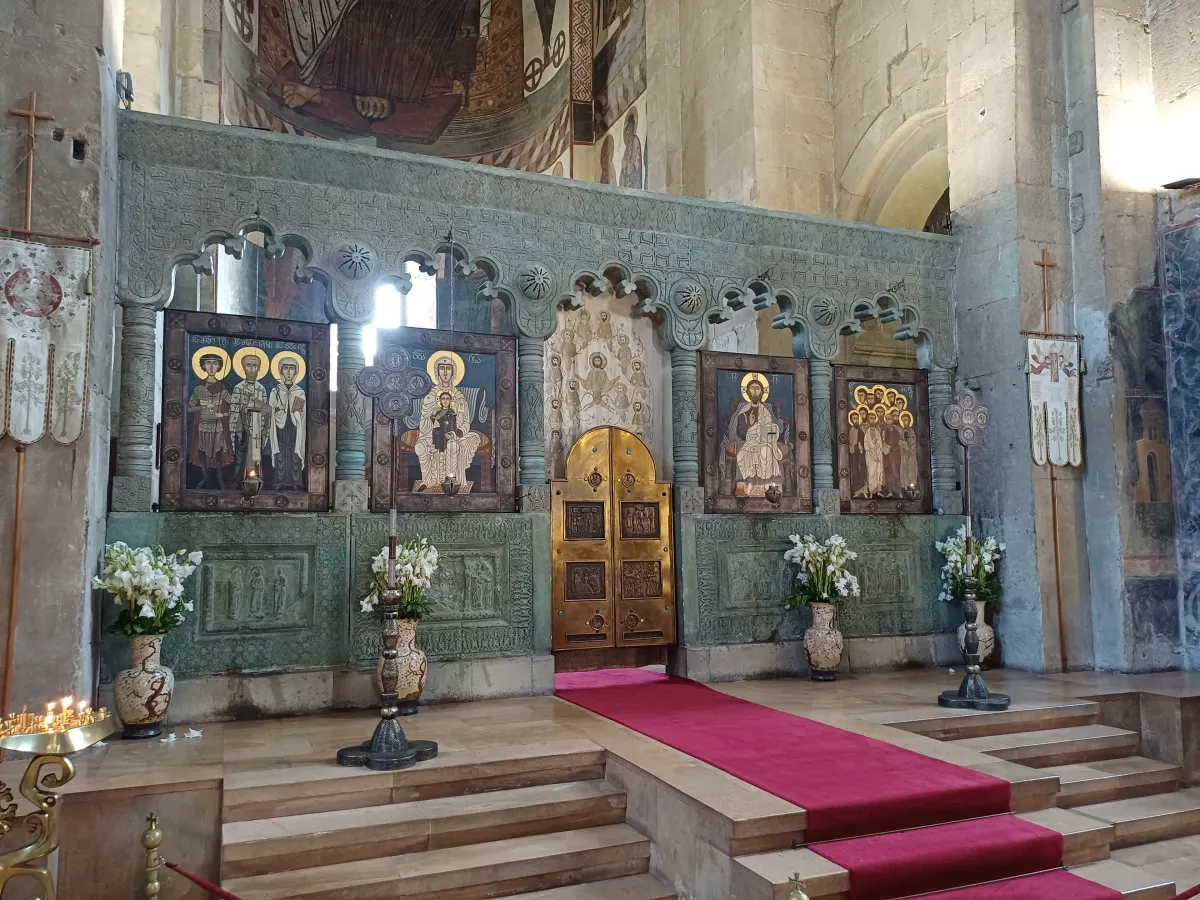
Georgia is an old Christian country, proud of its language, history and traditions, and its people are famously hospitable. A little knowledge of its customs goes a long way.
Churches and monasteries
Most Georgians belong to the Georgian Orthodox Church, and its churches and monasteries, from Mtskheta to Gelati and Gergeti, are among the country's great sights. They're living places of worship, so:
- Women should cover their hair with a scarf and wear a skirt below the knee. Many churches lend scarves and wraparound skirts at the door, but carry a scarf to be sure.
- Men should wear long trousers, not shorts, and take off their hats.
- Cover your shoulders. Be quiet, turn off your phone, and don't walk in front of people who are praying.
- Photography is banned in some churches and monasteries. Look for signs or ask, and never photograph a service without permission.
- Services can be long, and people come and go during them. You may stay at the back and watch quietly.
Being a guest
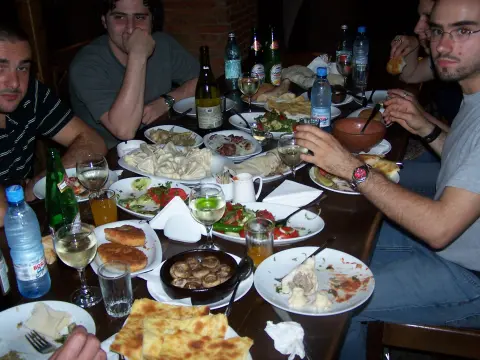
- You may well be invited into someone's home, offered fruit, wine or chacha, or given a lift. It's genuine hospitality, and accepting is usually the polite thing to do. Bring a small gift if you're invited for a meal.
- Expect to be fed a lot, and to be offered toasts: see Food and wine.
- Older people are treated with great respect. Dress modestly in the countryside, and avoid kissing and cuddling in public outside the cities.
- Georgian society is conservative. LGBT+ people may face hostility, and the UK government advises discretion.
Language
- Georgian has its own alphabet and is unrelated to the languages around it. Learn a few words: gamarjoba ("hello"), gmadlobt ("thank you"), ki ("yes"), ara ("no").
- Many young people in the cities speak English. Older people often speak Russian, but some Georgians don't like being addressed in it, because of the war of 2008 and the occupation: start in English or Georgian.
- In Svaneti, the Svan language is spoken too, and in some regions Armenian or Azerbaijani.
History and sensitive topics
- Georgia has been fought over by empires for centuries, was part of the Soviet Union until 1991, and lost Abkhazia and South Ossetia in wars in the 1990s and in 2008. These are painful subjects: listen rather than argue, and don't call the occupied regions independent countries.
- Politics is divided, and there have been large protests since 2024. Stay away from demonstrations: see Safety in Georgia.
- Stalin was born in Gori, where his museum still stands, and attitudes to him vary. See the Stalin Museum.
- Don't photograph military sites, police stations or border posts.
Holidays and festivals
- The Georgian Orthodox Church uses the old calendar, so Christmas is on 7 January, and Easter usually falls on a different date from the western one. Easter and Christmas are celebrated with church services through the night.
- Independence Day is on 26 May, and Giorgoba, St George's Day, on 23 November.
- Tbilisoba, Tbilisi's festival, is held in October, and the wine harvest, rtveli, in September and October.
See also: Georgian food and wine.
Comments
No comments yet.