
Etiquette in Vietnam: temples, homes, eating, and visiting war sites with respect
Vietnamese people are welcoming and forgiving of visitors who get things wrong, but a few customs are worth knowing, especially in temples and at the sites linked with the country's wars.
Pagodas and temples
- Cover your shoulders and knees: no vests, short shorts or short skirts. Carry a scarf or sarong. Some temples lend coverings at the gate.
- Take your shoes off where others have, usually before stepping into the main hall, and don't step on the raised threshold.
- Speak quietly, don't point your feet at the altars or statues, and don't touch statues or offerings. Ask before photographing people praying or monks.
- Donations in the box are welcome. Incense is burned in odd numbers, usually one or three sticks.
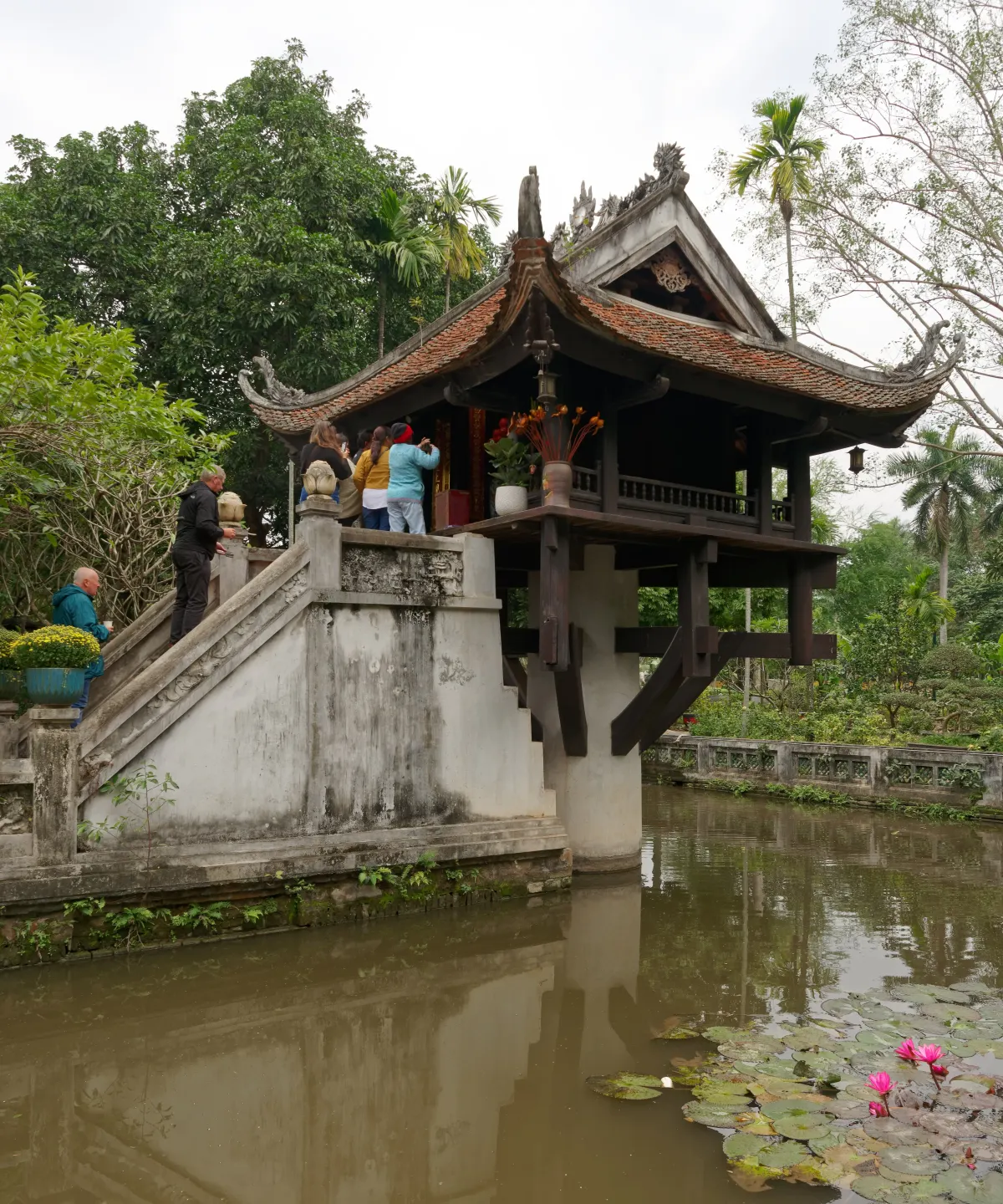
- Temples to visit include the Temple of Literature and Ngọc Sơn Temple in Hanoi, the One Pillar Pagoda, and the pagodas of Huế.
The Ho Chi Minh Mausoleum
The Ho Chi Minh Mausoleum in Hanoi is treated with great respect. Wear long trousers or a skirt to the knee and covered shoulders, don't wear hats or sunglasses inside, walk in line in silence, keep your hands out of your pockets, and don't take photos inside. Bags and cameras are checked in before you go in. It's open only in the mornings, is closed on Mondays and Fridays, and usually closes for a couple of months a year for maintenance, so check before you go.
Meeting people
- A smile and a nod are the usual greeting. Handshakes are common between men. Xin chào (sin chow) is hello, and cảm ơn (gahm uhn) is thank you.
- Older people are shown respect: greet them first, and let them start eating first.
- Keep your temper. Shouting or getting visibly angry makes people lose face and rarely gets you anywhere; a calm smile and patience work better.
- Don't touch people's heads, even children's, and don't point with one finger: beckon with your palm down.
- Public displays of affection are frowned on outside the big cities.
- Avoid criticising the government or the Communist Party, or talking politics with people you don't know well.
In someone's home
- Take your shoes off at the door. Bring a small gift, such as fruit, sweets or something from your country, and give and receive things with both hands.
- Don't stick your chopsticks upright in your rice: it looks like incense for the dead. Rest them across your bowl. Take food from the shared dishes onto your rice, rather than eating straight from them.
- If you're offered a toast, everyone drinks together: "một, hai, ba, dzô!" (one, two, three, cheers!).
Visiting war sites with respect
For most Vietnamese people, the war with the United States (called the American War here), and the earlier war with France, are family history. Many visitors want to understand it, and the sites tell the story from Vietnam's point of view.
- The War Remnants Museum in Ho Chi Minh City shows the effects of the war, including Agent Orange, with very graphic photographs. Allow a couple of hours, and prepare yourself: it's upsetting.
- The Củ Chi Tunnels, north-west of Ho Chi Minh City, were used by Viet Cong fighters. You can crawl through widened sections. There's a shooting range where visitors fire war-era guns; many people find it out of place, and you don't have to go near it.
- Hỏa Lò Prison in Hanoi held Vietnamese revolutionaries under the French, and American pilots (who called it the "Hanoi Hilton") in the war.
- Independence Palace in Ho Chi Minh City is where the war ended, when tanks crashed through its gates on 30 April 1975.
- Around the former Demilitarised Zone (DMZ), north of Huế, there are the Vịnh Mốc tunnels, where villagers lived underground, Khe Sanh and other battle sites, and war cemeteries. Unexploded bombs and mines are still found in this area: stay on the paths, and never touch anything metal you find.
- Dress and behave respectfully at war cemeteries and memorials, as you would at home. Ask before photographing veterans.
Comments
No comments yet.