
Traditional music in Ireland: how to find a session, and how to behave at one
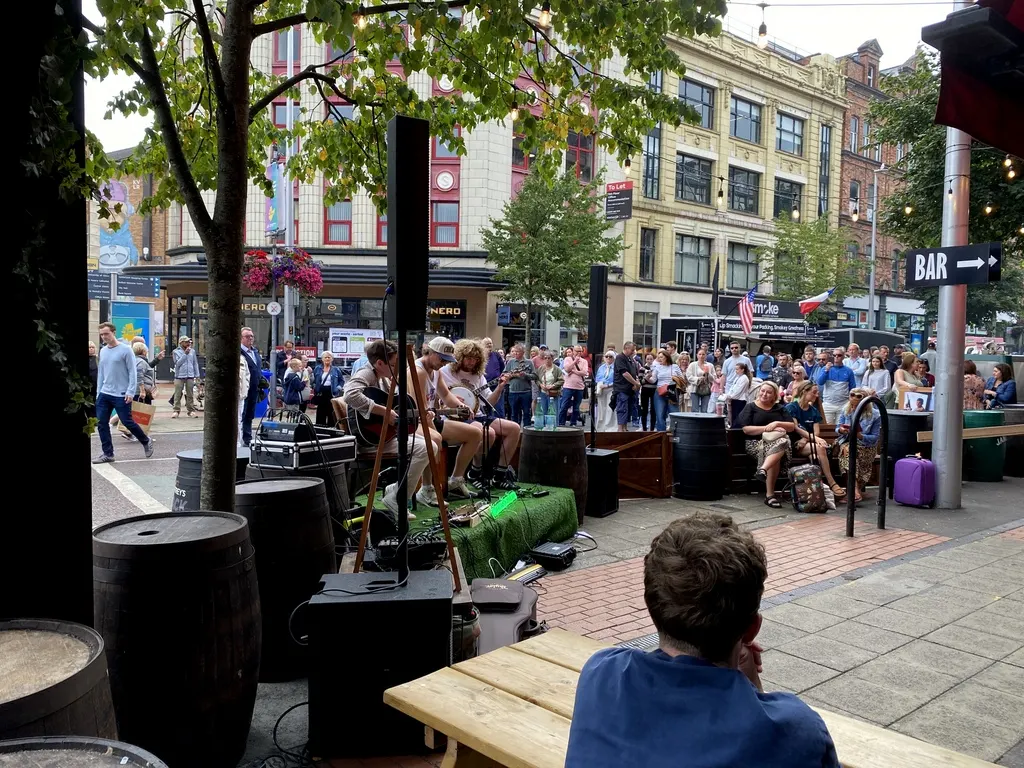
Most evenings, somewhere near you in Ireland, people are playing old tunes in the corner of a pub. It's free, it's often wonderful, and nobody minds if you don't know one tune from another.
At a session
A session (seisiún) is an informal gathering of musicians playing traditional Irish tunes, on fiddles, flutes, tin whistles, accordions, concertinas, banjos, guitars and the bodhrán drum, usually around a table in the corner of a pub. Some are arranged by the pub, others just happen. They're free to listen to.
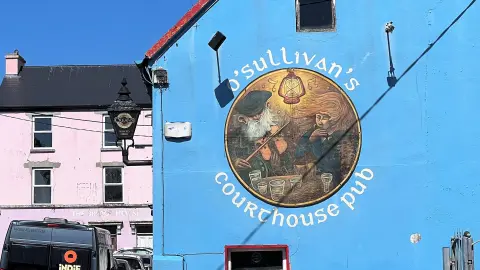
- Where: sessions happen all over Ireland, but some places are famous for them: Doolin and Ennis in County Clare, Dingle, Galway, Westport and Sligo, and Dublin's Temple Bar and the pubs of Smithfield. Ask in a pub or at the tourist office where there's music that night; many sessions start late, around 9 or 9.30 pm.
- Listen: sit near enough to hear, but don't take the musicians' seats, and keep your voice down while they play, especially during a slow air or a song. Clap at the end of a set of tunes.
- Join in only if you're invited, or ask first. If you play, bring your instrument: you may be welcome.
- Buying the musicians a drink is a good way to say thank you.

Gus O'Connor's pub, Doolin
Doolin, a small village on the County Clare coast, is the traditional music capital of Ireland, and Gus O'Connor's is its most famous pub, serving pi…
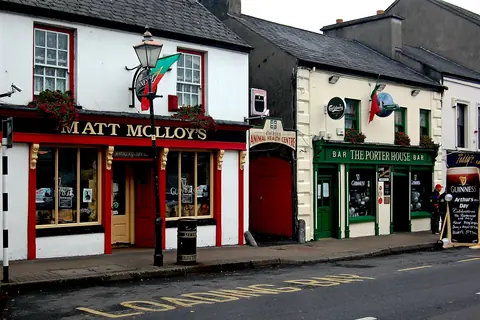
Matt Molloy's, Westport
One of the best pubs in Ireland for traditional music, owned by Matt Molloy, the flute player of the Chieftains, who bought it in 1989.
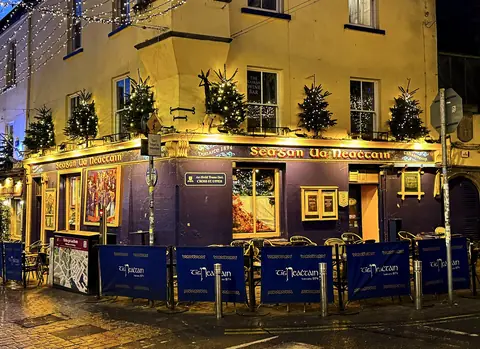
Tigh Neachtain, Galway
A much-loved old pub in the heart of Galway, painted bright blue, on the corner of Cross Street and Quay Street.
Festivals and other places to hear it
- Fleadh Cheoil na hÉireann, the biggest festival of Irish music, is held in a different town each August, with competitions, concerts and sessions in every pub.
- The Willie Clancy Summer School, in Miltown Malbay, County Clare, in early July, is a week of classes by day and sessions by night.
- Comhaltas, the organisation that looks after the music, has branches all over the country, with concerts for visitors in summer.
- Pubs with a "trad night" on the sign often have paid musicians with microphones. They're fun, and easier to find, but a session without a stage is something else.
See also Irish pubs and 7 days in Ireland.
Comments