
Money, costs and phones in New Zealand
New Zealand is easy to pay your way in: cards are taken almost everywhere, prices include tax, and tipping isn't expected. It isn't cheap, though, especially for eating out and in the most popular places in summer. Here's what to know about money and staying connected.
Paying
- The currency is the New Zealand dollar (NZ$). There are no 1 or 2 cent coins: prices are rounded to the nearest 10 cents when you pay in cash.
- Cards: Visa and Mastercard are taken almost everywhere, including at markets, campsites and small cafés, and you can tap to pay with your card or phone. American Express is accepted less often. Local debit cards are called EFTPOS.
- Surcharges: some businesses add a small surcharge for paying by card, so check the sign at the counter. Many cafés and restaurants also add a surcharge, often 15%, on public holidays, to cover their staff's higher wages that day.
- Cash is still useful for honesty boxes at fruit stalls and campsites, and in some small towns. Cash machines (ATMs) are in every town.
- GST, a 15% goods and services tax, is included in the prices you see. Visitors can't claim it back when they leave, except on goods a shop sends abroad for you.
Tipping
Tipping isn't expected in New Zealand, as staff are paid a minimum wage. Nobody will mind if you don't, but a tip for exceptional service in a restaurant, or for a guide on a tour, is always appreciated. Round up or leave about 10%.
What things cost
- Eating out is expensive. Save by buying from supermarkets (the big chains are in every town), cooking in your campervan or holiday park kitchen, and eating takeaways like fish and chips and pies.
- Fuel is more expensive in remote places, like the West Coast and around Mount Cook, than in the cities.
- Free things: walks, beaches, lookouts, natural hot streams and many galleries cost nothing, and basic DOC campsites are free.
- Book ahead for the best prices on campervans, flights and ferries, especially for December to February.
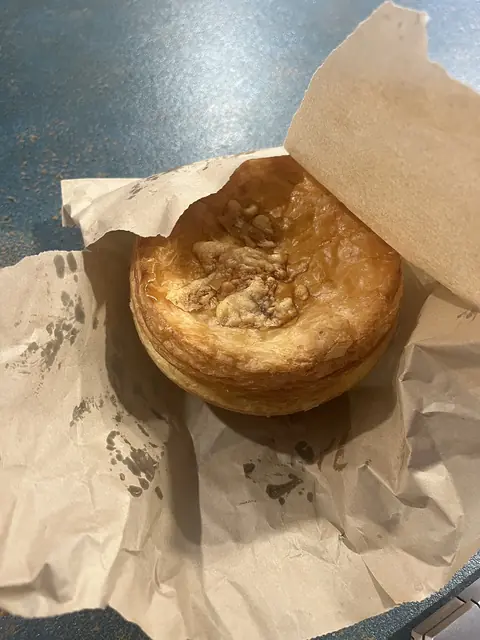
Kiwi meat pies
New Zealand's favourite quick meal, found all over the country: a hand-sized pie of flaky pastry, filled with mince and cheese, steak and cheese, ste…
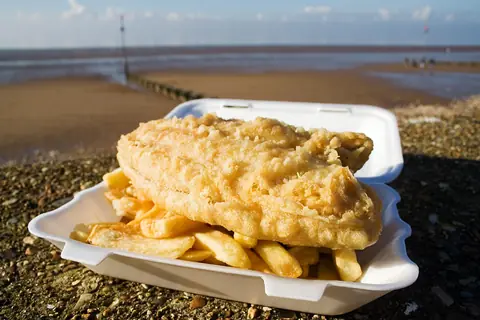
Fish and chips on the beach
A Kiwi summer tradition: fish and chips from the local shop, wrapped in paper and eaten on the beach.
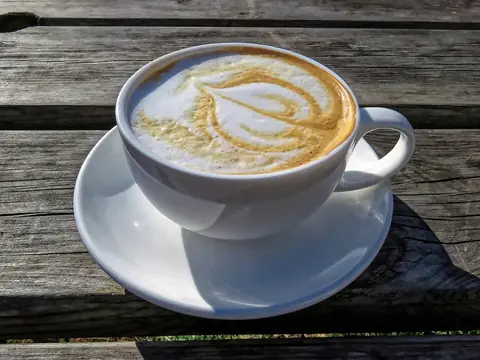
Flat white and Kiwi café culture
The flat white, espresso with velvety steamed milk and a thin layer of microfoam, was made popular in New Zealand and Australia in the 1980s; both co…
Phones and internet
- SIM cards and eSIMs: New Zealand's three mobile networks, One NZ, Spark and 2degrees, sell prepaid SIM cards and eSIMs with data, at the international airports, in their shops and in supermarkets. You'll need your passport. They're much cheaper than roaming on most foreign plans.
- Coverage is good in towns and along the main highways, but there's none on many mountain passes, in much of the West Coast and Fiordland, and on most walking tracks. Download maps to your phone before you set off, and carry a personal locator beacon on long walks.
- Wi-fi is free in libraries, many cafés and town centres, and at most holiday parks, though it can be slow.
- Emergencies: dial 111 for police, fire or ambulance. It works even without credit.
Plugs and power
New Zealand uses 230 volts and three-pin plugs with flat, angled pins (type I), the same as Australia. Bring an adaptor, which you can also buy at the airport or in any supermarket.
See also arriving in New Zealand and what to pack.
Comments
No comments yet.