
Driving in New Zealand: rules, road signs and one-lane bridges
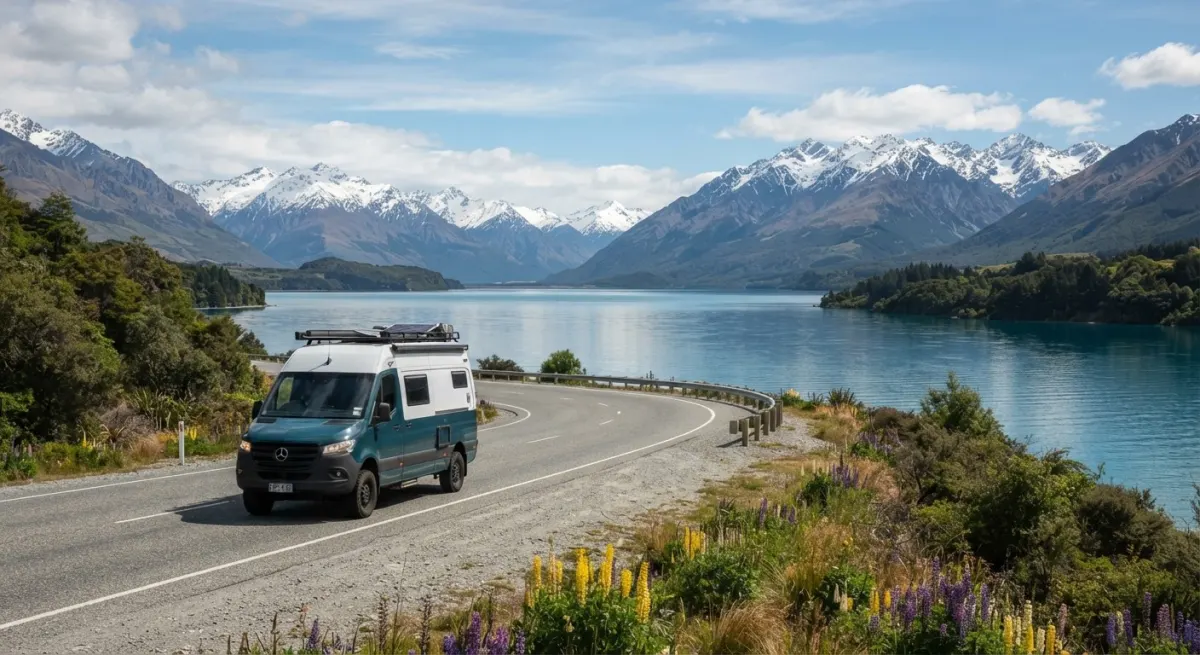
Driving is the best way to see New Zealand, but it isn't like driving at home, wherever home is. Everyone drives on the left, and the roads are quieter but narrower and more winding than visitors expect. There are one-lane bridges, gravel roads, sheep on the road and mountain passes that close in snow. This is what you need before you pick up a hire car or campervan, and the rules and signs that catch visitors out.
What you need to drive
- A current driving licence: you can drive for up to 12 months from when you arrive on a valid overseas licence. After that you need a New Zealand licence. Any conditions on your licence, such as needing glasses, still apply.
- In English, or with a translation: if your licence isn't in English, you must also carry an International Driving Permit or an approved English translation. Carry your original licence too: the permit or translation isn't valid on its own.
- Carry it whenever you drive. Police can ask to see it at any time, including at the alcohol checkpoints that are common in New Zealand.
- Campervans: an ordinary car licence covers the campervans and motorhomes that rental companies hire out, but the bigger ones (over 3,500 kg) are heavy vehicles and are limited to 90 km/h.
- Age: most rental companies want you to be at least 21, and some charge more if you're under 25.
- Insurance: check what the hire includes. Many hire agreements don't cover gravel roads, windscreens or tyres unless you pay to reduce the excess, and some roads, such as Skippers Road near Queenstown, aren't covered at all.
The official DriveSafe site for visiting drivers has the rules in several languages, and a quiz to test yourself. The full rules are in the New Zealand Road Code.
The main rules
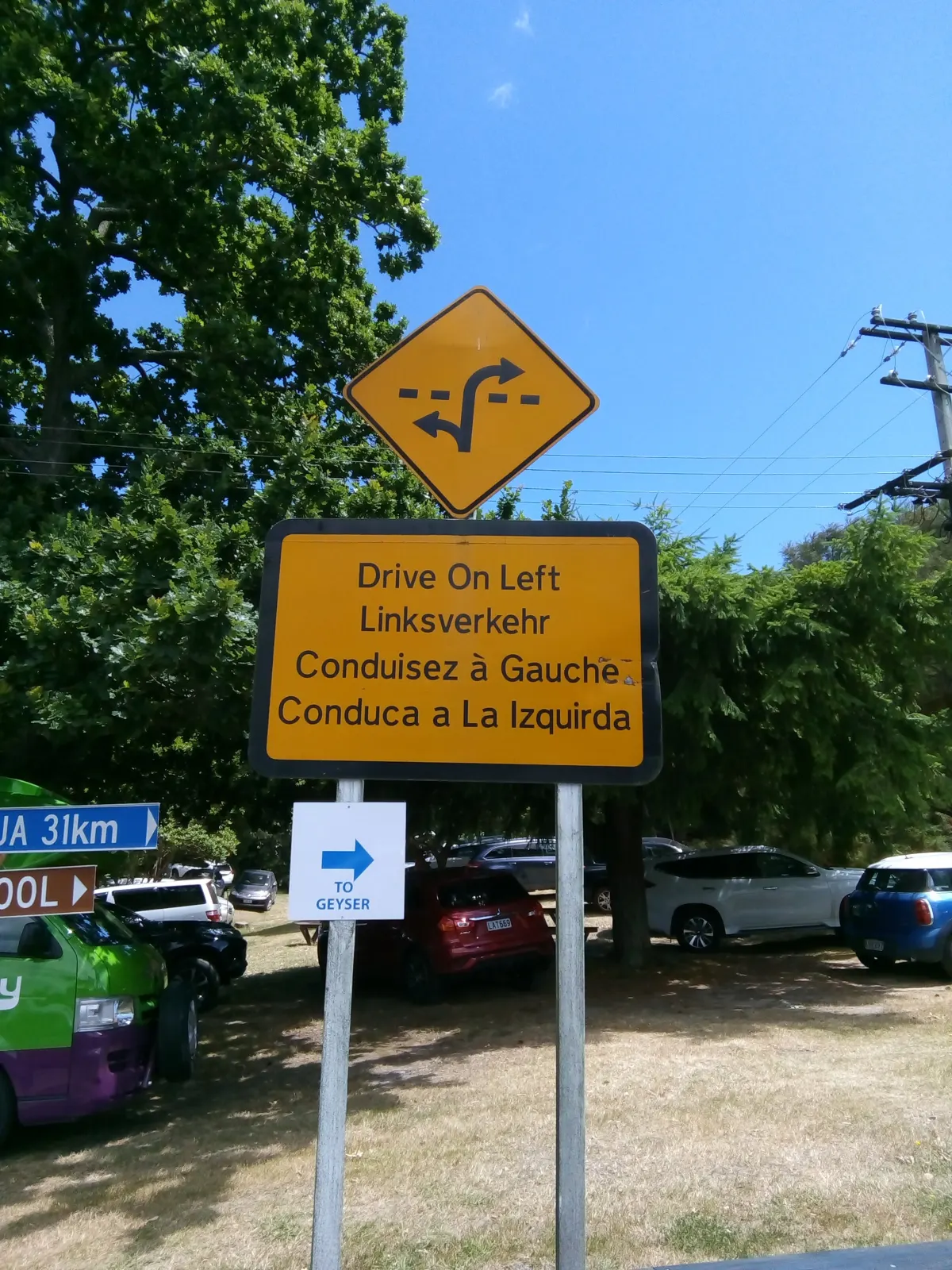
- Keep left. It's easy to forget when you pull out of a car park, a petrol station or a scenic lookout onto an empty road. Many visitors put a note on the dashboard.
- Speed limits are in km/h: 100 km/h on most open roads (some are 80 km/h or less, and a few motorways are 110 km/h) and 50 km/h in towns, unless signs say otherwise.
- Police are strict about speeding. If you're caught going over the limit, even by a little, expect a ticket: a warning is rare, and "I'm a tourist" won't help. Police patrol the open roads in marked and unmarked cars, and there are fixed and mobile speed cameras. If a camera catches a hire car, the rental company passes the fine on to you, usually with an admin fee, even after you've gone home.
- Seatbelts are compulsory for everyone in the vehicle. Children under 7 must be in an approved child seat, which the rental company can hire to you.
- Alcohol: if you're 20 or over, the limit is 0.05% blood alcohol. Under 20, it's zero.
- Mobile phones: you can't hold your phone while driving, even stopped at lights. Use a phone mount and don't touch it, or pull over.
- Red lights: you can't turn left (or right) on a red light, unless there's a green arrow.
- Parking: park on the left side of the road, facing the same way as the traffic. Parking facing oncoming traffic is illegal.
- Cyclists: give them at least 1.5 m of room when you pass.
- Emergencies: dial 111 for police, ambulance or fire.
Giving way
- Turning: if you're turning, give way to traffic going straight through. If you're turning left and a car coming the other way is turning right into the same road, you give way to it.
- Roundabouts: go around them clockwise, give way to traffic coming from your right, and indicate left as you leave.
- Stop and give way signs: at a stop sign you must stop completely, even if the road is clear. At a give way sign, slow down and give way to all traffic on the other road.
- Stop signs on every road: unlike in North America, there's no first-come, first-served rule. The normal give way rules apply, and if you're still unsure, give way to the vehicle on your right.
- Pedestrian crossings (black and white stripes, often with orange lights on poles): stop for anyone on the crossing or waiting to cross.
One-lane bridges
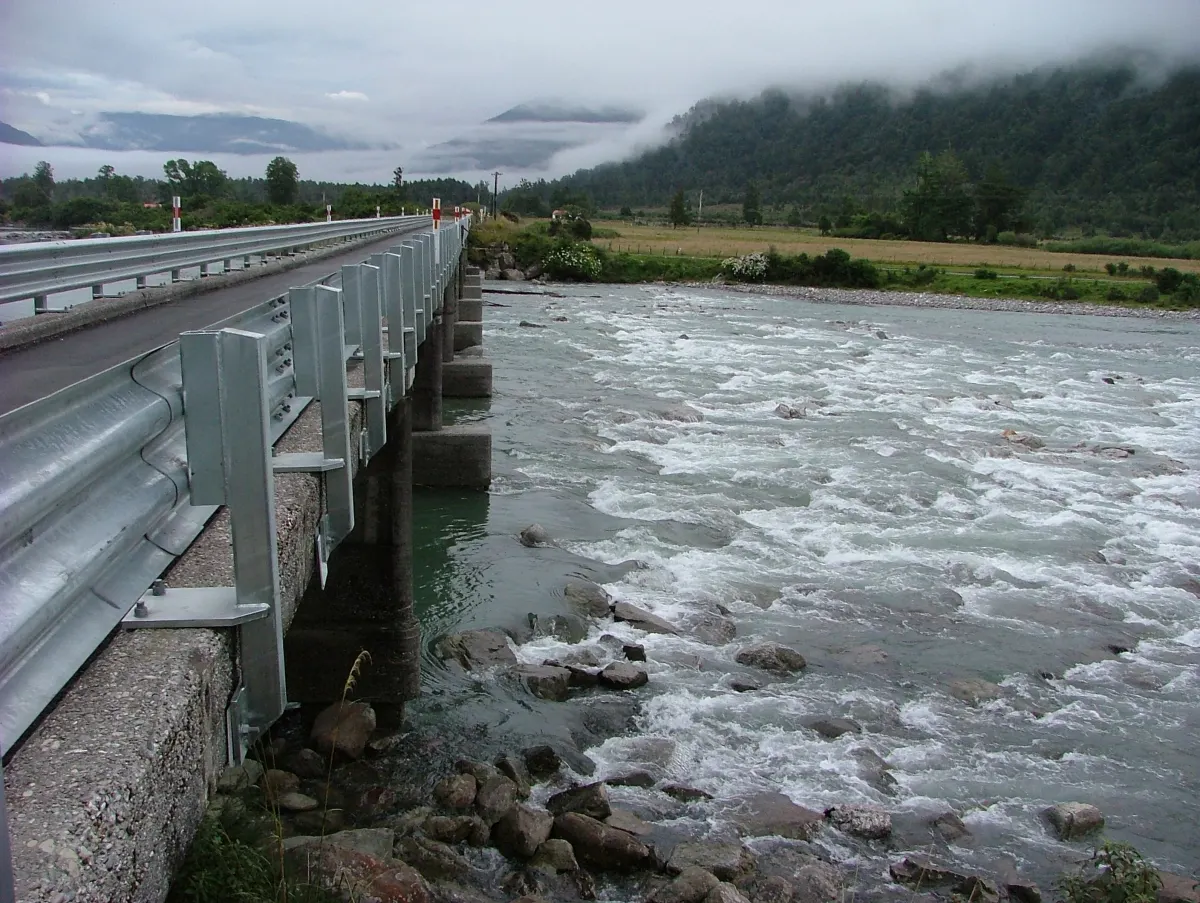
There are hundreds of one-lane bridges, especially on the West Coast and in the country, and some are long. A yellow diamond warns you of one ahead, and a sign at the bridge shows who goes first:
- A round sign with a red border, a small red arrow pointing up and a big black arrow pointing down: traffic coming the other way has priority. Stop and give way to anything on the bridge or coming towards it, then cross.
- A blue rectangular sign with a big white arrow pointing up and a small red arrow pointing down: you have priority. Slow down and make sure oncoming traffic has stopped before you cross.
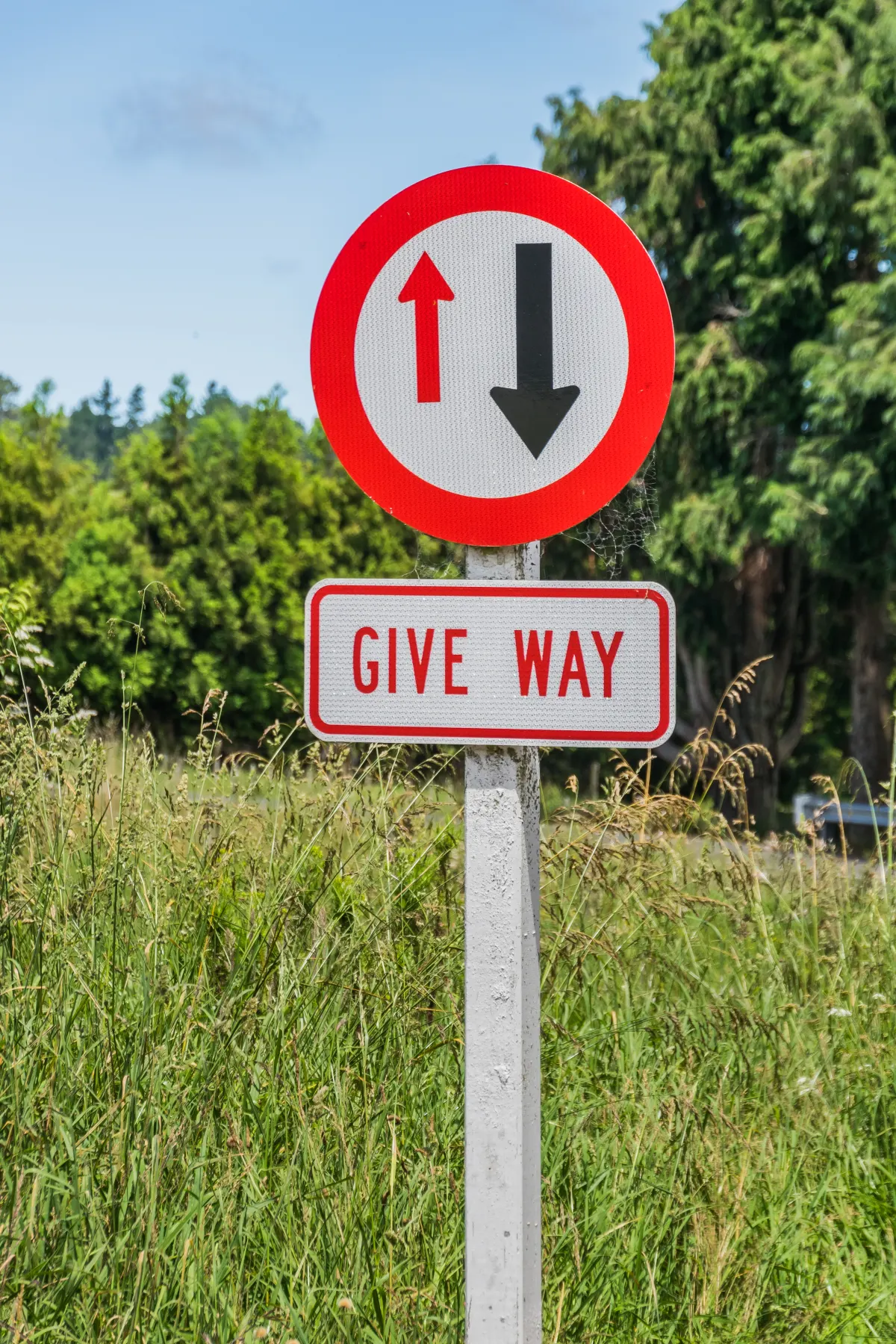
The big arrow always has the right of way. If you're not sure, or a truck or campervan is already on the bridge, let the other vehicle go first.
Road signs that confuse visitors
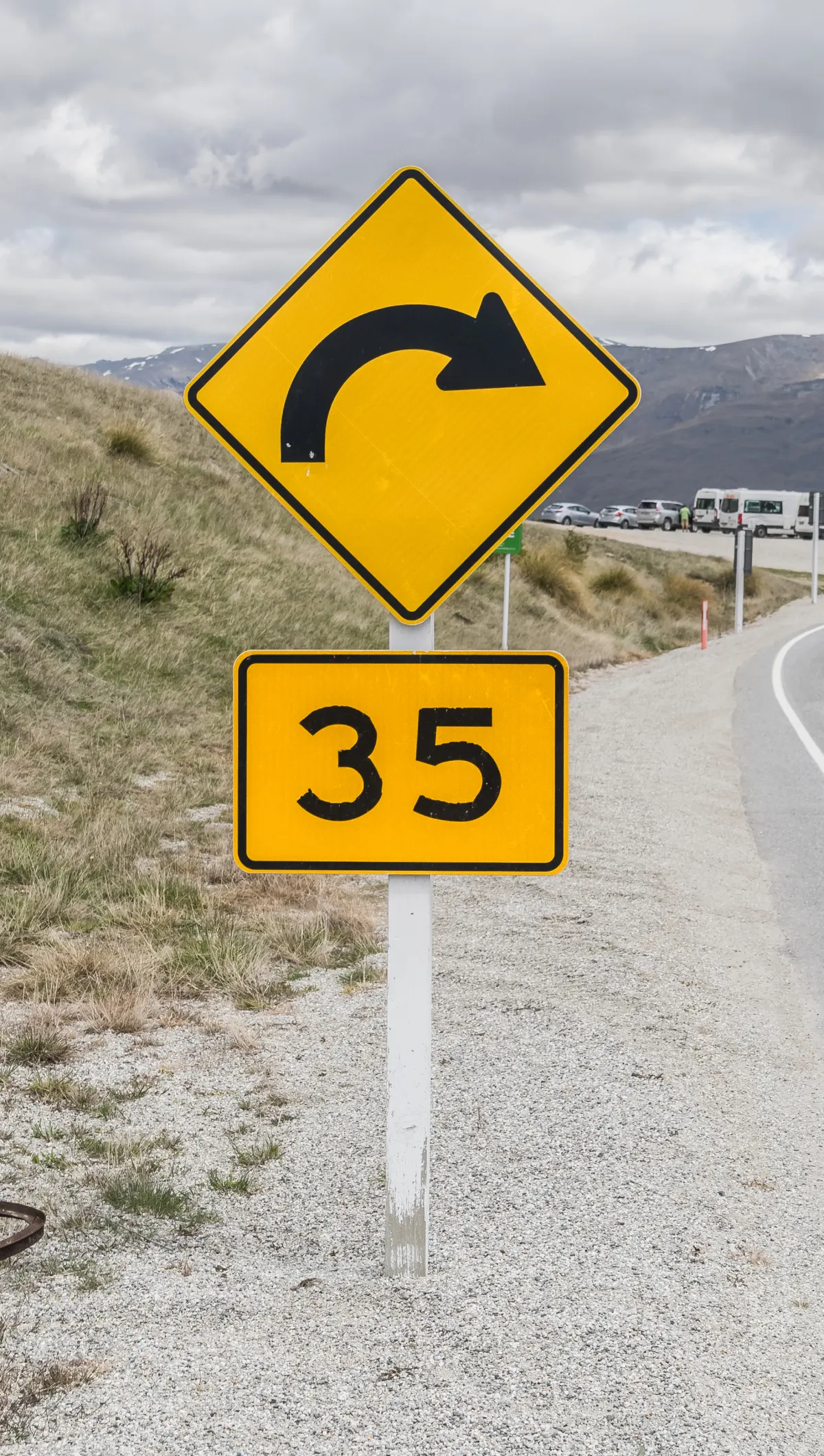
- Yellow curve signs with a number: the number is the safe speed for the bend ahead, in km/h. It isn't a limit, but take it seriously: 35 means 35, especially in a campervan.
- Yellow lines: a solid yellow line on your side of the centre line means no passing. Don't cross it.
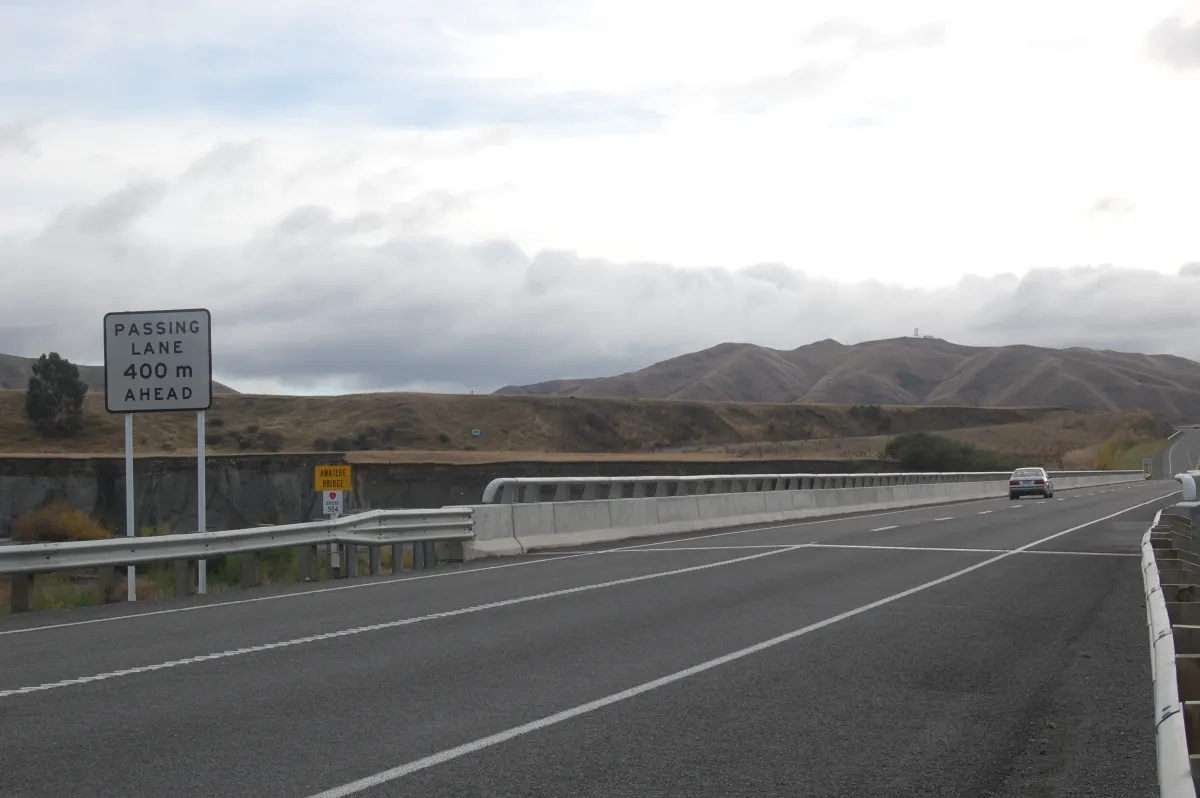
- Passing lanes: signs show where the next one is, often only a few kilometres ahead. Wait for it rather than overtaking on a bend. Slower traffic keeps left, and the lanes merge again at the end.
- Slow vehicle bays: short lay-bys where slower vehicles pull over to let traffic past.
- Loose chips: a sign, often with a 30 km/h limit, on newly sealed roads with loose stones on top. Slow down: stones thrown up crack windscreens.
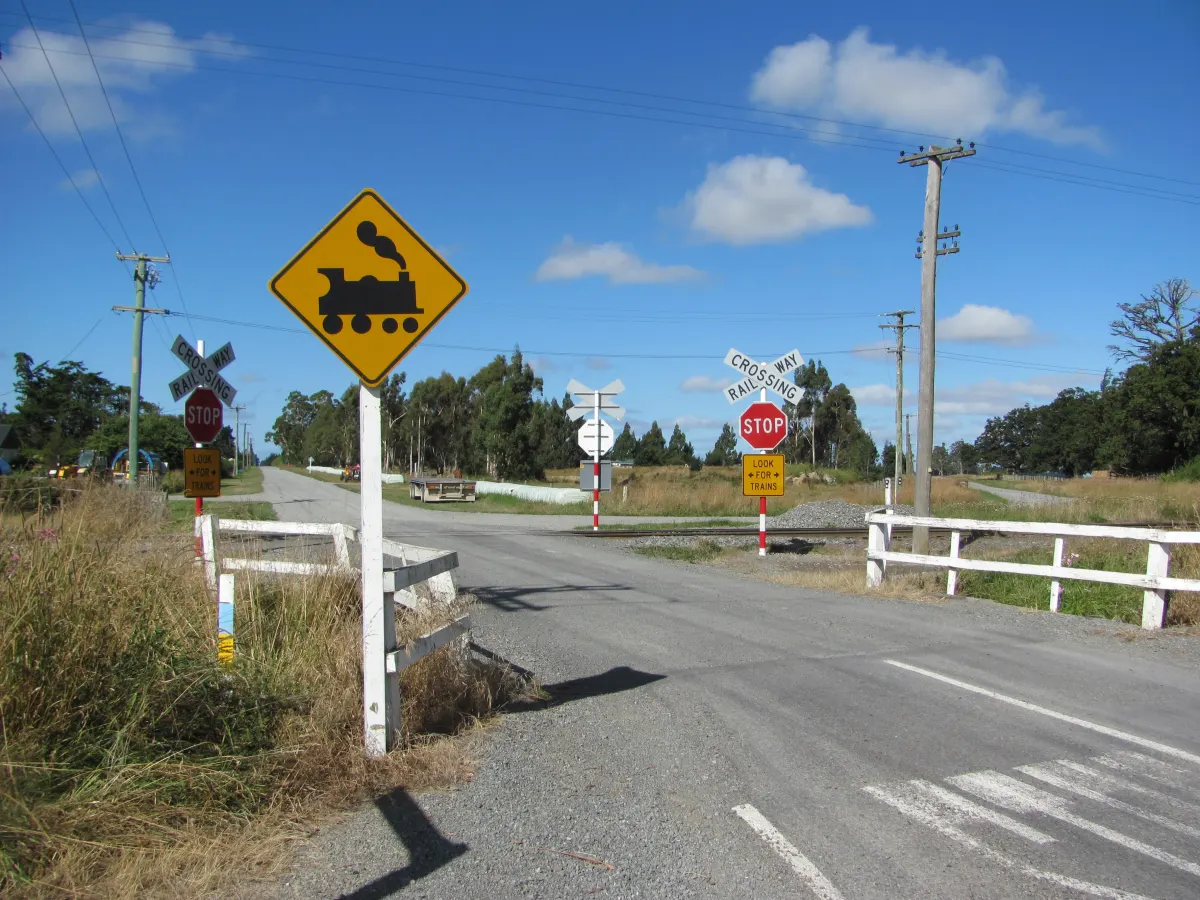
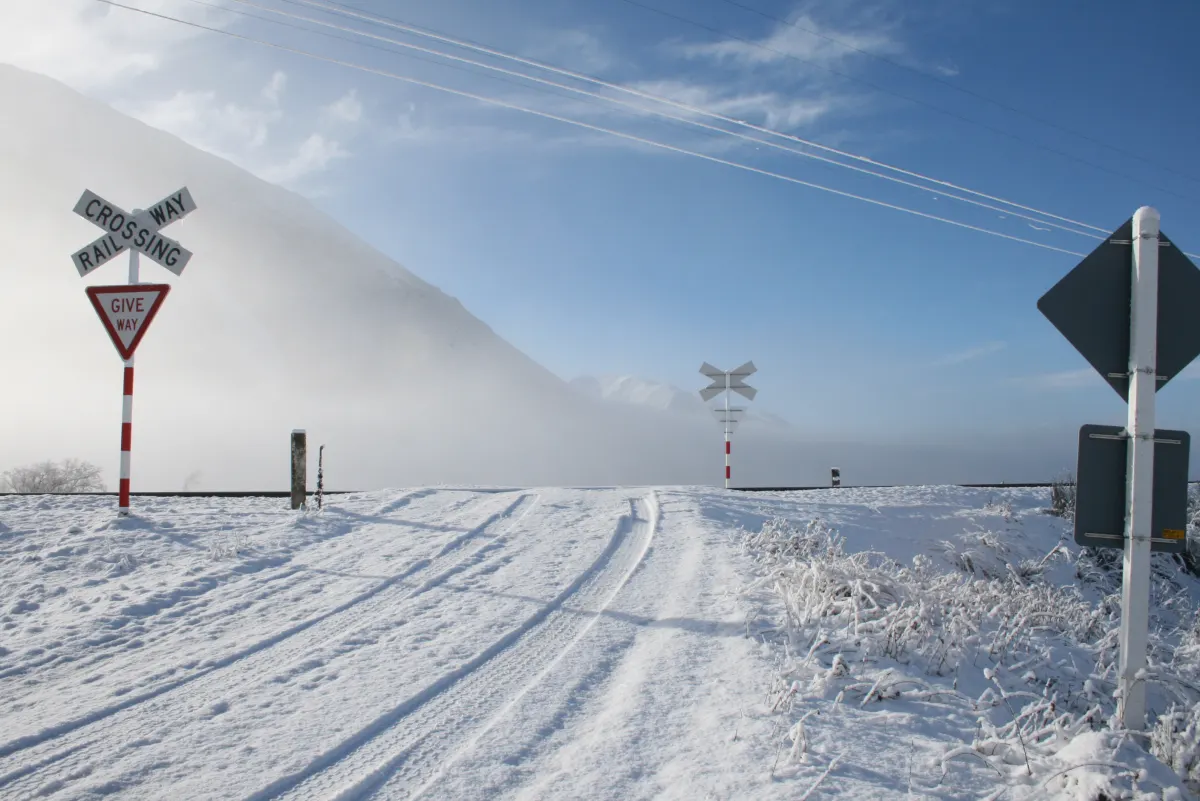
- Railway crossings: many rural crossings have no barriers, only a sign, or flashing red lights and bells. Stop when the lights flash, and at a crossing with only a sign, slow down and look both ways.
- Animal signs: as well as stock, you may see signs for kiwi, penguins or ducks crossing the road. Slow down, especially at dusk.
- No stopping: a red circle on a blue background with a red cross.
The roads themselves
- Allow more time than the map shows. Most highways are one lane each way, winding and hilly, with roadworks, campervans and logging trucks. Plan on about 60 to 70 km an hour, and only an hour or two of driving between breaks. Tiredness is a common cause of crashes, especially on the first day after a long flight.
- Let others pass. This is one of the most important things to know. If you're in a slow vehicle, such as a campervan, or you're driving below the limit to enjoy the view, keep checking your mirrors, and as soon as a queue builds up, pull over where it's safe and let it pass. If five or more vehicles are behind you, you're expected to. With few passing lanes, drivers stuck behind a slow vehicle get frustrated and take risks to overtake, and that causes serious crashes. Use slow vehicle bays, wide shoulders and lay-bys, indicate left, slow down and keep moving or stop completely off the road, and let everyone past before you pull out again. Locals will thank you with a wave.
- Stopping for photos is fine, but only where there's room to get completely off the road: never stop on a bend, on a bridge or on the road itself.
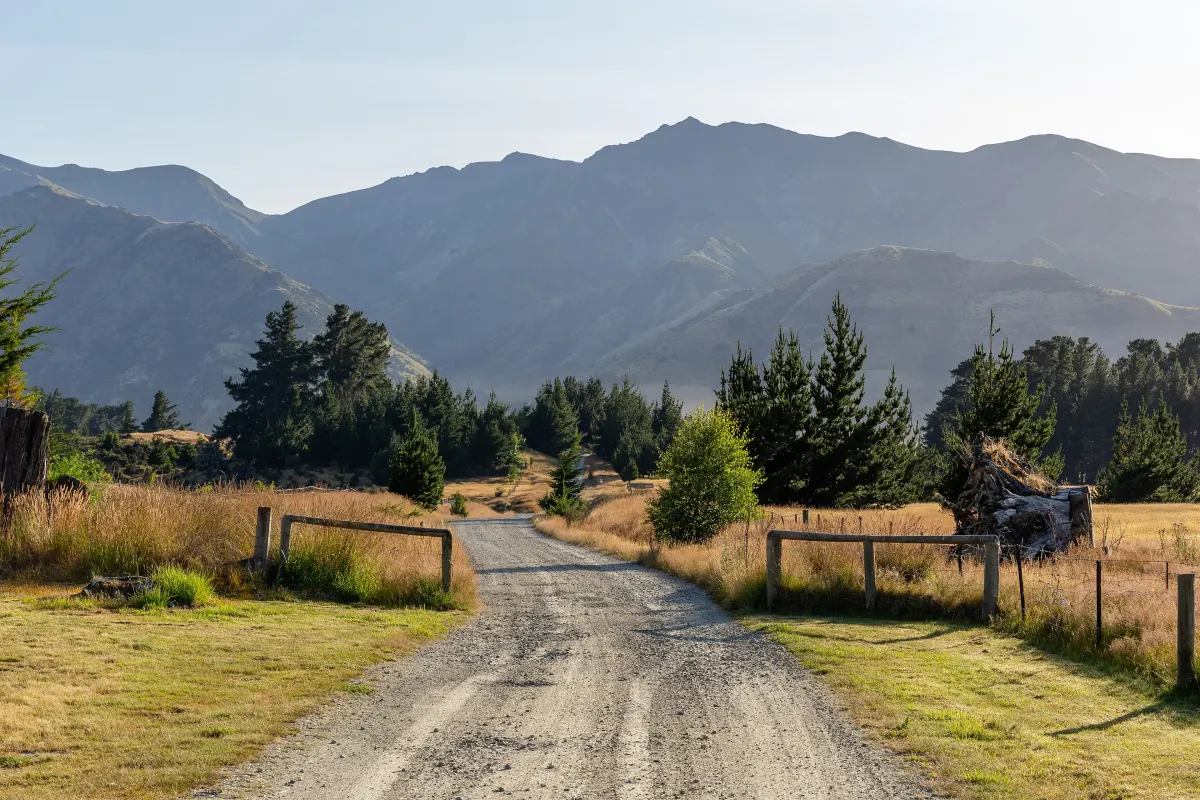
- Gravel roads: drive slowly, keep left on bends, and brake gently. Check your hire agreement first.
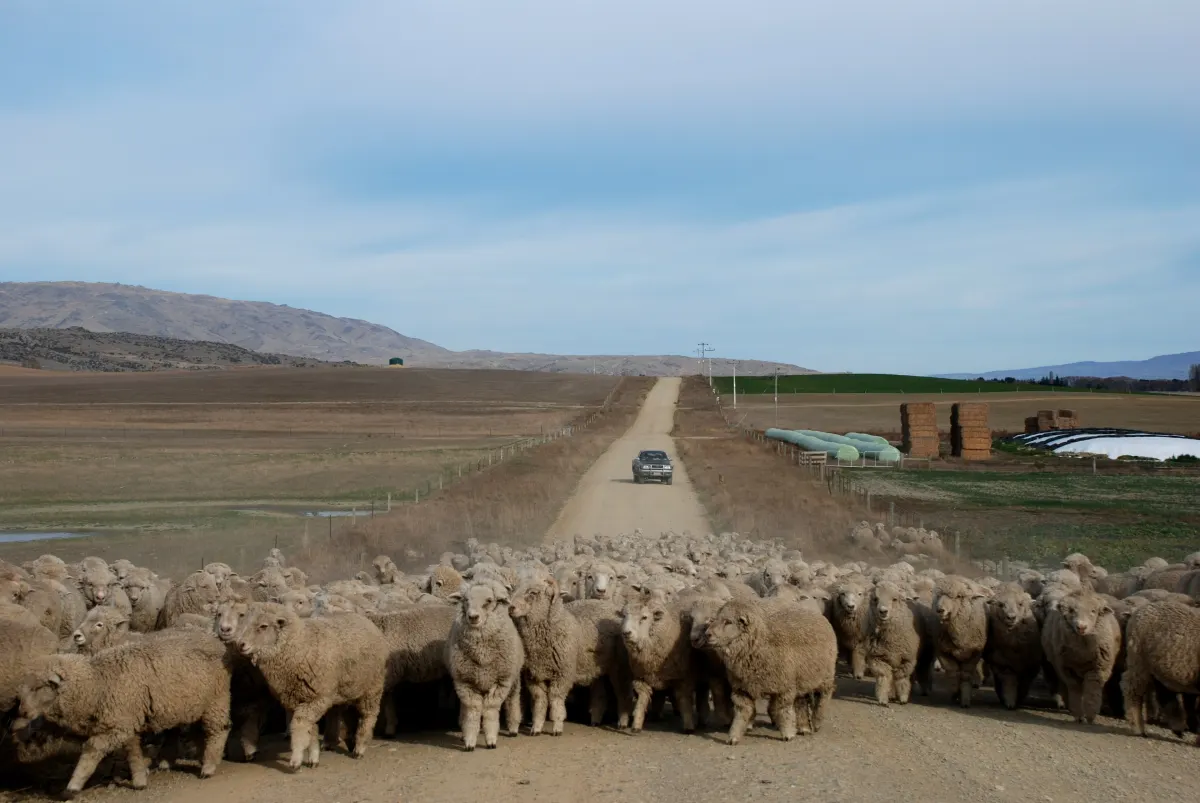
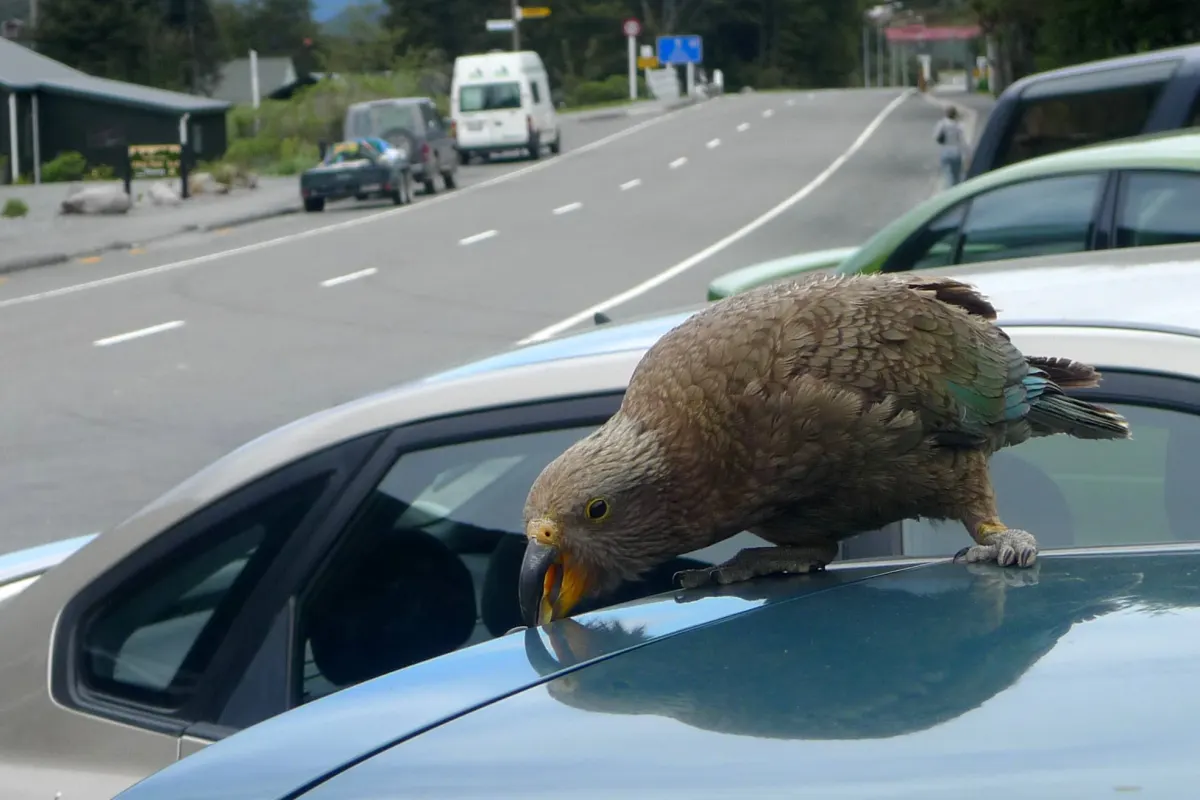
- Stock and wildlife: farmers move sheep and cattle along rural roads. Stop and let them past slowly, or drive through very slowly if a farmer waves you on. Kea, the mountain parrots, wait by the road on the mountain passes. Don't feed them.
- Fuel: towns can be 100 km or more apart, and some small ones have no fuel or only a card-only pump. Fill up when you can before a mountain pass or a remote stretch.
- Mobile coverage drops out on the passes, on much of the West Coast and in Fiordland. Download maps to your phone before you set off.
Weather, winter and the mountain passes
- Check road closures and conditions on the NZTA journey planner before you set off. Heavy rain closes roads with slips and flooding at any time of year, and snow and ice close the mountain passes in winter.
- From about June to September, watch for black ice on shaded corners in the mornings, especially in the South Island and on the central North Island plateau. Slow down and avoid sudden braking.
- Carry chains on the mountain passes in winter, and practise fitting them before you need them. On the Milford Road, signs require you to carry chains in the colder months, and the hire company can supply them.
- Drive to the conditions: in rain, snow or strong wind, slow down well below the limit, and leave more space in front of you. High-sided campervans get blown about in strong crosswinds.
Driving a campervan
- It's wider and taller than you're used to: keep left of the centre line on bends, but watch the edge of the road too. Many roads have deep gutters or drop-offs.
- You'll be slower than most traffic, especially on hills, so pulling over to let others pass is part of driving a campervan here: do it every time a queue builds up behind you, not just once or twice a day.
- Take the hills slowly. Use a lower gear going down long hills, instead of riding the brakes.
- Secure everything before you drive, and lock the doors and cupboards.
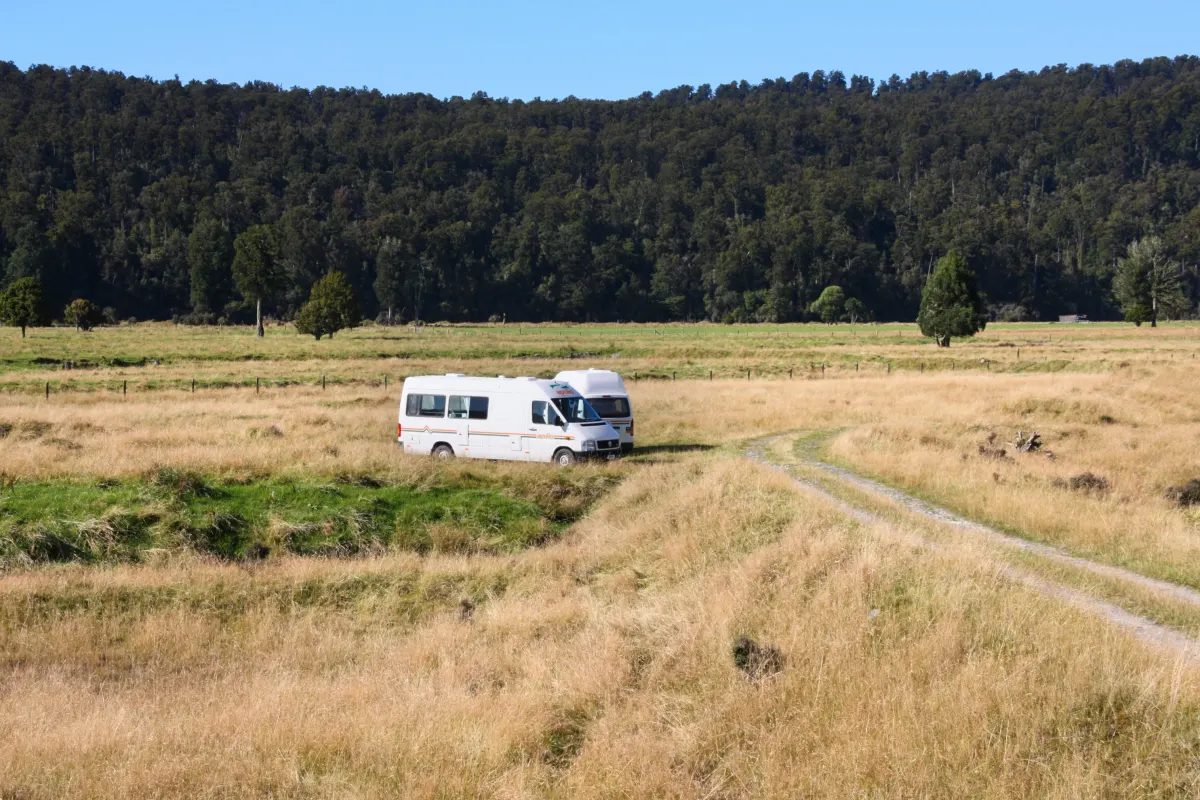
- You can only camp overnight outside a campsite on council land in a certified self-contained vehicle, with a fixed toilet and a green self-containment warrant. Many cheaper rental vans aren't, so ask before you book. Follow the signs: many lay-bys and car parks don't allow it, and you can be fined. See Camping in New Zealand for where you can stay.
Planning a road trip? See 7 days in the South Island by car or campervan.


Comments
No comments yet.