
Walking and tramping safely in New Zealand
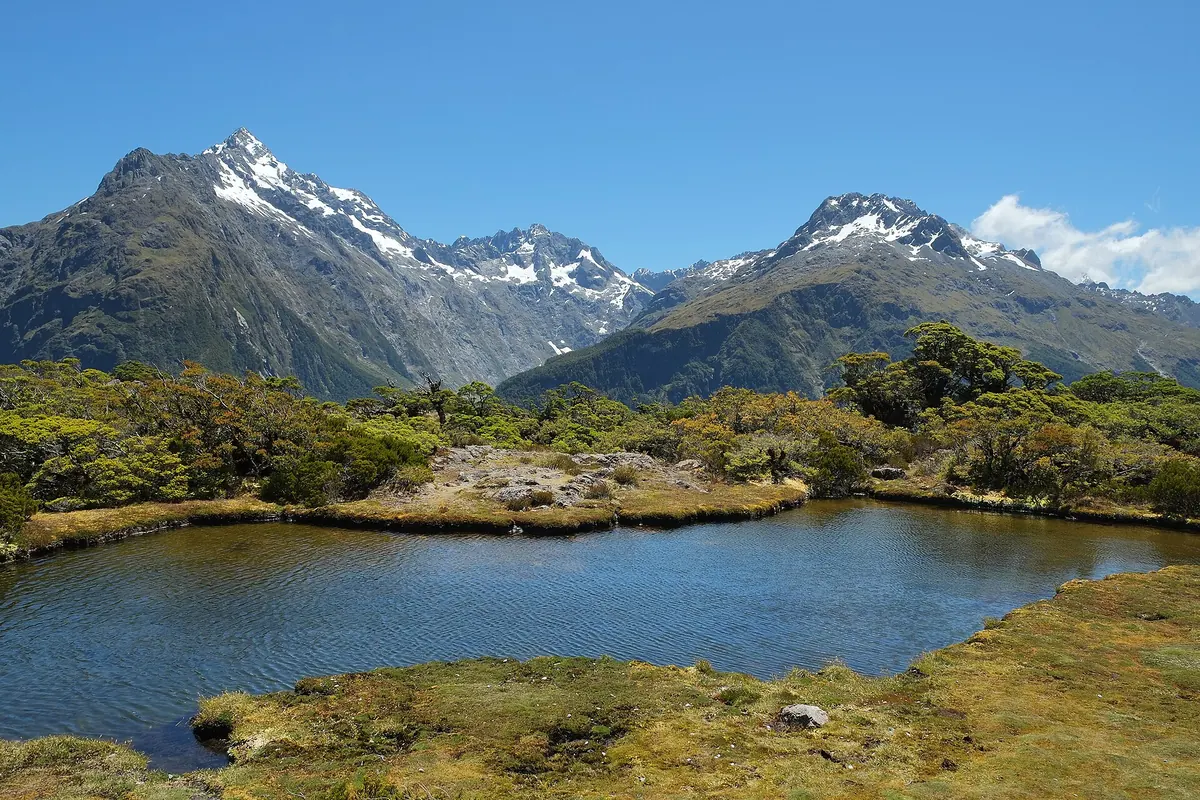
Walking, or tramping as New Zealanders call it, is the best way to see New Zealand's mountains, forests and coast. There are thousands of tracks, from 10-minute strolls to a waterfall to week-long hikes through the wilderness, most of them free and well signposted. But the weather and the rivers can be dangerous, and every year visitors get into trouble on tracks that were too long or in weather that turned. A little planning goes a long way.
Short walks and day hikes
The Department of Conservation (DOC) looks after most of the tracks, and its website has a page for each one, with how long it takes, how hard it is, and any closures. Signposted times are for an average walker without stops, and are usually honest. Some of the best day walks, like the Tongariro Alpine Crossing and Roys Peak, are steep and exposed: take them seriously, and turn back if the weather turns.

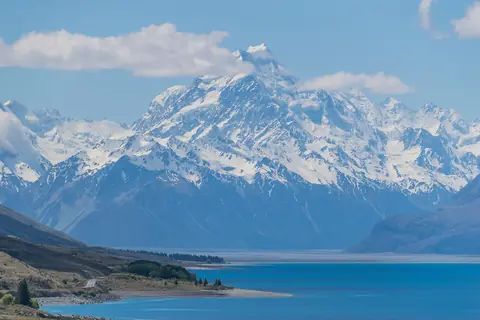
Hooker Valley Track, Aoraki/Mount Cook
An easy 10 km return walk over three swing bridges to Hooker Lake, with icebergs and a view of Aoraki/Mount Cook, New Zealand's highest mountain, 3,7…

Tongariro Alpine Crossing
Often called the best one-day walk in New Zealand, the Crossing climbs between the volcanoes of Tongariro National Park, the country's oldest nationa…

Roys Peak Track, Wānaka
A steep, zig-zagging climb of 1,250 m up farmland and tussock to the summit of Roys Peak (1,578 m), with one of the most famous views in New Zealand:…
The Great Walks
The Great Walks are New Zealand's best-known multi-day tracks, well made and with comfortable huts and campsites along the way. Most take three to five days. They include the Milford, Routeburn and Kepler tracks in the south, the Abel Tasman Coast Track, the Heaphy and Paparoa tracks, the Rakiura Track on Stewart Island, Lake Waikaremoana, the Tongariro Northern Circuit, and the Whanganui Journey, which is done by canoe.
- Book early: the huts and campsites must be booked in the main season (about late October to April), on the DOC Great Walks website. Bookings for the next season open in May, and the most popular, like the Milford Track, sell out within minutes.
- Huts have bunks with mattresses, water, toilets and, on most tracks, gas cookers in the season. Bring your own sleeping bag, food, cooking pot and plates.
- Outside the season, the alpine tracks are much harder, with snow and avalanche danger, and the hut facilities are removed.
- Guided walks with private lodges are available on some tracks, if you'd rather not carry a heavy pack.
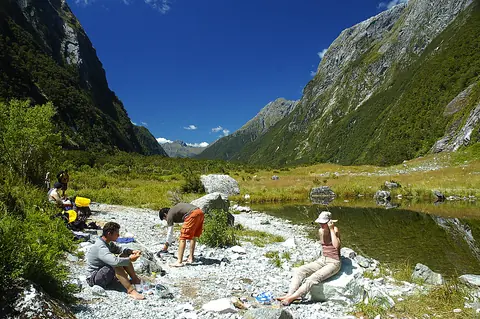
Milford Track, Fiordland
Often called 'the finest walk in the world': a four-day, 53.5 km Great Walk through Fiordland from the head of Lake Te Anau to Milford Sound, over th…

Routeburn Track
One of New Zealand's Great Walks, 33 km over 2 to 4 days through Mount Aspiring and Fiordland National Parks, with alpine lakes, waterfalls and views…

Abel Tasman Coast Track
One of New Zealand's Great Walks: 60 km of easy, well-graded track along the coast of the Abel Tasman National Park, through native bush and over hea…
Backcountry huts
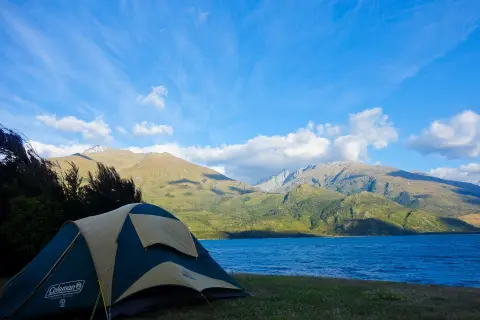
Away from the Great Walks, DOC has hundreds of backcountry huts, from comfortable ones with a warden to tiny, basic shelters. Most can't be booked: you pay with hut tickets or a Backcountry Hut Pass, bought from DOC visitor centres, and take a bunk on a first-come basis. Carry a tent in case the hut is full.
Staying safe
The Mountain Safety Council's Land Safety Code has five simple rules:
- Choose the right trip for you: one that matches your fitness and experience, and the time of year. Allow plenty of daylight.
- Understand the weather: check the mountain forecast on MetService before you go, and be ready to turn back. It can snow in the mountains in any month.
- Pack warm clothes and extra food, a waterproof jacket, a first aid kit and a torch, even on a day walk.
- Share your plans and take a way to get help. Tell someone where you're going and when you'll be back, using the intentions form on AdventureSmart. There's no phone coverage on most tracks, so carry a personal locator beacon (PLB): you can hire one from DOC visitor centres and outdoor shops for a small fee.
- Take care of yourself and each other: stay together, and keep an eye on the slowest walker.
The biggest danger is rivers. They rise very quickly after rain, and drowning while crossing them has long been one of the main causes of death in the New Zealand outdoors. If a river is high, fast or discoloured, don't cross: wait for it to go down, or turn back. "If in doubt, stay out."
On the track
- Leave gates as you find them, open or closed, when a track crosses farmland, and don't disturb stock, especially at lambing time in spring. Many tracks cross private land with the farmer's permission: stay on the track.
- Clean your shoes at the cleaning stations in the kauri forests of the north, to stop the spread of kauri dieback disease, and stay on the boardwalks around the trees.
- Take all your rubbish out with you, and use the toilets: they're at most huts, campsites and car parks.
- Don't feed the birds, especially kea, the mountain parrots: it harms them.
- Dogs aren't allowed in national parks, and you need a permit to fly a drone on conservation land.
- Sandflies bite on the West Coast and in Fiordland: bring insect repellent and long sleeves.
See also weather, seasons and what to pack, and camping in New Zealand.


Comments
No comments yet.