
Visiting Rapa Nui (Easter Island): the entry form, 30-day limit, registered lodging, park ticket, guide rule and how to behave
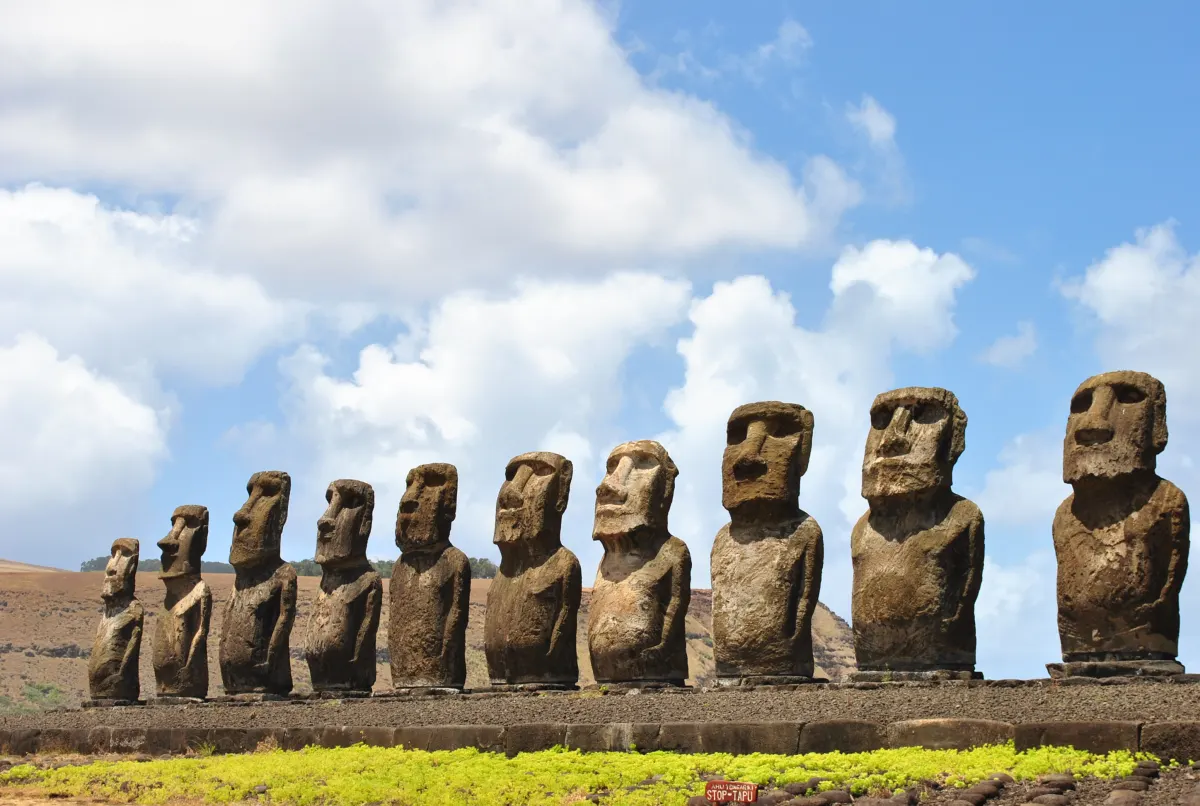
Rapa Nui is part of Chile, 3,700 km out in the Pacific, with its own rules to keep the number of people down. Airlines turn away those who haven't done the form.
Before you fly
- Fill in the FUI (Formulario Único de Ingreso) at ingresorapanui.interior.gob.cl. It's free. Chile's tourist board says within 48 hours of the flight. Others give earlier times, so look at the site a few days ahead.
- A return ticket, for a stay of no more than 30 days, counting the first and last. That's the law (21.070) for everyone but residents, and it can't be extended.
- A booking at lodging registered with SERNATUR (check on serviciosturisticos.sernatur.cl, region Valparaíso, commune Rapa Nui), or an invitation letter from a resident, issued by the island's provincial delegation. Not everything on booking sites is registered: ask the host for its number.
- Your passport and PDI slip. Be at the airport three hours before: PDI checks everything.
Flights
Only LATAM, from Santiago, about 5½ hours. The number of flights a week changes with the season. Fares fall if you book months ahead. The Tahiti route wasn't confirmed when this was written. See Flights.
The park ticket
- Most of the sites are in a national park run by the Ma'u Henua community. Since 1 October 2025 it has been US$100 for foreign adults and US$40 for children. Agencies list the same as 95,000 and 38,000 pesos for adults (13 and over) and children of 7 to 12. Under-7s are free.
- It's valid for 10 days in a row. Rano Raraku and Orongo can be entered once, the rest as often as you like.
- Buy it on rapanuinationalpark.com. Choose foreigner: with the wrong kind you can be turned away. The office in Hanga Roa also sells them, for now. It isn't refunded.
You need a guide
- Since the island reopened in August 2022, the park's sites can be visited only with an accredited guide, or a Rapa Nui host over 18. The ticket doesn't include one.
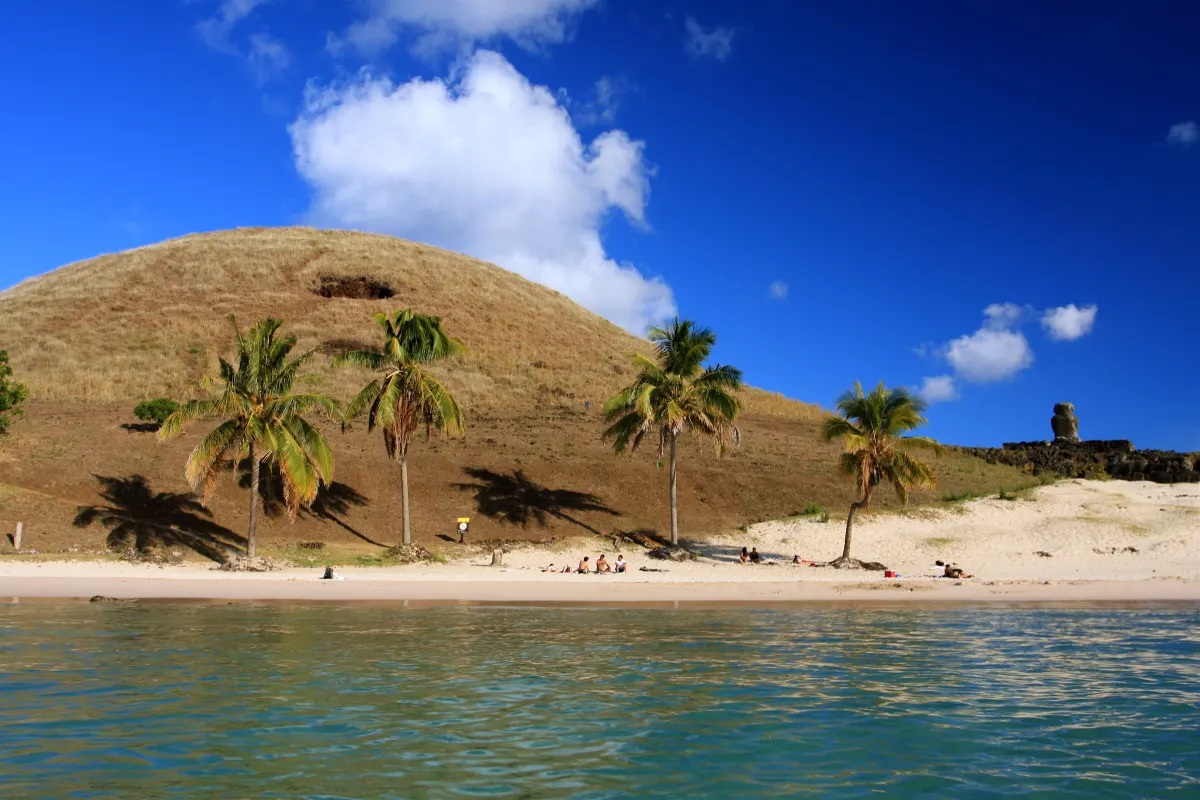
- A local agency lists two exceptions: Tahai, by the town, where everybody goes for sunset, and Anakena beach, but not its moai platform, Ahu Nau Nau.
- Sites are open from 9 am to 6 pm, with sunrise at Ahu Tongariki by arrangement.
- Join a small group for a day and a half or two days, and do the rest at your own pace. Book in January, February and for Tapati.
How to behave
- Never touch or climb a moai, and never step on an ahu. Fines run from 5 to 100 UTM, up to several million pesos. A fire in October 2022 scorched many moai at Rano Raraku, and rising seas threaten others.
- Stay on the paths. No drones without permission, no camping, no alcohol or tobacco, no dogs, and take no stones.
- Greet people with iorana. It's the Rapa Nui's land and they call it that.
What to bring
- Food from the mainland is welcome, as shops are dear, but no honey or anything made with it. Fill in the SAG form, as fresh fruit, plants and meat are checked.
- Pesos and dollars: few cash machines, and cards don't work everywhere.
- Sun cream, hat, rain jacket, mosquito repellent: there's dengue. Take your medicines: there's one small hospital.
- Take out your rubbish, as the island asks visitors to.
Getting round
- Hire a car, scooter or bicycle in Hanga Roa. There's no insurance, so all damage is yours. Cows and horses sleep on the road.
- No buses. Taxis are fixed-price. Riding and walking the north coast need a guide.
- The sea is rough, and swimming is for Anakena.
How long
Four full days. The weather, and flights, can hold you up: don't fly home the same day. Between Hanga Roa and the rest of Chile it's two hours' time difference.

Historic sites
Easter Island (Rapa Nui)
Hanga Roa, Valparaíso
A remote Pacific island famous for its nearly 1,000 moai, giant stone figures carved by the Rapa Nui people.






Comments