
Volcanoes in Chile: the new 0 to 5 scale, Villarrica's yellow alert and climbing it, ash, and what to do in an eruption
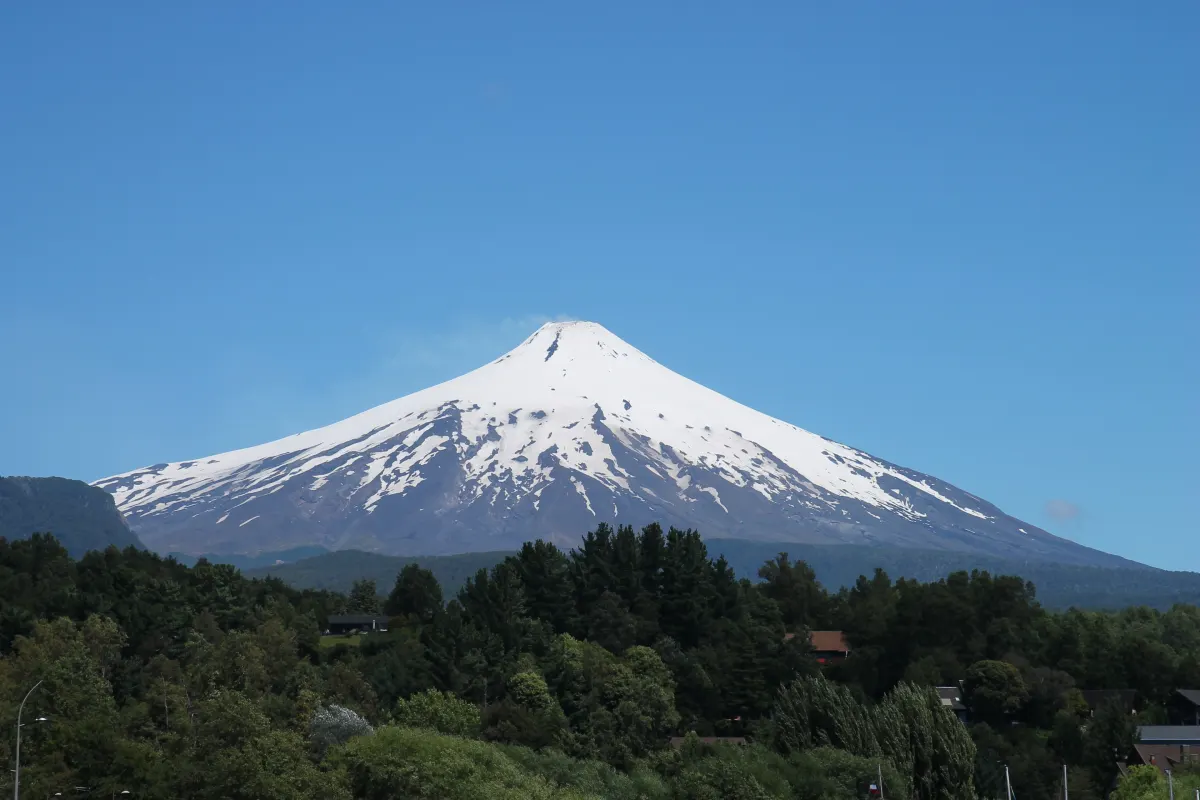
Chile has about 90 active volcanoes, and many of its best holidays are at the foot of one. They're watched day and night. Before you go to Pucón or pay for a climb, look at the state of the mountain.
The new scale
- On 28 October 2026 the geological service, Sernageomin, replaced its green, yellow, orange and red technical alerts with six activity states (Estados de Actividad Volcánica, EAV):
- 0 resting. 1 slight changes, no immediate danger. 2 clearer changes. 3 minor eruption, usually by the crater. 4 moderate eruption that can reach nearby areas. 5 major eruption.
- The disaster agency, SENAPRED, still declares green, yellow and red alerts for districts, and decides on closed zones and evacuations. So you'll see both a number and a colour.
- Look at rnvv.sernageomin.cl, the new page, which is still being tested, and senapred.cl. Older guides use the old colours.
Can you climb Villarrica?
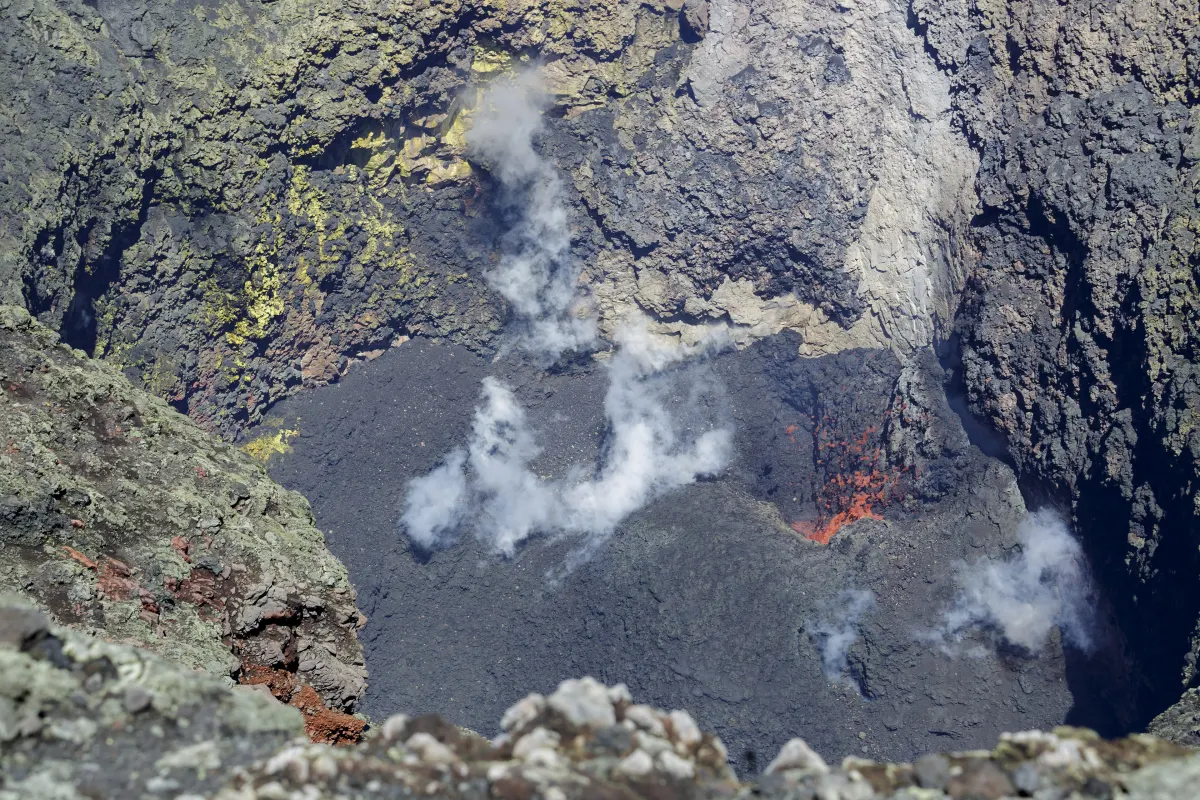
- The climb from Pucón, in crampons over snow to a smoking crater, is Chile's most famous.
- On 4 September 2026 the volcano went to yellow alert, because its lava lake was rising. A local guide wrote on 6 October that no climbs to the top were being made. Other agencies were still selling climbs, "depending on activity". Its state in late November couldn't be confirmed.
- So: check before you book, ask how high you'll get, and whether you get your money back.
- When it's open you need an authorised company, unless you're an accredited mountaineer. Going alone isn't allowed. It's 6 to 8 hours, 1,400 m up, and needs fitness. Agencies quoted about US$185 to 190 in October.
- Turn round when the guide says so. People have died on the ice. Helmets, ice axes and gas masks should be part of the price.
- The towns, beaches, hot springs and Huerquehue stay open in a yellow alert.
Others
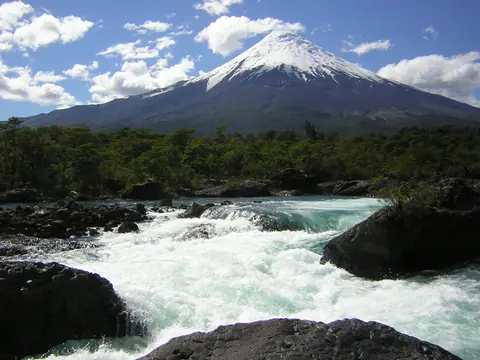
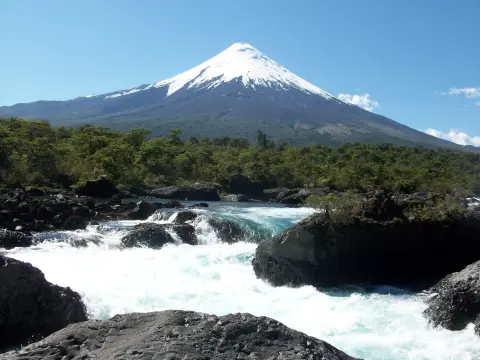
- Osorno, above Lago Llanquihue, quiet, with a chairlift for the view: see Vicente Pérez Rosales. Calbuco, next to it, erupted without warning in 2015.
- Llaima, in Conguillío. Puyehue-Cordón Caulle stopped flights as far as Australia in 2011. Chaitén buried its own town in 2008: you can walk to the crater's rim in Pumalín.
- Nevados de Chillán, a ski resort, was raised to yellow in 2026.
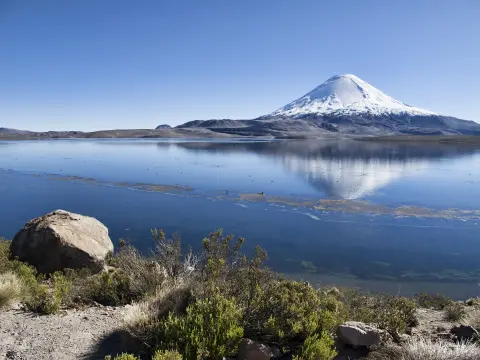
- Lascar, near San Pedro, puffs. Parinacota, in Lauca, sleeps.
- Copahue, on the border, often sends people from their homes for a few days.
If it erupts
- Sirens sound in Pucón and the villages. Follow the green evacuation signs to a meeting point.
- The killer is the lahar: melted snow, mud and rocks down the river beds, within minutes. Get away from rivers and bridges, and up. Never cross one that's rising.
- Then get out by the road you're told to. Have fuel.
Ash
- Stay in, with windows shut. Outside wear a mask and glasses, not contact lenses. Drive slowly, without wipers.
- Flights in the south, and in Argentina, may stop for days. Insurance bought after the alert won't pay.
Geysers and hot springs
At El Tatio stay behind the stones: the crust is thin, and people have been burnt and killed. Hot springs may be closed by floods or landslides.
Where to sleep
Pucón's map shows its danger zones. If it worries you, stay on the Villarrica side of the lake or in the hills. After a strong earthquake check the alerts again.

Tours and activities
Pucón and Villarrica Volcano
Pucón, La Araucanía
A lakeside adventure town beneath the snow-capped, active Villarrica volcano.
Natural features
Vicente Pérez Rosales National Park
Puerto Varas, Los Lagos
Chile's oldest park, with the Petrohué falls, the emerald Todos los Santos lake and Osorno volcano.
Comments