
Paying for Dutch public transport: OVpay, the end of the OV-chipkaart, checking in and out, and what to do if you forget
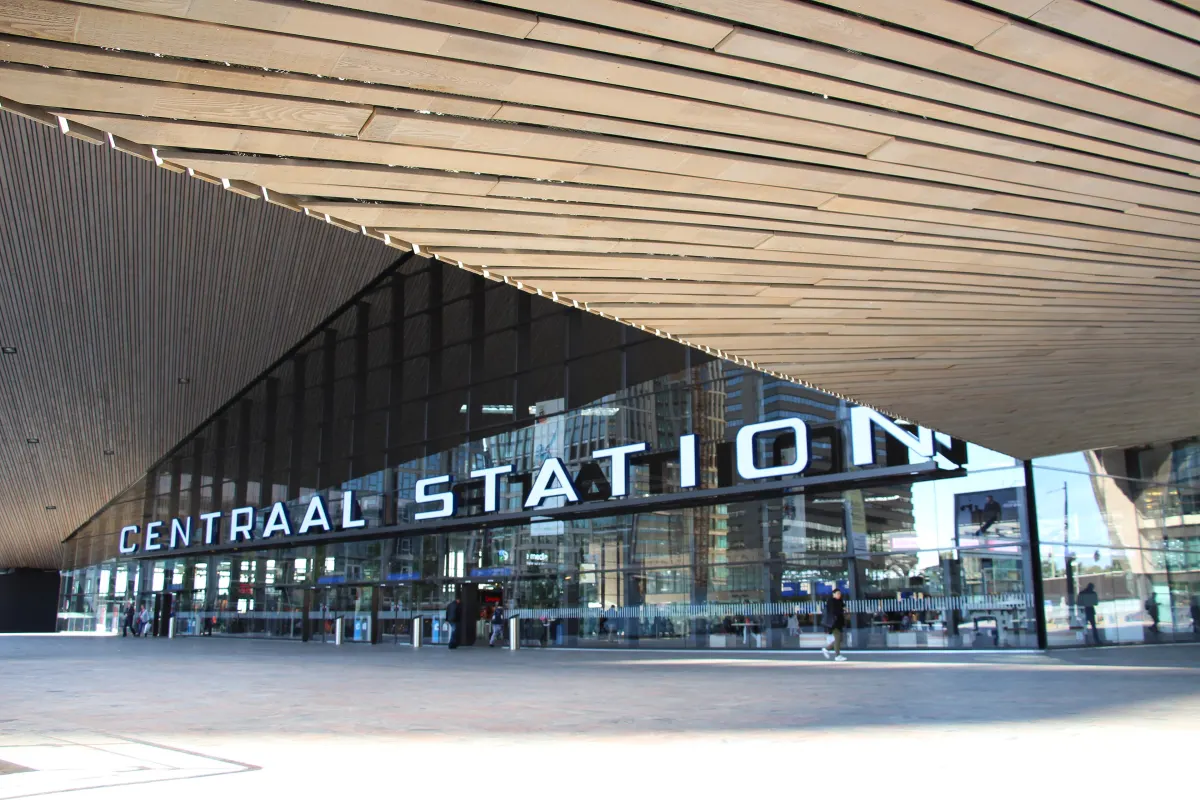
One system covers every train, tram, bus and metro in the country. You touch in with the bank card or phone you already have, and touch out at the end. Visitors no longer need an OV-chipkaart, the old blue card, which is being abolished.
OVpay: your own card
- Use a contactless Mastercard, Visa, Maestro or V Pay, credit or debit, or the same on Apple Pay or Google Pay. There's nothing to register.
- Check in when you start and check out when you finish, with exactly the same card or device. Your phone and the plastic card count as two different things, even for one account.
- One card per person. You can't check in two people with one card.
- The fare is worked out from the distance. For city transport it's a base fare and a price per kilometre: at Amsterdam's GVB, €1.16 plus €0.217 a km in 2026 and €1.21 plus €0.227 from 1 January 2027. If you change within 35 minutes you don't pay the base fare again.
- The money leaves your account the next day, with a code starting NLOV. Type it in at ovpay.nl to see the trip. Your bank may add a fee for foreign payments.
Where to touch
- Trams and buses: at the readers by the doors, as you get on and as you get off. Every time, even for a change.
- Metro: at the gates.
- Trains: at the gates, or at small stations at a post on the platform or by the entrance. Posts belong to different companies: at some stations you must use the one for the train you're taking.
- Changing from NS to another train company, such as Arriva: check out at one company's post and in at the other's.
- Changing from one NS train to another: do nothing.
- One beep and a green light means in, or out. Two or three beeps, or red, means try again.
If you forget to check out
- You're charged a default fare. On a train that's €20 or more, and a few euros on a bus or tram.
- You can usually get it back: look up the trip on ovpay.nl or in the OVpay app a day later, and say where you got off. Often it's put right by itself.
- If you've not checked in and an inspector comes, the fine is €50 to €70 and up, plus the fare. Being a tourist isn't an excuse.
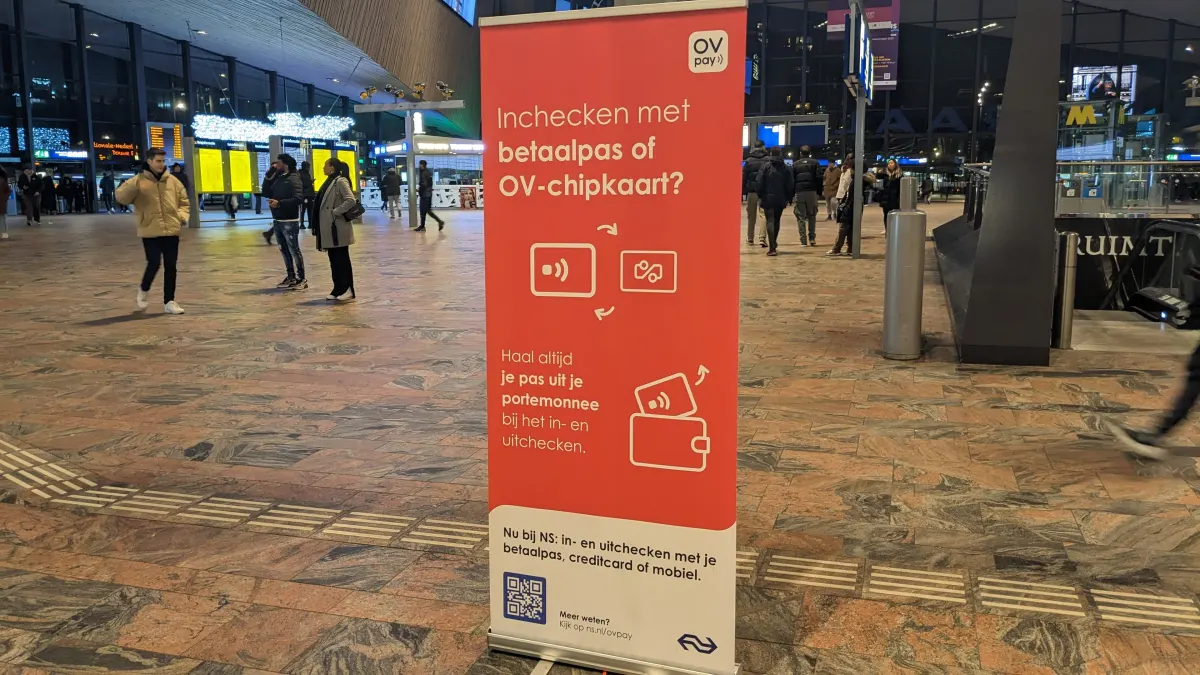
The OV-chipkaart
- The anonymous blue card hasn't been sold since 1 July 2026. If you still have one, it works until it expires or the system ends, which is planned for the end of 2027. Use up the balance.
- It's replaced by the OV-pas, about €6, valid for five years, which works on the same system as OVpay. It's useful for somebody with no bank card, such as a child. You can load money on it and lend it.
- With an old OV-chipkaart you need at least €20 on the card to check in on an NS train.
When a ticket is better
- Children: OVpay always charges the adult fare. Under-4s go free. For older ones buy a child's day ticket, or a Railrunner on trains. From 2027 children aged 4 to 11 can travel free with a Kids Vrij subscription, but that needs a Dutch account.
- Several trips in one day: a day ticket from GVB in Amsterdam, RET in Rotterdam or HTM in The Hague.
- Discounts, such as over-65s, aren't given on a bank card. The national discount for over-65s ends on 1 January 2027 anyway.
- First class: switch your card to it in the NS app, or buy an e-ticket.
- You can't pay cash on trams and buses.
Planning
The 9292 and NS apps plan door to door in English, show the fare and the platform, and know about works. Google Maps is good too, but slower to notice closures.

Historic sites
Zaanse Schans
Zaanstad, North Holland
A village of green wooden houses and working windmills on the Zaan river, just north of Amsterdam, gathered here from around the region.
Towns and cities
Utrecht
Utrecht
A lively student city with canals unique for their wharves at water level, now cafés.


Comments