
Hot springs in Iceland: wild bathing, burns, which are closed, and how to behave
Hundreds of hot springs come out of the ground in Iceland. A few are pleasant to sit in. Most are too hot, too small or on somebody's farm, and some will kill the skin in a second.
Where, and where not
- Test the water with your hand, at the place where you'll sit. Many springs are boiling. People are badly scalded every year. If it steams and there's nobody in it, find out why.
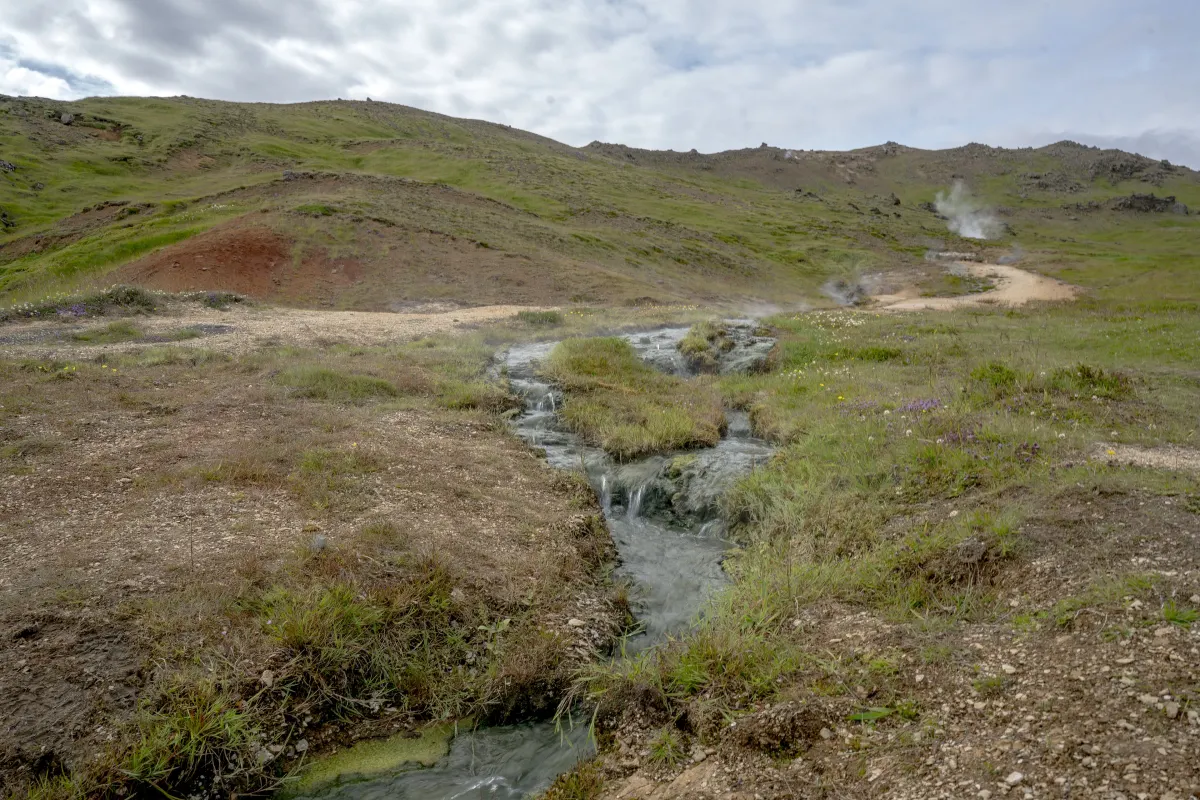
- Reykjadalur, above Hveragerði, is a warm river an hour's walk uphill. Stay on the boards and paths past the boiling pools, and go home by daylight. There are only screens to change behind. The paid spa that opened at the bottom in September 2026 is a separate thing.
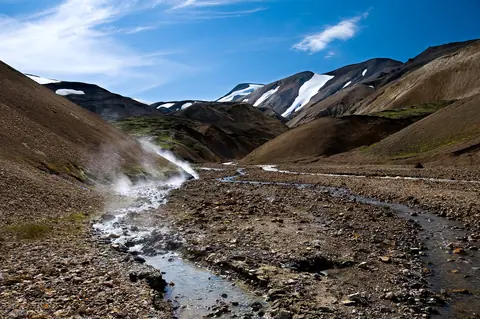
- Landmannalaugar has a warm stream by the hut, in summer.
- Closed: the owner shut Fossalaug and Reykjafoss, near Varmahlíð, in June 2026. Swimming isn't allowed in the Grjótagjá cave at Mývatn, or at the springs of Deildartunguhver and Geysir, where the water is near boiling.
- Most are on private land. Look for a box or a sign, pay, and leave if it says no. Don't camp beside them or leave anything. Others have been closed because of crowds and rubbish.
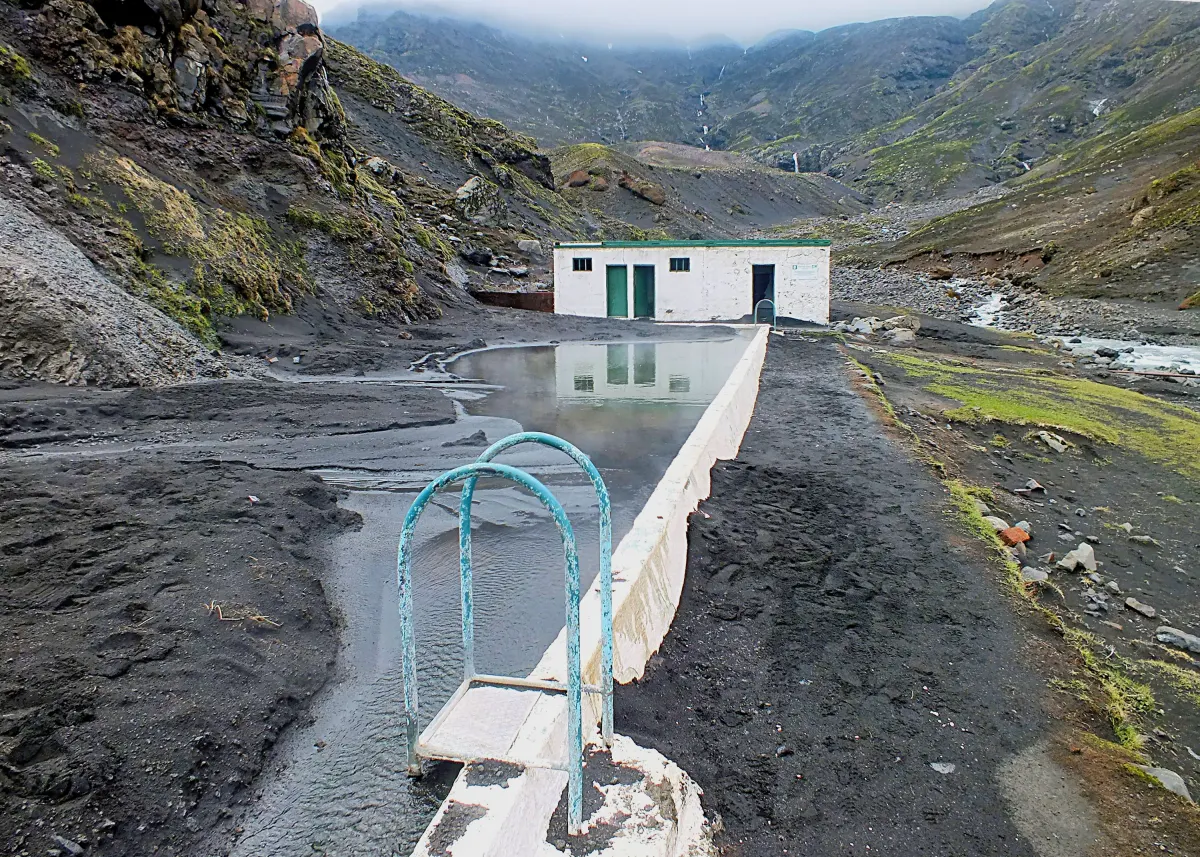
- No soap or glass. Dogs and loud music stay at home. Old turf-sided pools such as Seljavallalaug aren't cleaned often, and are slippery.
Staying well
- Don't put your head under. Amoebas and bacteria are rare here, and it's still wise.
- Ten to fifteen minutes is enough at 40°C and over. Drink water, and not alcohol.
- Getting out into wind is the worst part. Have a towel, a hat and dry things ready in a bag that won't blow away.
- Stay on boards and paths. Around steaming ground the crust may be thin.
- For a scald: cool water for 20 minutes, and call 112 if it's bad.
See also Swimming pools, for the shower rule, and Blue Lagoon and other lagoons.
Natural features
Landmannalaugar
Southern
A colourful area of rhyolite mountains in red, yellow and green, lava fields and a natural hot spring for bathing, in the Highlands.

Comments