
Camping in Iceland: where you may sleep, campers and motorhomes, tents, campsites, costs and the Camping Card
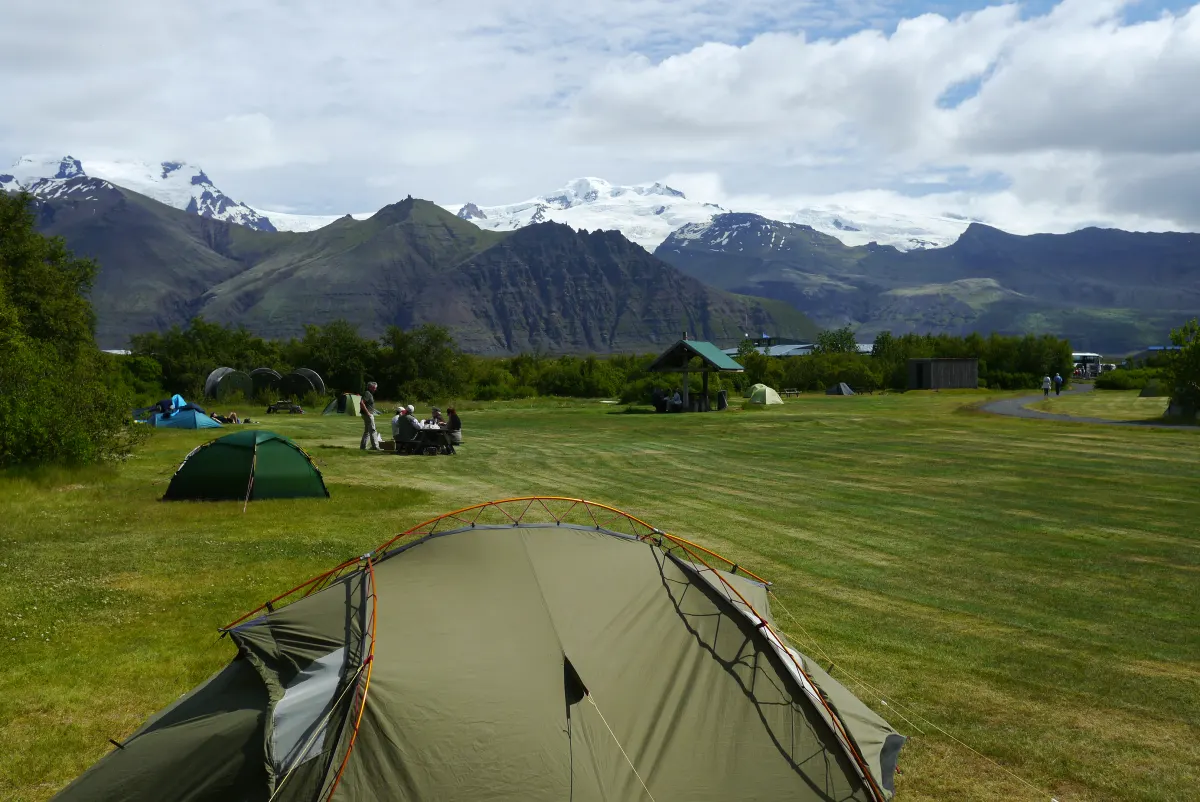
Camping is the cheapest way to see Iceland, and campsites are good, frequent and simple. Wild camping, the sort in old blogs and videos, isn't allowed. Use a campsite every night and you won't go wrong.
Campers, motorhomes and cars
The law says that you may not spend the night in a camper van, motorhome, caravan, tent trailer or the like outside a campsite, unless the owner of the land gives permission. That means every lay-by, car park, beach and viewpoint. The police and landowners do come round. Sleeping in a car is treated the same way.
Tents
- Safetravel puts it simply. The only exception is for hikers and cyclists: one night, in a tent, on uncultivated land, with no campsite near.
- In more detail, the law allows a traditional tent for one night by a public road in inhabited country, if there's no campsite in the immediate vicinity and the owner hasn't forbidden it. Near houses or farms, ask.
- In uninhabited country, and away from roads, a plain tent is allowed unless local rules say no. For three tents or more, ask.
- In national parks and nature reserves, use the campsites only. That goes for Þingvellir, Skaftafell, Jökulsárgljúfur, Hornstrandir, the Mývatn area and the whole Laugavegur trail. Local rules ban it along much of the south coast too.
Campsites
- There are about 150 or more, most of them open from mid-May to mid-September. Nearly every village has one, often by the pool. You hardly ever need to book for a tent, apart from the first weekend in August, and a few busy sites. Come before 6 pm.
- Pay in an app such as Parka, at a machine, or to whoever comes round in the evening.
- Most charge 2,000 to 3,500 krónur a person. Skaftafell and Ásbyrgi were 2,800 in 2026, with the shower and the tax, and free for 16 and under. Electricity there was 1,500. Elsewhere showers may cost extra, and the lodging tax of 400 a pitch is added.
- Don't charge an electric car from a campsite plug unless they say you can.
The Camping Card
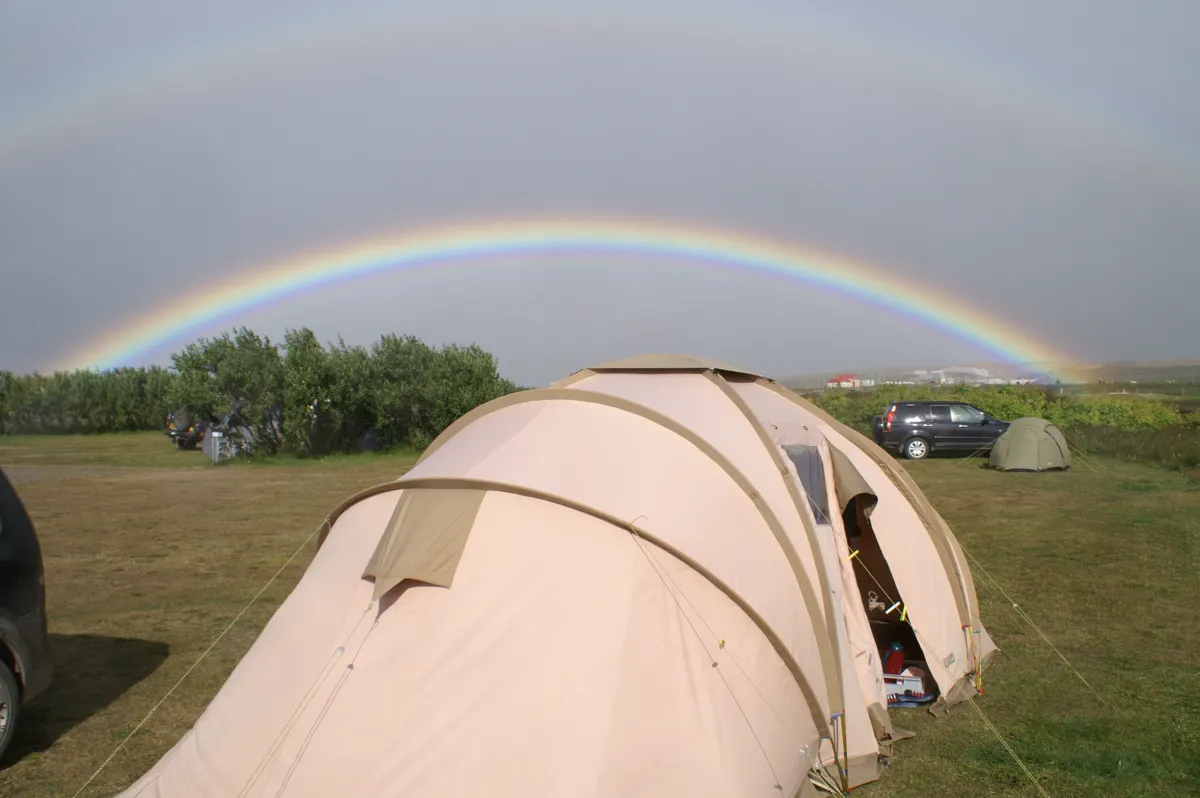
The Camping Card (Útilegukortið) covered 28 nights at its sites for two adults and up to four children, in one tent or camper, for about €179 in 2026. Tax and electricity were extra, and it ended on 15 September. It pays after about five nights for two. Check the list of sites against your route: few of them are on the south coast.
In winter
- A few campsites stay open, among them Reykjavík, Skaftafell and others on the south coast. Ring first.
- In a tent it's for experts. In a camper it's possible on short days, with heating, and no driving in wind. Some firms won't hire out motorhomes at all.
Wind, cold and fire
- Bring a strong tent and spare pegs. Iceland isn't the place for a first try. Put it behind a wall or hedge, with the narrow end to the wind.
- Nights are 3 to 8°C in July, and freezing in September. Bring a warm bag, an insulated mat and an eye mask.
- Campfires are prohibited. Cook on gas, and not in the tent. You can't fly with gas: buy it at petrol stations and outdoor shops, or look for leftovers at campsites.
- Empty toilets and grey water only at the marked places.
The highlands and huts
- Go prepared for bad weather and no signal. The rescue teams' highland patrol is there only in summer.
- Huts on the Laugavegur belong to the touring association FÍ (fi.is), and sell out soon after they open for booking, up to a year ahead. You can camp beside them without booking, for a fee. Hikers still need to bring food for the whole way.
- At Landmannalaugar the ground is stony and the wind strong. If you drive there by day in summer, book the parking: see F-roads.
Landmannalaugar
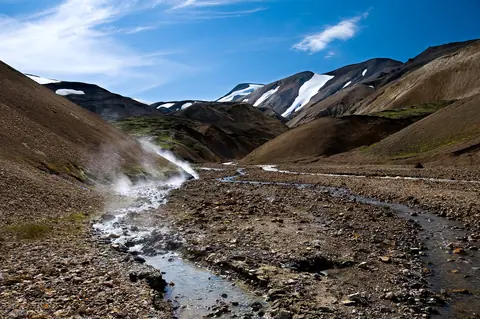
A colourful area of rhyolite mountains in red, yellow and green, lava fields and a natural hot spring for bathing, in the Highlands.
Comments