
Sharks in South Africa: the flags in Cape Town, the nets in KwaZulu-Natal, and cage diving
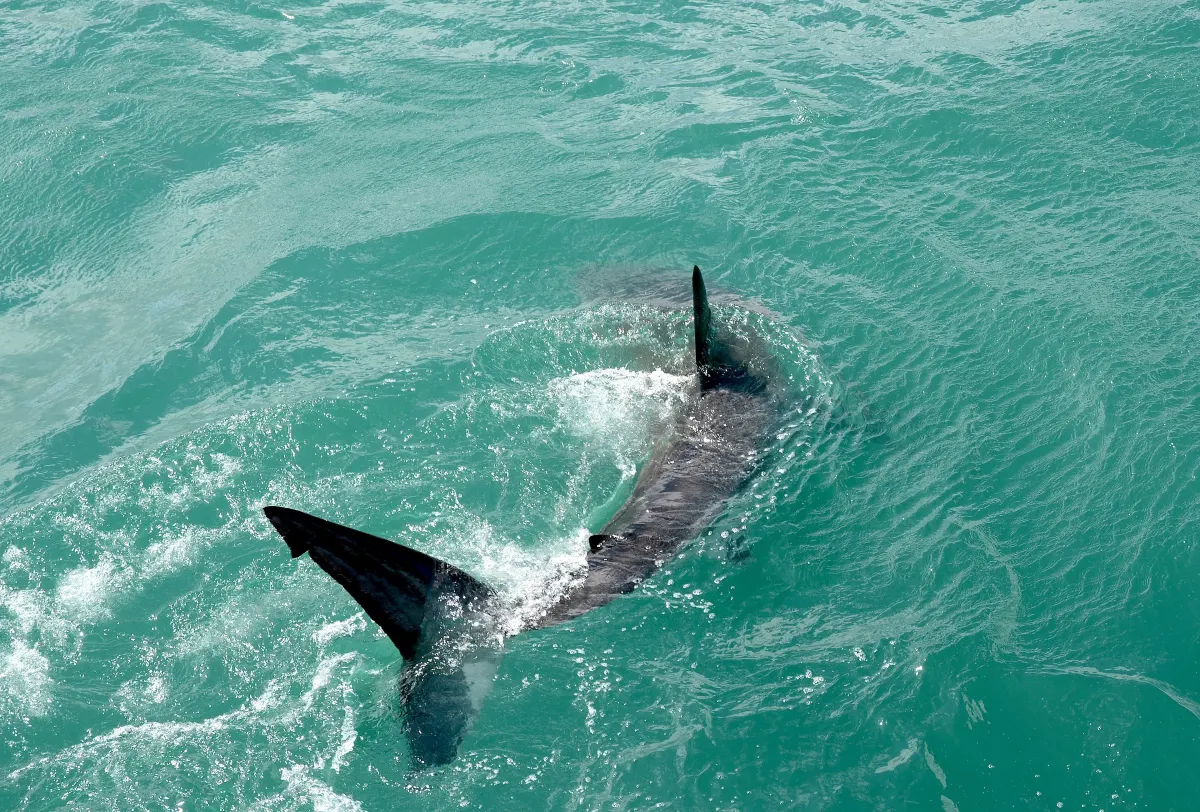
Several kinds of shark live off South Africa, including great whites, bull sharks and ragged-tooths. Attacks are rare. They're more likely with murky water, river mouths, fishing or seals, at dawn, dusk and night, and where there's bait.
Cape Town: the flags
Shark Spotters watch from the hills at Muizenberg, St James, Kalk Bay, Clovelly, Fish Hoek, Glencairn and Noordhoek corner, mainly in summer. Flags tell you what they see:
- Green: the spotter can see well, and has seen no shark.
- Black: it's hard to see into the water.
- Red: a shark has been seen lately, so be careful.
- White with a black shark, and a siren: a shark is near. Get out.
- No flag: nobody's watching.
White sharks come inshore most from October to March.
KwaZulu-Natal: nets and drumlines
KwaZulu-Natal has nets and baited drumlines at 37 beaches from Richards Bay to Port Edward. They aren't a wall: they float off the beach and reduce the number of sharks. They're lifted at times, for instance for the sardine run in winter, when swimming may be banned: read the board and the lifeguards' flags. They also kill many other animals, which is why they're argued about.
Cage diving
Boats go from Gansbaai and Mossel Bay. Ask what you'll see now, because white sharks have left some places, and choose an operator with a permit that doesn't chum heavily.
Rip currents are a much bigger danger: see Beaches.


Comments