
Culture and etiquette in Qatar: mosques, Souq Waqif, museums, greetings, dress, Fridays and Ramadan
Only about one person in eight in Qatar is Qatari. The rest come from a hundred other countries, so English is the everyday language and people are used to strangers. But Qatari life is private, religious and formal, and a little care with dress, greetings and cameras goes a long way.
Greetings
- As-salamu alaykum ("peace be upon you") is always welcome; the answer is wa alaykum as-salam. Shukran is thank you, and inshallah, "if God wills", can mean yes, perhaps or no.
- Men shake hands with men, often for a long time. Don't offer your hand to someone of the opposite sex unless they offer first. A hand on your heart and a nod is a graceful answer.
- Ask about health and family in general before business. Don't ask a man about his wife or daughters.
- Use your right hand to give, take and eat. Don't point the soles of your feet at anyone.
Dress
- Cover shoulders and knees, men and women. Loose cotton or linen is comfortable, with a light layer for fierce air conditioning.
- Qatari men wear a white thobe and headdress, women a black abaya. Visitors aren't expected to copy them, and it can look like fancy dress outside a desert camp.
- Museums can turn you away with bare shoulders or knees.
Visiting mosques
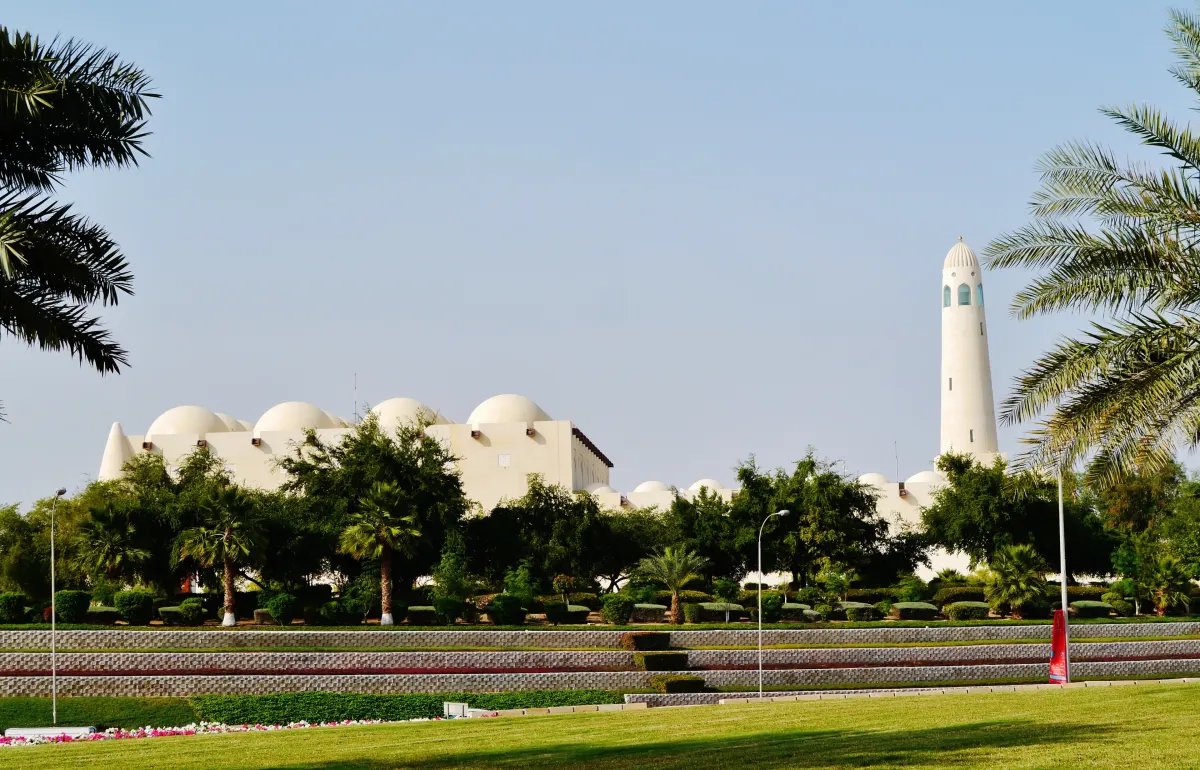
- The Imam Muhammad ibn Abd al-Wahhab Mosque, the state Grand Mosque, with its dozens of domes, is open to everyone outside prayer times. Guided visits by the Sheikh Abdulla Bin Zaid Al Mahmoud Islamic Cultural Center were offered in 2026 every day except Friday, 9am to 11am and 5pm to 8pm. Check before you go, above all in Ramadan.
- That centre's own mosque, with the spiral minaret beside Souq Waqif (people call it Fanar), gives visitors introductions to Islam and Arabic.
- The mosques at Katara, one blue and one gold, are small and beautiful.
- Wear long sleeves and long trousers or a long skirt. Women cover their hair; abayas are usually lent. Take off your shoes, switch off your phone, don't walk in front of people praying, and ask before taking pictures.
Souq Waqif
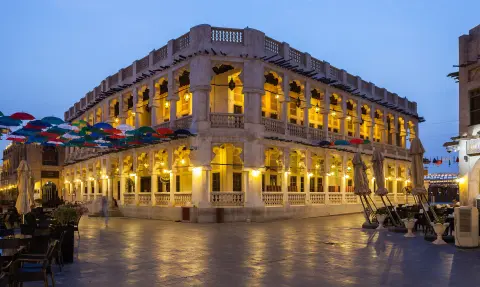
- Souq Waqif is at its best from late afternoon to midnight, and on Thursday and Friday evenings the whole city is there. Many shops close in the early afternoon.
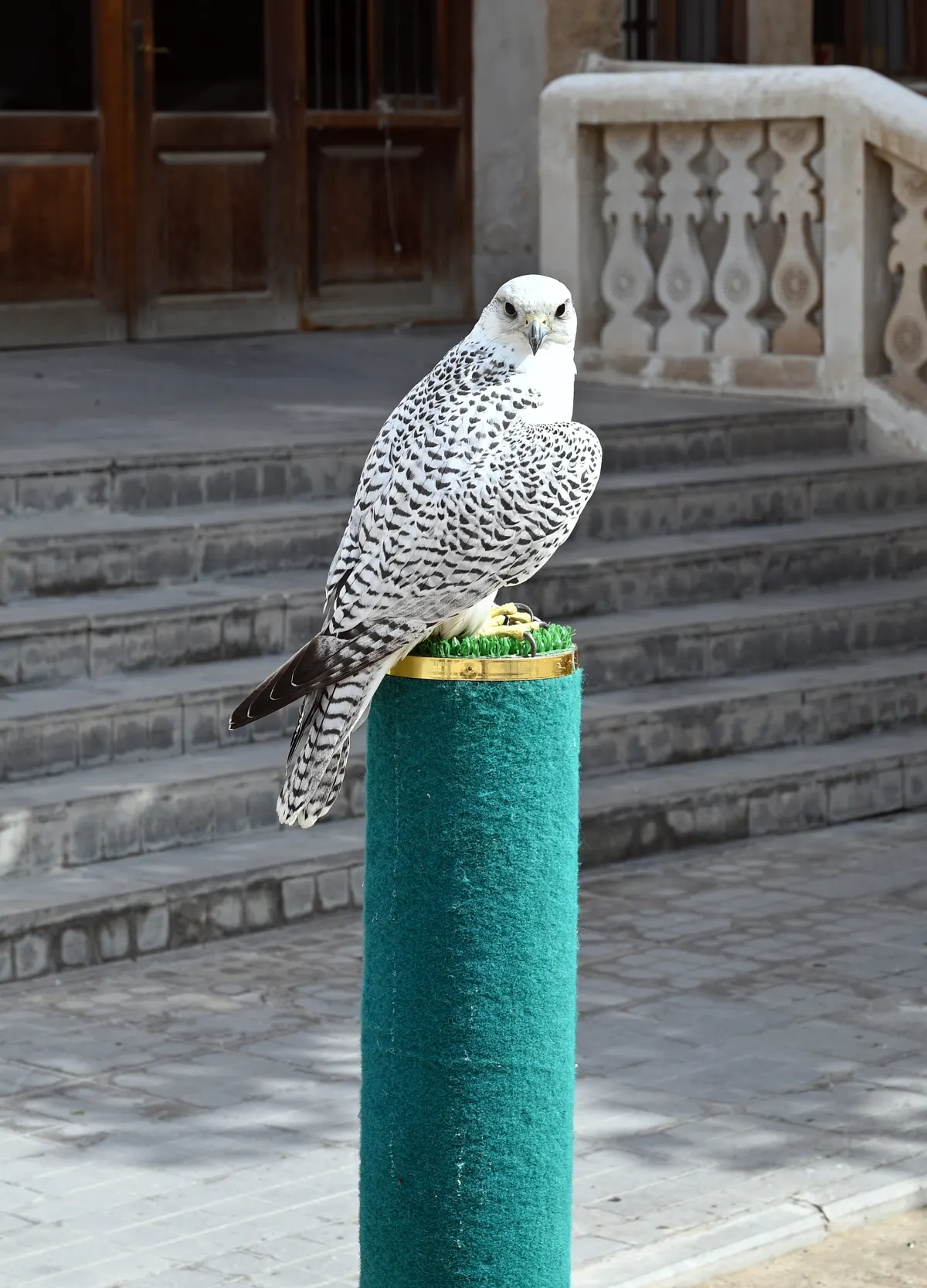
- The Falcon Souq and the falcon hospital are serious places: falcons are treasured, and some cost as much as a car. Ask before you photograph birds or their owners, and don't use flash. Some shops let you hold one.
- Think before you buy or photograph in the animal market: the conditions can upset visitors.
- Bargain kindly, accept tea if it's offered, and don't start bargaining unless you mean to buy.
Museums
- The Museum of Islamic Art is closed on Wednesdays, the National Museum on Tuesdays, Mathaf on Mondays and the Msheireb Museums on Sundays. They open on Friday afternoons only (1.30pm, or 3pm in Msheireb), and the bigger ones stay open until 9pm on Thursdays.
- Photos for yourself are fine without flash, tripods or selfie sticks.
- Bin Jelmood House, one of the Msheireb Museums, tells the story of slavery in the Gulf with rare frankness.
Camels
- Camel racing takes place at Al Shahaniya, west of Doha, in the cooler months, with small robot jockeys. Ask your hotel which days there's training or a race.
- Australia advises avoiding contact with camels, and raw camel milk, because of MERS: see Heat, health and weather.
Fridays and prayer times
- Friday is the holy day. Until after the midday prayer, streets are empty and almost everything is shut. Families go out in the evening.
- Five times a day some small shops close for a few minutes. Be patient, and turn music down during the call to prayer.
Ramadan and holidays
- In Ramadan (from about 8 February 2027) days are quiet, with short opening hours, and nights are long and festive. Accept an invitation to iftar, the meal at sunset, if you get one. Halfway through comes Garangao, when children go round in bright clothes collecting sweets.
- The rules are strict for visitors too: see Qatar's laws.
- Eid al-Fitr, around 10 March 2027, and Eid al-Adha, in mid-May, close offices for several days. Hotels fill with visitors from other Gulf countries.
- National Day, 18 December, brings parades and fireworks. Expect crowds and closed roads.
What to talk about, and what not to
- Good subjects: food, football, falcons, family, travel, and how Doha has changed.
- Leave religion, the Emir, the war and neighbouring countries alone unless you know people well.
- Most people you meet, such as drivers, guards and cleaners, are migrant workers, often far from their families. A friendly word, patience and a tip are appreciated. Don't photograph them without asking.
Comments
No comments yet.